Most people who get interested in art do not start with a plan. They start with a single painting, or a single artist, or a museum visit that surprised them. Then the questions start. What was Monet doing with light that made his paintings look different from everything before? Why does a Picasso cost $100 million when a technically accomplished academic painting from the same period costs $5,000? What were the Bauhaus designers actually trying to change? The questions branch outward, and without a map the branching can feel overwhelming.

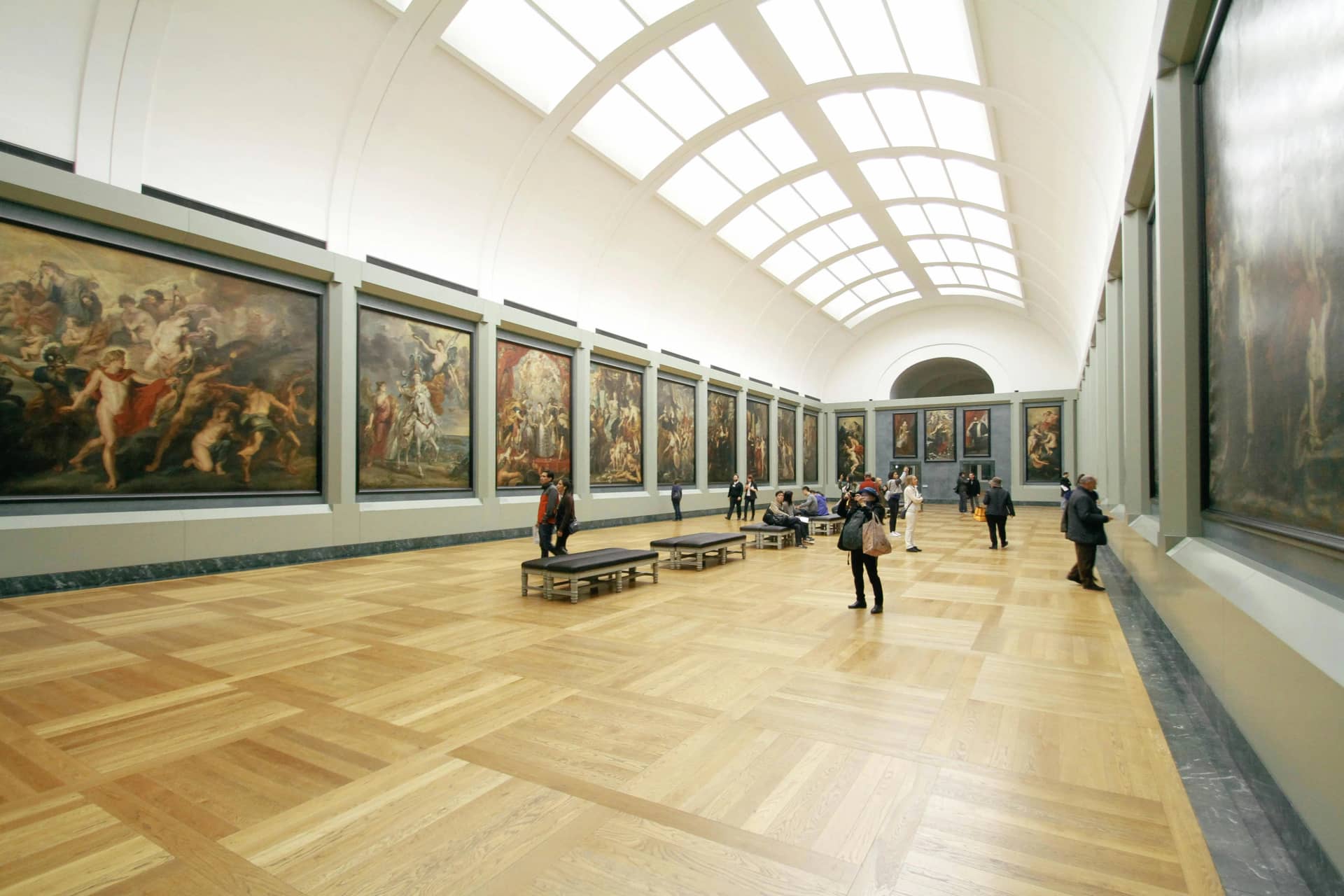
Interior of Bristol Museum and Art Gallery. Museums are the best place to begin looking at art seriously. The experience of standing in front of actual paintings cannot be replicated online. Photo by Adrian Pingstone. Image: CC BY-SA 2.0, via Wikimedia Commons
This post is that map. It organizes the Quiet Canvas library into four reading tracks: one for absolute beginners who want to build confidence and vocabulary, one for people who want to understand art history as a connected story, one for people who want to understand how art is actually made, and one for people who want a global picture that goes beyond Western Europe. Each track is a sequence you can follow from post to post, with knowledge that compounds. You do not need to follow any track rigidly. But having a map makes the exploration more directed and more satisfying.
Track 1: The Absolute Beginner Path

Vincent van Gogh, "Man Standing, Reading a Book" (1882). Van Gogh's letters reveal a deeply well-read, methodical painter. Reading about art and looking at art are complementary practices. Image: Public domain, via Wikimedia Commons
If you are new to looking at art and want to build confidence and vocabulary before anything else, this sequence takes you from zero to genuine appreciation in eight steps. These posts are designed to answer the most fundamental questions: What is good art? How do I look at it? What are artists trying to do? They are each practical and specific, with no assumed knowledge.
Start Here
- Step 1:How to Look at Art for Beginners: Understanding Any Artwork: the foundational guide. Read this first.
- Step 2:Understanding Composition in Art: Balance, Movement, and Focal Points: how artists organize what you see.
- Step 3:Color Theory for Art Appreciation: Warm, Cool, and Complementary Colors: what colors are doing in a painting.
- Step 4:The Essential Art Toolkit: Mastering Visual Elements: line, shape, value, texture, space.
- Step 5:Popular Art Styles and How to Recognize Them: how to identify movements quickly.
- Step 6:What Makes Art Good: Understanding Taste, Skill, and Meaning: the hardest question, explained honestly.
- Step 7:Mastering Art Descriptions: A 4-Step Guide: how to talk about art confidently.
- Step 8:Famous Paintings Explained: What 20 Iconic Works Are Actually About: apply what you've learned to the most famous paintings in history.
After completing this track, you should be able to walk into any gallery, look at any work, and have something genuinely useful to say about what you are seeing. That is the goal.
Track 2: The Art History Path

Willem van Haecht, "The Gallery of Cornelis van der Geest" (1628). The painting shows a 17th-century collector's gallery visited by Archdukes Albrecht and Isabella. Art collecting and display have a long history that shapes how we encounter art in museums today. Image: Public domain, via Wikimedia Commons
If you want to understand art history as a connected story, start with the overview and then read the individual movement guides in chronological order. This track is arranged so that each post builds on the last: understanding the Renaissance makes Baroque more legible, and understanding Baroque makes Romanticism and Impressionism more comprehensible.
The Overview
- The Evolution of Art Styles: From Realism to Contemporary: the broad sweep.
- The Complete Guide to Art Movements: A Timeline from Ancient to Now: the comprehensive reference map.
The Chronological Path
- Ancient Egyptian Art: Rules, Symbolism, and 3,000 Years of Consistency
- Byzantine Art: Gold, Icons, and the Sacred Image
- Renaissance Art: Perspective, Humanism, and the Birth of Modern Art
- Baroque Art: Drama, Light, and the Power of the Catholic Church
- Romanticism: Emotion, Nature, and the Revolt Against Reason
- Impressionism: Monet, Light, and Breaking Academic Rules
- Cubism: Picasso, Braque, and Seeing All Sides at Once
- The Bauhaus Movement: Where Art Met Design and Function
- Surrealism and the Subconscious: Dalí, Magritte, and Dream Logic
- Abstract Expressionism: When Art Became About the Act of Painting
- Pop Art: History, Traits, Artists, and Modern Takes
Artist Spotlights (Chronological)
After or alongside each movement guide, the artist spotlights add depth. These are organized here in rough chronological order by the artist's birth date:
- Hokusai: The Great Wave, Manga, and a Lifetime of Reinvention (1760)
- Rembrandt: Light, Shadow, and the Dutch Golden Age (1606)
- Johannes Vermeer: Light Through Windows and Domestic Mystery (1632)
- Artemisia Gentileschi: Baroque Painter and Trailblazer (1593)
- Leonardo da Vinci: Painter, Scientist, and the Renaissance Ideal (1452)
- Michelangelo: The Sistine Chapel, David, and the Obsessed Genius (1475)
- Paul Cézanne: The Bridge Between Impressionism and Cubism (1839)
- Claude Monet: The Garden at Giverny and the Birth of Impressionism (1840)
- Auguste Rodin: The Thinker, the Gates of Hell, and Modern Sculpture (1840)
- Gustav Klimt: Gold, Symbolism, and the Vienna Secession (1862)
- Wassily Kandinsky: Abstraction, Music, and the Language of Color (1866)
- Henri Matisse: Color, Cutouts, and the Joy of Looking (1869)
- Pablo Picasso: Cubism, Controversy, and a Century of Influence (1881)
- Edward Hopper: Loneliness, Light, and American Solitude (1882)
- Salvador Dalí: The Showman Behind the Surrealism (1904)
- Frida Kahlo: Self-Portraits, Surrealism, and Personal Pain (1907)
- Andy Warhol: The Factory, Fame, and Everything Is Art (1928)
- Yayoi Kusama: Infinity Rooms, Polka Dots, and Immersive Art (1929)
- Jean-Michel Basquiat: Neo-Expressionism and Cultural Commentary (1960)
- David Hockney: Color, California, and the Digital Canvas (1937)
- Banksy: Street Art's Most Mysterious Figure (b. c.1974)
Track 3: The Techniques Path
If you want to understand how art is actually made, rather than its history, this track covers the major media and techniques in an order that builds from foundations toward more complex and specialized practices.
Foundations
- Drawing Fundamentals: Line, Shade, Form, and Perspective: the technical foundation of all visual art.
- Color Theory for Art Appreciation: understanding color before you mix it.
- Color Mixing Basics: How to Get the Color You Actually Want: the practical skill.
Drawing Media
- Charcoal Drawing: Smudging, Layering, and Getting Dark Values Right
- Pastel Drawing: Soft, Oil, and How to Work with Either
- Figure Drawing: Proportion, Gesture, and the Human Form
Painting Media
- Acrylic Painting for Beginners: Why It's the Ideal Starting Medium: start here.
- Watercolor Basics: Transparency, Wet-on-Wet, and Layering
- Gouache Explained: The Opaque Watercolor Most People Haven't Tried
- Oil Painting Explained: Glazing, Impasto, and Why It Takes Months to Dry
Other Techniques
- Printmaking 101: Linocut, Etching, and Screen Printing
- Sculpture Materials: Clay, Bronze, Marble, and Found Objects
- Mixed Media Art: How to Combine Materials Without It Looking Messy
- Digital Art: The Modern Creative Frontier Explained
The World Art Path
Most art education focuses exclusively on Western European and American traditions. If you want a more global picture, this reading path covers traditions from Japan, China, Africa, Egypt, Byzantium, and the Americas:
- Ancient Egyptian Art: Rules, Symbolism, and 3,000 Years of Consistency
- Byzantine Art: Gold, Icons, and the Sacred Image
- Hokusai: The Great Wave, Manga, and a Lifetime of Reinvention
- Chinese Landscape Painting: Philosophy, Brushwork, and the Empty Space
- African Art: Mask Traditions, Contemporary Scene, and What the West Got Wrong
- Frida Kahlo: Self-Portraits, Surrealism, and Personal Pain: Mexican art and identity.
How to Get the Most from This Blog
A few practical notes. First, you do not need to read in order. Each post is designed to be useful on its own, even if you have read nothing else. But if you want cumulative knowledge, the sequences above are the most efficient path. Second, the artist spotlights and movement guides complement each other: reading the Impressionism guide alongside the Monet spotlight gives you a richer picture than either one alone. Third, if you encounter a term you do not recognize, the Art Vocabulary: Essential Terms Every Art Lover Should Know is a searchable reference.
The goal of all of this is not to accumulate information. It is to improve the experience of actually looking at art. Every post here is written toward the moment when you stand in front of a painting or sculpture and find that you are seeing more than you would have seen before. That is the only metric that matters.
Start with How to Look at Art for Beginners if you are completely new, or jump straight to whichever track above matches your current interest. If you have suggestions for posts you'd like to see added, leave them in the comments.