
Walking into a major art museum for the first time can feel like arriving at a party where everyone else already knows each other. The rooms are enormous, the walls are packed with paintings you feel you should recognize, and other visitors seem to glide through with an air of confident understanding while you stand in front of a canvas wondering what you are supposed to be feeling. If this sounds familiar, you are not alone, and you are not doing anything wrong.
The truth is that most people, including regular museumgoers, have never been taught how to visit a museum effectively. Schools take students on field trips but rarely explain how to actually engage with what is on the walls. The result is that many adults approach museums with a mix of obligation and low-level anxiety, rushing through galleries to check famous works off a mental list without really seeing anything. The Louvre receives approximately 8 million visitors per year, and the average visitor moves through it in under three hours. That is less than four seconds per object in the collection.
This guide offers a different approach. Whether you are visiting your first museum or your fiftieth, these practical strategies will help you slow down, see more, and walk out feeling genuinely enriched rather than exhausted and vaguely guilty about everything you missed.
Before You Go: Planning Makes Everything Better
A little preparation goes a long way. You do not need to become an art history expert before your visit, but spending fifteen minutes on the museum's website can dramatically improve your experience.
Choose Your Museum Wisely
Not all museums are created equal for every visitor. If you are new to art, a smaller museum or a focused collection is often better than a massive encyclopedic institution. The Frick Collection in New York, the Courtauld Gallery in London, or the Musée de l'Orangerie in Paris offer intimate, manageable experiences where you can see world-class art without the overwhelming scale of the Met, the Louvre, or the British Museum.
If you are visiting a large museum, accept upfront that you cannot see everything in one visit. The Metropolitan Museum of Art has over two million objects in its collection. The Louvre has approximately 380,000. Trying to see even a fraction of either in one day is a recipe for exhaustion and diminishing returns. Pick one or two sections that interest you and explore those thoroughly. Depth over breadth is always the more rewarding strategy.
Check the Website
Most major museums have excellent websites with:
Floor plans — Know the layout before you arrive so you can navigate efficiently
Highlights tours — Curated lists of must-see works, often with brief descriptions
Current exhibitions — Temporary shows are often the most exciting part of a visit
Audio guides — Many museums offer free audio tours through their apps
Visitor information — Hours, ticket prices, free admission days, bag policies
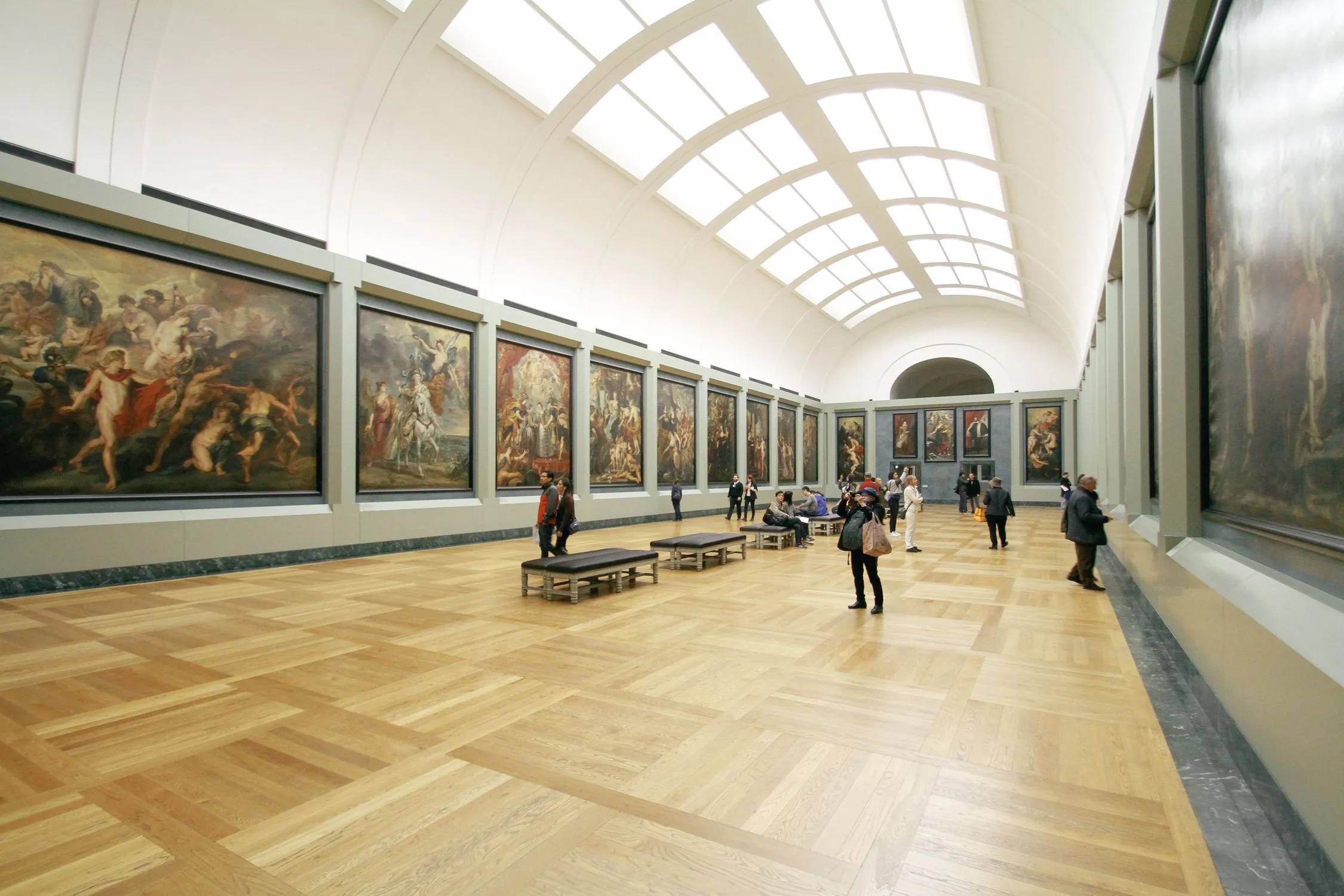
A gallery interior showing the scale and atmosphere of a major art museum. Photo by Riccardo on Pexels
Timing Matters
Visit on weekday mornings if possible. Most museums are least crowded between opening time and noon on Tuesday through Thursday. Avoid weekends and holidays unless you enjoy competing for sightlines. Many museums offer late-night hours one evening per week. The Met is open until 9 PM on Fridays and Saturdays, and these evening sessions typically have a more relaxed atmosphere with shorter queues at popular works.
Museum Etiquette: The Unwritten Rules
Museum etiquette exists to protect the art and ensure everyone has a good experience. Most of it is common sense, but a few points are worth stating explicitly.
Do Not Touch the Art
This is the cardinal rule. Oils from your skin can damage paint, patina, and delicate surfaces over time. Even sculptures that look sturdy can be fragile. If there is no barrier, maintain at least an arm's length of distance. Museum guards take this seriously — they will ask you to step back, and repeated offenses can get you escorted out.
Photography Policies
Most museums now allow photography of their permanent collections without flash. However, temporary exhibitions often prohibit photography entirely due to loan agreements with other institutions. Look for signs at gallery entrances, and always turn off your flash. Selfie sticks are banned in virtually every major museum worldwide.
A word of advice: resist the urge to photograph everything. Studies have shown that people who photograph artworks actually remember them less well than people who simply look. If you want to remember a painting, spend two minutes looking at it carefully rather than two seconds framing a photo.
Keep Your Voice Down
Museums are not libraries — quiet conversation is perfectly fine. But keep your volume at a level that does not carry across the gallery. If you are visiting with children, brief them on indoor voices beforehand. Most kids are actually great in museums if you engage them actively rather than expecting them to be silent.
Be Aware of Your Space
Do not stand directly in front of a painting for extended periods if others are waiting to see it. Step to the side, take your time from a slight angle, and let others have their turn. In crowded galleries, be patient — the person in front of you has as much right to look as you do.
How to Actually Look at Art
This is where most museum visits fall short. People glance at a painting for an average of fifteen to thirty seconds before moving on. That is barely enough time to register what the painting depicts, let alone appreciate how it is made or what it means. Here is a more rewarding approach.
The Slow Looking Method
Pick five to ten works that catch your eye and spend at least five minutes with each one. Yes, five full minutes. It sounds like a long time, but this is where the magic happens. Here is what to do during those five minutes:
First minute: Just look. Do not read the label. Do not think about what you "should" see. Just let your eyes wander across the surface. Notice what grabs your attention first.
Second minute: Observe the details. Move closer. Look at the brushwork, the texture, the edges where colors meet. How did the artist actually make this? What tools and techniques can you identify?
Third minute: Step back. View the painting from across the room. How does it change at a distance? What do you notice from far away that you missed up close?
Fourth minute: Read the label. Now check the title, artist, date, and medium. Does this information change how you see the work? Does the title reveal something you missed?
Fifth minute: Reflect. How does this painting make you feel? What questions does it raise? Would you want to live with this painting? Why or why not?
This method, sometimes called slow looking, is practiced by art educators worldwide. The [Harvard Art Museums' slow art programs](https://harvardartmuseums.org/learn/programs/slow-art) and the Yale Center for British Art both offer structured slow-looking sessions that demonstrate how much more you can see when you simply give yourself permission to take your time. The research behind these programs consistently shows that increased dwell time correlates directly with richer recall and stronger emotional response.
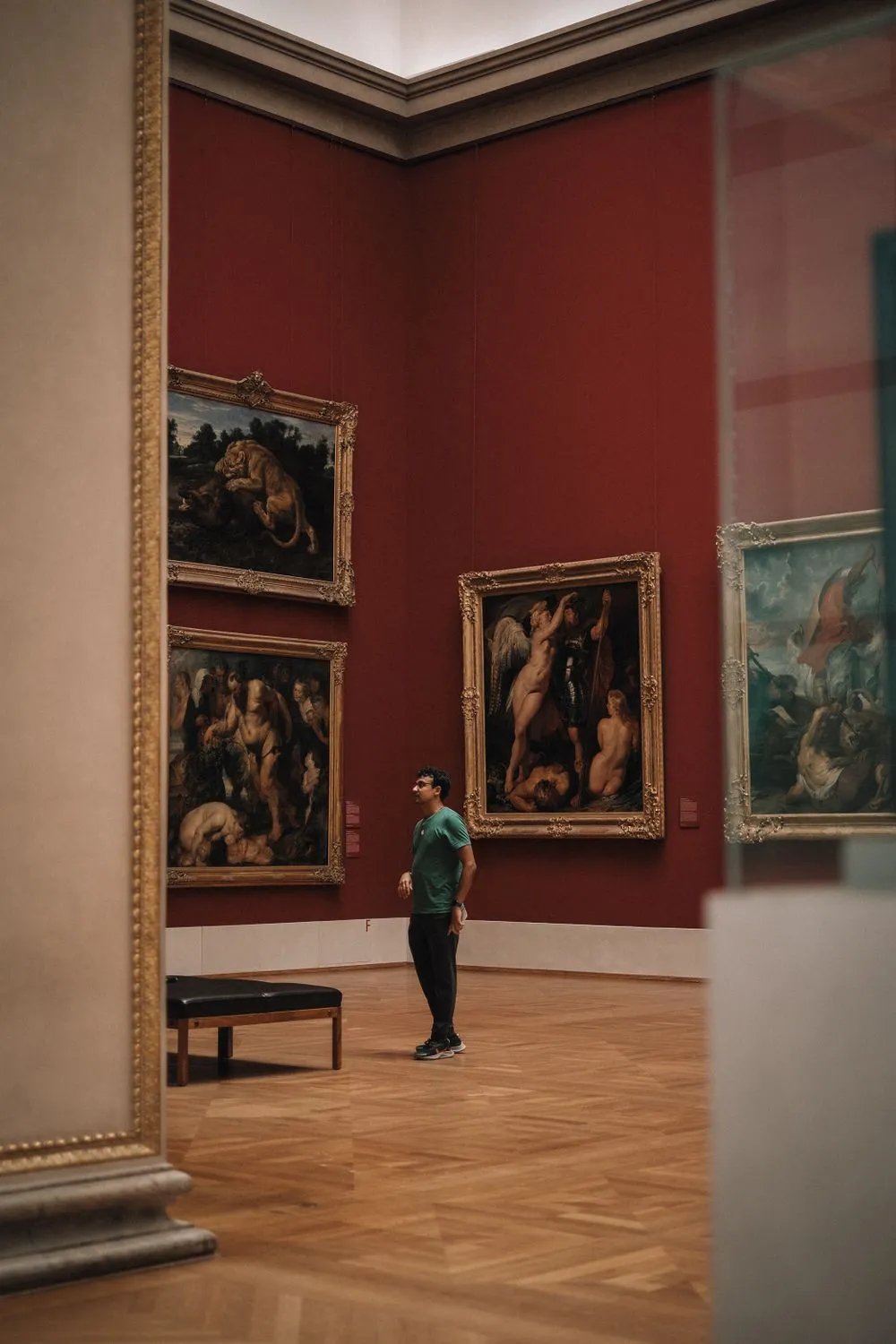
Taking time to look carefully at a single painting is more rewarding than rushing through an entire gallery. Photo by Alina Chernii on Pexels
What to Look For
If you are not sure what to notice, here are some starting points that work with any painting:
Color — Is the palette warm or cool? Bright or muted? How does the color make you feel?
Light — Where is the light coming from? How does it shape the forms? Are the shadows colored or black?
Brushwork — Can you see individual brushstrokes, or is the surface smooth? What does the texture tell you about how the artist worked?
Composition — Where does your eye go first? How does it move through the painting? Is the composition balanced or asymmetrical?
Scale — How big is the painting? Does its size affect your experience? A Rothko that fills your entire field of vision creates a very different feeling than a Vermeer you could hold in your hands.
Condition — Can you see cracks, repairs, or areas where the paint has darkened with age? These signs of time are part of the painting's history.
Making the Most of Museum Resources
Audio Guides and Apps
Audio guides are underrated. A good audio guide provides context that enriches your viewing without replacing your own observations. The [Bloomberg Connects app](https://www.bloombergconnects.org/), used by hundreds of major museums worldwide, lets you choose which works to learn about rather than forcing you through a fixed route. Use the audio guide selectively: listen to commentary on works that genuinely interest you, and skip the rest. The goal is to deepen your engagement with a few works, not to acquire summaries of many.
Docent Tours
Many museums offer free guided tours led by trained docents (volunteer guides). These tours are excellent for beginners because a good docent will teach you how to look, not just what to know. They will point out details you would miss on your own and explain connections between works. Check the museum's daily schedule — tours often start at specific times and fill up quickly.
The Museum Shop and Café
Do not skip the museum shop. Exhibition catalogs, postcards, and art books can extend your museum experience long after you leave. Buying a postcard of a painting you loved is a surprisingly effective way to remember it — you can pin it above your desk and revisit it daily. The café is also worth a stop, not just for refreshment but because taking a break midway through your visit prevents the fatigue that makes the last galleries feel like a chore.
Visiting with Children
Children can be wonderful museum companions if you adjust your expectations. Here are some tips:
Keep it short — Forty-five minutes to an hour is plenty for young children. Leave before they get tired, and they will want to come back.
Let them lead — Ask children which paintings they want to look at rather than dragging them to the "important" ones. Their choices are often surprising and delightful.
Play games — "I Spy" works brilliantly in museums. Ask them to find all the dogs in the paintings, or count how many people are wearing hats, or find the saddest face and the happiest face.
Bring sketchbooks — Many museums allow sketching (with pencil only, no pens or markers). Drawing in front of a painting forces close observation and is one of the best ways to really see a work of art.
Use the family programs — Most major museums offer family guides, activity sheets, and dedicated family tours. These are designed by educators and are genuinely excellent.
Building a Museum Habit
The best way to get comfortable in museums is to visit regularly. If you live near a museum, consider getting a membership — it pays for itself in two or three visits and removes the pressure to "see everything" each time. With a membership, you can pop in for thirty minutes to visit a single favorite painting, which is often more rewarding than a marathon four-hour session.
Keep a museum journal. After each visit, jot down which works stuck with you and why. Over time, you will start to see patterns in your own taste — maybe you are drawn to landscapes, or portraits, or abstract color fields. These preferences are the beginning of a personal relationship with art that can enrich your life for decades.
Final Thoughts
An art museum is not a test. There are no wrong answers, no required responses, and no minimum level of knowledge needed to walk through the door. The only thing you need to bring is your willingness to actually look at what is on the walls. Everything else follows from that.
Start small, take your time, and trust your own eyes. If a painting moves you, it does not matter whether you can name the artist or explain the technique. The emotional response is the point. The knowledge comes later, and it only deepens what you already feel. For more on developing your eye once you are in front of a painting, see our guide to how to look at art for beginners. And for building the vocabulary that helps you articulate what you notice, see our guide to how to start appreciating art even if you do not get it.


