Art Glossary
A comprehensive glossary of art terms, techniques, movements, and materials. From chiaroscuro to creative coding, find clear definitions for every art concept.
A
Academy (Art Institution): The Schools and Standards Bodies That Ruled Art
Art academies were official schools and standards bodies that controlled art education and exhibitions. From the Academie royale to the Royal Academy, learn their history.
Alla Prima: Wet-on-Wet, Single-Session Painting
Alla prima is wet-on-wet painting completed in a single session. From Frans Hals to Monet to Sargent, learn the history and technique of direct painting.
Anamorphosis: Distorted Images That Resolve From a Specific Viewpoint
Anamorphosis is a projection technique where a distorted image resolves into a coherent picture from a specific viewpoint. From Holbein to Niceron, learn how it works.
Assemblage: Sculpture From Found Objects and Everyday Materials
Assemblage is sculpture made from found objects and everyday materials. Learn its history from Picasso to Rauschenberg, key artists, and how it changed art.
Atelier: The Artist's Studio as School, Workshop, and Institution
An atelier is an artist's studio and the studio-based teaching model that trained artists for centuries. From Rembrandt to Beaux-Arts de Paris, learn how it worked.
B
Balance in Art: Visual Weight, Symmetry, and the Distribution of Elements
Balance in art is the distribution of visual weight across a composition. Learn about symmetrical, asymmetrical, and radial balance from Raphael to Pollock, with research.
Binder: The Substance That Holds Pigment Together and Makes Paint Stick
A binder is the substance that holds pigment particles together and adheres them to a surface. From animal glue to linseed oil to acrylic, learn binder history and types.
Blind Contour Drawing: The Exercise That Teaches You to See
Blind contour drawing is an exercise where you draw without looking at the paper, training observation over production. From Nicolaides to Betty Edwards, learn its history.
Bookbinding: Book Construction as Craft and Art From the Codex to Contemporary Practice
Bookbinding is the art of constructing books by hand, from Coptic sewing to exposed-spine structures. Learn its history, key practitioners, and modern revival.
Bozzetto: The Terracotta Sketch Where Sculptors Think With Their Hands
A bozzetto is a small, rapidly modeled terracotta sketch used by sculptors to develop ideas in three dimensions. Learn how Bernini, Algardi, and Baroque sculptors used clay bozzetti.
Broken Color: Small Strokes of Pure Color for Optical Mixing
Broken color places pure, unmixed strokes side by side to blend in the eye. Learn how Monet, Van Gogh, and Seurat used this technique for brighter, vibrating color.
C
Calligraphy: The Art of Beautiful Writing Across Cultures
Calligraphy is the art of expressive writing across Chinese, Japanese, Islamic, and Western traditions. Learn its history, key practitioners, and modern revival.
Camera Obscura: The Dark Chamber That Taught Painters to See
The camera obscura is a dark chamber optical device that projected images for painters before photography. From Vermeer to Canaletto, learn how it shaped art.
Canvas Panel: Canvas Mounted on Rigid Board for Portable Painting
A canvas panel is primed canvas glued to a rigid backing like MDF or hardboard. Learn its history from Impressionist plein air studies to modern mass-produced panels.
Cartoon: The Full-Size Preparatory Drawing Behind Every Fresco and Tapestry
A cartoon is a full-size preparatory drawing used to transfer a composition to fresco, tapestry, or panel. From Raphael's Vatican Cartoons to Leonardo's drawings, learn how they worked.
Cartouche: The Oval Frame That Carries Names, Coats of Arms, and Decoration
A cartouche is an oval or scrolled frame enclosing names, coats of arms, or decorations. From Egyptian hieroglyphs to Renaissance ornament to Baroque maps, learn its history and uses.
Carving: The Subtractive Art of Sculpting From Solid Stone, Wood, and Ivory
Carving is subtractive sculpting from solid materials like stone, wood, and ivory. Learn its history from prehistory to Michelangelo and how it works.
Chalk: Natural Earth Pigments From Renaissance Drawings to Three-Crayon Technique
Chalk is a soft drawing material made from natural minerals: black shale, red iron oxide, and white calcite. Learn how Leonardo, Michelangelo, and Watteau used chalk and the trois crayons technique.
Charcoal: Carbon Drawing From Cave Walls to Contemporary Studios
Charcoal is burnt organic matter used for drawing since prehistory. Learn vine vs compressed charcoal, techniques from blending to fixative, and artists from Da Vinci to Kathe Kollwitz.
Chiaroscuro: Light-Dark Contrast for Volume and Drama
Chiaroscuro is the use of strong light-dark contrast to model form and create drama. From Leonardo to Caravaggio to Rembrandt, learn how it shaped Western painting.
Chine-colle: Pressing Thin Paper Into Prints for Delicate Detail and Color
Chine-colle bonds thin paper to a heavier support during printing, adding color and texture. Learn its history, technique, and use by Matisse and Redon.
Cold Pressed Paper (Not): The Versatile Surface Most Watercolorists Choose
Cold pressed paper is watercolor paper with a lightly textured surface, the most popular choice for watercolor. Learn how it works, its history, and why 80% of painters prefer it.
Composition: The Arrangement of Elements That Makes a Painting Work
Composition is how an artist arranges visual elements within an artwork. Learn how composition works from Raphael to Rothko, with principles, examples, and research.
Conté Crayon: The Hard Pastel That Survived a Blockade
Conté crayons are compressed graphite or charcoal mixed with clay, invented in 1795 during the Napoleonic Wars. Learn how Seurat used them and why artists still choose them over soft pastels.
Contour Drawing: The Line That Describes Form
Contour drawing is the technique of rendering a subject entirely through its outlines, capturing form and volume without shading. From Picasso to Matisse, learn how it works.
Contrast in Art: Light Against Dark, Warm Against Cool, and the Power of Difference
Contrast in art is the placement of opposing visual elements to create tension and focus. Learn how Caravaggio, Vermeer, and Rothko used value, color, and texture contrast.
Cross Hatching: Overlapping Line Sets for Darker Values and Deeper Form
Cross hatching is the drawing technique of overlapping sets of parallel lines to build darker values. From Durer to Rembrandt, learn how it creates tone and form.
D
Doodle Art: Spontaneous Drawing From Marginalia to Zentangle and Mandala Doodles
Doodle art is spontaneous, often meditative drawing that ranges from notebook margins to structured Zentangle and mandala patterns. Learn its history and practice.
Dry Brush: Minimal Paint on Brush for Broken Texture
Dry brush is a painting technique using minimal paint on a dry brush to create broken, textured strokes. From Durer to Wyeth, learn how it works.
E
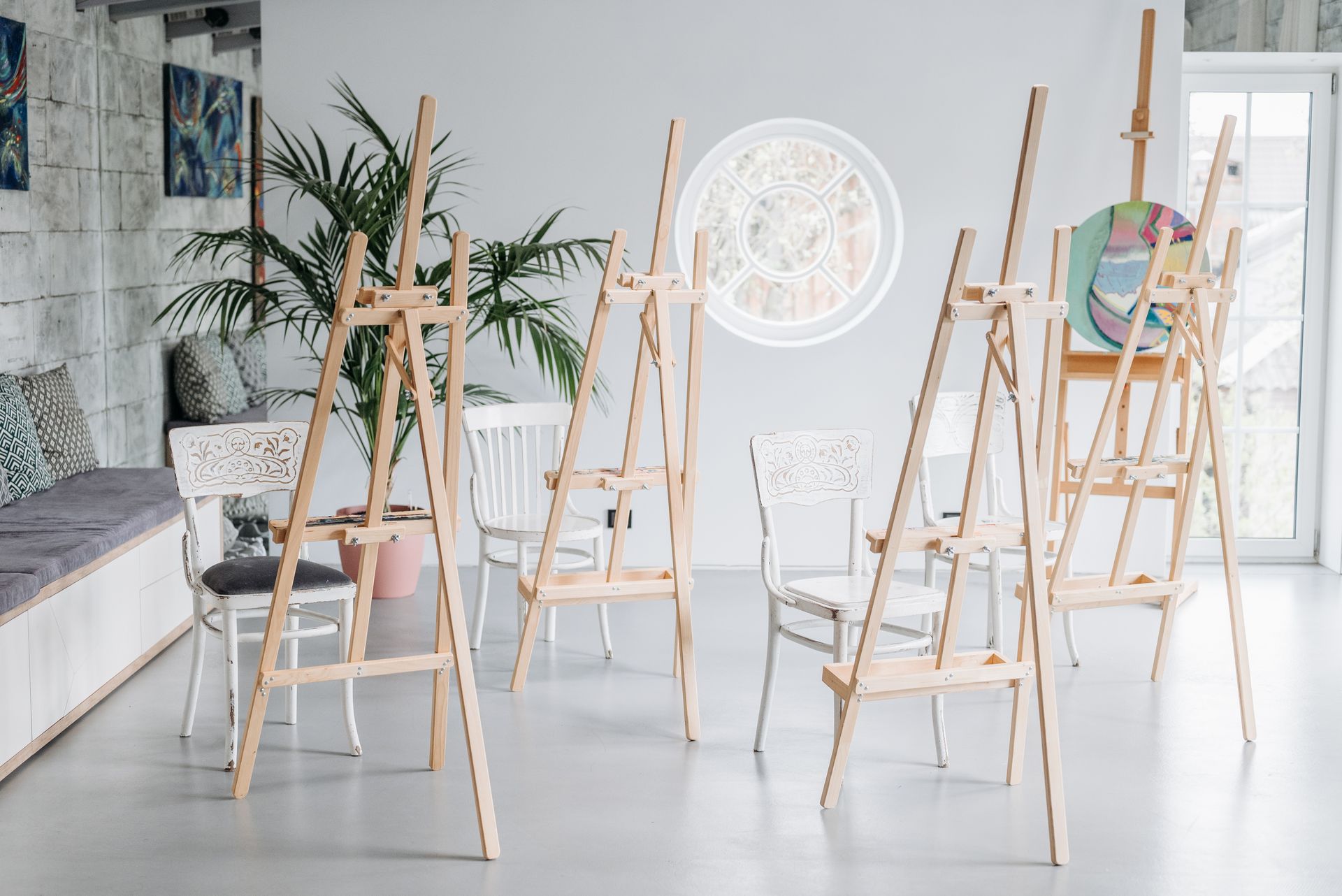
Easel: The Artist's Stand, From Ancient Egypt to the Studio Today
The easel is the upright support that holds a painting while the artist works. Learn its history from ancient Egypt to modern studio designs, types, and how to choose one.
Emphasis and Focal Points in Art: Where the Artist Sends Your Eye
Emphasis in art is the creation of a focal point that draws the viewer's attention. Learn how artists from Leonardo to Vermeer used contrast, isolation, and placement.
F
Fat Over Lean: The Oil Painting Rule for Layering to Prevent Cracking
Fat over lean is the oil painting rule that each layer should contain more oil than the one beneath. Learn the science behind why it prevents cracking and delamination.
Fixative: The Spray That Keeps Drawings From Smudging
Fixative is a spray applied over charcoal, pastel, and pencil drawings to prevent smudging. From Loriot's 18th-century secret to modern acrylic sprays, learn its history.
Foreshortening: Compressing Depth for Perspective Effect
Foreshortening compresses objects along the line of sight to create perspective depth. Learn how Mantegna, Michelangelo, and Caravaggio used this technique.
Found Object (Objet Trouvé): How Everyday Things Became Art
A found object is an everyday item an artist selects and presents as art. Learn the history of objet trouvé from Duchamp's Fountain to Tracey Emin's My Bed.
Fugitive Color: The Pigments That Fade and Disappear Over Time
Fugitive color is pigment that fades over time when exposed to light. From Van Gogh's geranium lake to cochineal reds, learn why some pigments vanish and how conservators fight back.
G
Gesso: The Primer That Prepares Every Painting Surface
Gesso is the white primer applied before painting to seal and prepare the surface. Learn its history from medieval gypsum grounds to modern acrylic gesso and how to use it.
Gesture Drawing: Rapid Drawing Capturing Movement and Essence
Gesture drawing is rapid drawing that captures the movement and essence of a figure. Learn its history, key practitioners, and how to practice it from Kimon Nicolaides to today.
Glazing: Transparent Oil Layers for Luminosity and Depth
Glazing is the application of thin transparent oil paint layers over dry paint to create luminosity and depth. From Van Eyck to Rembrandt, learn how it works.
Grid: The Measuring Tool That Makes Accurate Drawing Possible
The grid is a tool for transferring and scaling images accurately. From Alberti's veil to Durer's perspective machines to Chuck Close, learn its history and use.
Grisaille: Painting Entirely in Shades of Gray
Grisaille is painting entirely in shades of gray, often to simulate stone sculpture. From Van Eyck to Goya, learn how this monochrome technique shaped Western art.
Ground: The Preparatory Layer Between Support and Paint
The ground is the preparatory layer applied to a painting support before painting. From medieval gesso to modern acrylic primer, learn its history, types, and function.
H
Halation: The Optical Glow Effect From Light Against Dark
Halation is the optical glow that appears where light meets dark in a painting. Learn how Baroque painters used dark halos and warm edges to make light appear to radiate.
Harmony in Art: Unity, Color Agreement, and the Pleasing Whole
Harmony in art is the pleasing agreement between elements that makes a composition feel whole. Learn how color, shape, and proportion create harmony from Raphael to Rothko.
Hatching: Parallel Lines for Value and Shading in Drawing
Hatching is the drawing technique of using closely spaced parallel lines to create tonal value. From Durer to Rembrandt, learn how this fundamental technique works.
Hot Pressed Paper: The Smooth Surface for Fine Detail and Botanical Art
Hot pressed paper is watercolor paper pressed through heated rollers for a smooth surface. Learn how it works, its history, and why botanical illustrators and realists prefer it.
I
Illustration Board: The Rigid Surface for Drawing, Painting, and Plein Air
Illustration board is paper mounted to a rigid backing, creating a warp-resistant surface for drawing and painting. Learn its history, types, and why illustrators and plein air painters use it.
Illustration: Image-Making as Communication From the Diamond Sutra to Digital Media
Illustration is the art of creating images that communicate, accompany, or respond to text. Learn its history from medieval manuscripts to digital media.
Impasto Medium: Additives That Thicken Paint for Texture
Impasto mediums are additives that thicken oil and acrylic paint for visible texture. Learn what they contain, how they work, and how Rembrandt and Van Gogh used them.
Imprimatura: The Toned Ground Applied Before Painting
Imprimatura is a thin toned layer applied to a painting support before painting begins. Learn its history from the Renaissance to Rubens and why it matters.
L
Leather Tooling: Decorative Carving and Stamping of Leather as Craft and Art
Leather tooling is the art of carving and stamping designs into damp vegetable-tanned leather. Learn its history from Islamic bookbinding to Western saddlery.
Letterpress: Relief Printing From Movable Type, From Gutenberg to Today
Letterpress is relief printing from movable type, invented by Gutenberg in 1440. Learn its history, technique, and contemporary revival in fine art printing.
Lightfastness: Why Some Pigments Survive Centuries and Others Vanish in Months
Lightfastness measures how well a pigment resists fading under light. Learn how the Blue Wool scale, ASTM ratings, and microfade testing protect art from irreversible color loss.
Linear Perspective: The System That Taught Painters to Depict Depth
Linear perspective is the geometric system for depicting depth on a flat surface. Learn how Brunelleschi, Alberti, and Masaccio revolutionized painting in the 1420s.
Linocut: Relief Printing From Carved Linoleum
Linocut is relief printmaking from carved linoleum, cheaper and easier than woodcut. Learn its history from 1905 to Picasso's reduction technique and today.
Linseed Oil: The Binder That Made Oil Painting Possible
Linseed oil is the drying oil that binds pigment in oil paint. From Van Eyck to Rembrandt to modern conservation science, learn how it works and why it matters.
Lost-Wax Casting (Cire Perdue): The Ancient Method for Bronze Sculpture
Lost-wax casting, or cire perdue, is the ancient bronze casting method used from 4000 BCE to the Renaissance. Learn its history, technique, and key sculptors.
M
Mahl Stick: The Painter's Support Stick for a Steady Hand
A mahl stick is a padded stick that steadies a painter's hand while working on detail. Learn its history from 16th-century studios to Vermeer and why some painters still use one.
Mandorla: The Almond-Shaped Halo That Surrounds the Divine
A mandorla is an almond-shaped halo enclosing the entire body of Christ or the Virgin Mary. Learn its Byzantine origins, its role in Romanesque art, and its theological meaning.
Maquette: The Scale Model That Bridges Sculptor's Idea and Final Work
A maquette is a scale model for a sculpture or architectural project. From Rodin's Burghers of Calais to contemporary public art commissions, learn how maquettes shape the final work.
Marouflage: Adhering Painted Canvas to Walls and Ceilings
Marouflage is the technique of adhering a painted canvas to a wall or ceiling using adhesive. From Renaissance murals to modern conservation, learn how it works.
Mass in Art: Visual Weight and the Perceived Heaviness of Elements
Mass in art is the perceived visual weight of elements in a composition. Learn how size, color, position, and texture create visual heaviness from Rembrandt to Rothko.
Medium (Painting): The Substance That Changes How Paint Behaves
A painting medium is any substance added to paint to change its properties. From stand oil and dammar to modern alkyd gels, learn how mediums shape oil painting.
Modeling: The Additive Art of Sculpting With Clay, Wax, and Soft Materials
Modeling is additive sculpting with soft materials like clay and wax. Learn its history, technique, and use from ancient Egypt to Rodin and beyond.
Movement in Art: Implied Motion, Directional Force, and the Eye's Journey
Movement in art is the implied or actual motion that guides the viewer's eye through a composition. Learn how artists from Raphael to Pollock create visual movement.
O
One-Point Perspective: The Single Vanishing Point That Organized Renaissance Space
One-point perspective uses a single vanishing point to create the illusion of depth. Learn how Masaccio, Raphael, and Perugino used it to organize space and meaning.
Origami: Paper Folding as Art From Japanese Ceremony to Computational Design
Origami is the art of folding paper into representational and abstract forms without cutting. Learn its history from Japanese ceremony to computational design.
P
Paint Tube: The Tin Container That Changed Painting Forever
The collapsible paint tube, patented in 1841, made plein air painting practical. From Rand to Renoir to Monet, learn how a tin tube reshaped art history.
Palette Knife: The Flat Blade That Went From Mixing Tool to Painting Tool
The palette knife is a flat-bladed tool for mixing and applying paint. Learn its history from medieval amassettes to Van Gogh, Courbet, and contemporary impasto painting.
Palette: The Painter's Mixing Surface, From Medieval Boards to Modern Studio Tools
The palette is the flat surface where painters mix colors before applying them. Learn its history, shapes, materials, and how artists from Vermeer to Monet arranged their paints.
Panel (Painting): The Rigid Surface That Predates Canvas by a Thousand Years
A painting panel is a rigid wood or composite surface for painting, the dominant support before canvas. Learn its history from Byzantine icons to modern MDF, types, and how to choose one.
Papercutting: Decorative Cutting From a Single Sheet of Paper
Papercutting is the art of creating decorative images by cutting from a single sheet of paper. Learn its history from Chinese jianzhi to Dutch knipkunst.
Pastel: Pure Pigment Sticks From Leonardo to Degas and Beyond
Pastel is a stick of pure pigment held together with minimal binder. Learn how Degas layered pastels with fixative, how La Tour built portraits in the 18th century, and why pastel blurs drawing and painting.
Pen and Ink: Liquid Line Drawing From Quills to Technical Pens
Pen and ink is drawing with liquid ink applied through a nib. Learn about iron gall ink, quill and reed pens, steel dip pens, and how Rembrandt, Van Gogh, and Picasso used ink for permanent, expressive line.
Pentimento: Visible Traces of a Changed Composition Beneath the Surface
A pentimento is a visible trace of a changed composition beneath a painting's surface. Learn how X-ray and infrared imaging reveal artists' revisions from Rubens to Ensor.
Photogravure: Photographic Images Etched Into Copper Plates and Printed in Ink
Photogravure etches photographic images into copper plates and prints them in ink. Learn its history from Talbot to Stieglitz and why it still matters today.
Pictorial Space: The Illusion of Depth on a Flat Surface
Pictorial space is the illusion of three-dimensional depth created on a flat surface. Learn how artists from Brunelleschi to Cezanne manipulated space in painting.
Picture Plane: The Imaginary Window That Defines a Painting
The picture plane is the imaginary flat surface of a painting, Alberti's open window. Learn how it shaped Renaissance art and how modern painters broke it open.
Pigment: The Colored Substance That Makes Paint Paint
Pigment is the colored substance used in paint, from prehistoric ochre to synthetic cadmiums. Learn its history, chemistry, types, and why some pigments last centuries.
Plein Air Easel (French Easel): The Portable Studio That Took Painting Outdoors
The plein air easel, or French easel, is a portable box easel with built-in storage that made outdoor painting practical. From the Barbizon School to today, learn its history.
Plein Air: Painting Outdoors on Location
Plein air is painting outdoors directly from nature. Learn how the paint tube, Valenciennes, Constable, and Monet turned outdoor observation into a revolution in painting.
Proportion in Art: Size Relationships from Ancient Egypt to the Renaissance and Beyond
Proportion in art is the size relationship between elements. Learn about the Egyptian canon, Polykleitos, Vitruvian Man, the golden ratio, and how artists use proportion.
R
Rag Paper: Cotton-Based Paper That Lasts for Centuries
Rag paper is paper made from cotton or linen rags, valued for its archival quality and strength. Learn its history from medieval China to modern watercolor paper and why it outlasts wood pulp.
Red Chalk (Sanguine): Iron Oxide Drawing From Leonardo to Watteau
Red chalk, or sanguine, is an iron oxide drawing material used since the Renaissance. Learn how Leonardo invented red-on-red, how Watteau mastered trois crayons, and why this warm medium dominated 18th-century drawing.
Repousse: Hammering Metal Into Relief From the Reverse Side
Repousse is hammering malleable metal from the reverse side to create relief designs. Learn its ancient history, technique, and famous examples.
Residency (Artist): Time, Space, and Support for Creative Work
An artist residency is a program offering artists time, space, and support to develop their work. From the Joan Mitchell Center to ZKM, learn how residencies work and what they offer.
Rhythm in Art: Visual Repetition That Creates Movement and Tempo
Rhythm in art is the repetition of visual elements at intervals to create movement. Learn about regular, flowing, alternating, and progressive rhythm from Monet to Pollock.
Rough Paper: The Heavily Textured Surface for Expressive Watercolor
Rough paper is watercolor paper with the heaviest texture, left to dry with minimal pressing. Learn how it creates dramatic granulation, its history, and why landscape painters prefer it.
S
Scale in Art: How Size Changes Everything About How We Experience Art
Scale in art is the size of a work or its elements relative to the viewer. Learn how scale shapes meaning from Egyptian colossi to Serra's steel walls, with research.
Scumbling: Dry Brush Dragging of Opaque Paint for Texture and Haze
Scumbling is dragging thin broken layers of opaque paint over a darker dry layer for texture, haze, and soft light. From Titian to Turner, learn how it works.
Sfumato: Gradual Blending With No Visible Lines
Sfumato is Leonardo da Vinci's technique of gradual tonal blending with no visible lines. Learn how he used it in the Mona Lisa and Virgin of the Rocks.
Sgraffito: Scratching Through One Layer to Reveal Another
Sgraffito is scratching through a surface layer to reveal a contrasting color beneath. Learn its history from Renaissance facades to pottery to contemporary painting.
Silverpoint: Metal Stylus Drawing on a Prepared Surface
Silverpoint is drawing with a silver stylus on a specially prepared surface, leaving delicate gray lines that oxidize to warm brown. Learn its history from Leonardo to today.
Sizing: The Sealant Layer That Protects Canvas and Paper From Oil
Sizing is the sealant applied to canvas or paper before gesso or ground to prevent oil penetration. Learn the history of rabbit skin glue sizing and why PVA size replaced it.
Solvent: The Liquid That Thins and Cleans Paint
Solvents thin paint, dissolve resins, and clean brushes. From turpentine to mineral spirits to citrus solvents, learn the history and science of painting solvents.
Stippling: Dots for Value, Texture, and Tone
Stippling is the art of building value and texture with dots. Learn its history from Renaissance engraving to scientific illustration and how it differs from pointillism.
Support: The Physical Surface Every Painting Is Made On
The support is the physical surface a painting is made on, from wood panels to canvas to copper. Learn its history, types, and why it matters for conservation.
T
Tattoo: Skin as Canvas, Cultural Tradition, and Fine Art Crossover
Tattooing is the art of inserting ink into skin to create permanent images. Learn its history from Indigenous traditions to contemporary fine art crossover.
Tenebrism: Extreme Darkness With Shafts of Light
Tenebrism is Caravaggio's extreme chiaroscuro, where darkness dominates and light cuts through like a spotlight. Learn its history, artists, and how to spot it.
Three-Point Perspective: Three Vanishing Points for Extreme Views
Three-point perspective adds a third vanishing point above or below the horizon for dramatic bird's-eye or worm's-eye views. Learn how it works and who used it.
Thumbnail Sketch: Small Compositional Studies Before Committing
Thumbnail sketches are small, rapid compositional studies that save time and prevent structural failures. Learn their history from Renaissance esquisses to concept art.
Tonal Drawing: Light and Shadow Masses Without Line
Tonal drawing builds form from patches of light and shadow rather than lines. Learn its history from Leonardo to Velazquez and how it differs from linear drawing.
Tooth: The Surface Roughness That Grabs Pigment and Holds It
Tooth is the surface roughness of paper, canvas, or panel that grips pigment. Learn why pastelists, watercolorists, and oil painters depend on tooth for adhesion and layering.
Trompe l'Oeil: Visual Deception and the Art of Fooling the Eye
Trompe l'oeil is the art of visual deception, painting objects so realistically they appear to exist in real space. From Pompeii to Pere Borrell del Caso, learn how it works.
Turpentine: The Painter's Solvent From Pine Resin to Modern Alternatives
Turpentine is the traditional solvent distilled from pine resin, used to thin oil paint and clean brushes. From Old Masters to modern safer alternatives, learn its history.
Two-Point Perspective: Two Vanishing Points and the Angular View
Two-point perspective uses two vanishing points to depict objects viewed at an angle. Learn how it works, who used it, and how to construct it with examples.
U
Underpainting: The Foundational Layer Beneath the Visible Painting
Underpainting is the foundational layer beneath a painting's surface. Learn about grisaille, verdaccio, dead coloring, and how Vermeer and Rembrandt used it.
Unity in Art: The Sense of Wholeness That Makes a Composition Cohere
Unity in art is the sense that all elements belong together in a single composition. Learn how Gestalt principles, color, and structure create unity from Raphael to Rothko.
V
Vanishing Point: Where Parallel Lines Converge in Perspective
The vanishing point is where parallel lines appear to converge in a perspective drawing. Learn its history from Brunelleschi to Taylor and how artists use it.
Varnish: The Protective Coating That Defines a Painting's Surface
Varnish is the transparent coating applied over finished paintings to protect and saturate the surface. From mastic to dammar to synthetic resins, learn its history.
Vehicle: The Liquid That Carries Pigment and Makes Paint Possible
The vehicle is the liquid that carries pigment in paint, combining binder and solvent. From linseed oil to gum arabic to acrylic polymer, learn how vehicles define paint types.
Verdaccio: Greenish Underpainting for Flesh Tones
Verdaccio is a greenish underpainting used to create lifelike flesh tones. Learn how Renaissance painters from Giotto to Michelangelo used green earth beneath warm skin colors.
Viewfinder: The Simple Frame That Teaches You to See
A viewfinder is a frame artists use to isolate and compose a scene. From Klimt's cardboard cutout to modern adjustable tools, learn how viewfinders shape composition.
Visionary Art: Painting From Inner Experience and Spiritual Vision
Visionary art depicts spiritual, mystical, and inner experiences rather than the physical world. From William Blake to Alex Grey, learn its history, artists, and techniques.
Visual Literacy: The Ability to Read Images and Why It Matters
Visual literacy is the ability to interpret, evaluate, and create meaning from visual information. From art history to AI images, learn why it matters in 2026.
W
Washi: Japanese Paper Made From Kozo, Mitsumata, and Gampi Fibers
Washi is traditional Japanese paper handmade from kozo, mitsumata, and gampi fibers. Learn its thousand-year history, how it is made, its role in art and conservation, and why it lasts.
Watercolor Paper: The Surface That Makes Watercolor Possible
Watercolor paper is thick, absorbent paper designed for water media. Learn its history, cotton vs. wood pulp fibers, weights from 90 lb to 300 lb, and how to choose the right surface.
Wet-on-Dry: Layering Over Dried Paint for Control and Precision
Wet-on-dry is applying fresh paint over a dried layer for sharp edges and controlled building. Learn how oil and acrylic painters use it for glazing and detail work.
Wet-on-Wet: Painting Into Wet Paint Before It Dries
Wet-on-wet is painting into still-wet paint so colors blend on the surface. Learn how oil paint's slow drying made this technique central to alla prima and plein air.
Wood Engraving: Fine Relief Printing From End-Grain Boxwood Blocks
Wood engraving is fine relief printing from end-grain boxwood, developed by Thomas Bewick in the 18th century. Learn its history, technique, and key artists.
Woodcut: Relief Printing From Carved Wood Blocks
Woodcut is the oldest printmaking technique, carving images into wood blocks for relief printing. Learn its history from China to Durer to Hokusai's ukiyo-e.
Why an Art Glossary?
Art has always had a language problem. Walk into any gallery and you will hear terms like chiaroscuro, impasto, sfumato, and pentimento thrown around as if everyone knows what they mean. Most people do not. They nod along, afraid to ask, and miss half of what the painting is actually doing.
This glossary exists to fix that. Every entry is written in plain English with real examples: specific paintings, specific artists, specific dates. When we explain plein air, we point you to Monet working beside the Seine in 1873, not a generic definition copied from a dictionary. When we cover creative coding, we start with Casey Reas and Ben Fry at MIT in 2001, not a vague paragraph about "art and technology."
The terms here span centuries and disciplines. You will find Renaissance techniques sitting next to digital art movements, printmaking terminology next to motion graphics concepts. That mix is intentional. Art does not stay in neat historical boxes, and neither does the vocabulary we use to talk about it. A painter working today might need to understand glazing just as much as a 3D animator needs to know what kinetic typography means.
Each definition is a starting point, not a finish line. We write them to be specific enough that you can recognize the technique the next time you see it, but short enough that you can read one in under five minutes. If a term leads you to a painting you had not considered before, or sends you down a rabbit hole about a movement you had never heard of, the glossary is doing its job.
New terms are added regularly. If there is a concept you keep running into but cannot find here, that is a gap we want to fill. The best art terminology does not stay still. It grows as artists invent new ways of working, and the language has to keep up.