
In May 2023, the United States Supreme Court ruled in Andy Warhol Foundation for the Visual Arts, Inc. v. Goldsmith that Andy Warhol's silkscreen portrait of Prince, based on a 1981 photograph by Lynn Goldsmith, was not protected by fair use. "Commentators in the art world feared for the future of appropriation art, popular with artists inspired by Warhol like Richard Prince and Jeff Koons, if artists were to be deterred from creating works by fears of litigation or prohibitive license fees," as the case summary on Wikipedia notes. "Fair use, the unlicensed use of material copyrighted by another, is the most powerful and misunderstood legal doctrine in American art law," according to Sanbuk. The Warhol ruling did not kill appropriation art. It narrowed it. It established that when a secondary use is commercial and serves the same purpose as the original, the fair use defense is weaker.
"Andy Warhol's art is in many ways an art of appropriation. He turned commercial imagery into high art. The very act of copying is central to his artistic process and the Pop Art movement. Warhol's derivative works often blur the line between repetition and reinvention." The question of who owns an image, and what artists can do with images they do not own, is one of the most contested issues in contemporary art. It has been litigated for decades, it has produced inconsistent rulings, and it remains unresolved. This guide is not legal advice. It is a map of the terrain: the cases, the principles, and the practical realities of copyright in art. For more on the movements that pushed these boundaries, see our guide to the complete guide to art movements.
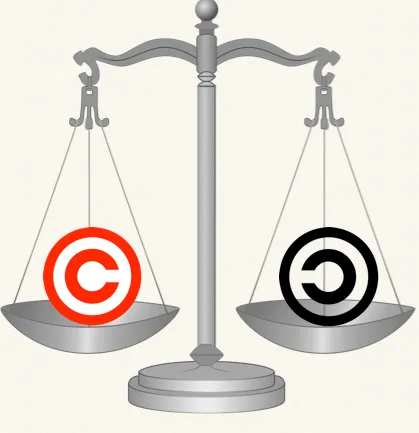
Copyright symbol. "We will then examine the art-historical movement that intentionally tested its boundaries: Appropriation Art. From there, we will demystify the most powerful and misunderstood legal doctrine in American art law, 'Fair Use'" (Sanbuk). Image via Wikimedia Commons
Copyright Basics: What It Protects and How Long It Lasts
Copyright protects original works of authorship fixed in a tangible medium: paintings, photographs, sculptures, prints, digital art. It does not protect ideas, concepts, or methods, only the expression of those ideas. You cannot copyright the idea of painting a soup can. You can copyright the specific painting you made of one.
In the United States, for works created after January 1, 1978, copyright lasts for the life of the author plus 70 years. For corporate works, works made for hire, it lasts 95 years from publication or 120 years from creation, whichever is shorter. After copyright expires, the work enters the public domain. As of January 1, 2026, works published before 1931 are generally in the public domain in the United States, though the rules have exceptions. Copyright grants the exclusive right to reproduce the work, distribute copies, create derivative works, display the work publicly, and perform the work publicly. These rights can be licensed, sold, or transferred. The public domain is the counterweight. Works whose copyright has expired can be used freely by anyone. For more on what is current in the field, see our guide to contemporary art trends.
Fair Use: The Four Factors and the Warhol Ruling
Fair use is determined by four factors. First, the purpose and character of the use, commercial versus nonprofit, transformative versus derivative. Second, the nature of the copyrighted work, creative versus factual. Third, the amount and substantiality of the portion used. Fourth, the effect of the use on the potential market for the original. Courts weigh these factors together, and no single factor is decisive.
In Andy Warhol Foundation v. Goldsmith (2023), the Supreme Court ruled 7-2 that Warhol's "Orange Prince" (1984), based on Goldsmith's 1981 photograph, was not fair use. The Court, in an opinion by Justice Sonia Sotomayor, focused on the first factor: the purpose and character of the use. Both Goldsmith's photograph and Warhol's silkscreen were licensed to magazines for portraits of Prince. They served the same commercial purpose. "The Court's focus on the commercial licensing context narrowed the fair use defense for appropriation art." The ruling does not make all appropriation art illegal. It makes it riskier, especially when the secondary use is commercial and serves the same purpose as the original.
The implication is the part that unsettled the art world. "Commentators in the art world feared for the future of appropriation art, popular with artists inspired by Warhol like Richard Prince and Jeff Koons, if artists were to be deterred from creating works by fears of litigation or prohibitive license fees." Fair use is a defense, not a right. It is determined case by case, after the fact, by a court. There is no formula. No percentage of alteration guarantees protection. No rule says that if you change it enough, it is fair use. The only way to know for certain whether a use is fair is to be sued and win.
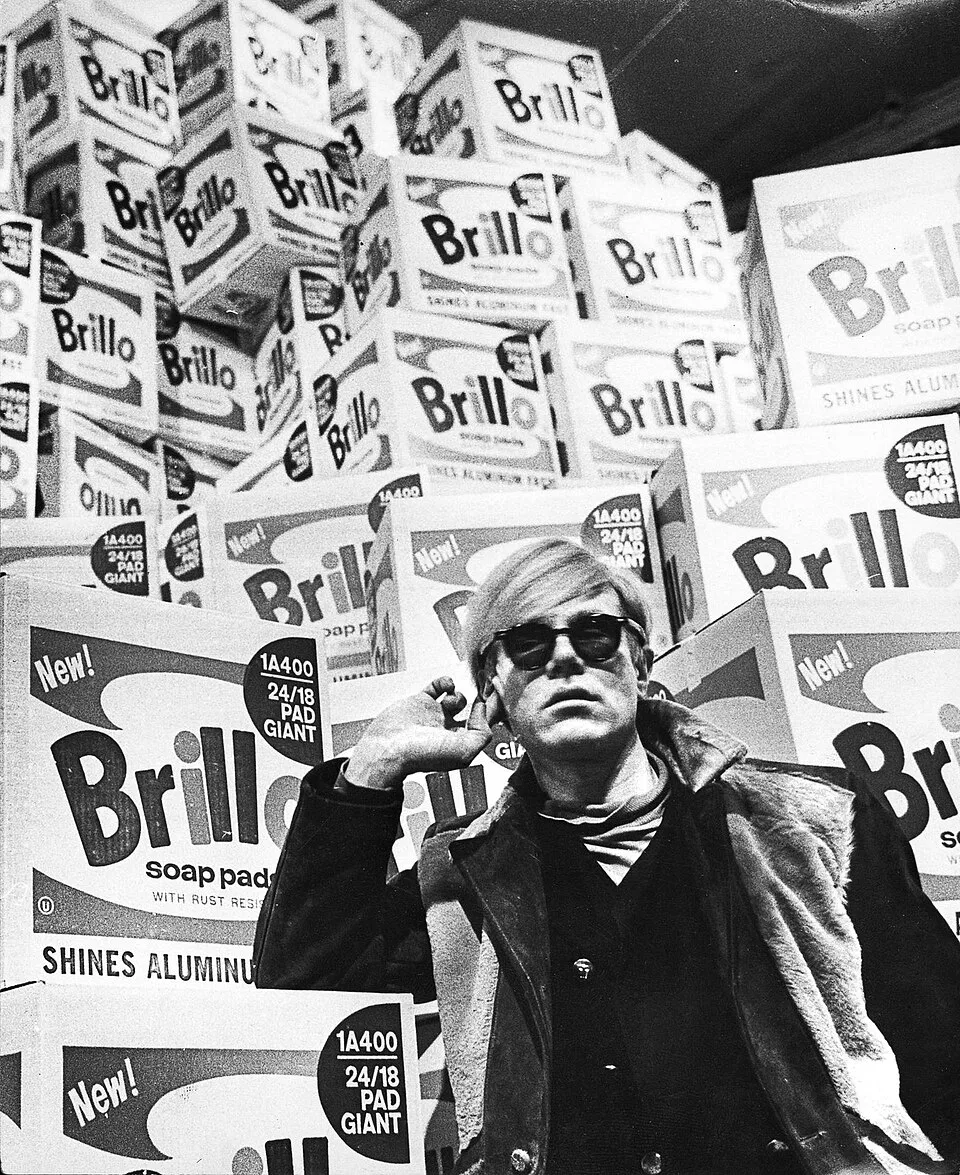
Andy Warhol. His "Orange Prince" (1984) was based on Lynn Goldsmith's 1981 photograph of Prince. In 2023, the Supreme Court ruled 7-2 that Warhol's silkscreen was not fair use. "Commentators in the art world feared for the future of appropriation art, popular with artists inspired by Warhol like Richard Prince and Jeff Koons, if artists were to be deterred from creating works by fears of litigation or prohibitive license fees" (Wikipedia). Image via Wikimedia Commons
Appropriation Art: The Movement That Tested Copyright
"The art-historical movement that intentionally tested its boundaries: Appropriation Art." Marcel Duchamp's "Fountain" (1917), a urinal presented as art, was the first appropriation artwork. Andy Warhol's Campbell's Soup Cans (1962) and Brillo Boxes (1964) appropriated commercial imagery. Sherrie Levine's "After Walker Evans" (1981) rephotographed Evans's Depression-era photographs and presented them as her own, a feminist critique of authorship and originality. The movement is built on taking existing images and making them mean something else. That is also, legally, what copyright infringement looks like.
Richard Prince rephotographs advertisements, Marlboro cowboy ads, Instagram posts, and presents them as his own art. He has been sued multiple times. In Cariou v. Prince (2013), the Second Circuit ruled that most of Prince's appropriations of Patrick Cariou's photographs were fair use because they had a "different character" and "new expression," but some were not. In 2016, Prince lost a case over his use of an Instagram photo by Donald Graham. Jeff Koons has won some and lost some. In Rogers v. Koons (1992), the Second Circuit ruled that Koons's sculpture "String of Puppies," based on a photograph by Art Rogers, was not fair use because it was a "deliberate copying" for commercial purposes. But in Blanch v. Koons (2006), the Second Circuit ruled that Koons's use of a photograph from a fashion magazine was fair use because it was transformative, used as part of a collage commenting on consumer culture.
Appropriation art exists in a legal gray zone. It is art that by definition uses copyrighted material, and it is art that by definition claims to transform that material. The courts have been inconsistent, sometimes protecting appropriation, sometimes not. The Warhol ruling has made the gray zone narrower. For more on the works that get appropriated, see our guide to famous paintings.
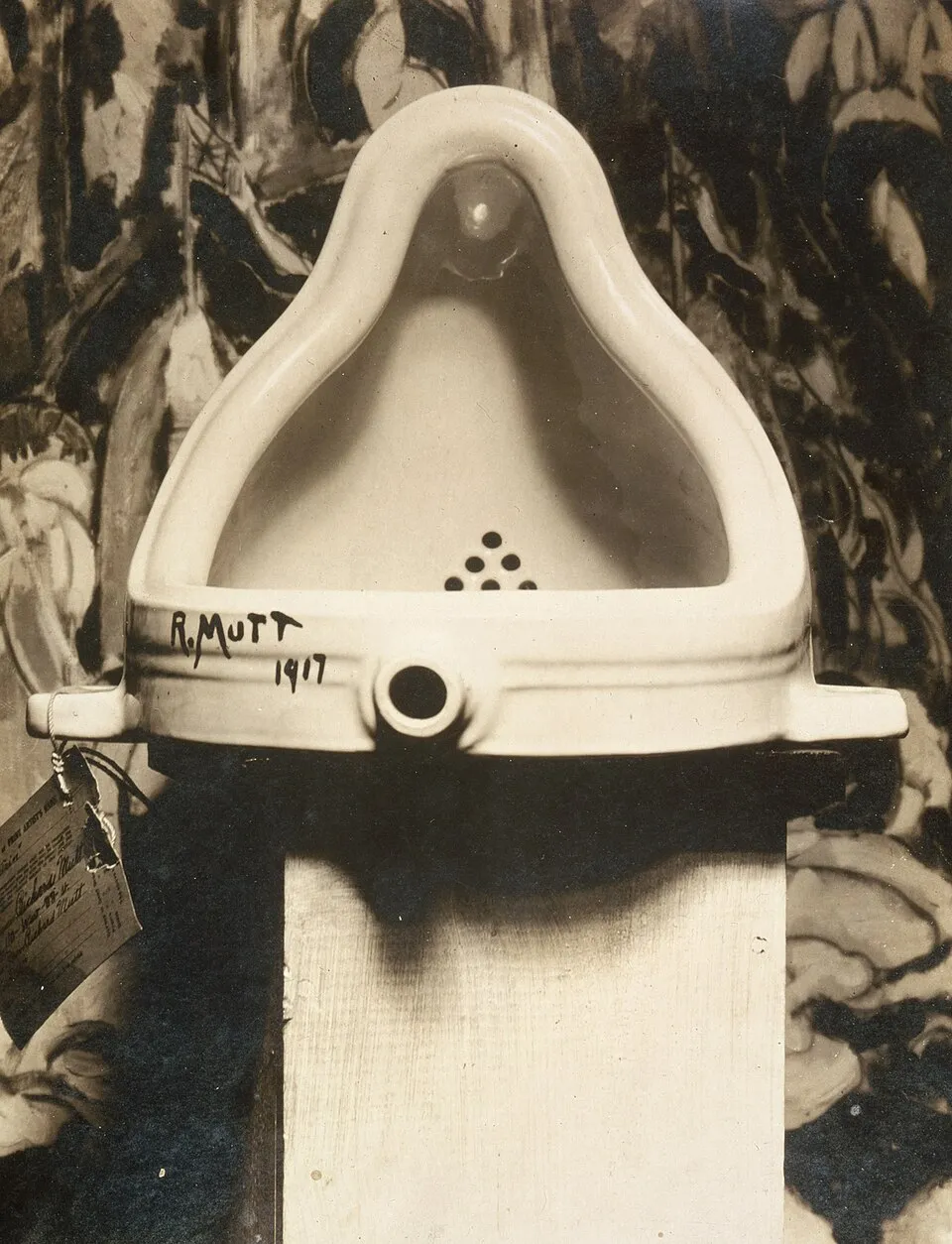
Marcel Duchamp, "Fountain" (1917), photograph by Alfred Stieglitz. "The art-historical movement that intentionally tested its boundaries: Appropriation Art" (Sanbuk). Duchamp's readymade, a urinal signed "R. Mutt," was the first appropriation artwork. Image via Wikimedia Commons
The Landmark Cases: Warhol, Cariou, Rogers
Rogers v. Koons (1992): Art Rogers, a photographer, sued Jeff Koons for creating a sculpture based on Rogers's photograph "Puppies." The Second Circuit ruled for Rogers. Koons's sculpture was not fair use because it was a "deliberate copying" of the photograph for commercial purposes, and the sculpture served the same artistic purpose as the photograph. Koons was ordered to pay damages and to destroy the remaining copies of the sculpture.
Cariou v. Prince (2013): Patrick Cariou, a photographer, sued Richard Prince for using Cariou's photographs of Rastafarians in a series of paintings. The Second Circuit ruled that 25 of Prince's 30 paintings were fair use because they had a "different character" and "new expression." Five were not, because they did not sufficiently transform the original photographs. The ruling was seen as a victory for appropriation art, but the five paintings that were not protected showed the limits of the defense.
Andy Warhol Foundation v. Goldsmith (2023): the Supreme Court ruled 7-2 that Warhol's "Orange Prince" was not fair use. The Court focused on the commercial licensing context. Both Goldsmith's photograph and Warhol's silkscreen were used for magazine portraits of Prince. "The Court's focus on the commercial licensing context narrowed the fair use defense." The ruling does not overturn Cariou. It narrows it. The key question is whether the secondary use serves the same purpose as the original. If it does, fair use is harder to claim. For more on the cultural stakes, see our guide to art and society.
What Artists Can Actually Do: Practical Guidance
Use public domain works freely. Works published before 1931, generally, are in the public domain. You can copy, transform, and sell them without permission. Wikimedia Commons, the Met's Open Access program, and the National Gallery of Art's open access program are good sources. The Met's Open Access program provides nearly 500,000 images that you can use freely.
Get permission. If you want to use a copyrighted work, the safest approach is to get permission from the copyright holder. This may involve paying a licensing fee, but it eliminates the risk of a lawsuit. A license is cheaper than a defense.
Transform, do not copy. Fair use is more likely to apply when the secondary use is transformative, when it adds new meaning, new expression, or new purpose. A direct copy is less likely to be fair use than a work that uses the original as raw material for something different. "Artists freely admit being influenced by other artists, but you should be aware of the distinction between copyright violation and creative appropriation," as LegalZoom puts it.
Avoid commercial uses that compete with the original. The Warhol ruling makes clear that when the secondary use is commercial and serves the same purpose as the original, fair use is harder to claim. If you are using a photograph to make another photograph, or a painting that serves the same function as the photograph, be cautious. When in doubt, consult a lawyer. Copyright law is fact-specific and inconsistent. This guide is not legal advice. If you are making art that uses copyrighted material, consult an intellectual property lawyer. For more on building the foundation to make these judgments, see our guide to art for beginners.
Final Thoughts
In 2023, the Supreme Court ruled 7-2 in Andy Warhol Foundation v. Goldsmith that Warhol's "Orange Prince" was not fair use. "Commentators in the art world feared for the future of appropriation art." "Fair use, the unlicensed use of material copyrighted by another, is the most powerful and misunderstood legal doctrine in American art law." Copyright lasts for life plus 70 years. Fair use has four factors: purpose, nature, amount, market effect. Rogers v. Koons (1992): Koons lost, "deliberate copying" for commercial purposes. Cariou v. Prince (2013): Prince mostly won, 25 of 30 paintings were fair use, 5 were not. Warhol v. Goldsmith (2023): the Warhol Foundation lost, "the Court's focus on the commercial licensing context narrowed the fair use defense." "Andy Warhol's art is in many ways an art of appropriation. He turned commercial imagery into high art." Practical guidance: use public domain works, get permission, transform do not copy, avoid commercial uses that compete with the original, consult a lawyer. "Fair use is a defense, not a right."
If you are an artist who uses existing images, photographs, paintings, advertisements, Instagram posts, in your work, understand the legal landscape. Read the Warhol v. Goldsmith ruling, available on the Supreme Court's website. Read the four factors of fair use. Look at your work and ask: am I transforming the original, or am I copying it? Am I using it for the same purpose as the original, or for a different purpose? Is my use commercial? Does it compete with the original? If the answers make you nervous, get permission or use public domain material. The Met's Open Access program at metmuseum.org/open-access provides nearly 500,000 images that you can use freely. Wikimedia Commons provides millions more. The public domain is vast, and it is the safest place to start. Copyright in art is not a barrier to creativity. It is a framework, imperfect, inconsistent, and evolving, that balances the rights of creators with the freedom of artists to build on what came before. The Warhol ruling narrowed the framework. It did not close it. The question is not whether you can use existing images. The question is how, and the answer requires care, knowledge, and sometimes a lawyer. For more on engaging critically with what you see, see our guides to how to look at art and teaching yourself art history.


