The most visited single-artist museum in the world is not the Louvre's Mona Lisa room or the Van Gogh Museum. By annual attendance it is a digital art installation in Tokyo run by a collective called teamLab, which the Guinness World Records recognized in 2021 as the world's most visited museum dedicated to a single art group. That fact tells you something true about Tokyo: its art world does not behave like the art worlds of Paris or New York, and it never has.
Tokyo is the largest metropolitan economy on earth, and its art ecosystem is correspondingly enormous but structurally different. There is no single center. Edo-period craft workshops, a manga and anime visual culture that most Western art schools still do not know how to teach, world-class public museums, two permanent immersive digital museums, and gallery districts scattered across Roppongi, Ginza, and Kiyosumi-Shirakawa all coexist without a hierarchy. This guide covers how Tokyo's art world works: the Edo foundation, the craft tradition, the manga pipeline, the museums, the market, and how to navigate it. For the deeper background on the tradition this all rests on, see our guide to Japanese art, ukiyo-e, and the aesthetic of ma.
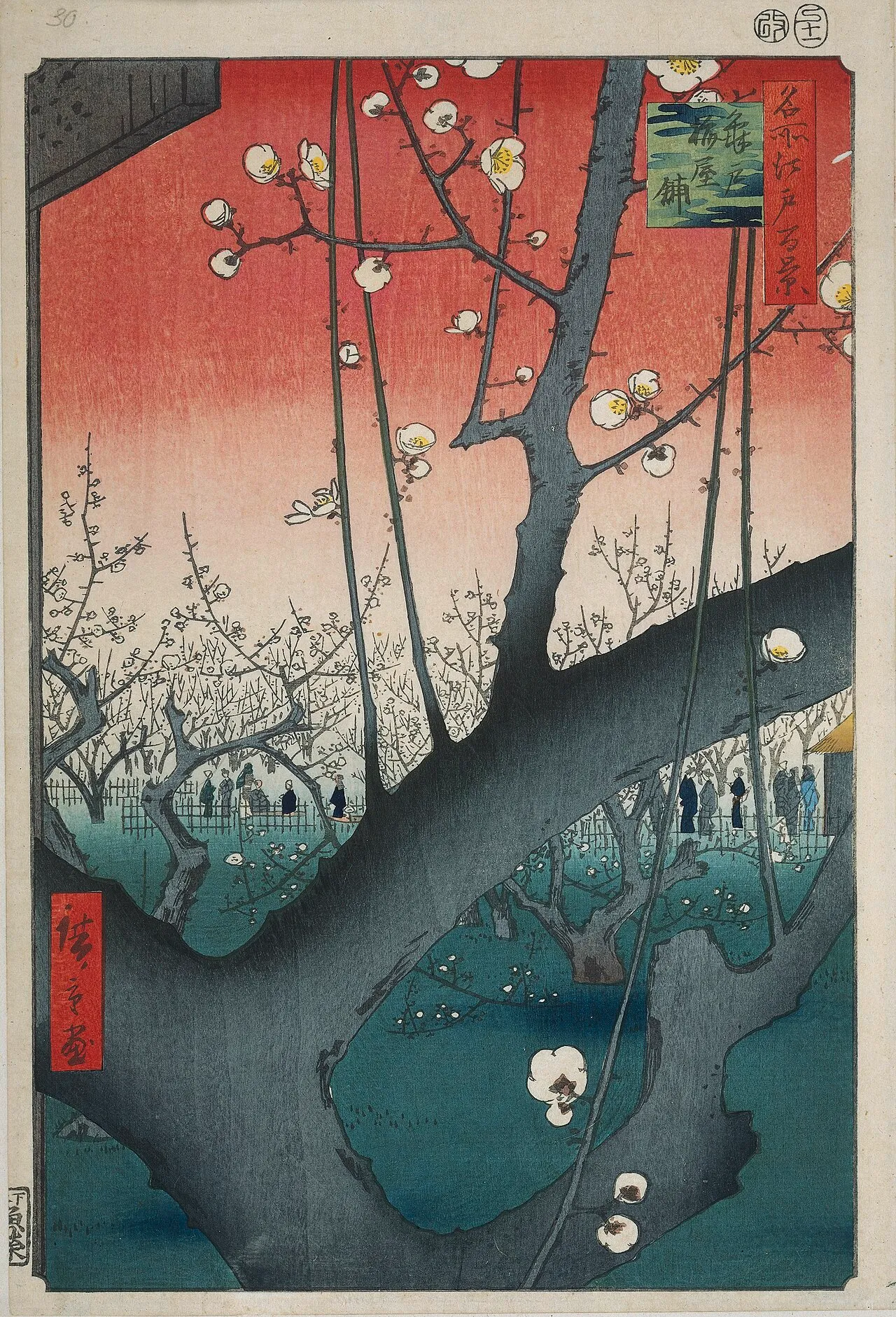
Utagawa Hiroshige, "Plum Garden at Kameido" (1857), from One Hundred Famous Views of Edo. Kameido is in present-day Koto ward, Tokyo. Hiroshige's Edo prints are among the earliest mass-media images of the city, sold cheaply to ordinary residents. Van Gogh later copied this exact print in oil paint. Image via Wikimedia Commons.
The Edo Foundation
Tokyo's art history starts with Edo, the city's name before 1868. When the Tokugawa shogunate made Edo its seat of power in 1603, it became within a century the largest city on earth, with around one million residents by the early 1700s. That population supported a commercial art market built around ukiyo-e, the woodblock prints sold for the price of a bowl of noodles. Hokusai, Hiroshige, and Utamaro were not luxury artists. They were mass-market producers working for publishers in the districts around Nihonbashi.
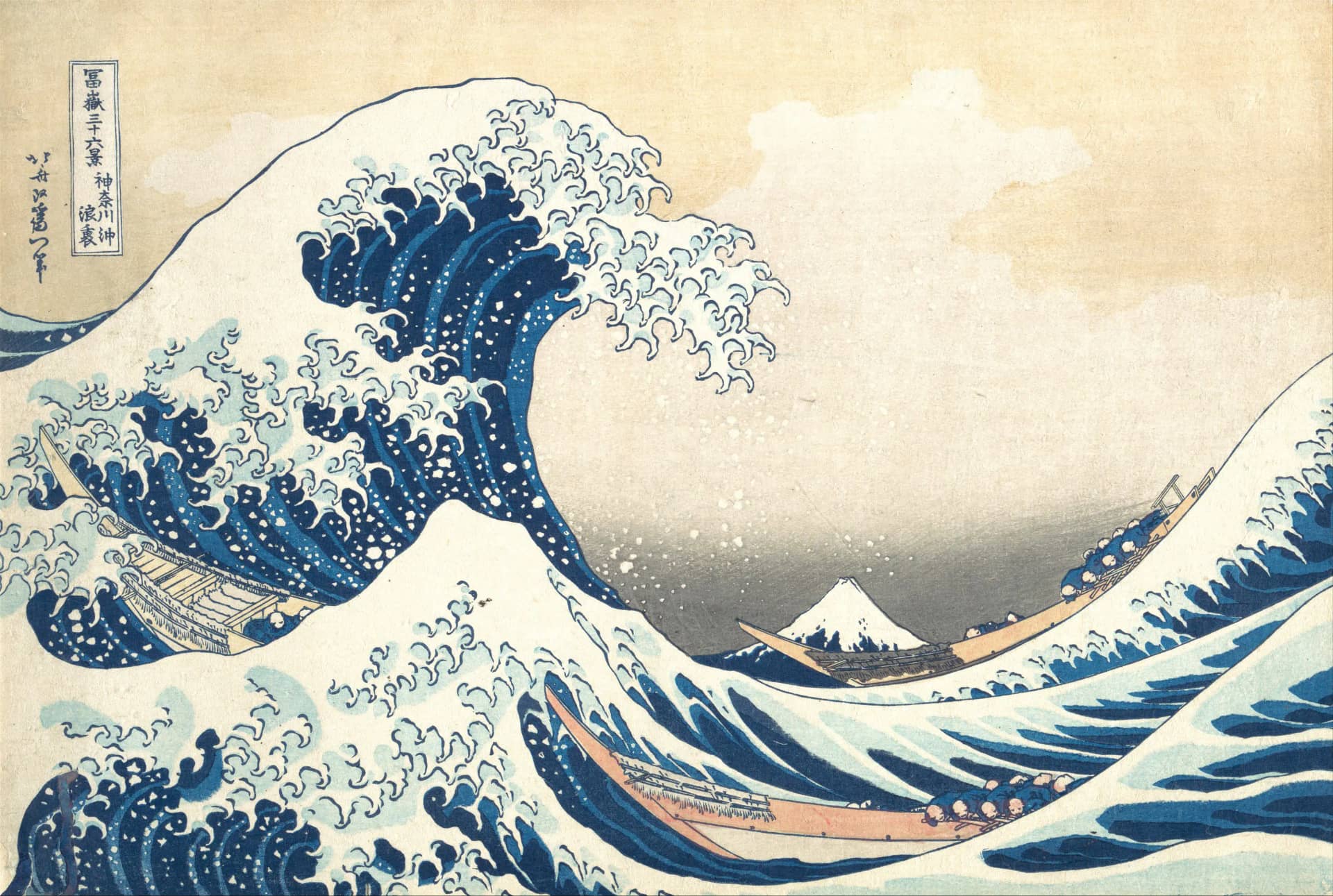
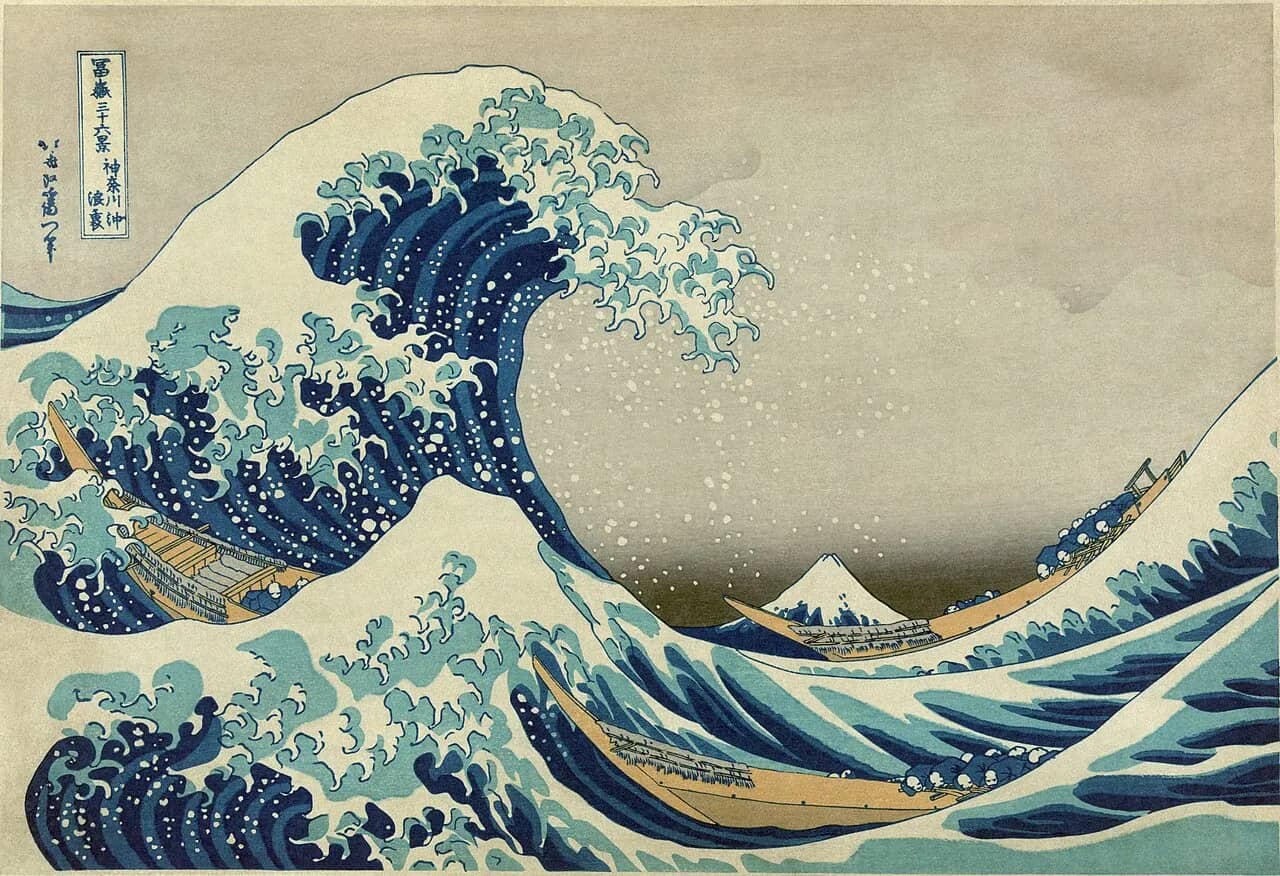
This matters because it established a pattern that still defines the city: art in Tokyo has always been a popular medium rather than an elite one. The ukiyo-e system, where a publisher commissioned a designer, a carver, a printer, and a distributor, produced a commercial pipeline that looks a lot like the manga industry that replaced it. For more on the print tradition, see our posts on Hokusai, the Great Wave, and the Japanese print masters and woodblock printing, Japanese tradition and contemporary practice.
Craft as Living Art
Tokyo's second foundation is craft. The Edo-period guild system produced specialized traditions that survive as working industries: urushi lacquerware, Edo kiriko cut glass, hand-dyed kimono textiles under the collective name Tokyo some-kogei, and the gold leaf and metalwork trades centered in the eastern shitamachi districts. Japan's government designates the masters of these trades as holders of Important Intangible Cultural Properties, known informally as Living National Treasures.
The distinction between craft and fine art that organizes Western art history barely applies in Tokyo. A contemporary urushi artist might exhibit in a Ginza gallery one season and a department store the next, and nobody treats the second venue as a demotion. Department stores themselves function as exhibition venues. The art floors of Takashimaya in Nihonbashi and Isetan in Shinjuku run serious curated shows, a hangover from the postwar decades when department stores hosted Japan's most ambitious exhibitions.
Manga and the Visual Culture Pipeline
The third foundation is manga. The word itself is old; Hokusai used it for his sketchbook volumes, the Hokusai Manga, in 1814. The modern industry dates to Osamu Tezuka's postwar work and to the rental-manga market of the 1950s and 1960s in Osaka and Tokyo. Today manga generates roughly five billion dollars in annual domestic revenue and functions as the city's largest training ground for visual storytelling. A generation of contemporary artists, most famously Takashi Murakami, built explicitly on this substrate. Murakami's Superflat theory argued that the flatness of ukiyo-e persisted through manga and anime into contemporary art, collapsing the high-low distinction entirely.
You can see the pipeline directly at the Ghibli Museum in Mitaka, which requires advance tickets and still sells out, at the Suginami Animation Museum in the ward that houses most of the anime studios, and across Akihabara and Nakano Broadway. For the artists who carried this visual language into the gallery system, see our post on Yayoi Kusama's immersive installations, which previews where this section ends up.
The Museums
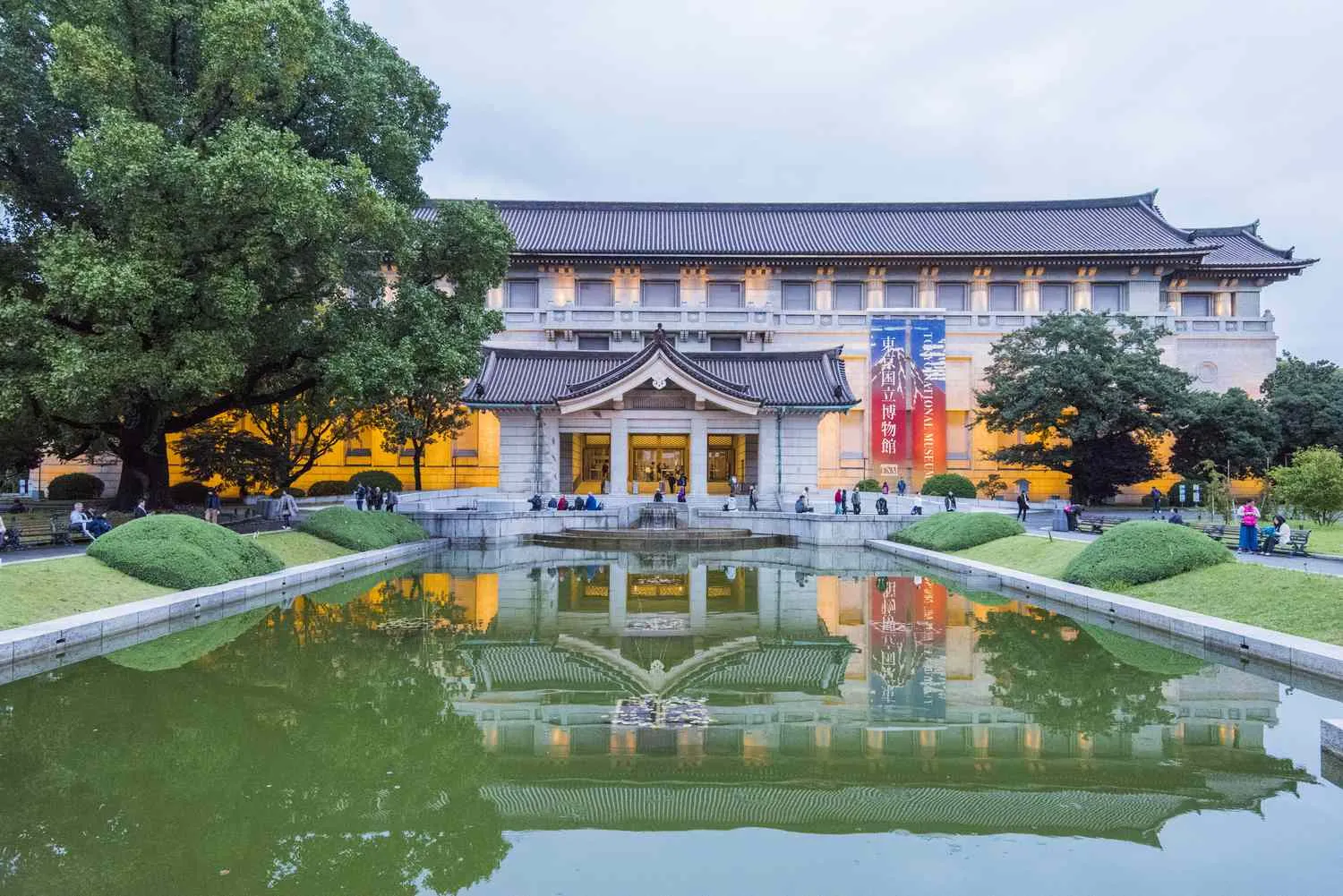
Tokyo's museum geography centers on two zones. Ueno Park holds the Tokyo National Museum, founded in 1872 and the oldest and largest art museum in Japan, whose Honkan gallery displays Japanese art across all periods. Roppongi holds the "Art Triangle Roppongi": the Mori Art Museum, the National Art Center, and the Suntory Museum of Art.
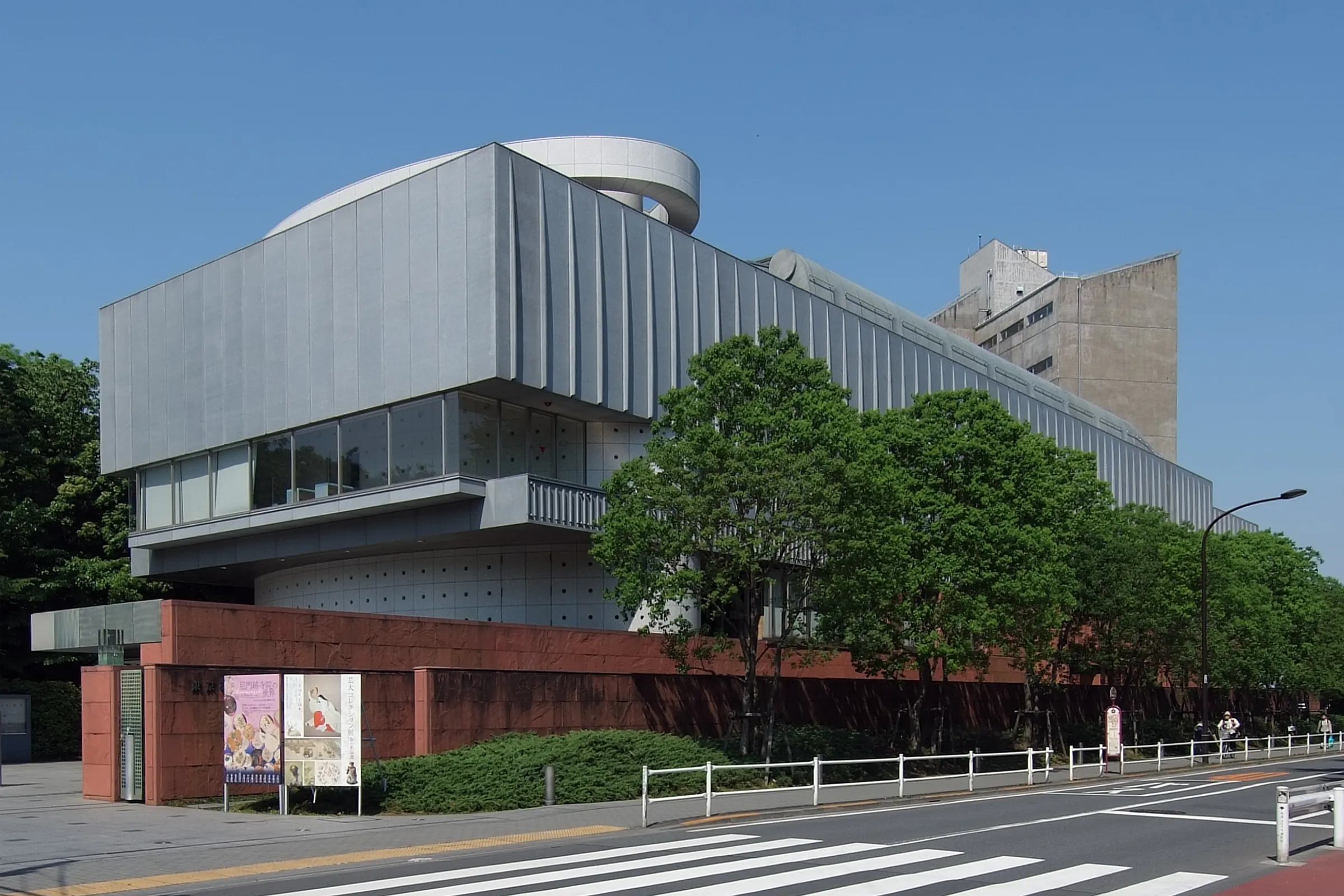
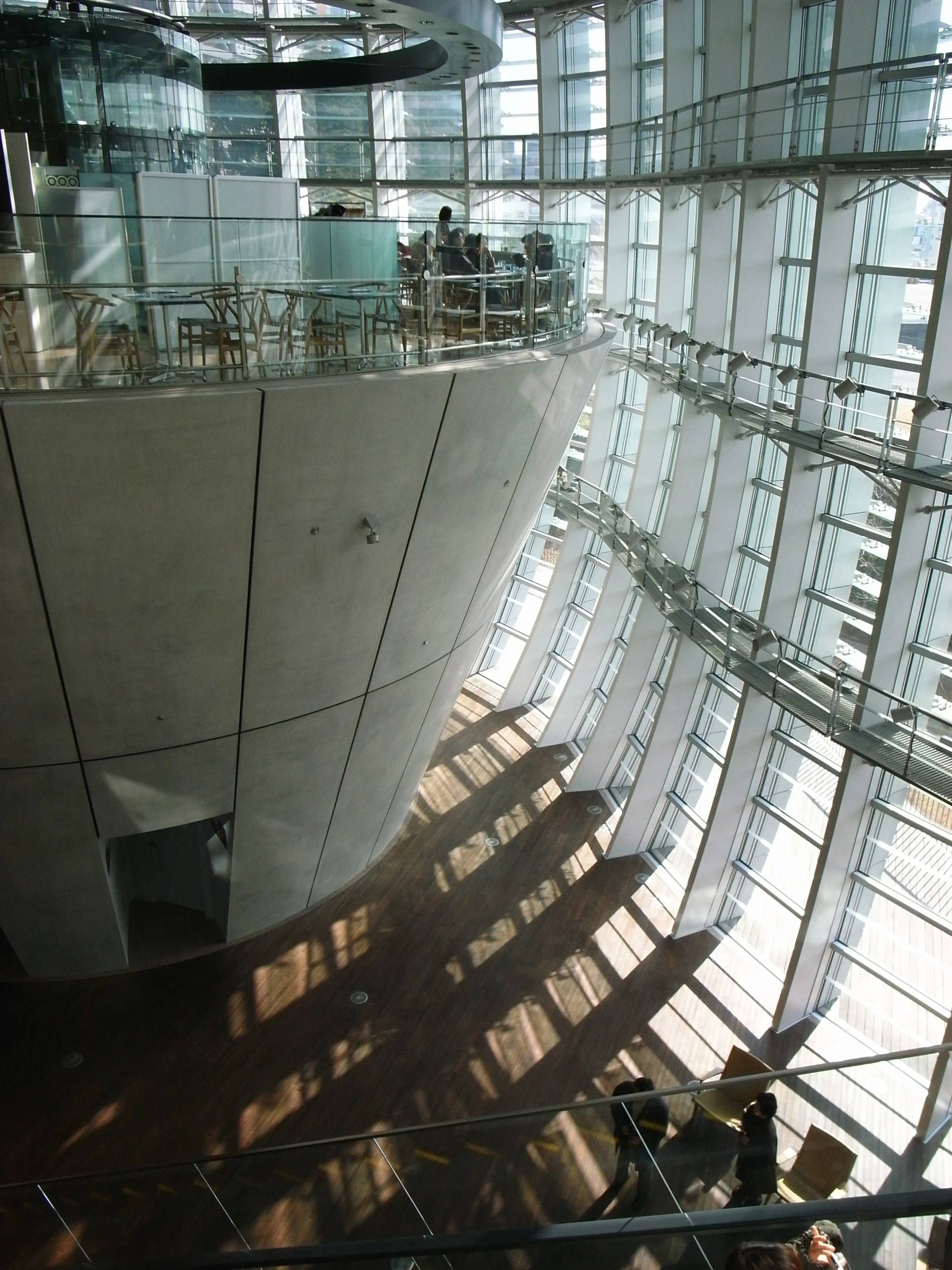
The Mori Art Museum opened in 2003 on the 53rd floor of the Roppongi Hills Mori Tower. It has no permanent collection and focuses on major international contemporary exhibitions, staying open until 10pm most nights, which makes it the rare museum designed for after-work visits. The National Art Center, designed by Kisho Kurokawa and opened in 2007 with a wave-shaped glass facade, is one of the largest exhibition spaces in Japan. It also keeps no permanent collection; it is a venue for rotating exhibitions and the sprawling shows of the art association societies.
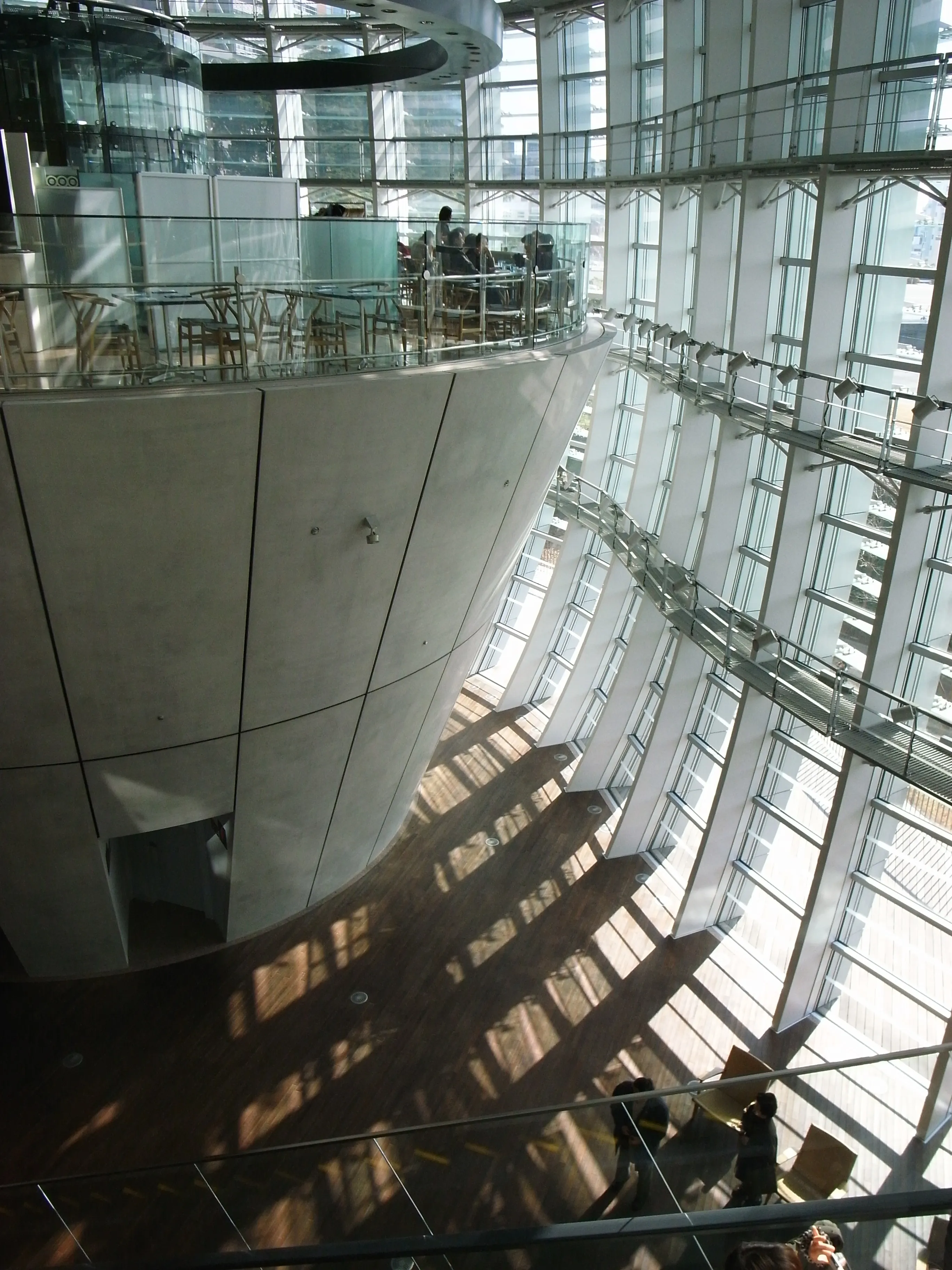
The National Art Center, Tokyo, designed by Kisho Kurokawa and opened in 2007. Its undulating glass facade fronts one of Japan's largest exhibition spaces. The center holds no permanent collection; it functions purely as a venue for rotating exhibitions, including the blockbuster loan shows that draw the country's biggest museum audiences. Image via Wikimedia Commons.
Two smaller museums matter disproportionately. The Yayoi Kusama Museum in Shinjuku, opened in 2017, shows the artist's work in rotating displays and requires timed advance tickets. The Artizon Museum near Tokyo Station, the former Bridgestone Museum of Art, reopened in 2020 and holds one of the strongest Impressionist and modern collections in Japan. For the artist whose career connects Tokyo's traditional craft economy to its contemporary museum infrastructure, our Hokusai guide is the obvious companion read.
teamLab and the Immersive Boom
teamLab, founded in 2001 by Toshiyuki Inoko and a group of University of Tokyo students, is the phenomenon Tokyo's art world is now known for internationally. The collective's installations use projection, sensors, and responsive software to create rooms where the artwork changes as visitors move through it. Two permanent Tokyo museums currently operate. teamLab Borderless reopened in February 2024 at Azabudai Hills near Roppongi as a "museum without a map," a permanent installation where works migrate between rooms. teamLab Planets in Toyosu, where visitors wade barefoot through knee-deep water, is scheduled to run until the end of 2027. Adult admission runs around 3,400 to 3,800 yen depending on the venue and date, and both sell out in advance.
The teamLab model solved a problem other art cities have not: how to get mass audiences to pay museum prices for contemporary art. Some critics dismiss it as an Instagram factory, but the technical achievement is real, and the revenue model, ticketing immersive experiences rather than selling objects, is being copied worldwide. It sits naturally beside Tokyo's older strengths in installation and sensory art; for context on the genre, see our guide to installation art as experience.
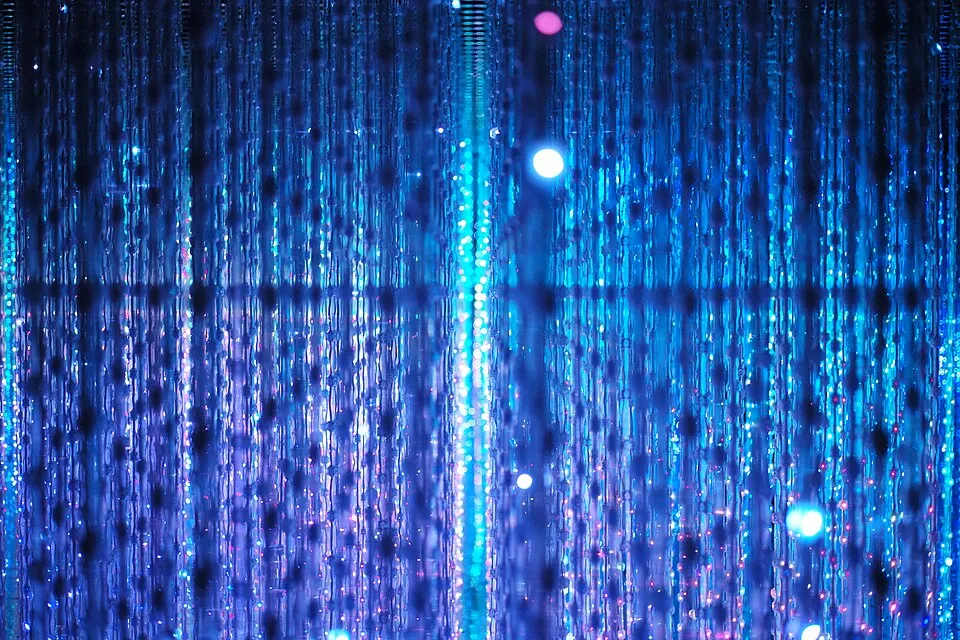
A teamLab immersive installation. The collective's Tokyo museums, Borderless at Azabudai Hills and Planets at Toyosu, are among the most visited art venues in the world. Artworks respond to visitors' bodies and migrate between rooms with no fixed route. Image via Wikimedia Commons.
Galleries, Fairs, and Art Week Tokyo
Tokyo's commercial gallery scene is smaller than its museum scene, but it has grown significantly since 2020. The main clusters are Roppongi, where Pace Gallery opened a major space in Azabudai Hills in 2024 and Perrotin has operated since 2017; Ginza, the oldest gallery district; Tennozu Isle near Shinagawa, home to the TERRADA warehouse-gallery complex; and Kiyosumi-Shirakawa, where former industrial buildings near the Museum of Contemporary Art Tokyo hold younger galleries like Taka Ishii's second space.
Two events organize the market calendar. Art Fair Tokyo, founded in 1992 and held each spring at the Tokyo International Forum, is the oldest art fair in Asia. Art Week Tokyo, launched in 2021, takes a different approach: each November it links more than 50 participating museums, galleries, and artist-run spaces with free shuttle buses, which is a practical fix for the same sprawl problem that makes Los Angeles hard to navigate. For how that western city solved its own geography problem, see our post on Los Angeles as an art city.
What Makes Tokyo Different
The honest summary is that Tokyo never developed the Western division between high art and everything else. Ukiyo-e was commercial printing. Manga is commercial publishing. Craft is commerce. Department stores are museums. teamLab is a theme-park-priced museum. The result is an art ecosystem that puzzles Western critics because it does not sort into their categories, and that is precisely its strength. The art is embedded in how the city entertains and educates itself, not sequestered in institutions that visitors have to be taught to enter.
The practical consequence for visitors is that Tokyo rewards mixing categories. Do the Mori Art Museum and the Tokyo National Museum, but also go to Nakano Broadway, a craft shop in the shitamachi, and a teamLab museum, because the connections between them are the point. For how to get more from museum visits generally, see our guide to visiting an art museum.
Final Thoughts
Tokyo's art world works because it never separated making from selling, or tradition from technology. The same city that preserves Edo kiriko cut glass in working studios also runs the world's most visited immersive art museum. The same visual culture that produced Hokusai's cheap woodblock prints produces manga sold by the million and Superflat theory sold at auction. Nothing is cordoned off.
Start at the Mori Art Museum for the major international shows and the view from the 53rd floor, then cross to the National Art Center for whatever blockbuster is running. Spend a morning in Ueno at the Tokyo National Museum. Book teamLab Borderless well in advance, and if you are there in November, use the Art Week Tokyo shuttles to reach the smaller galleries you would never find alone. For the classical foundation under all of it, read our guide to Japanese art, and for the print tradition specifically, the Great Wave and Japanese prints.
Frequently Asked Questions
What is the best art museum to visit in Tokyo?
It depends on what you want. The Mori Art Museum is best for major contemporary exhibitions, the Tokyo National Museum for classical Japanese art, and teamLab Borderless for an immersive digital experience. The National Art Center hosts rotating blockbuster shows with no permanent collection.
Is teamLab Borderless still open in Tokyo?
Yes. teamLab Borderless reopened in February 2024 at Azabudai Hills as a permanent museum after closing its original Odaiba location in 2022. teamLab Planets in Toyosu is scheduled to remain open until the end of 2027.
What is Art Week Tokyo?
Art Week Tokyo is an annual event held each November since 2021 that links more than 50 museums, galleries, and alternative art spaces across the city with free shuttle buses. It was created to make Tokyo's scattered art scene easier to navigate.
Where are the main gallery districts in Tokyo?
Contemporary galleries cluster in Roppongi, Ginza, Tennozu Isle, and the warehouse district of Kiyosumi-Shirakawa. Roppongi also has the highest concentration of museums, including the Mori Art Museum and the National Art Center.