
"An appraisal is an opinion of value. An appraisal can also be defined as the act or process of developing a thoroughly researched and well supported opinion of value by an impartial and properly qualified individual," according to ASA-Hudson, via FindArtInfo. That sounds simple. It is not. The process of determining what a work of art is worth involves provenance research, condition examination, comparable sales analysis, and a written report that complies with the Uniform Standards of Professional Appraisal Practice, or USPAP. "The current edition of the Uniform Standards of Professional Appraisal Practice is the 2024 Edition USPAP, which became effective on January 1, 2024. Unlike prior editions, this version does not have a fixed expiration date," according to the International Society of Appraisers (ISA).
A certified appraisal costs $200 to $500 per item, according to FindArtInfo. The IRS requires a "qualified appraisal" for non-cash charitable deductions over $5,000, and "art donations valued at $20,000 or more" require "a complete signed appraisal report" attached to the tax return, as AppraiseItNow explains. "Most insurers require a written appraisal for fine art scheduled on a policy, typically for works valued over $5,000 to $10,000." "Probate courts require documented fair market value appraisals for collections included in an estate. IRS Form 706 requires qualified appraisals for taxable estates." An appraisal is not a guess. It is a structured, documented, defensible opinion, one that can be submitted to insurers, the IRS, probate courts, and auction houses. The question is not just what your art is worth. The question is who says so, how they determined it, and whether their opinion will hold up when it matters. For more on protecting what you own, see our guide to art insurance.
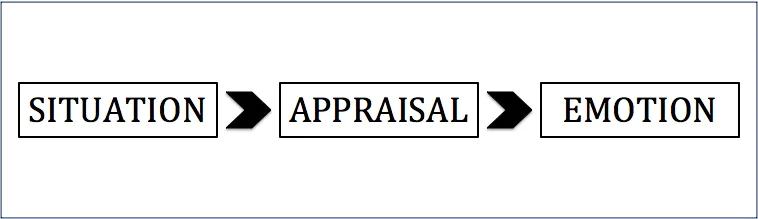
Art appraisal. "An appraisal is an opinion of value. An appraisal can also be defined as the act or process of developing a thoroughly researched and well supported opinion of value by an impartial and properly qualified individual" (ASA-Hudson). "The opinion can be expressed as a specific amount, a range of values, or in relationship to a previous value opinion" (ASA-Hudson). Image via Wikimedia Commons
Types of Appraisal: Insurance, Estate, Donation, Sale
"Most insurers require a written appraisal for fine art scheduled on a policy, typically for works valued over $5,000 to $10,000. Replacement value appraisals are used here." "Insurance replacement value is almost always higher than fair market value. If you are insuring a collection, use replacement value appraisals, not auction comparable estimates, to ensure adequate coverage." Underinsuring is the most common mistake collectors make, and it surfaces only when there is a loss.
"Probate courts require documented fair market value appraisals for collections included in an estate. IRS Form 706 requires qualified appraisals for taxable estates." For donations, "the IRS requires a qualified appraisal for non-cash charitable deductions over $5,000 (Form 8283). The appraiser must be independent of the donor and donee." "Art donations valued at $20,000 or more (requires complete signed appraisal attached)." "Donations of more than $500,000 for any single item or group of similar items (must attach complete signed appraisal report)." For sale preparation, "sale preparation requires a current market estimate. Clarify your purpose before contacting appraisers."
"The type of appraisal you need depends entirely on its purpose. Always specify the intended use when contacting an appraiser, this determines the methodology and the value standard applied." The same painting can have three different appraised values in the same week: a high replacement value for insurance, a lower fair market value for an estate, and a current market estimate for a sale. None of them is wrong. They answer different questions. For more on how the market sets those numbers, see our guide to auction houses and valuation.
The Qualified Appraiser: ASA, AAA, ISA
"The most important factor in choosing an appraiser is their credentials and specialisation. Look for membership in one of these recognised professional organisations." The American Society of Appraisers (ASA) is "one of the oldest and most respected appraisal organisations. ASA members must pass exams, demonstrate experience, and comply with USPAP standards." The Appraisers Association of America (AAA) "focuses specifically on fine art, antiques, and decorative arts. Members are tested on both appraisal methodology and art history knowledge." The International Society of Appraisers (ISA) is a "large organisation covering personal property appraisals including fine art. Members must complete coursework, pass exams, and submit appraisals for peer review."
The red flags are explicit. "Red flags to avoid: Any appraiser who charges a percentage of the appraised value (an USPAP ethics violation), who also offers to buy the work they are appraising, or who cannot provide verifiable credentials and references." An appraiser who takes a percentage of the value has an incentive to inflate it. An appraiser who offers to buy the work has an incentive to deflate it. Both are conflicts of interest, and both violate USPAP ethics. A qualified appraiser is not just someone who knows about art. They are someone who has been trained, tested, and credentialed in appraisal methodology, and who is bound by USPAP ethics rules. For more on engaging with what you see, see our guide to how to look at art.
The Appraisal Process: Interview, Inspection, Research, Report
The process starts with the interview. "First, your appraiser will interview you regarding the reason you require an appraisal. Many people consult an appraiser saying, 'I just want to know what it is worth.' The appraiser will explain the many levels of 'worth' or value." "Your appraiser must know who the intended users are and the intended use of the appraisal, in order to correctly develop an appropriate appraisal." Without a defined purpose, the appraisal has no standard to meet.
Then comes the scope of work. "The Scope of Work, which is the type and extent of research and analyses required to prepare the appraisal, is determined by the appraiser at this time. In each appraisal, an appraiser must identify the problem to be solved, determine and perform the scope of work necessary to develop credible assignment results, and disclose the scope of work in the report." The inspection follows. "The client and appraiser will schedule a date for an on-site inspection. The client may provide the appraiser with information relevant to the objects being appraised. On-site, each object is inspected, other information is gathered and photographs taken to fully document the condition and appearance of the object."
The research is where the value is built. "The sales comparison approach utilizes recent sales of similar items, and is accomplished by researching all relevant and available sales records and asking prices. The appraiser analyzes comparable sale characteristics that include age of the object, material or medium, style, maker, manufacturer, artist, quality, rarity, exhibition and publication history, and the market in which they were sold." The report closes the loop. "A formal appraisal must include: appraiser credentials, type of value appraised, full physical description, comparable sales used, and the appraiser's dated signature. Verify completeness before submission to insurers or the IRS." "A credible appraisal report clearly identifies the objects appraised, the scope of work performed by the appraiser, the client and other intended users, and the intended use of the report. The appraisal report must also include the definition of value (e.g., fair market or replacement value), the effective date, and the subject object's relevant characteristics." For more on who profits in this trade, see our guide to the economics of the art world.

Rembrandt's "The Night Watch" during Operation Night Watch, examined with high-resolution digital photography, X-ray fluorescence analysis and spectroscopy. "On-site, each object is inspected, other information is gathered and photographs taken to fully document the condition and appearance of the object" (ASA-Hudson). Image via Wikimedia Commons
USPAP Compliance: The 2024 Edition
"The current edition of the Uniform Standards of Professional Appraisal Practice is the 2024 Edition USPAP, which became effective on January 1, 2024. Unlike prior editions, this version does not have a fixed expiration date. Instead, USPAP now operates under an open-ended model in which the Standards remain in effect until the Appraisal Standards Board (ASB) adopts and publishes revisions with a new effective date." The education requirement persists. "USPAP education requirements remain on a biennial schedule. Appraisers are still required to complete the 7-Hour USPAP Update course every two calendar years to maintain compliance."
The certification should state compliance with the current version. "Your USPAP Certification should state compliance with the current version (2024 Edition) of the Uniform Standards of Professional Appraisal Practice." The ethics rules are the backbone. "Professional appraisers are trained to deflect any attempt to influence the appraisal or opinion of value, and to remain independent, impartial and objective." "An appraiser must: (1) be competent to perform the assignment; (2) acquire the necessary competency to perform the assignment; or (3) decline or withdraw from the assignment."
USPAP is not a law. It is a set of standards. "USPAP does not establish who or which assignments must comply. Neither The Appraisal Foundation nor its Appraisal Standards Board is a government entity with the power to make, judge, or enforce law. An appraiser must comply with USPAP when either the service or the appraiser is required by law, regulation, or agreement with the client." But in practice, USPAP compliance is required by insurers, the IRS, and courts, which means it is required in any appraisal that matters. For more on building the knowledge to judge value, see our guide to art for beginners.
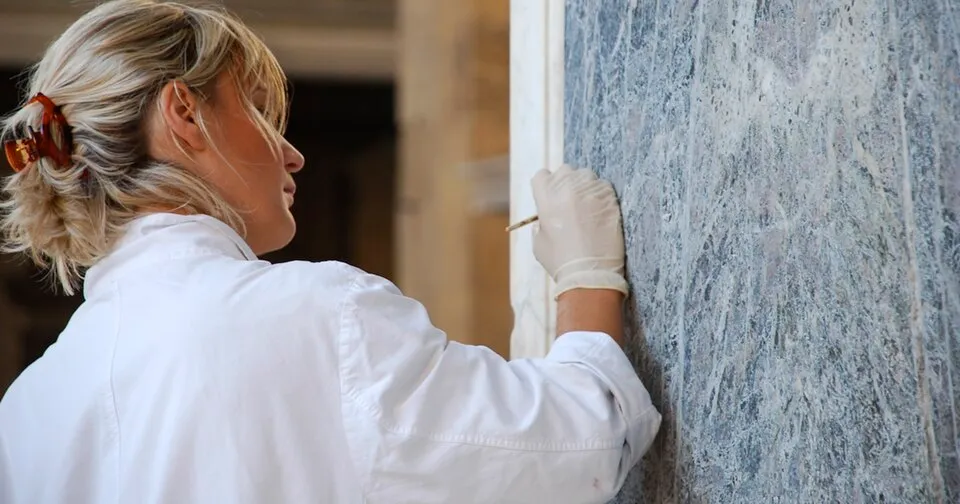
A restorer at work. "Professional appraisers are trained to deflect any attempt to influence the appraisal or opinion of value, and to remain independent, impartial and objective" (ASA-Hudson). USPAP ethics require the appraiser to remain independent of the value they assign. Image via Wikimedia Commons
The Three Approaches to Value
The cost approach "reports the present" cost of reproducing or replacing the property. This approach is most relevant for insurance appraisals, where the question is what it would cost to replace this work. The sales comparison approach "utilizes recent sales of similar items, and is accomplished by researching all relevant and available sales records and asking prices. The appraiser analyzes comparable sale characteristics that include age of the object, material or medium, style, maker, manufacturer, artist, quality, rarity, exhibition and publication history, and the market in which they were sold." This is the most common approach for fine art appraisal. The income approach is relevant for works that generate income, for example works that are licensed for reproduction. It is rarely used for individual fine art appraisals but can be relevant for large collections or investment-grade art.
"After data collection and analysis is complete, the appraiser determines the best approach to value each object." The choice of approach depends on the type of appraisal, the type of property, and the available data. For most fine art, the sales comparison approach is the primary method. The comparables are the evidence, and the report is where the evidence gets weighed. For more on the works that anchor these valuations, see our guide to famous paintings.
IRS Requirements: Form 8283 and Qualified Appraisals
"Form 8283, used to report noncash donations exceeding $500, requires accurate valuations, detailed documentation, and compliance with strict guidelines to avoid disallowed deductions or potential audits." "If claiming a deduction exceeding $5,000, then the donor will need a 'qualified appraisal' and a signature from a 'qualified appraiser' in Section B of the IRS Form 8283." The thresholds escalate with the value. "Property donations valued at more than $5,000. Art donations valued at $20,000 or more (must attach complete signed appraisal report). Donations of more than $500,000 for any single item or group of similar items (must attach complete signed appraisal report)."
The timing is fixed. "The appraisal must be performed no earlier than 60 days before the date of the donation and no later than the due date (including extensions) of the tax return on which your client first claims the deduction." The standards are specific. "A qualified appraisal must meet specific IRS standards under Treasury Regulations section 1.170A-17(a) and (b). The appraisal must: Be prepared according to generally accepted appraisal standards, following the substance and principles of the Uniform Standards of Professional Appraisal Practice (USPAP)." The IRS does not trust opinions. It trusts documented, USPAP-compliant appraisals prepared by qualified appraisers. If you are donating art and claiming a tax deduction, the appraisal is not optional. It is a legal requirement. And if the appraisal is wrong, the deduction can be disallowed, and the donor can face penalties. For more on the print side of valuation, see our guide to open vs limited edition prints.
Final Thoughts
"An appraisal is an opinion of value, the act or process of developing a thoroughly researched and well supported opinion of value by an impartial and properly qualified individual." Types: insurance ("replacement value appraisals"), estate ("fair market value appraisals," "IRS Form 706"), donation ("qualified appraisal for non-cash charitable deductions over $5,000," "Form 8283," "Art donations valued at $20,000 or more"), sale ("current market estimate"). Credentials: ASA ("one of the oldest and most respected"), AAA ("focuses specifically on fine art"), ISA ("members must complete coursework, pass exams, and submit appraisals for peer review"). Red flags: "Any appraiser who charges a percentage of the appraised value (an USPAP ethics violation)." Process: interview, scope of work, on-site inspection, research, report. USPAP: "the 2024 Edition USPAP, which became effective on January 1, 2024, does not have a fixed expiration date." "7-Hour USPAP Update course every two calendar years." Three approaches: cost, sales comparison, income. IRS: "$5,000" threshold, "$20,000" art threshold, "$500,000" complete report threshold, "60 days before" timing. Cost: "$200 to $500" per item. "Insurance replacement value is almost always higher than fair market value." "Professional appraisers are trained to deflect any attempt to influence the appraisal or opinion of value, and to remain independent, impartial and objective."
If you own art worth more than $5,000, whether for insurance, estate planning, or donation, get a certified appraisal. Find a qualified appraiser through the ASA (appraisers.org), AAA (appraisersassoc.org), or ISA (isa-appraisers.org) directories. Look for someone who specializes in your type of art, Old Masters, contemporary, photography, prints, Asian art. Confirm USPAP compliance. Confirm that they charge a flat fee or hourly rate, not a percentage of the appraised value. "Gather provenance documents, purchase receipts, exhibition labels, certificates of authenticity, previous appraisals, and condition reports. Provide clear photographs of front, back, signature, and any damage." "A formal appraisal must include: appraiser credentials, type of value appraised, full physical description, comparable sales used, and the appraiser's dated signature." An appraisal is not a guess. It is a structured, documented, defensible opinion, one that can be submitted to insurers, the IRS, probate courts, and auction houses. The question is not just what your art is worth. The question is who says so, how they determined it, and whether their opinion will hold up when it matters. Now you know.


