
The Hand in Art: Gesture, Symbol, and What Hands Communicate in Images
Dürer's Praying Hands are the most famous hands in art. Buddhist mudras encode enlightenment. Michelangelo's Adam hand reaches for God. Discover what hands say in art.
Your cart is empty
Browse the store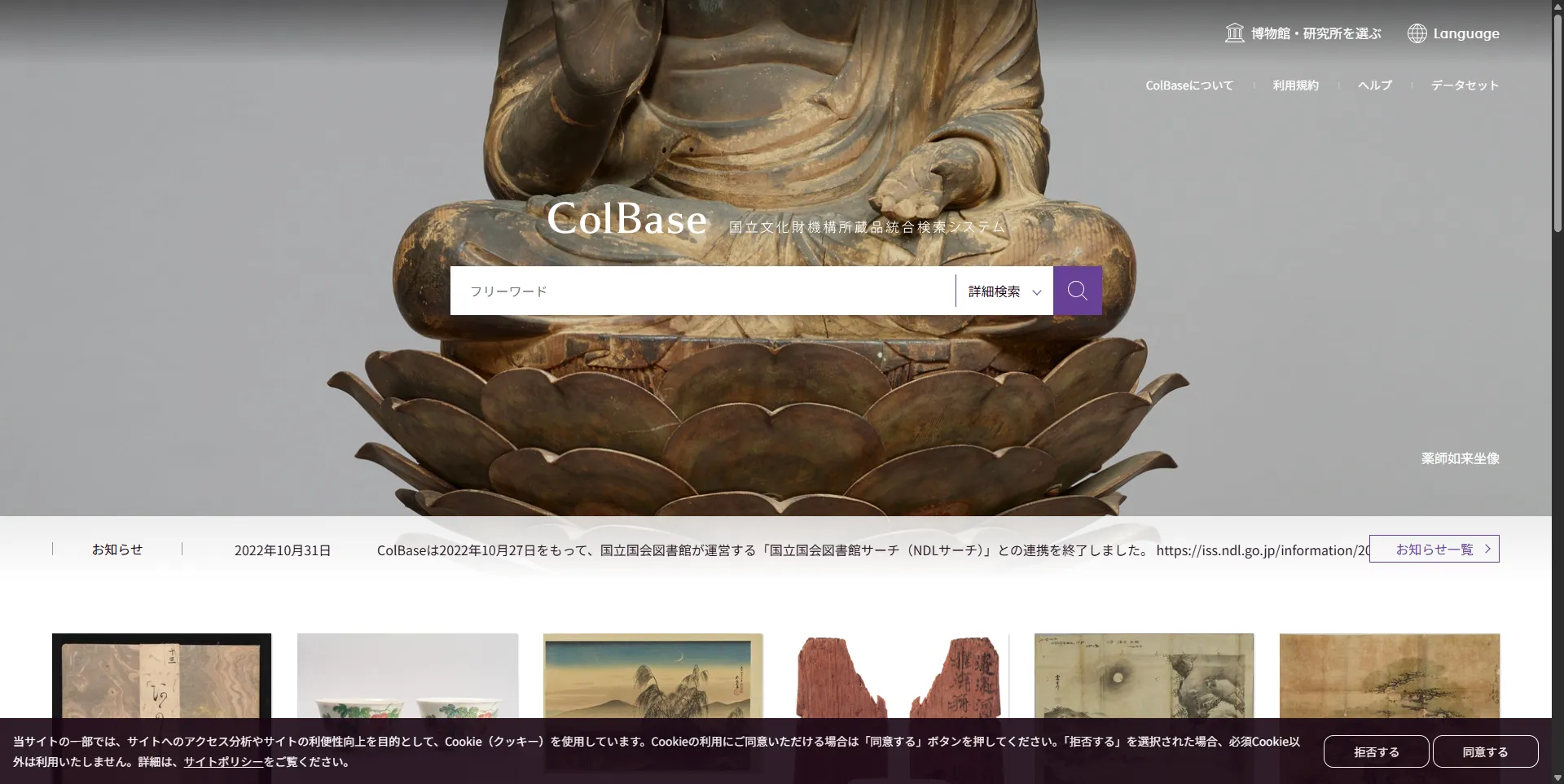
ColBase is the integrated database of Japan's four national museums, offering downloadable high-resolution images of Japanese art and cultural heritage. Free, with 5,800 downloads per month and a 2022 Digital Archive Japan Award.
Discover other stock image sites you might be interested in
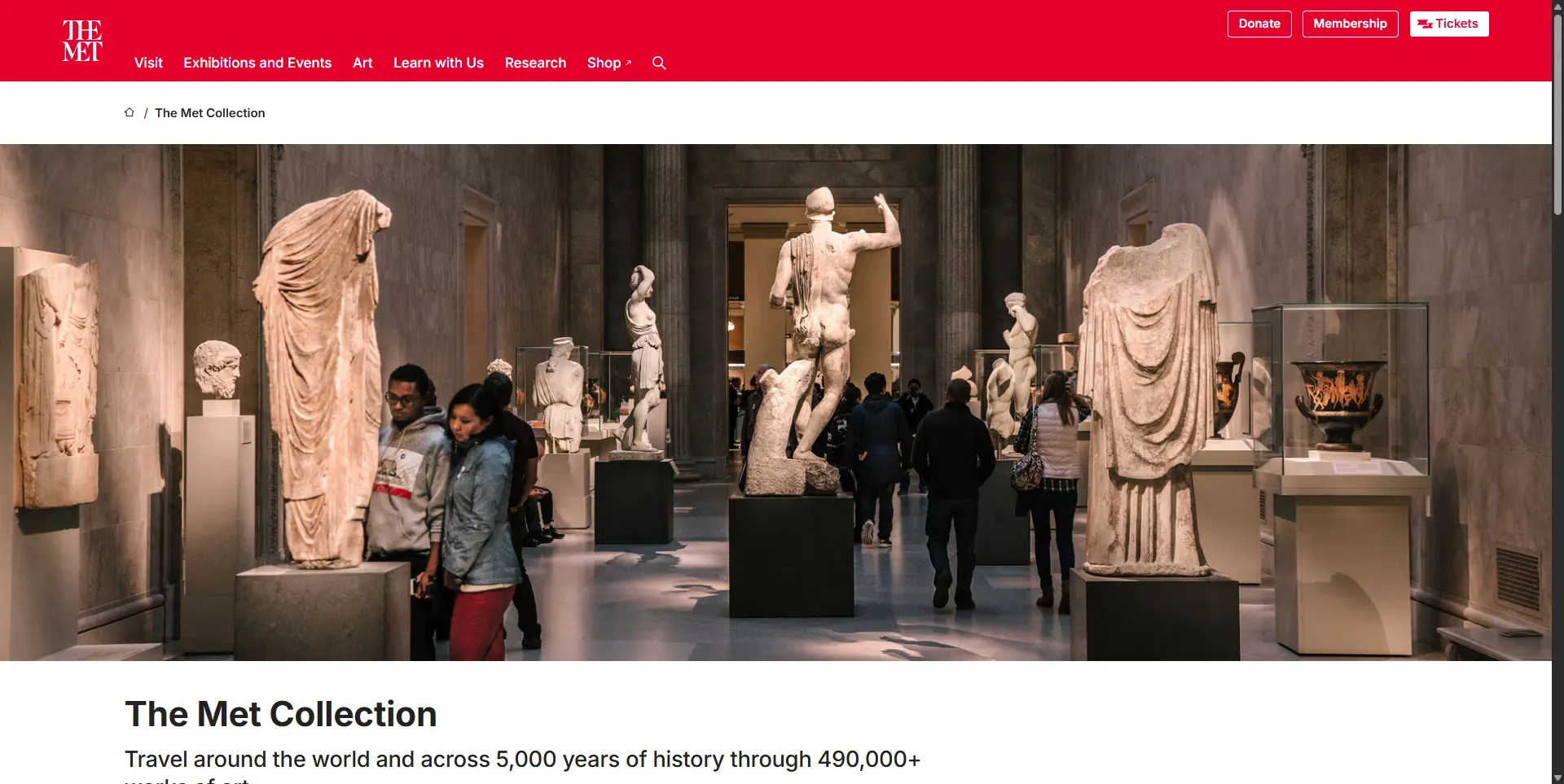
The Met Open Access program offers 492,000+ CC0 images spanning 5,000 years of art. Free download, no attribution, keyless API, weekly CSV updates on GitHub.
View details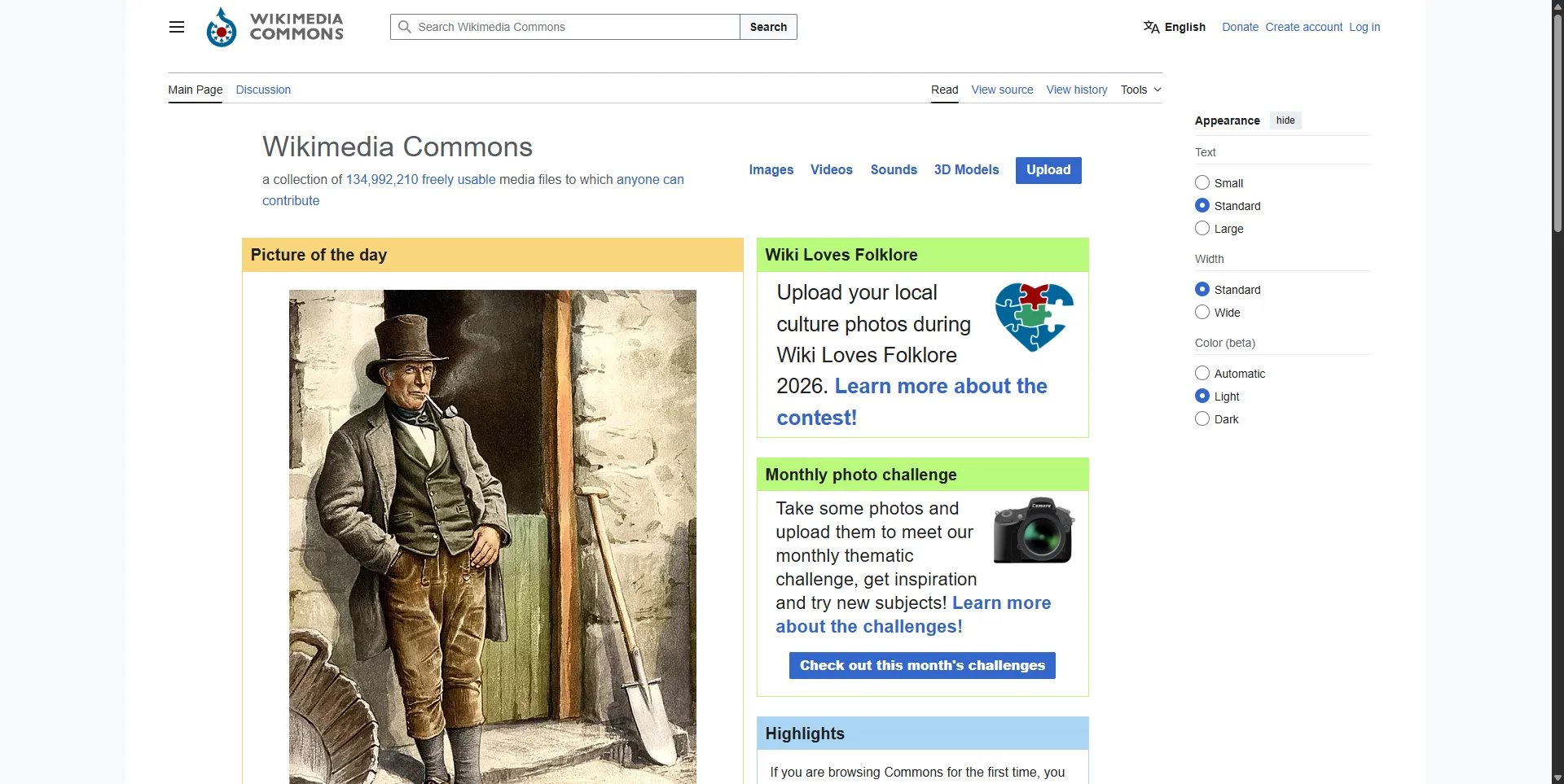
Wikimedia Commons hosts 140M+ freely licensed media files. Public domain art, historical photos, and scientific illustrations. Free with attribution for CC content.
View detailsExplore definitions from our glossary that connect to this stock site
Ceramics is art made from clay and fired at high temperatures. From Jomon pottery to contemporary sculpture, learn its history, materials, and methods.
Clay is the primary modeling material for sculpture, fired into earthenware, stoneware, and porcelain. Used for over 30,000 years, it remains the most versatile and accessible sculptural medium.
Read more about this topic on our blog
Dürer's Praying Hands are the most famous hands in art. Buddhist mudras encode enlightenment. Michelangelo's Adam hand reaches for God. Discover what hands say in art.

Woodblock printing is one of the oldest printmaking techniques still actively practised. This guide covers the history of ukiyo-e, how Japanese woodblock prints are made, key artists from Hokusai to contemporary practitioners working with the Adachi Institute in 2025 and 2026, and why relief printing on wood remains a vital medium today.

Ceramics is one of humanity's oldest crafts and one of its youngest fine art forms. This guide covers the techniques, the key artists from Bernard Leach to Grayson Perry, the major firing traditions, and why clay continues to attract serious artists in 2026.

Peonies and Butterfly, from an untitled series of large flowers
Katsushika Hokusai
from $14.99

Plum Garden at Kameido (Kameido Umeyashiki), from the series "One Hundred Famous Views of Edo (Meisho Edo hyakkei)"
Utagawa Hiroshige
from $14.99

Storm below Mount Fuji (Sanka no haku u), from the series Thirty-six Views of Mount Fuji (Fugaku sanjūrokkei)
Katsushika Hokusai
from $14.99

Shower at Shōno
Utagawa Hiroshige
from $14.99
ColBase is the integrated database of Japan's National Institutes for Cultural Heritage. It lets you cross-search the collections of seven institutions: the Tokyo National Museum, Kyoto National Museum, Nara National Museum, Kyushu National Museum, Tokyo National Research Institute for Cultural Properties, Nara National Research Institute for Cultural Properties, and the Museum of the Imperial Collections, Sannomaru Shozokan.
The platform offers downloadable high-resolution images of Japanese art and cultural properties, with descriptions in Japanese, English, Chinese, and Korean. It won the Digital Archive Japan Award in August 2022. A 2024-2025 study published in the Journal of the Society of Digital Archives reported that ColBase averages around 5,800 image downloads per month, with "Education and Learning" as the most common use case.
That sounds promising. But there is a significant limitation you need to understand before relying on ColBase for creative work.
As of March 2026, ColBase's FAQ states clearly: images of works whose creator is still alive or died less than 70 years prior (within the copyright protection period) are, in principle, not included in the database. The same applies to photographs of human subjects where image rights or publicity rights apply.
This means ColBase primarily contains images of older works that have entered the public domain under Japanese copyright law. While this covers a substantial range of historically significant Japanese art, it excludes most modern and contemporary works. If you need 20th or 21st century Japanese art, ColBase will not have downloadable images.
The FAQ also notes that even when a third party owns copyright, some uses (like quoting under Japan's Copyright Act) may be permitted without consent. But determining what qualifies as a permissible quote requires legal knowledge of Japanese copyright law. If you are not familiar with Japanese copyright, proceed carefully.
Japan's foremost museum in the humanities field. The collection focuses on cultural properties from Japan and other Asian regions. Strengths include Japanese archaeology (Jomon, Yayoi, Kofun periods), classical Japanese painting, Buddhist sculpture, and East Asian ceramics.
Focuses on works from the Heian period through the Edo period, when Kyoto was the capital of Japan. The collection is particularly strong in Heian and Kamakura period Buddhist art, Muromachi period ink painting, and Edo period decorative arts.
Specializes in Buddhist art and the cultural properties of Nara. The collection includes important Buddhist sculptures, paintings, and ritual objects from the Asuka through Heian periods, when Nara was the center of Japanese Buddhism.
Focuses on cultural assets related to Japan's cultural exchanges with other Asian regions. This is the newest of the four national museums and offers a unique perspective on the cross-cultural influences that shaped Japanese art through trade and diplomatic contact with China, Korea, and Southeast Asia.
Added to ColBase in October 2023, this museum holds artworks from the Imperial Household. The collection includes Japanese-style paintings, calligraphy, and decorative arts that were formerly in the possession of the Imperial Family.
ColBase's interface is functional but not what you would call user-friendly. The search supports Japanese, English, Chinese, and Korean, which is helpful for international users. However, the search functionality is basic compared to museum APIs like the Cleveland Museum of Art or the Art Institute of Chicago.
A system update in March 2023 added cookie dialogs, updated site policies, dataset provision, and improved image zoom display. These are incremental improvements, not transformative ones. The site still feels like a government database rather than a platform designed for visual discovery.
The largest traffic source is Google, followed by other cultural property and educational websites. Most images are downloaded only once, and even the most downloaded work has only 313 downloads. This tells you that users are seeking a wide range of images rather than focusing on specific works, which reflects the research-oriented nature of the platform.
Compared to the Cleveland Museum of Art, which offers 37,000-plus CC0 images with a well-documented API, ColBase has no API and more restrictive licensing. CMA's open access program is far more developer-friendly.
Compared to Artvee, ColBase has more depth in Japanese art specifically but a much less pleasant browsing experience. Artvee offers a curated, visual interface. ColBase is a catalog database.
Compared to Openverse, ColBase is a single institutional source. Openverse indexes content from dozens of sources, including some Japanese museum content, through a unified search with license filtering.
Compared to Wikimedia Commons, ColBase has higher-quality images with better provenance for Japanese cultural properties. Wikimedia Commons has more content overall but inconsistent quality.
Artists studying Japanese art traditions can download high-resolution images of historical Japanese paintings, sculptures, and decorative arts. The collection is particularly valuable for studying Buddhist art, ink painting, and traditional Japanese crafts.
Designers working with Japanese aesthetic traditions can source reference material for patterns, motifs, and color palettes from historical Japanese art. Check the copyright status of each work before using it commercially.
Educators teaching Japanese art history can use the images freely in educational materials. Education and Learning is the most common use case for ColBase downloads, according to the 2024-2025 usage study.
Researchers in Japanese art and cultural heritage can access high-quality images with detailed provenance information across seven institutions through a single search.
ColBase is the right choice for researchers, educators, and artists who specifically need high-resolution images of Japanese cultural properties from the national museum system. The cross-museum search across seven institutions is genuinely useful, and the multilingual support makes it accessible to international users.
It is not for someone who needs a user-friendly browsing experience, API access, or guaranteed CC0 licensing. The copyright limitations exclude most modern works, and the interface is functional at best. If you need broadly licensed art images, start with Artvee or the Cleveland Museum of Art. Come to ColBase when you need specifically Japanese cultural heritage material.
Start searching at colbase.nich.go.jp and check our reviews of Artvee and Openverse for broader art image resources.
Quiet Canvas is a space for artists and art lovers: essays, glossary terms, tools, and curated directories to support your creative practice.
Learn more →