Art Institute of Chicago Open Access: The Best Free Impressionist Image Library Online
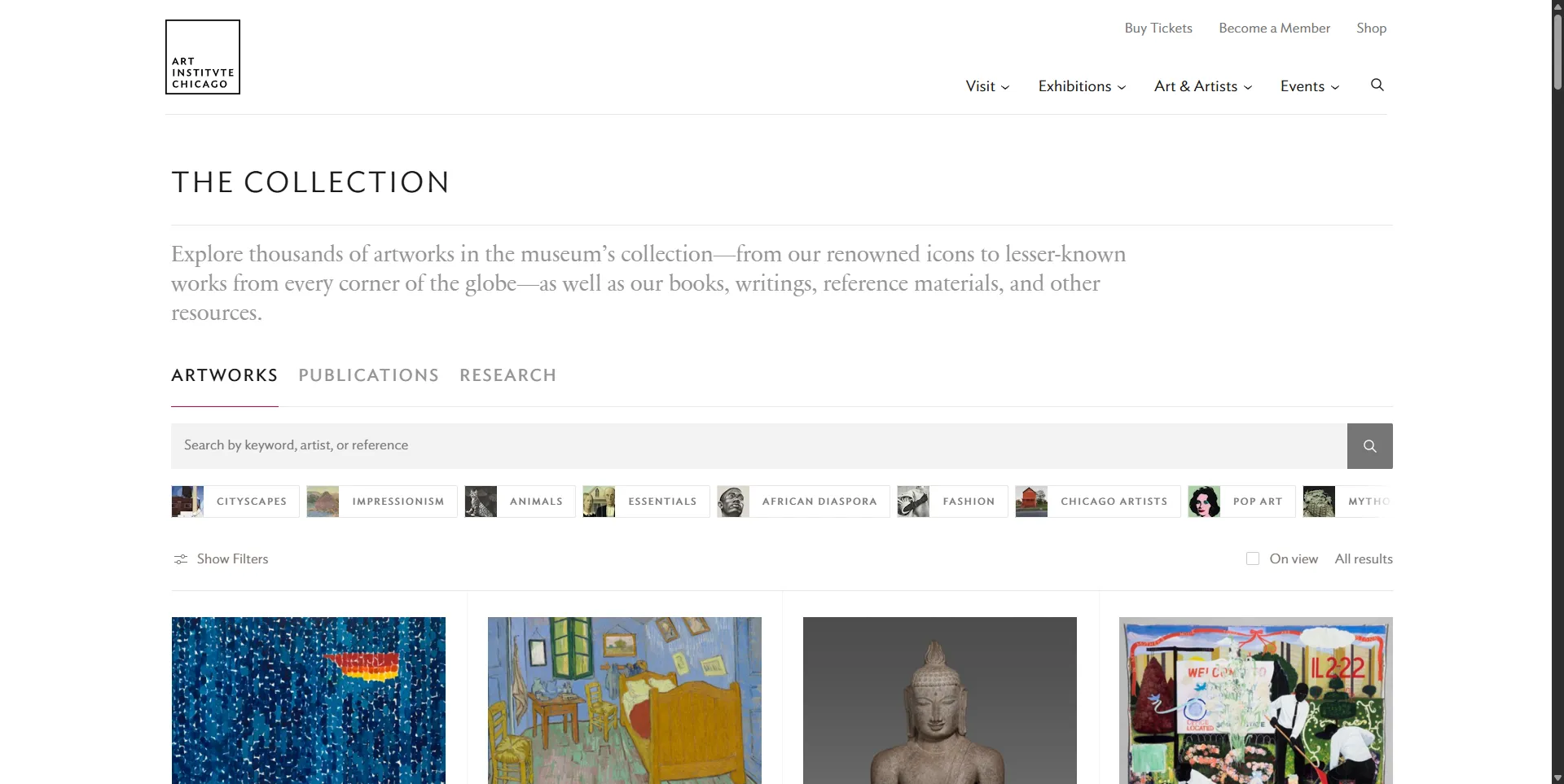
You can zoom into Seurat's A Sunday on La Grande Jatte closely enough to see individual dots of paint. That single fact captures why the Art Institute of Chicago's open access program matters. Most museum websites give you a thumbnail and a copyright notice. The Art Institute gives you 50,000-plus high-resolution images under Creative Commons Zero (CC0), no attribution required, no fees, no permission needed. You can download them, print them, sell merchandise featuring them, or paste them into your commercial design work.
Founded in 1879, the Art Institute holds more than 300,000 works spanning 5,000 years. The open access program covers about 50,000 of those, focusing on works believed to be in the public domain. What separates this program from other museum open access initiatives is the quality of the API and the depth of metadata accompanying each image.
What Makes the AIC API Special
The Art Institute runs what is widely considered one of the most capable museum APIs available. It powers the museum's website, mobile app, and gallery interactives. Data dumps are updated nightly, and the API documentation is thorough and well-maintained.
A few technical details worth knowing if you plan to build with the API:
- The API returns JSON-formatted data through a REST-style service. You can query collections, exhibitions, and even shop products.
- The
image_id field needed to construct image URLs is not returned by default. You must explicitly request it using the fields parameter. Skip this step and you get nothing.
- Images are hosted on a separate IIIF server that requires a
Referer header pointing to www.artic.edu. Without it, the server returns a 403 error.
- The license field returns
"CC0" in the API, not "Open Access" as the documentation describes. Code written directly from the docs to filter for open access works will silently return nothing until you correct this single string.
These are minor issues, but they reveal the gap between documentation and implementation that developers should expect. Once configured correctly, the API is fast, reliable, and returns remarkably rich metadata.
The Impressionist and Post-Impressionist Holdings
This is where the collection shines. The Art Institute holds one of the finest groups of French Impressionist and Post-Impressionist paintings outside of France.
Seurat's A Sunday on La Grande Jatte is the headline work. The CC0 image lets you study every dot of colour at maximum zoom. For painters interested in pointillist technique, this is as close as you can get to standing in front of the canvas without flying to Chicago.
Renoir's Two Sisters (On the Terrace), Monet's stack of paintings from the Normandy coast through the Water Lilies series, and major works by Cezanne, Gauguin, and Van Gogh round out a collection that reads like a textbook on the development of modern painting. The high-resolution downloads let you examine brushwork, colour relationships, and compositional decisions at a level of detail that printed reproductions cannot match.
American Art: Gothic and Nighthawks
Grant Wood's American Gothic needs no introduction. The CC0 image lets you study the pitchfork, the stitching on the overalls, and the tight-lipped expressions that have made this painting one of the most parodied images in American culture.
Edward Hopper's Nighthawks is equally iconic. The high-resolution download reveals Hopper's precise handling of artificial light and empty urban space. For painters studying how to render loneliness through composition and colour temperature, this single image is a masterclass.
The American art collection also includes strong holdings in Hudson River School painting, American modernism (O'Keeffe, Sheeler, Stuart Davis), and colonial portraiture.
Asian Art: Japanese Prints and Beyond
The Asian art collection covers Chinese bronzes, Japanese painting and ceramics, Korean ceramics, and Indian sculpture. The Japanese woodblock print collection is the standout, with major works by Hiroshige, Hokusai, and other ukiyo-e masters. These prints are available in high resolution, making them excellent reference material for illustrators and designers working with Japanese visual traditions.
How It Compares to Other Open Access Programs
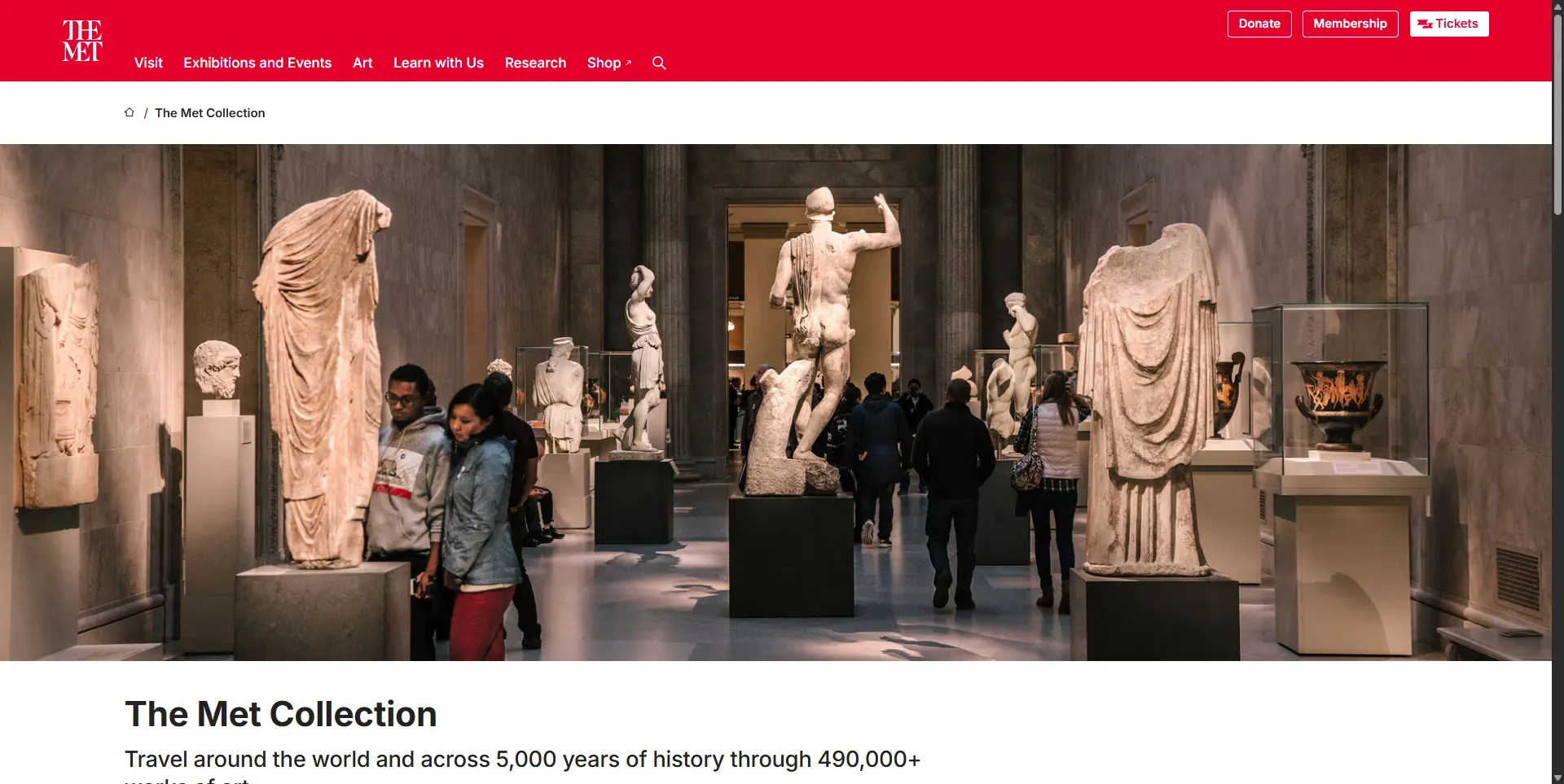
Compared to the Metropolitan Museum's open access program, the AIC has fewer images (50,000 vs. 492,000) but a more developer-friendly API. The Met's API is functional but less documented. The AIC's API supports complex queries and returns richer metadata per record.
Compared to the Cleveland Museum of Art open access, which offers 37,000-plus CC0 images, the AIC has stronger Impressionist and American art holdings, while Cleveland excels in Asian and medieval art.
Compared to Artvee, which aggregates public domain art from multiple museums, the AIC offers higher resolution images, better metadata, and API access. Artvee wins on browsing experience and ease of use for non-technical users.
Practical Uses for Artists and Designers
Painters can download high-resolution images of Impressionist and Post-Impressionist works to study specific brushwork techniques. Zoom into a Monet to see how he layered broken colour. Examine a Van Gogh to understand his impasto application. This is reference material that would cost hundreds of dollars per image from commercial licensing services.
Designers can use CC0 images directly in commercial work. Print them on merchandise, incorporate them into marketing materials, or use them as visual reference for illustration projects. No attribution required, no licensing fees.
Developers can build applications using the public API. The Art Institute even built an Animal Crossing art generator that lets you import collection artworks into the game using IIIF manifest URLs. That is the kind of creative experimentation the CC0 license encourages.
Educators can use the images freely in teaching materials, online courses, and publications without licensing costs.
Insider Tips
- Use the collection search and filter for "CC0 Public Domain Designation" to find downloadable images. Not every work in the online collection is open access.
- For images not available as CC0, or for higher-resolution TIFF files, the museum partners with Art Resource for licensing. Scholarly and academic publications are often free, subject to a processing fee.
- The API data is also available as nightly JSON dumps, which is useful for large-scale data analysis or machine learning projects.
- IIIF support means you can use the images with any IIIF-compatible viewer for deep zoom, annotation, and comparison tools.
Final Verdict: Who Is This Actually For?
The Art Institute of Chicago Open Access program is essential for anyone who needs high-quality images of Impressionist, Post-Impressionist, or American art. The CC0 license removes all legal friction, and the API makes it one of the most developer-friendly museum open access programs available.
If you are a painter studying technique, a designer needing public domain imagery for commercial work, a developer building cultural applications, or an educator creating teaching materials, this should be one of your first stops. For broader coverage across multiple museums, pair it with Openverse or Wikimedia Commons.
Visit the Art Institute's open access page to start browsing, or read the API documentation if you want to build with the data.