Artvee: The Most Browsable Public Domain Art Library Online
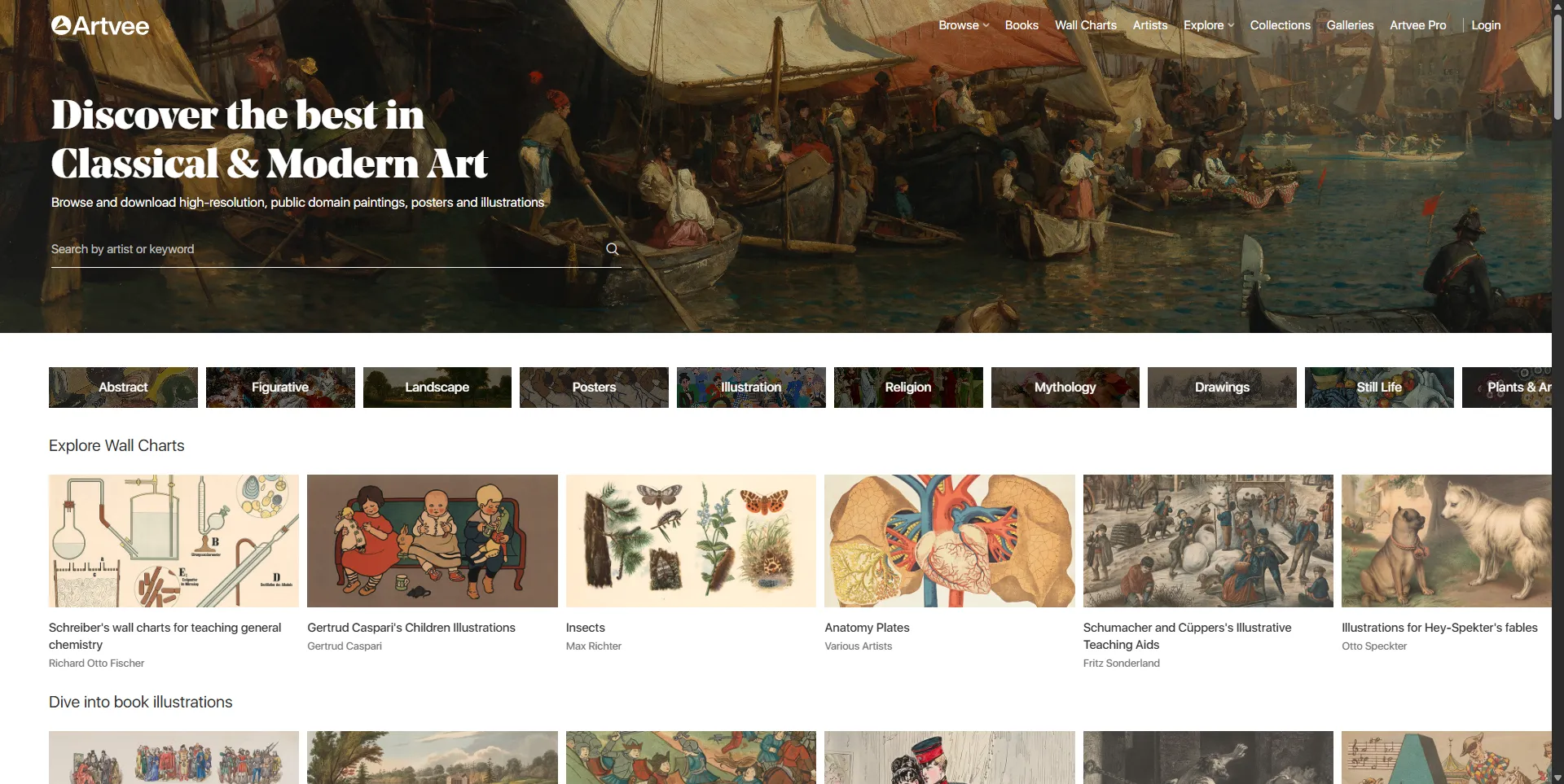
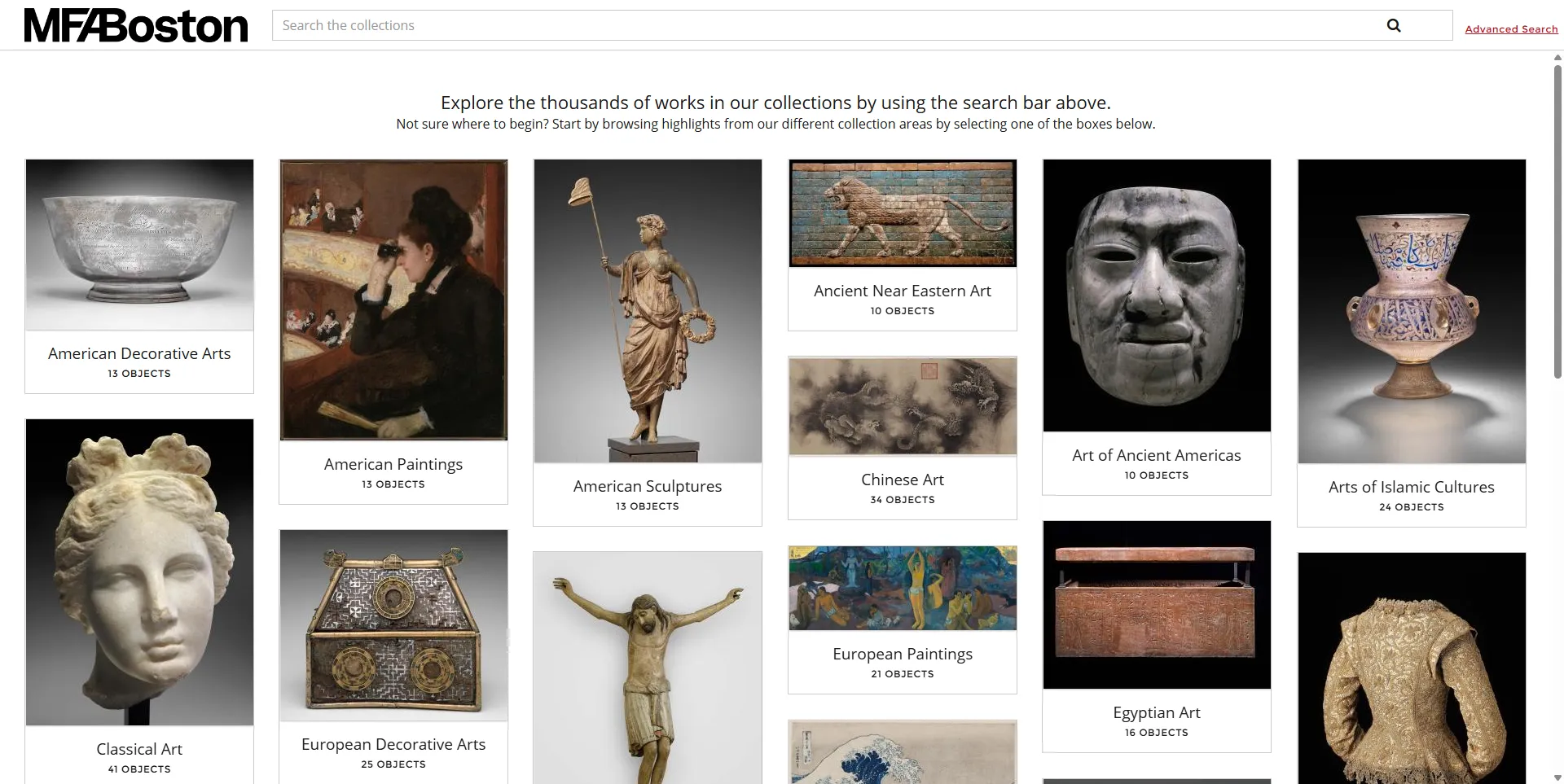
Most museum open access databases feel like they were built for cataloguers, not artists. You get a search bar, a wall of metadata, and if you are lucky, a download button buried three clicks deep. Artvee flips this around. It takes the same public domain artworks from the Met, the Art Institute of Chicago, the Rijksmuseum, and dozens of other institutions, then presents them in a clean, visual interface designed for browsing and discovery.
The result is a platform that feels more like Pinterest than a museum database. And for artists and designers who want to find public domain art without fighting through academic search interfaces, that makes all the difference.
What You Get
Artvee offers over 50,000 curated artworks, all in the public domain. Every image is free for personal and commercial use with no attribution required. You can print them on merchandise, incorporate them into client work, use them as reference material, or just browse for inspiration. No registration needed to download.
The collection is organized into 12 categories that reflect how artists and designers actually think about art: Abstract, Figurative, Landscape, Illustration, Posters, Religion, Mythology, Still Life, Drawings, Plants and Animals, Books, and Wall Charts. This is a refreshing change from the curatorial classification systems that museum databases use, which are designed for scholars rather than visual thinkers.
You can also browse by artist nationality, movement, topic, culture, and curated collections. The search returns results as a visual grid that allows rapid scanning, which is far more efficient than the list-based results most museum databases serve up.
Strengths of the Collection
Old master paintings from the Dutch Golden Age, Italian Renaissance, and Flemish Baroque are well-represented. Works by Rembrandt, Vermeer, Rubens, Caravaggio, and Raphael are available in resolutions exceeding 3,000 pixels on the longest side, with many reaching 5,000 pixels or more. That is enough detail for large-format printing and close-up study of brushwork.
Botanical illustrations are a standout category. Thousands of images from historical natural history publications, including Pierre-Joseph Redoute's stipple engravings and plates from Curtis's Botanical Magazine, make this one of the best free resources for botanical illustrators and designers working with floral motifs. For deeper botanical illustration archives, also check the Biodiversity Heritage Library.
Vintage posters from the Art Nouveau and Art Deco periods are another strength. Travel posters, advertising posters, and exhibition posters from the late 19th and early 20th centuries are popular with designers working in vintage styles.
Japanese woodblock prints by Hokusai, Hiroshige, and Utamaro are available in high resolution. These prints are among the most influential artworks in Western art history, having shaped Impressionism and Post-Impressionism. The resolution is sufficient to study the specific carving and printing techniques that define the ukiyo-e tradition.
Book illustrations form a dedicated collection with over 2,200 items covering a wide range of subjects from 19th-century scientific engravings to decorative magazine illustrations.
Downloading and Using Images
Each artwork page includes a download button that provides access to the highest resolution version available. You get two options: a standard JPG and a max-size download for the largest file. Downloads are immediate, no account required.
Because all images are public domain, you can use them for anything. Commercial products, packaging, advertising, modifications, redistribution. No attribution, no licensing fees, no restrictions. This makes Artvee images safe for professional creative work in a way that Creative Commons-licensed content from Openverse is not always, since CC licenses may require attribution or restrict commercial use.
Artvee Pro
Artvee now offers an Artvee Pro tier for users who want capabilities beyond the standard free access. Details on what Pro includes are not extensively documented on the site, but it is accessible via login. If you find yourself using Artvee regularly for professional work, it may be worth exploring. The free tier remains fully functional for all image browsing and downloading.
How It Compares
Compared to the Met's open access program, Artvee has fewer images (50,000 vs. 492,000) but a far more pleasant browsing experience. The Met's collection search is powerful but utilitarian. Artvee is designed for visual discovery.
Compared to Wikimedia Commons, Artvee is more curated and visually consistent. Wikimedia Commons has vastly more content but inconsistent quality, mixed licensing, and a search interface that is functional at best.
Compared to Rawpixel, which also offers public domain art alongside premium content, Artvee is completely free with no subscription tier required for full access. Rawpixel offers more design-ready assets (cut-outs, templates) but gates premium content behind a paywall.
Who Is It For?
Illustrators and designers who need public domain reference material or ready-to-use art for commercial projects. The browsing experience is ideal for mood boarding and visual exploration.
Botanical illustrators will find the botanical collection particularly valuable, with thousands of historical plates available for study and reference.
Vintage-style designers working with Art Nouveau, Art Deco, or Victorian aesthetics will find rich source material in the poster and illustration collections.
Anyone who finds museum databases frustrating will prefer Artvee's clean, visual approach to discovering public domain art.
Limitations
Artvee has no API, which limits its usefulness for developers and data scientists. If you need programmatic access to public domain art metadata, the Art Institute of Chicago API or the Cleveland Museum of Art API are better options.
The collection is smaller than what individual major museums offer. If you need depth in a specific area, you may need to go directly to the source institution's open access program.
Image quality can vary depending on the source institution's digitization standards. Artvee curates for quality, but they are limited by what the source museums provide.
Final Verdict: Who Is This Actually For?
Artvee is the best starting point for browsing and downloading public domain art if you want a clean, visual experience without fighting through museum database interfaces. The 50,000-plus curated collection, 12-category system, and no-strings-attached public domain licensing make it a practical resource for professional creative work.
It is not a replacement for museum APIs or larger collections. Think of it as the front door to public domain art: fast, friendly, and good enough for most browsing and downloading needs. When you need deeper collection access or API integration, move on to the institutional open access programs it draws from.
Start browsing at artvee.com and check our reviews of Wikimedia Commons and Europeana Open Culture for additional free art resources.