The Met Open Access: 492,000 Free Art Images, No API Key, No Attribution, No Restrictions
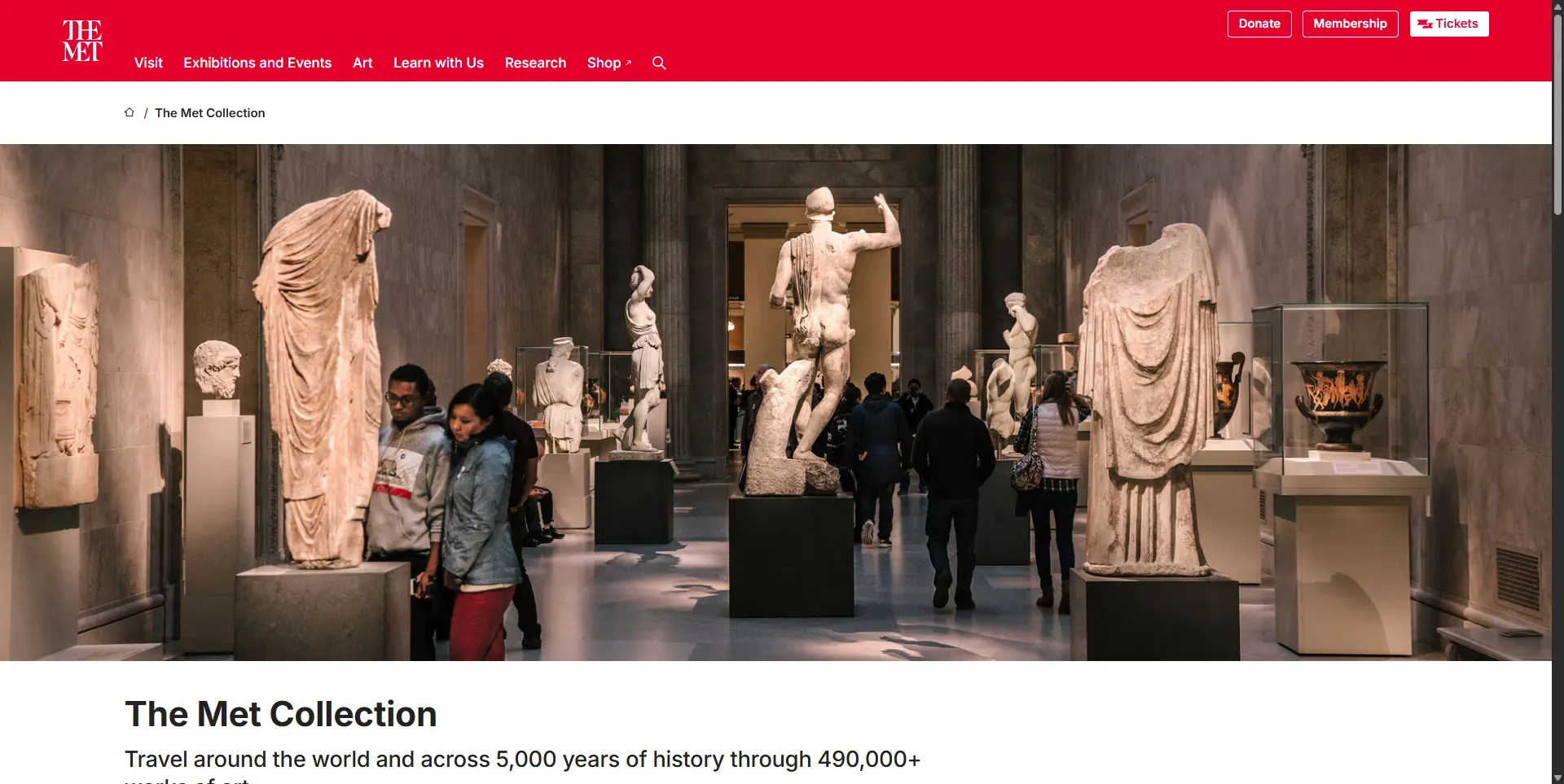
On February 7, 2017, the Metropolitan Museum of Art did something no other museum of its scale had done before. It placed over 375,000 public domain images under Creative Commons Zero, making them free for any use without attribution, without licensing fees, without restrictions. By 2026, that number has grown to over 492,000 images, and the program has become the gold standard for museum open access worldwide.
The Met's Open Access program covers public domain artworks from a collection spanning 5,000 years and every inhabited continent. You can download a high-resolution JPEG of Rembrandt's self-portrait, put it on a coffee mug, and sell the mug. Legally, you owe the Met nothing. They ask for attribution as a courtesy, not a requirement.
What CC0 Actually Means for Your Work
Creative Commons Zero is the most permissive licence in existence. It waives all copyright and related rights to the extent permitted by law. In practical terms:
- Commercial use: sell prints, use in advertising, put on merchandise, include in commercial publications. No fees, no permission needed.
- Derivative works: modify, remix, sample, and build upon the images. Create new art from old art. No restrictions.
- Attribution: not legally required. The Met encourages it ("The Metropolitan Museum of Art, New York" plus the credit line on the object page), but you are not obligated.
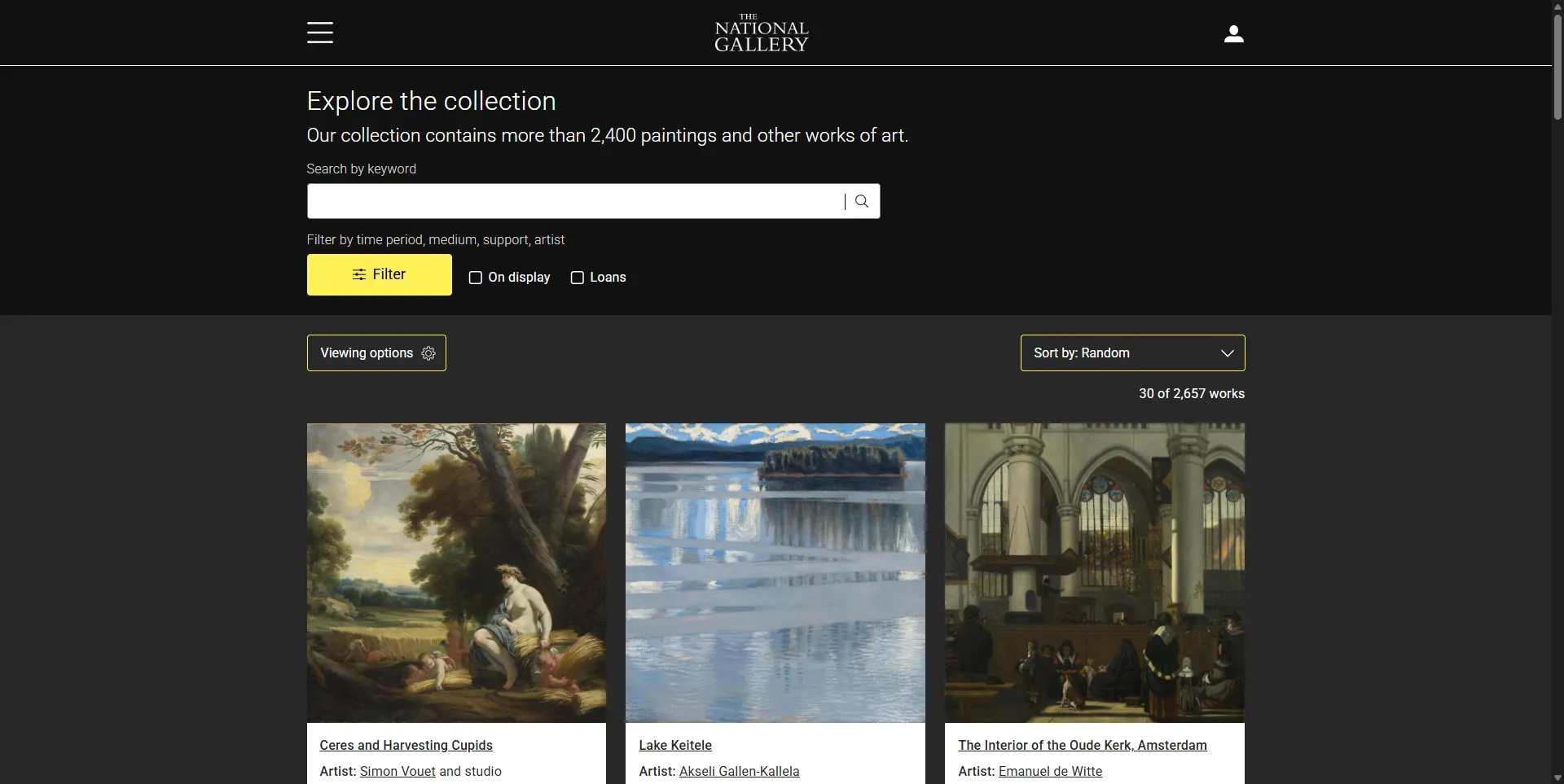
This is what separates the Met from institutions like the National Gallery in London, which restricts image reuse to CC BY-NC-ND (non-commercial, no derivatives). The Met gives you everything. The National Gallery London gives you a viewing license.
The Collection: 5,000 Years of Global Art
The Met's encyclopaedic collection is its core advantage over more specialised museums. Where the Getty focuses on Western art and the Harvard Art Museums specialise in German Expressionism and Byzantine material, the Met covers everything.
European paintings from the medieval period through the early 20th century include Rembrandt, Vermeer, El Greco, Velazquez, Rubens, Caravaggio, Monet, Cezanne, and hundreds of other major artists. The high-resolution images allow examination of brushwork, glazing, and impasto in detail that reproductions cannot match.
Ancient art from Egypt, Greece, Rome, and the Near East includes sculpture, pottery, jewellery, and decorative objects spanning thousands of years. The Egyptian collection is one of the finest outside Cairo, and the Open Access images make objects accessible that are otherwise visible only to museum visitors.
Asian art covers China, Japan, Korea, South and Southeast Asia, and the Islamic world. The Asian collection is one of the most comprehensive outside Asia, with particularly strong holdings in Chinese painting, Japanese prints, and South Asian sculpture.
American art from the colonial period through the 20th century includes paintings, sculpture, decorative arts, and folk art. The collection is particularly strong in 19th-century landscape painting and colonial decorative arts.
Drawings and prints from the 15th through 20th centuries include works on paper by major artists across all periods. The high-resolution scans allow detailed study of drawing techniques and printmaking processes.
Arms and armour, textiles, and decorative arts round out the collection with objects that are valuable reference for illustrators working on historical subjects. The arms and armour collection is one of the most important in the world.
The API: No Key Required
The Met's Collection API is the most accessible museum API available. No registration, no API key, no rate limiting beyond a request to keep it under 80 requests per second. You just start making HTTP requests.
The API provides four endpoints:
- Objects: a listing of all valid Object IDs
- Object: a record for a specific object, including image URLs if available under Open Access
- Departments: a listing of all departments with IDs and display names
- Search: full-text search across object data
Each object record includes primaryImage and primaryImageSmall URLs, an additionalImages array, subject keyword tags with AAT (Art & Architecture Thesaurus) URLs, and Wikidata links. The tags enable semantic search across the collection, linking Met objects to broader art history vocabularies.
The full dataset is also available as a CSV file on GitHub, updated weekly. If you need the entire dataset for offline analysis, download the CSV rather than paginating through the API.
What About Copyrighted Works?
Not every item in the Met's collection is Open Access. Works still under copyright or with other restrictions are not available for free download. The Met's website marks Open Access images with an "OA" icon at the lower left of the image.
For copyrighted works, the Met partners with Art Resource, its primary image-licensing partner. Art Resource handles licensing requests for copyrighted images, new photography, and custom imaging. Fees vary depending on the intended use, and new photography requires a minimum of six weeks.
This means: if you need an image that is not marked OA, you will pay for it through Art Resource. The free program covers public domain works only.
Met vs. Other Open Access Programs
Compared to the Getty Open Content, the Met offers 5.6x more images (492,000 vs 88,000) and covers a far broader geographic and cultural range. The Getty has a stronger photography collection and more consistent scholarly metadata. Both use CC0.
Compared to the National Gallery of Art in Washington, the Met offers 8x more images (492,000 vs 60,000+). The NGA focuses on European and American painting, sculpture, and decorative arts. The Met covers the entire world.
Compared to Harvard Art Museums, the Met has 2x more images and a far broader collection. Harvard's API is more feature-rich (colour extraction, more query parameters) but requires an API key. The Met's API is keyless.
Compared to the MFA Boston, both offer CC0 images from encyclopaedic collections. The Met has more images and a better API. The MFA has a stronger Japanese art collection.
Insider Tips
Filter for the OA icon. Not every image in the Met's online collection is Open Access. Use the filter to see only CC0 downloadable images and avoid wasting time on restricted works.
Use the API for batch research. No API key means you can start immediately. The 80 requests/second limit is generous for most use cases. For bulk analysis, download the weekly CSV from GitHub instead.
Check image resolution before downloading. The Met's images come in a range of sizes and resolutions, reflecting the evolution of their digitisation standards. Most Open Access images are suitable for publication, but assess resolution immediately after downloading, especially for print work.
Use the AAT tags for semantic search. The subject keyword tags link to the Getty's Art & Architecture Thesaurus. This enables searches that connect Met objects to broader art history vocabularies and other collections that use AAT.
Request new photography through Art Resource. If an Open Access image is unavailable or you need a higher-resolution version, Art Resource can provide it for a fee. New photography takes a minimum of six weeks.
Who Is This For?
The Met Open Access program is for any artist, designer, researcher, or educator who needs high-quality art images for any purpose. It is the first place you should look for historical art reference. It is for developers who want a keyless, well-documented museum API. It is for educators who need free, legally clear images for teaching.
It is not for you if you need contemporary art (most 20th and 21st century works are still under copyright), if you need historical photography (the Getty has a stronger photography collection), or if you need American documentary photography (the Library of Congress is the better source).
Getting Started
Browse the Met's online collection and filter for Open Access images using the OA icon. Download directly from any object page. For developers, the API documentation provides endpoint references and examples. The full dataset is available as a CSV on GitHub, updated weekly. No registration, no attribution required, no restrictions.