Biodiversity Heritage Library: 63 Million Pages of Free Natural History Art
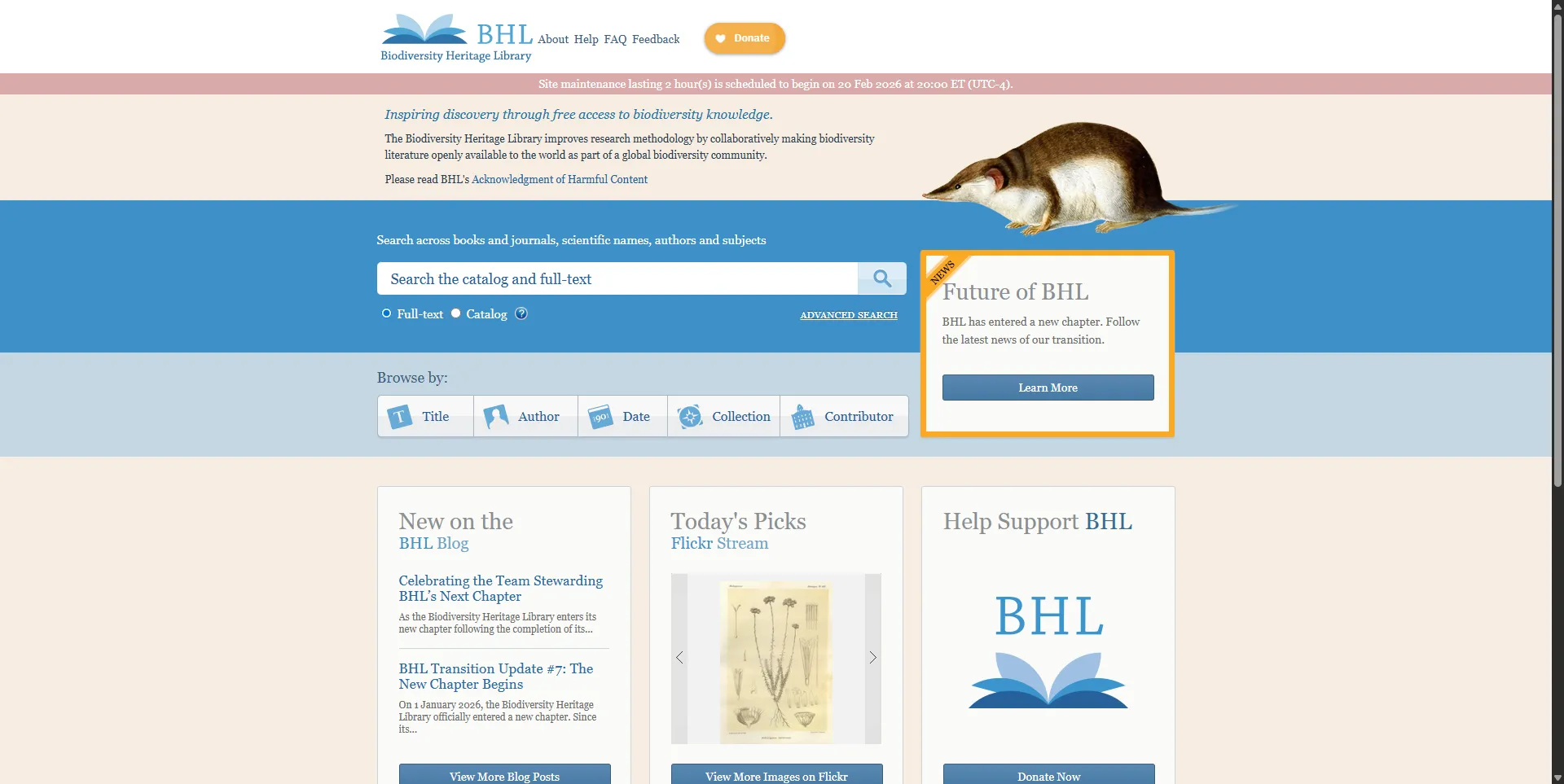
The Biodiversity Heritage Library (BHL) is the world's largest open access digital library for biodiversity literature. It holds over 63 million pages spread across 200,000 books and journals, dating from the 15th to the 21st century. If you need historical botanical illustrations, zoological plates, or scientific artwork from the golden age of natural history publishing, this is where you find them.
BHL is not a stock photo site. It is a research consortium that has spent 20 years digitizing the collective holdings of natural history museums, botanical gardens, and research institutions worldwide. The illustrations buried inside these scanned pages represent the work of some of the most accomplished natural history illustrators in history. And in 2026, the library is going through major changes that affect how you access them.
What Changed in 2026
BHL is in the middle of a significant transition. After 20 years under the Smithsonian Institution, BHL separated and moved to a new fiscal home at the Council on Library and Information Resources (CLIR). The technical infrastructure is being migrated to the Field Museum in Chicago, with servers physically moving during summer 2026.
Practical impact: during the server migration (late June 2026), full-text search, search filters, and on-demand PDFs were temporarily unavailable. The site remained online with catalog-only search. If you rely on BHL for research, plan around these maintenance windows.
The consortium also welcomed new members in 2026: Vanderbilt University's Heard Libraries joined and committed major technical support, bringing cloud infrastructure expertise through a partnership with Amazon Web Services. Senckenberg Gesellschaft fur Naturforschung also joined, expanding BHL's European coverage.
A new article-level discovery system is a notable addition. Researcher Roderic Page has made more than 260,000 articles within BHL discoverable, citable, and connected through persistent identifiers and DOIs. Previously, finding individual articles within 63 million digitized pages was nearly impossible without knowing the exact source. This is a meaningful improvement for anyone who needs to cite specific articles rather than entire books.
The Botanical Illustration Collection
Botanical illustrations are the most celebrated category in BHL. The collection spans five centuries of natural history publishing, from early printed herbals through 19th-century chromolithographs.
Curtis's Botanical Magazine is one of the most important sources, with over 200 years of continuous publication from 1787 to the present. The hand-coloured engravings and later chromolithographs document cultivated and wild plants from around the world with both scientific accuracy and genuine artistic beauty.
Pierre-Joseph Redoute's stipple engravings of roses, lilies, and other flowers represent the pinnacle of botanical illustration as fine art. His work combines scientific precision with an aesthetic sensibility that makes the plates valuable as both reference material and standalone artworks.
Expedition illustrations document plants collected during the great natural history voyages of the 18th and 19th centuries, including Captain Cook's voyages and the Beagle expedition. These are particularly useful for artists working with exotic or unusual plant subjects that are not easily found in other sources.
For a more browsable, curated selection of botanical illustrations from multiple sources, Artvee offers a cleaner interface. But BHL has far greater depth.
The Zoological Illustration Collection
John James Audubon's life-size illustrations of North American birds are among the most celebrated natural history images ever produced. They combine scientific accuracy with a dramatic, painterly quality that makes them extraordinary as artworks.
John Gould's lithographs document the birds and mammals of Australia, New Guinea, and other regions that were largely unknown to European science before his expeditions. These are particularly valuable for artists working with Australian or Pacific subjects.
The zoological collection also includes thousands of engravings and lithographs of mammals, reptiles, fish, insects, and marine life from every part of the world.
Machine Learning and Image Extraction
BHL is actively exploring machine learning to unlock its visual content at scale. Large Language Models are being used to identify and extract images buried within the 63 million pages of scanned text. This includes color plates, line drawings, distribution maps, habitat photos, and even sonograms of animal calls.
Preliminary text mining suggests BHL contains original descriptions for some 400,000 species, with additional information on up to 3 million species. ML tools are speeding up the discovery of these articles and converting static page scans into structured, searchable publications. For data scientists and developers interested in biodiversity informatics, BHL offers a rich playground for ML experimentation.
Licensing: Read Carefully
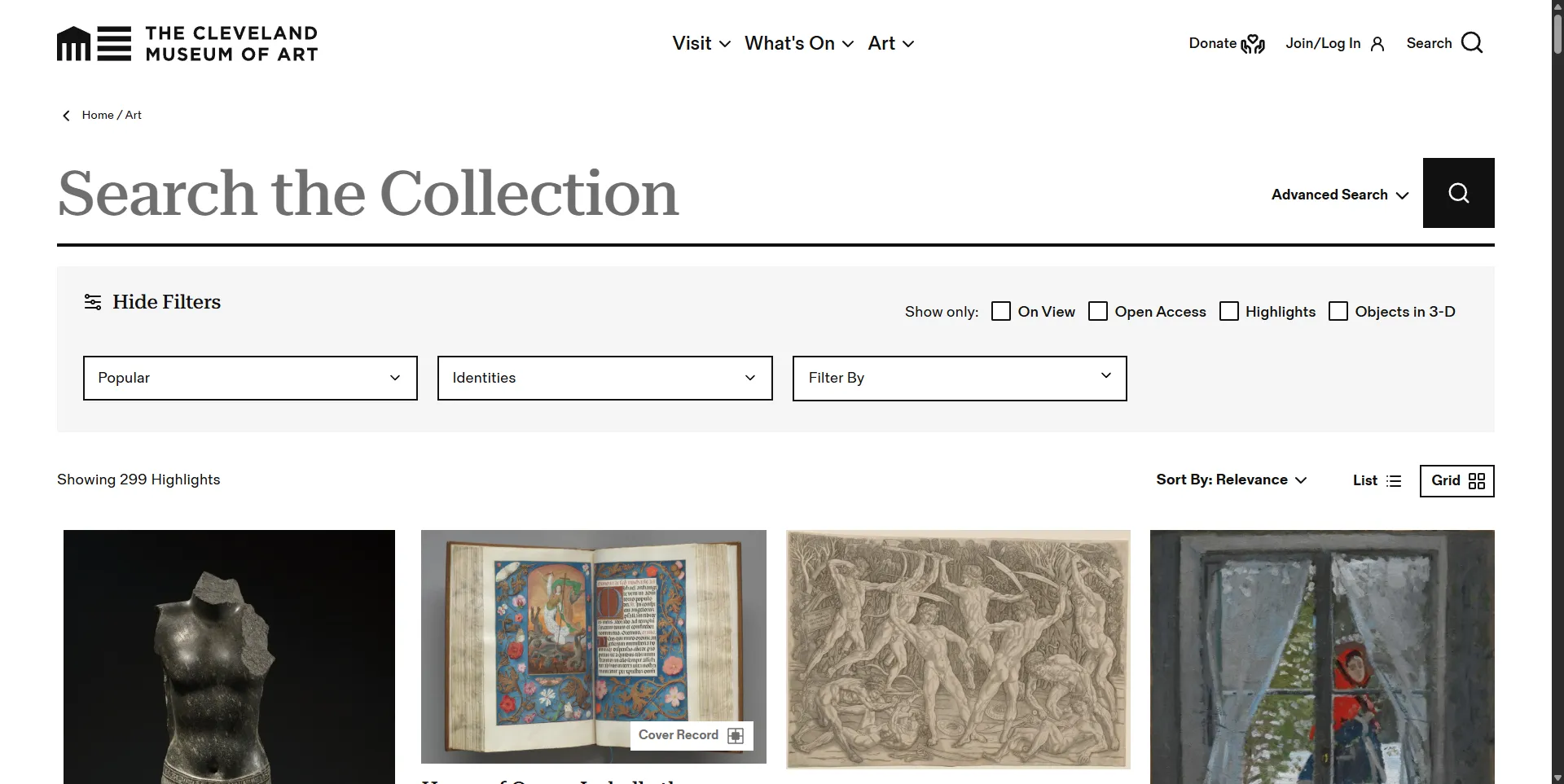
This is where BHL requires caution. Unlike the Art Institute of Chicago or the Cleveland Museum of Art, which release everything under CC0, BHL content has varying licenses. Some items are public domain, some are Creative Commons, and some have institution-specific restrictions.
You must check the license of each individual item before using it commercially. Attribution is often required. The BHL website provides provenance and license information for each item, but you need to read it carefully. If you need guaranteed commercial-safe imagery without attribution requirements, use CC0 museum collections instead.
How It Compares
Compared to Artvee, BHL has vastly more content but a much less user-friendly interface. Artvee is curated and visually browsable. BHL is a research database designed for scholars.
Compared to Wikimedia Commons, BHL has deeper, more authoritative natural history content with better provenance. Wikimedia Commons has more content overall but inconsistent quality and metadata.
Compared to Openverse, BHL is a source rather than a search engine. Openverse actually indexes some BHL content, making it discoverable through a single search alongside other CC-licensed sources.
Practical Uses for Artists
Botanical illustrators can study the specific techniques of historical masters in high resolution. The hand-colouring techniques used in 18th and 19th century plates, where skilled colourists applied watercolour washes to printed outlines, are particularly instructive for contemporary illustrators working in the scientific illustration tradition.
Natural history artists can find reference material for virtually any plant or animal species. The breadth of the collection means that reference for obscure or unusual species is often available nowhere else.
Designers working with natural history motifs can source historical illustrations for use in packaging, editorial design, or decorative work. Just check the license first.
Researchers and data scientists can use the API and article-level discovery system to build biodiversity knowledge graphs, train species identification models, or analyze historical distribution data.
Insider Tips
- Use the taxonomic search to find illustrations by species name rather than by book title. This is far more efficient if you are looking for images of a specific plant or animal.
- The article-level discovery system with DOIs is new in 2026. Use it to find and cite specific articles rather than entire books.
- During the server migration period, expect temporary limitations on full-text search and on-demand PDFs. Plan your research accordingly.
- BHL content has been cited over 400,000 times by researchers. The provenance and bibliographic metadata are reliable and well-documented.
Final Verdict: Who Is This Actually For?
BHL is essential for botanical illustrators, natural history artists, and researchers who need access to the largest collection of historical natural history illustrations in the world. The 63 million pages contain material that simply does not exist anywhere else online.
It is not for someone who needs a quick, clean download for a commercial project. The varying licenses, research-oriented interface, and ongoing technical migration make it harder to use than curated platforms like Artvee or CC0 museum collections. But if you are serious about natural history illustration and want to study the masters, BHL is irreplaceable.
Start exploring at biodiversitylibrary.org and check our review of Artvee for a more browsable botanical illustration experience.