By 1650 the city of Amsterdam had roughly 200,000 residents, and it had more paintings per household than any city before or since. The buying class was not kings or cardinals. It was merchants, shipwrights, cloth traders, and the bakers who supplied their ships. The Dutch Golden Age was the first art market built for the middle class, and Amsterdam invented it. Every artist who made the city famous worked inside that system: Rembrandt took commissions from a militia company, Vermeer's dealer in Delft sold to private buyers, Frans Hals in Haarlem painted regents and militia groups for pay.
Amsterdam's art world never stopped running. The same city that built the first mass market still runs the museums that hold its product, and in 2025 it marked 750 years since its founding charter. This guide covers the Golden Age market, the Rijksmuseum and the live restoration of the Night Watch, the Van Gogh Museum, the contemporary scene, and how to read the city's art geography today. For the deeper context of what Rembrandt and his contemporaries were actually doing, see our post on Baroque art and the Dutch Golden Age.
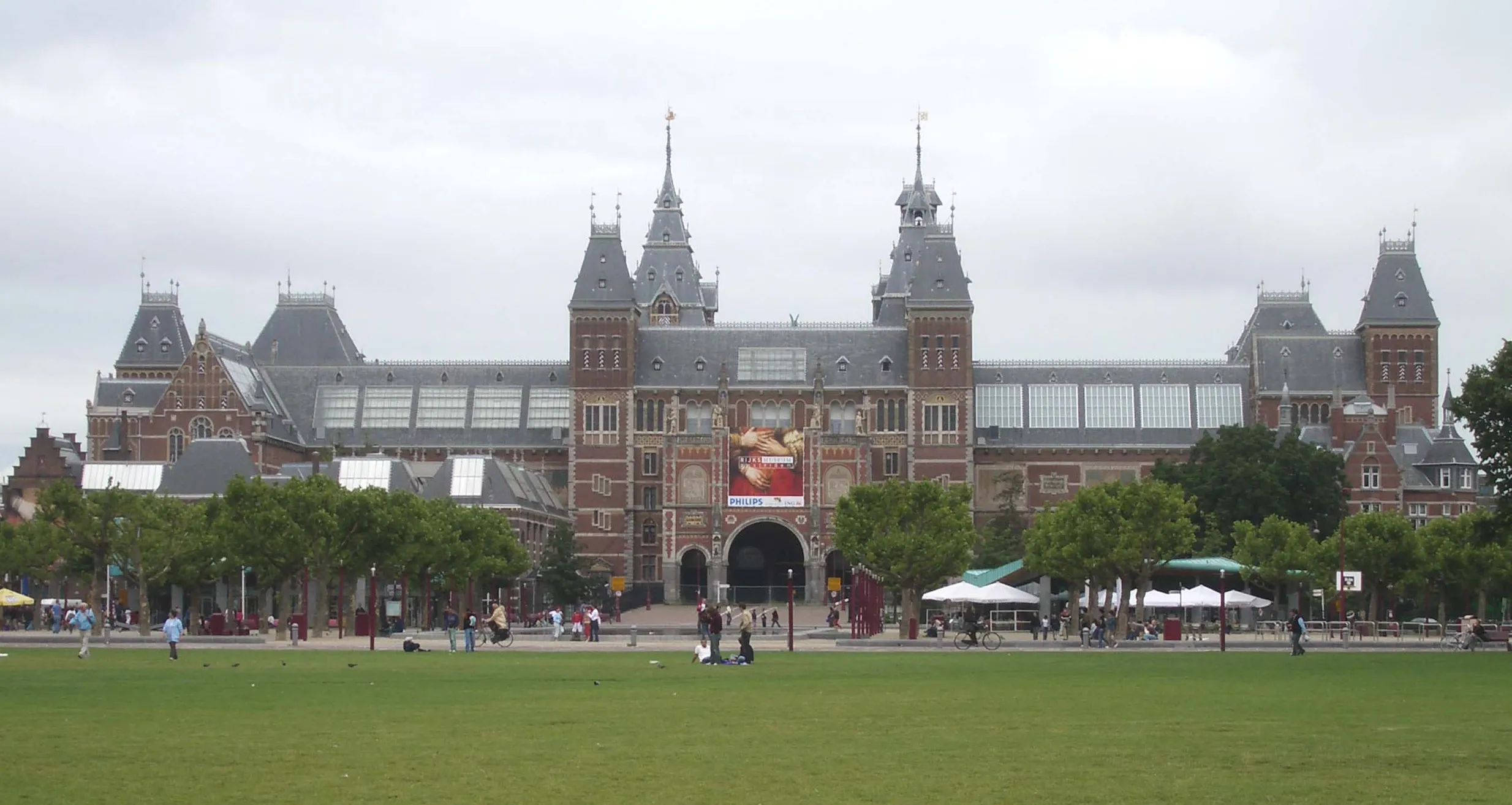
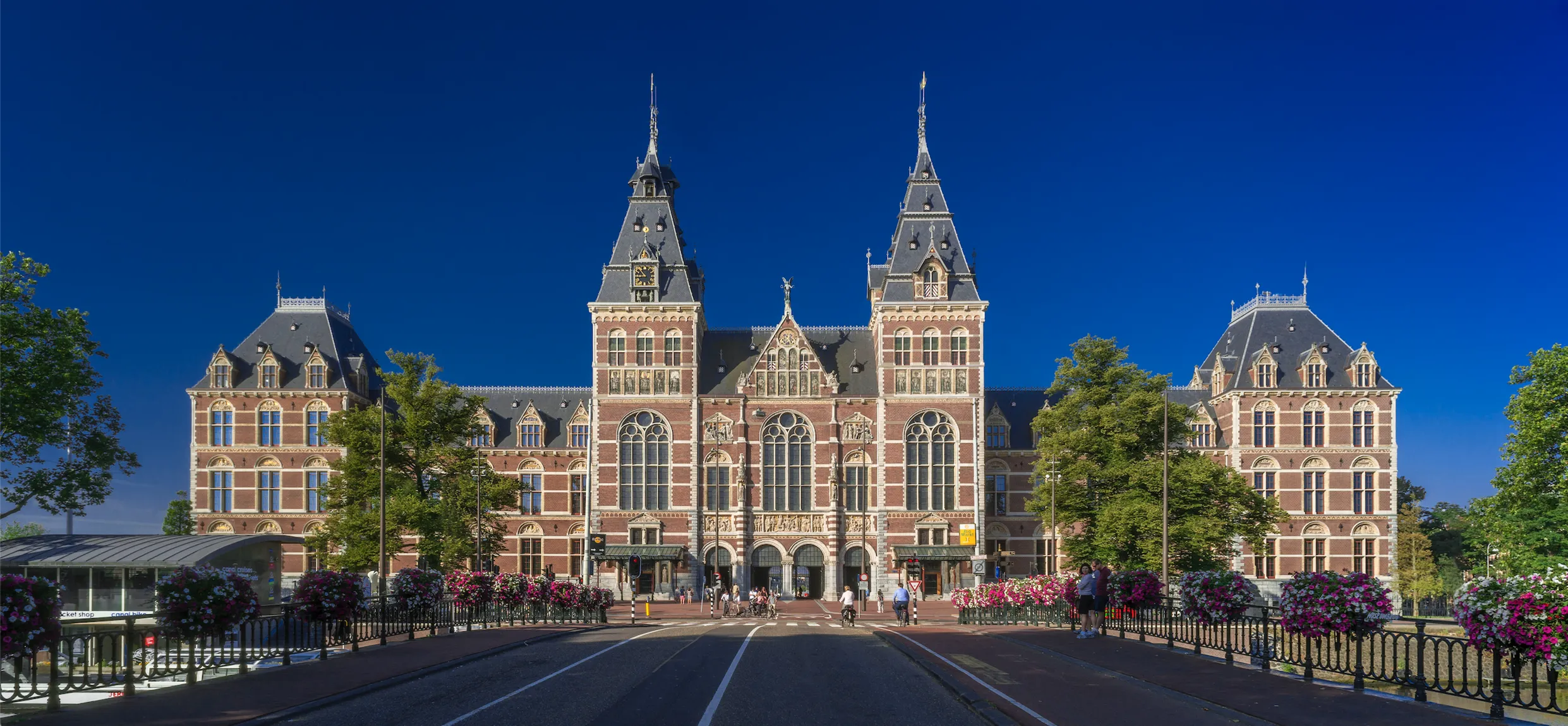
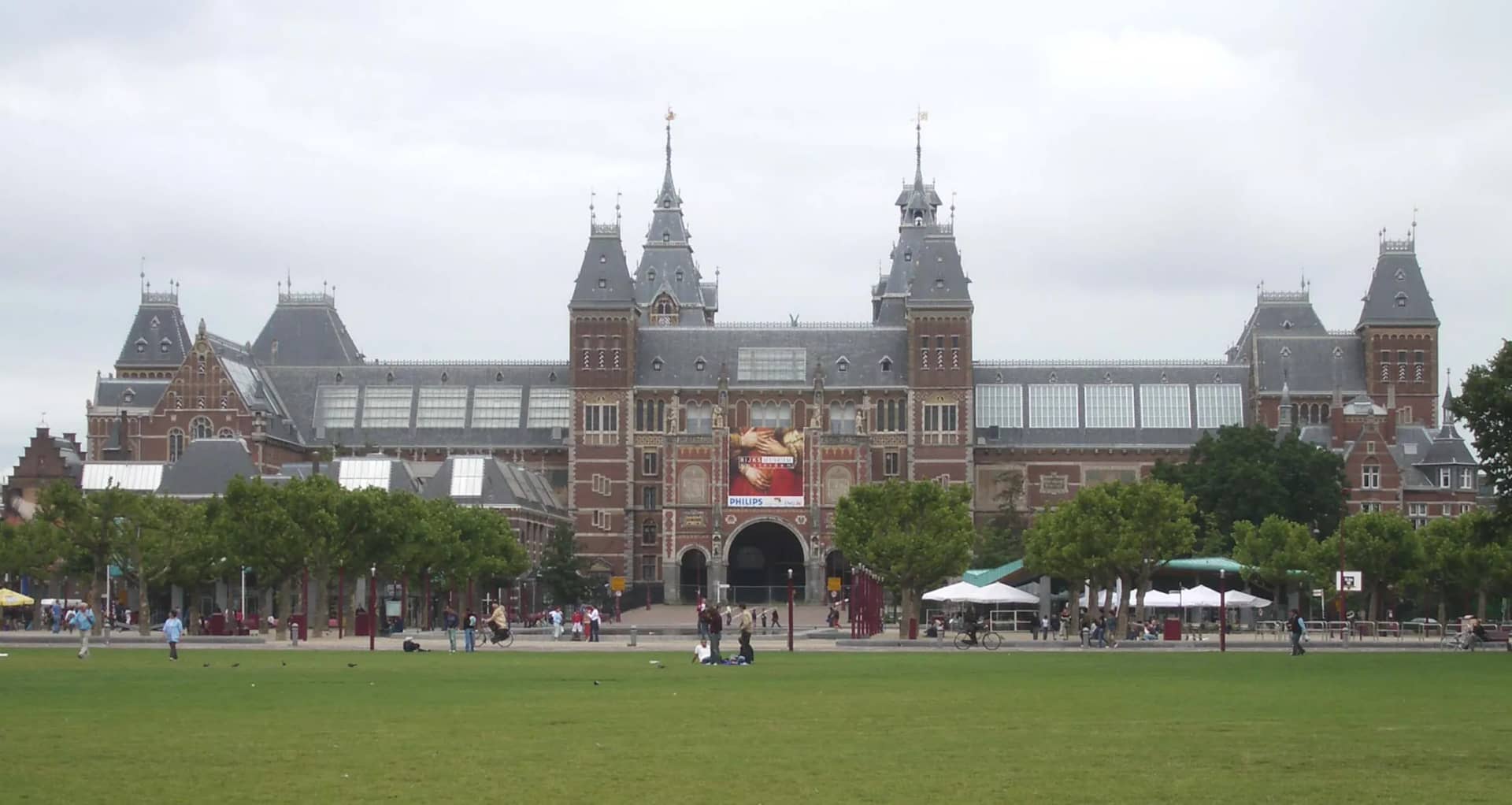
The Rijksmuseum, Amsterdam. Pierre Cuypers designed the building, opened in 1885, to rival the cathedrals of Europe. It holds the world's largest collection of Dutch Golden Age painting and received about 2.3 million visitors in 2025. Image via Wikimedia Commons.
The Market That Made the Masters
Amsterdam's Golden Age market worked like no other in Europe. The Protestant city commissioned no altarpieces, and the court at The Hague bought too little to matter. Instead, a merchant and artisan class bought paintings for their own walls. Art historians estimate that Dutch artists produced somewhere between five and ten million paintings during the 17th century for a population of under two million people. The result was a genuine mass market: paintings sold at fairs, in print shops, and from the backs of boats, at prices a clerk could afford.
That market created the modern art world. Amsterdam had dealers, auctions, speculative bubbles, and bankrupt artists. Rembrandt moved from Leiden in 1631 because Amsterdam was where the buyers were. He painted the Night Watch in 1642 for the militia company that paid for it, went bankrupt in 1656 when his speculative bubble collapsed, and died in 1669 in reduced circumstances. For the full arc of that career, see our post on Rembrandt's light and shadow.
The other great names sit an hour away. Vermeer never left Delft. Frans Hals never left Haarlem. Amsterdam collected their work, priced it, and sold it, but the city did not produce them. That distinction is honest and it matters: Amsterdam's role in the Golden Age was commercial before it was artistic, and that is what makes it the ancestor of every art market city that followed.
The Rijksmuseum and Operation Night Watch
The Rijksmuseum is the institution that turned Amsterdam's commercial history into a public collection. Founded in 1800 in The Hague and moved to Amsterdam in 1808, it occupied Pierre Cuypers's purpose-built cathedral of art from 1885. The building was designed to rival the great churches of Europe, with a public passageway running under it so the city could flow through the museum rather than around it.
The Night Watch sits at the heart of it in its own dedicated gallery. Since 2019 the painting has been inside Operation Night Watch, the largest research and restoration project ever conducted on the work. Conservators work in a transparent glass chamber in the gallery itself, in full view of visitors. They replaced the painting's 1975 wooden stretcher with a tensioned aluminum one in 2022, and since late 2024 they have been removing layers of old varnish under microscopes, a process that continued through 2025 and leaves sections of the painting temporarily duller as they work. It is the most public restoration in art history, and it is still running. For the painting itself, see our post on Rembrandt.
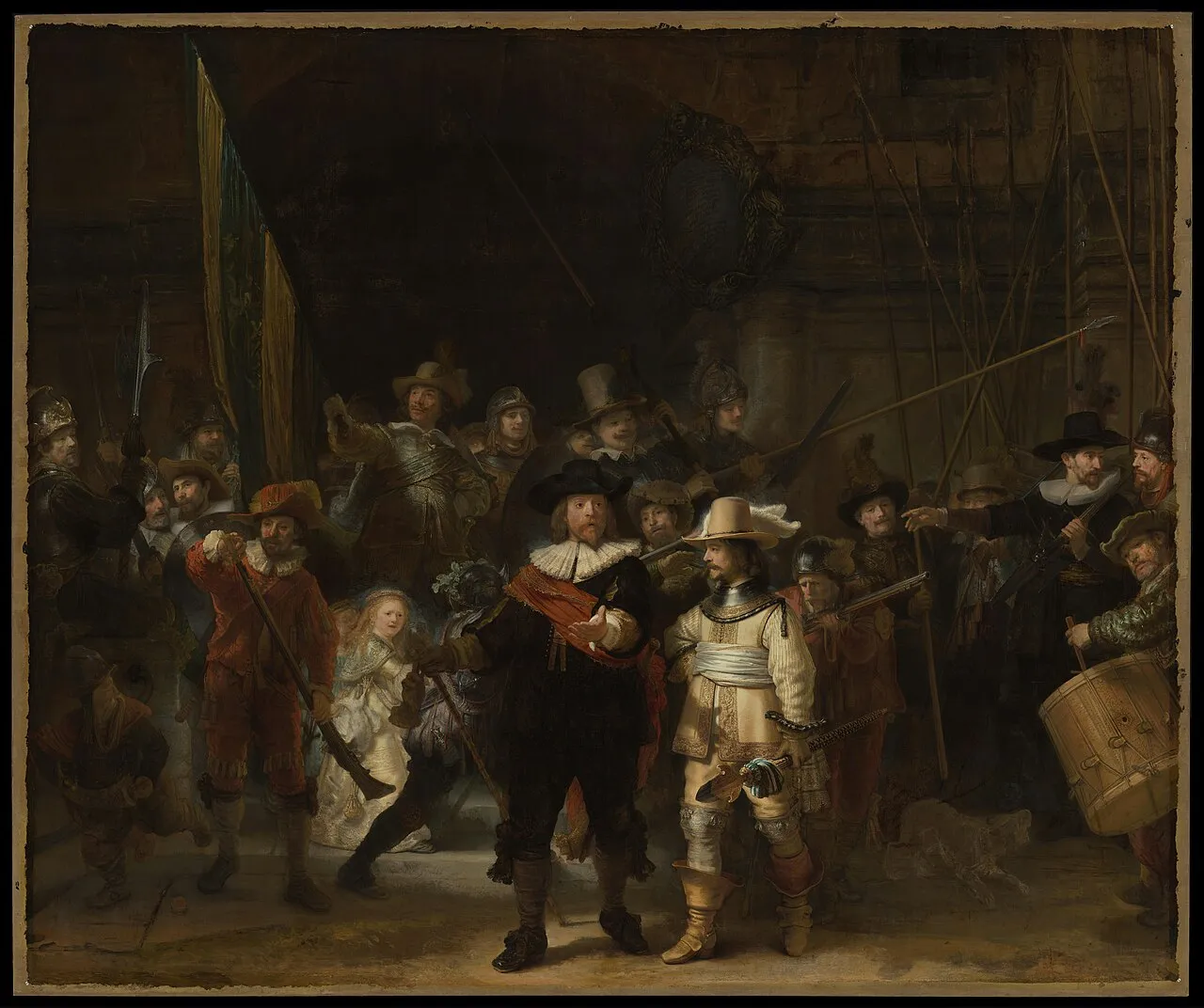
Rembrandt van Rijn, "The Night Watch" (1642). Oil on canvas, 363 by 437 cm. Rijksmuseum, Amsterdam. The militia company of Captain Frans Banninck Cocq and Lieutenant Willem van Ruytenburch is the most famous painting in the Netherlands. It is currently undergoing Operation Night Watch, the largest restoration project in its history, conducted in a glass chamber in full view of the public. Image via Wikimedia Commons.
Van Gogh and the Modern Museum
Amsterdam's second museum is the answer to a different century. The Van Gogh Museum opened in 1973 in a building by Gerrit Rietveld, the same De Stijl architect who designed the famous house in Utrecht. It holds the largest collection of Van Gogh paintings in the world, more than 200, most of them from the family collection that the artist's brother Theo and his widow Jo van Gogh-Bonger preserved. The collection covers the entire career, from the dark Potato Eaters of the Nuenen period through the Paris color experiments to the Saint-Rémy asylum works and the final Auvers canvases.
The museum's existence explains why Amsterdam reads as a complete art city rather than just a Golden Age one. A visitor can walk from the Night Watch to the Potato Eaters to the Sunflowers in the same district, the Museumplein, which also holds the Stedelijk Museum of modern and contemporary art, founded in 1874 and housed since 1895 in a building that was extended in 2012 with a controversial bathtub-shaped addition by Benthem Crouwel. For the artist's own story, see our post on Van Gogh.
The Contemporary Layer
Amsterdam's contemporary art scene is smaller than its museum reputation suggests, which is part of what makes it livable. The commercial galleries cluster in the Jordaan and around the Spiegelkwartier opposite the Rijksmuseum, a district that has sold art and antiques since the 18th century. The artist-run spaces matter more: de Appel arts centre has run programs and residencies since 1975, W139 has occupied its raw space on Warmoesstraat since 1979, and the Sandberg Instituut runs the graduate programs that feed the scene.
The annual fair is Art Rotterdam, held each February since 2000 in the Van Nelle Factory, a Unesco-listed modernist building in Rotterdam that is worth the trip alone. In Amsterdam itself, the H'ART Museum reopened in 2023 in the former Hermitage building on the Amstel after cutting its Russian state ties following the 2022 invasion, renaming itself and rebuilding its program around partnerships with the British Museum, Centre Pompidou, and Smithsonian. The Rembrandt House Museum on the Jodenbreestraat preserves the house where Rembrandt lived during his most prosperous years, complete with the collection of curiosities that bankrupted him. For how the modern gallery system that grew from all this works, see our post on how the art market works.
How to Read the City
Amsterdam's art geography is legible because the city is small. The Museumplein holds the Rijksmuseum, Van Gogh Museum, and Stedelijk within a few hundred meters of each other. The Jordaan galleries are a twenty-minute walk. The Rembrandt House is in the old Jewish quarter, the Hermitage on the Amstel, the photography museum Foam on the Keizersgracht. A dedicated visitor can do the whole museum circuit on foot in a day, which is exactly what Amsterdam's founders designed it for.
The day-trip geography matters too. Vermeer's Delft is forty minutes by train and contains the Vermeer Centrum and the church where he is buried. Frans Hals's Haarlem is fifteen minutes and has the Frans Hals Museum in the almshouse where he painted his regent groups. The Hague is forty-five minutes and has the Mauritshuis, which holds Girl with a Pearl Earring and View of Delft. Amsterdam is the market hub of a regional art system, and the honest way to see it is as the center of a network rather than a city that contains everything. For the fuller museum context, see our guide to the Rijksmuseum.
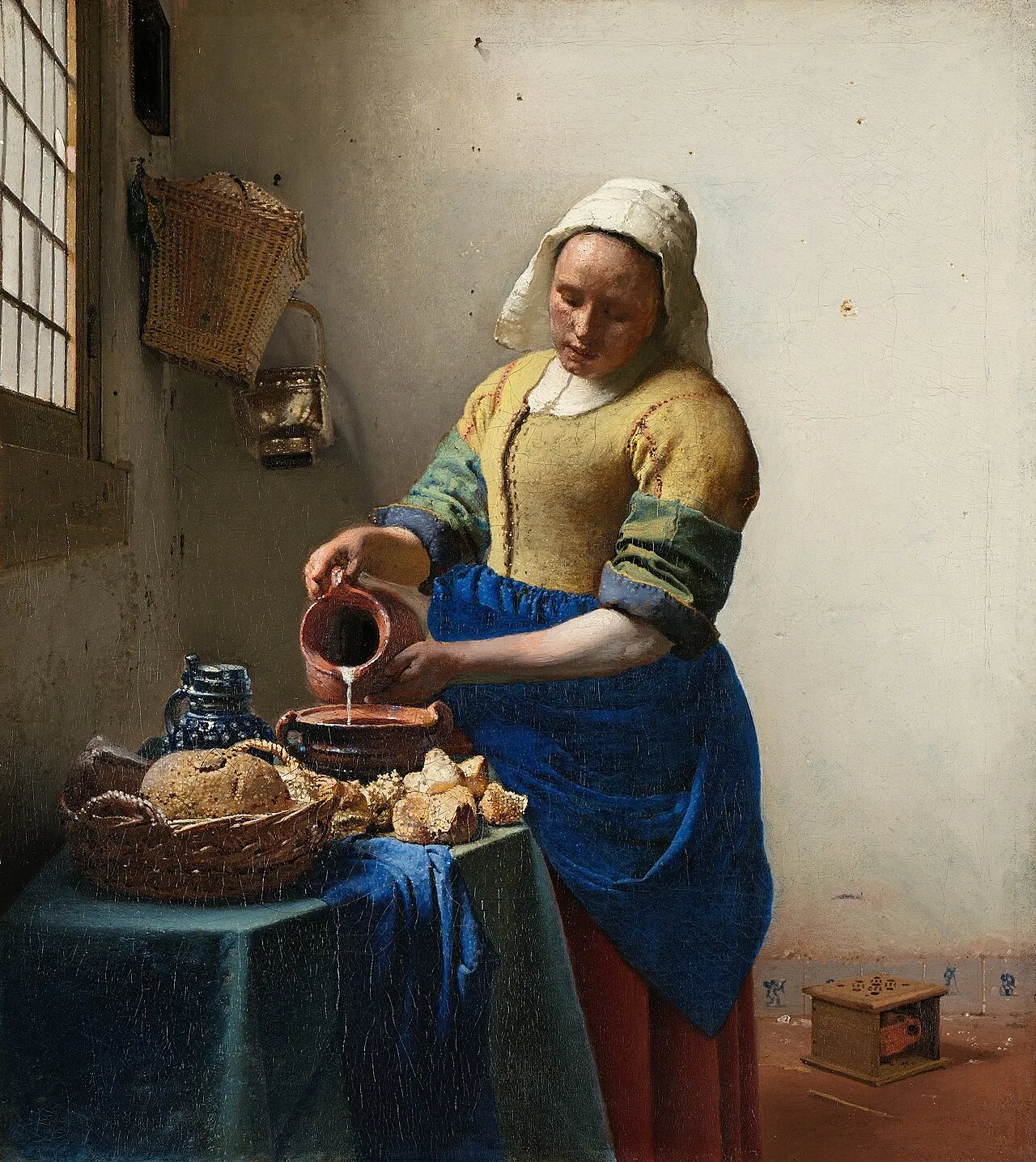
Johannes Vermeer, "The Milkmaid" (ca. 1658). Oil on canvas. Rijksmuseum, Amsterdam. Painted in Delft, it has been in Amsterdam's national collection since 1908. Vermeer worked sixty kilometers away in Delft all his life; Amsterdam is where the market priced and preserved his work. Image via Wikimedia Commons.
Final Thoughts
Amsterdam is the city that invented the modern art market and never let it go. The same commercial logic that bought paintings for bakers' walls in 1650 built the world's first mass art economy, created the dealer-auction-collector system every art city now uses, and preserved the whole product line in a single museum district. The Rijksmuseum is the argument made stone: the city that bought the art is the city that built the museum to keep it.
Start at the Rijksmuseum for the Golden Age foundation and the live Night Watch restoration, then cross the square to the Van Gogh Museum for the 19th-century sequel. Walk the Jordaan galleries and the Spiegelkwartier for the market that never closed, and take the train to Delft or Haarlem if you want to see where the masters actually lived. For the wider context of the Dutch collection, see our guide to the Rijksmuseum, and for how to get the most out of the visit, how to visit an art museum.
Frequently Asked Questions
Why is the Night Watch being restored in public?
Operation Night Watch, running since 2019, is the largest research and restoration project ever done on Rembrandt's painting. Conservators work inside a glass chamber in the Night Watch Gallery so visitors can watch them remove old varnish under microscopes.
What is the most famous museum in Amsterdam?
The Rijksmuseum is the most visited, with about 2.3 million visitors in 2025. It holds the Dutch Golden Age collection including Rembrandt's Night Watch, Vermeer's Milkmaid, and works by Frans Hals.
Did Rembrandt live in Amsterdam?
Yes. Rembrandt moved from Leiden to Amsterdam in 1631 and spent most of his career there. His house on the Jodenbreestraat, where he lived during his most prosperous years, is now the Rembrandt House Museum.
Is Vermeer from Amsterdam?
No. Vermeer lived his entire life in Delft, about an hour from Amsterdam. The Rijksmuseum in Amsterdam holds four of his paintings, but the largest single Vermeer work, Girl with a Pearl Earring, is at the Mauritshuis in The Hague.