In February 2018, Bonhams London sold a painting found in an ordinary north London flat for 1.2 million pounds. The work was "Tutu," painted in 1974 by the Nigerian modernist Ben Enwonwu, and the sale more than tripled its estimate. The buyers were not speculating on a rediscovered Old Master. They were confirming something the artists in Lagos and Nairobi had known for decades: African cities have their own art worlds, built largely outside the Western system, and the market was finally catching up.
Two cities have emerged as the poles of that world. Lagos is the commercial engine: it has West Africa's biggest art fair, its deepest pool of collectors, and a gallery scene that now ships talent to London and New York. Nairobi is the institutional anchor: it has East Africa's oldest artist-run spaces, its most serious private collection open to the public in the form of long-standing foundations, and the region's only dedicated contemporary art archive. Together they explain why "African contemporary art" has gone from a niche auction category to a structural feature of the global market. For the older material culture behind all of this, see our guide to African art, mask traditions, and what the West got wrong.
Lagos: The Market Engine
Lagos has roughly 20 million people and West Africa's largest economy, and its art scene runs on that same logic of scale. The anchor event is ART X Lagos, the international art fair founded in 2016 by Tokini Peterside-Schwebig. The fair's tenth anniversary edition ran November 6 to 9, 2025 at the Federal Palace Hotel, themed "10X," with satellite programming across the city during what has effectively become Lagos Art Week. Galleries showing there included O'DA Art, Wunika Mukan Gallery, Alexis Galleries, and Tiwani Contemporary, which mounted work by the designer Nifemi Marcus-Bello at its Lagos space.
The city's gallery scene predates the fair by decades. Nike Art Gallery in Lekki, founded by the textile artist Nike Davies-Okundaye, holds thousands of works across four floors and functions as a hybrid of gallery, museum, and artist-run archive. The Yemisi Shyllon Museum of Art at Pan-Atlantic University, opened in 2019, is the first purpose-built university art museum in Nigeria and holds one of the country's largest private collections, built around the collector Prince Yemisi Shyllon's holdings of modern and historic Nigerian art. Rele Gallery, founded in 2015, has become the most consistent pipeline for young Nigerian painters into international markets, and now operates an outpost in Los Angeles as well as Lagos.
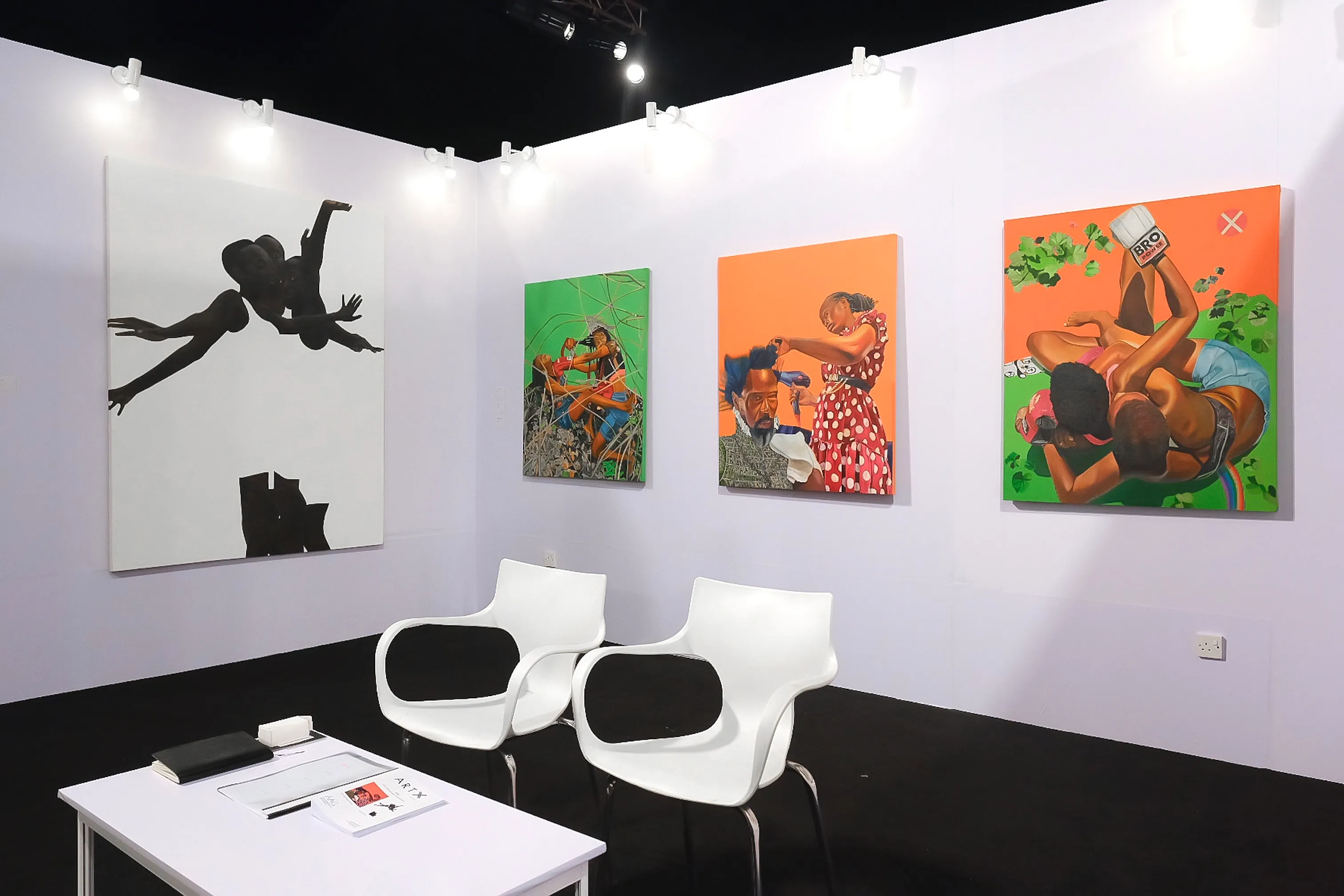
The Afriart Gallery booth at ART X Lagos 2022. Founded in 2016, ART X Lagos is now West Africa's leading international art fair and the anchor of Lagos Art Week each November. The 2025 tenth edition ran November 6 to 9 at the Federal Palace Hotel. Image via Wikimedia Commons.
LagosPhoto, founded in 2010, is the other structural fixture: an annual photography festival that has shown nearly every major Nigerian photographer, from the late J.D. 'Okhai Ojeikere, whose "Hairstyles" series documented a thousand Nigerian hairstyles over forty years, to younger artists like Wura-Natasha Ogunji. The Lagos Biennial, founded in 2017, adds a more critical, non-commercial layer, staging work in public sites like the abandoned Independence House on Tafawa Balewa Square.
The Lagos Foundation: Zaria Rebels and Oshogbo
Nigerian modernism did not wait for the market. In 1958, students at the Nigerian College of Arts, Science and Technology in Zaria formed the Zaria Art Society, later called the Zaria Rebels, and published a doctrine they called "natural synthesis": take European technique, apply it to Nigerian subjects and indigenous aesthetics, and reject both colonial art education and fake traditionalism. Uche Okeke, Demas Nwoko, Yusuf Grillo, and Bruce Onobrakpeya came out of that group. Onobrakpeya, who died in 2025 at 92, was its most influential technician, developing plastograph and plastocast printmaking methods that kept Nigerian printmaking inexpensive to produce and taught thousands of students at the Harmattan Workshop he founded in Agbarha-Otor.
Parallel to Zaria, the Oshogbo school developed around Ulli Beier's Mbari Mbayo workshops in the 1960s, producing Twins Seven Seven, Muraina Oyelami, and a visual language drawn from Yoruba mythology and imaginative intuition rather than formal training. Ben Enwonwu belongs to neither group but predates both: trained in Ibadan and at the Slade in London, he became the first African modernist to win international commissions, and his "Anyanwu" bronzes and portraits set the market baseline that Tutu later confirmed at auction. For more on how collections like his entered Western museums and why that history is contested, see our post on repatriation debates.
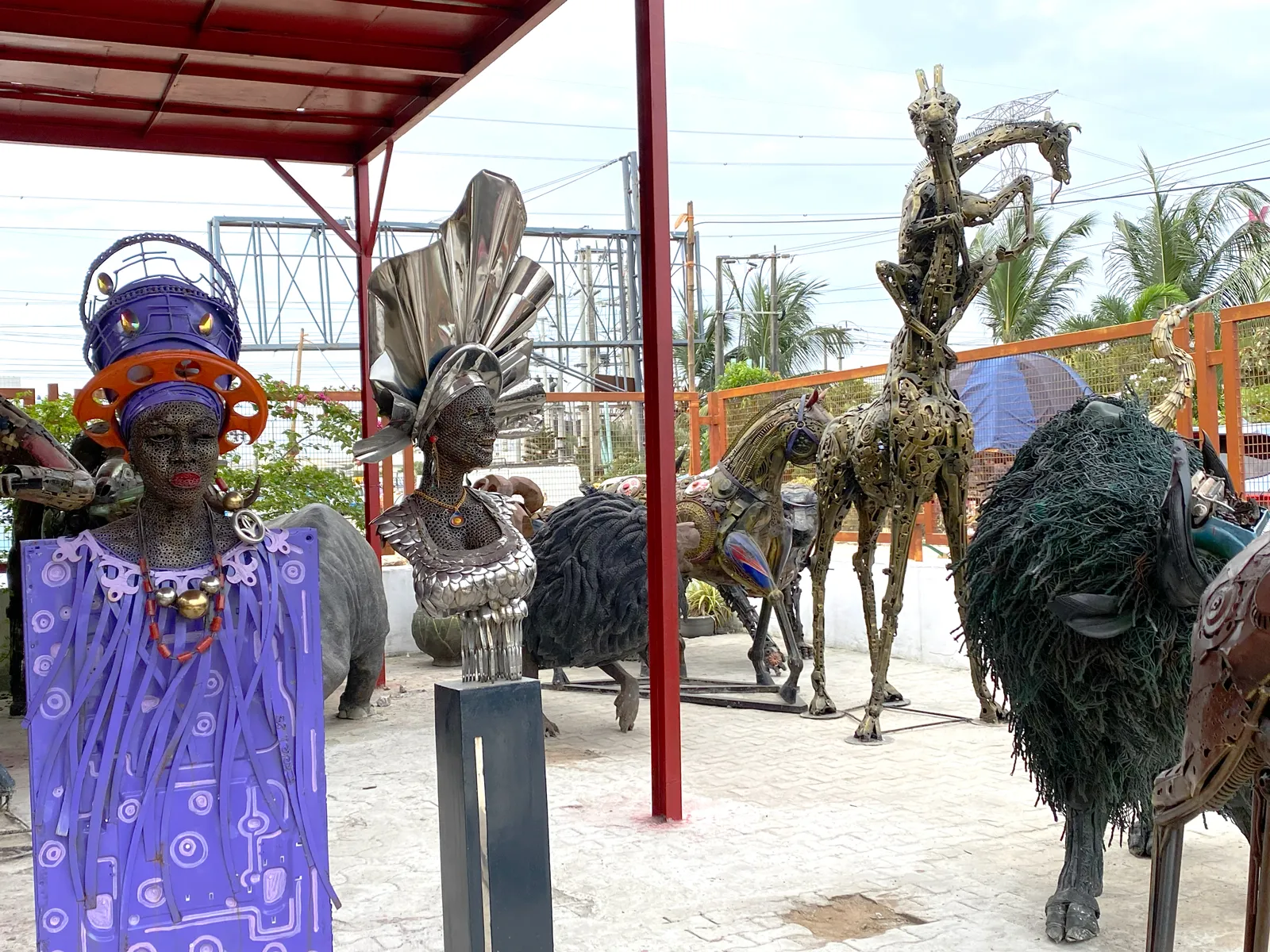
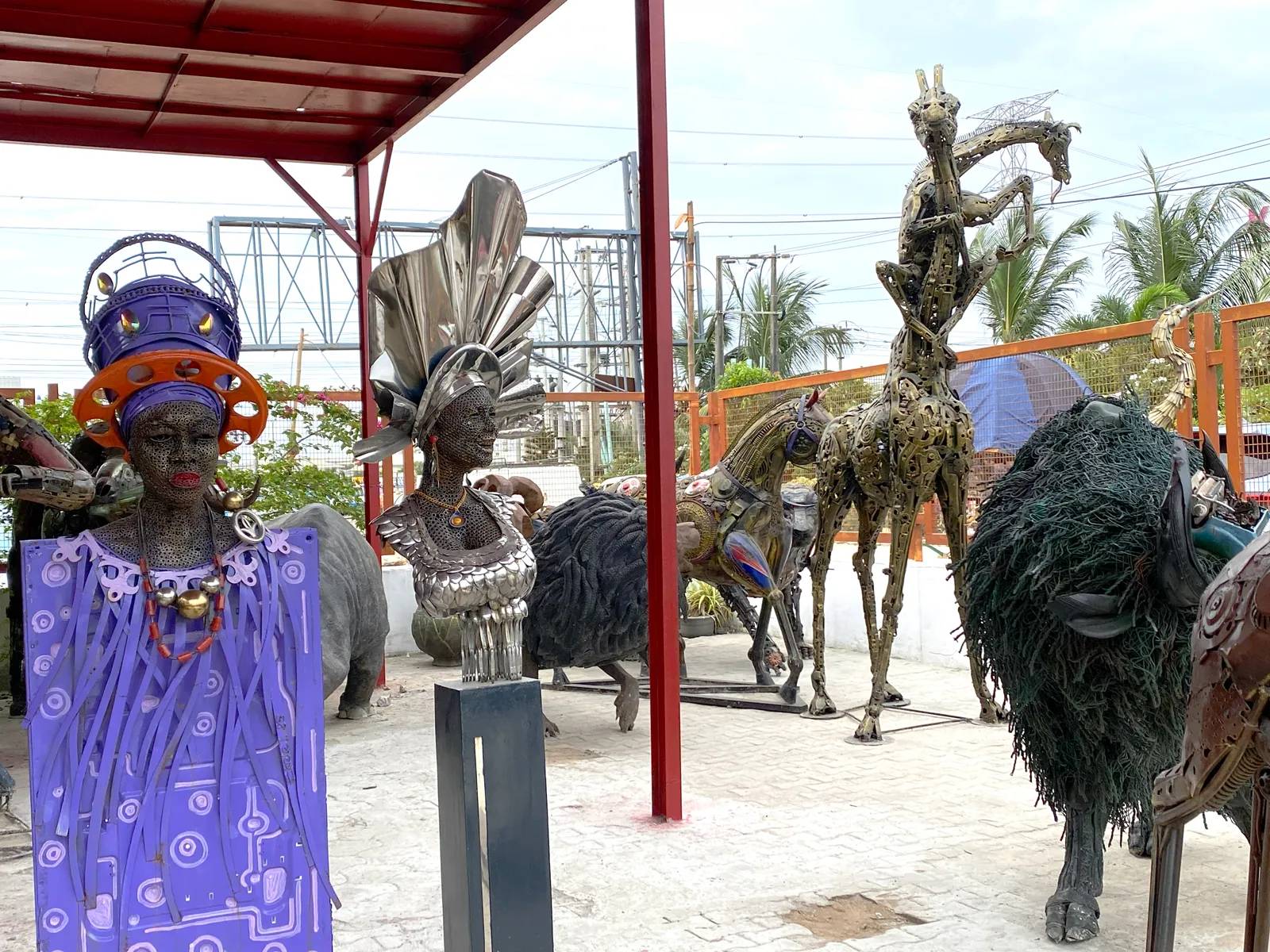
Nike Art Gallery in Lekki, Lagos. Founded by the textile artist Nike Davies-Okundaye, the gallery holds thousands of works across four floors and operates as a hybrid of commercial gallery, museum, and living archive of Nigerian visual culture. Image via Wikimedia Commons.
Nairobi: The Institutional Anchor
Nairobi's art scene is older and quieter than Lagos's, and it was built by artists rather than dealers. The oldest link is Paa ya Paa Arts Centre, founded in 1965 by the painter Elimo Njau, who famously refused to sell his own work and instead built a space for other East African artists. It still operates from its compound off Kiambu Road, run by Njau's family after his death, and it is the oldest surviving artist-run space in East Africa.
Gallery Watatu, founded in 1968 by Jony Waite and Robin Anderson, became the commercial model for the region. It bought and sold work by self-taught artists, most importantly the Tanzanian painter Edward Saidi Tingatinga, whose bright enamel-on-masonite paintings of animals created an entire school of tourist and fine art that outlived him. Watatu closed in 2013, but the model it built, buying directly from artists and reselling to a mixed local and expatriate market, defined Nairobi collecting for two generations.
Circle Art Gallery, founded in 2012 by Danda Jaroljmek, updated that model for the contemporary era. Its annual Modern and Contemporary East African Art Auction, held since 2013, was the first regular auction dedicated to the region and created the price transparency that Lagos's fair model lacked locally. The Nairobi Contemporary Art Institute, established in 2020 in Rosslyn, provides the missing institutional layer: a nonprofit space with an archive, a library, and exhibition programming that sits between a museum and an artist collective. In late 2025 it opened "Between Signals" with the collective munyu, an installation-driven show about perception and infrastructure that runs into 2026.
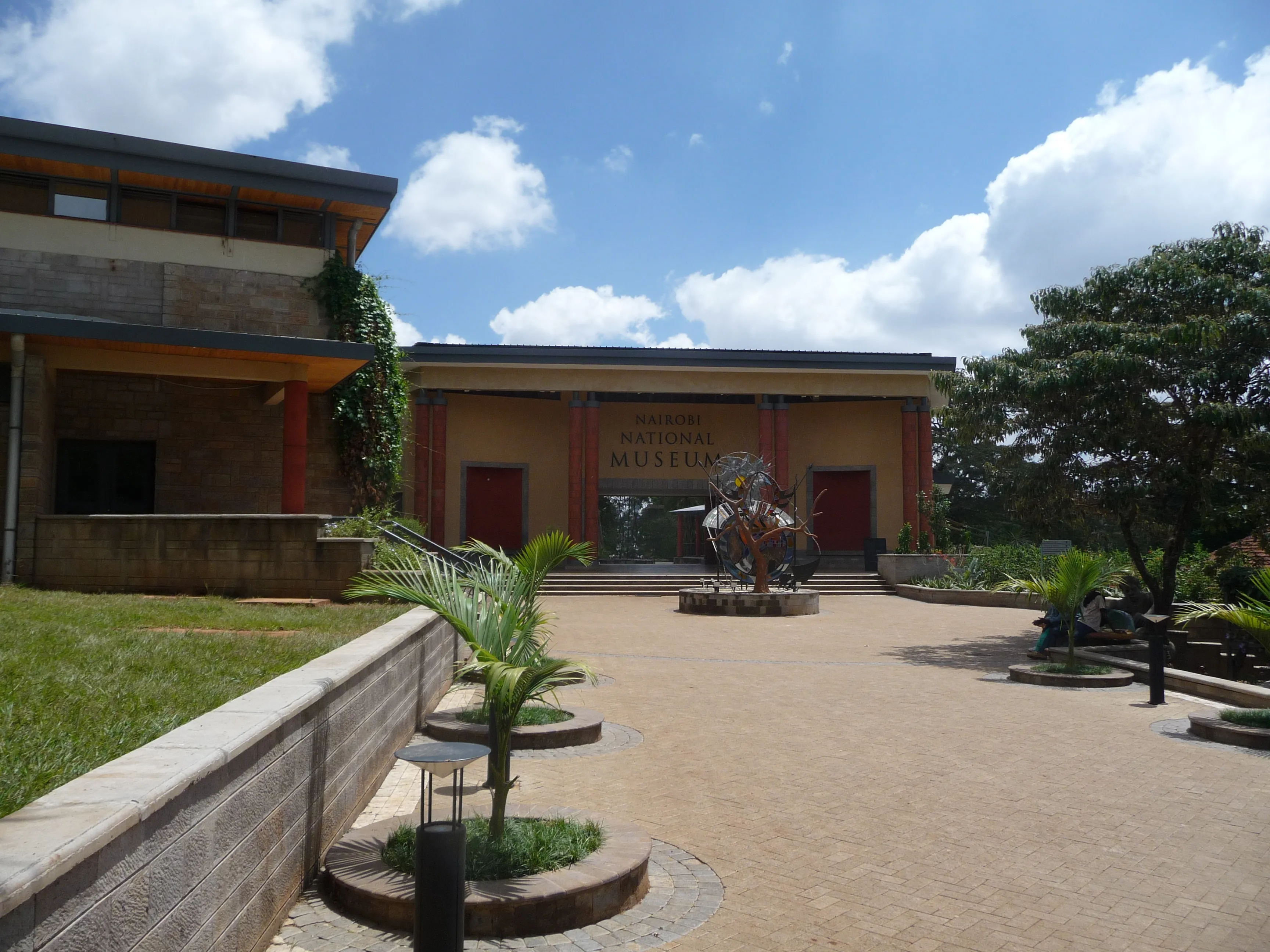
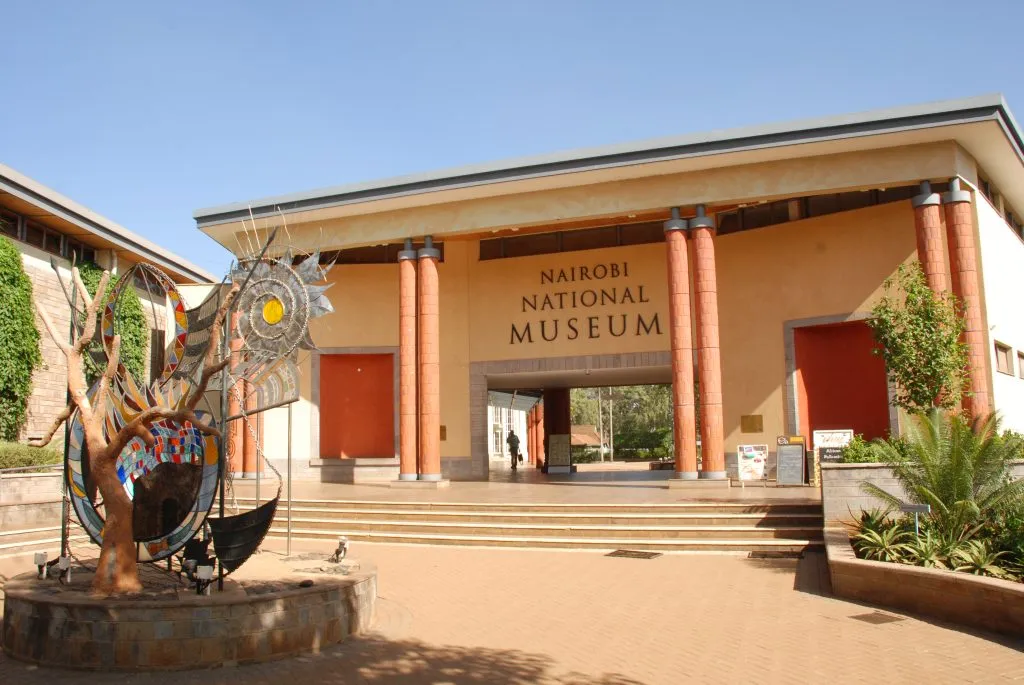
The Nairobi National Museum. Founded in 1920 and reopened in 2008 after a major renovation, it is the region's main national museum. Nairobi's dedicated contemporary spaces, from Paa ya Paa to the Nairobi Contemporary Art Institute, were built largely by artists rather than by the state. Image via Wikimedia Commons.
The Artists the Market Found
The international market discovered this infrastructure through specific names. Njideka Akunyili Crosby, born in Enugu and based in Los Angeles, won a MacArthur Fellowship in 2017 and now sells at auction for several million dollars; her large works, built from photo transfers of Nigerian family snapshots, are the most expensive contemporary Nigerian paintings ever made. Wangechi Mutu, born in Nairobi and long based in New York, filled the Metropolitan Museum's facade niches with "The NewOnes, will free Us" in 2019, the first commission for that space. Victor Ehikhamenor, who works between Lagos and London, brought Benin Kingdom visual grammar into contemporary painting and represented Nigeria at the Venice Biennale's first Nigerian pavilion in 2017.
Behind them is a bench of artists the Western market has not yet priced but the regional scene has long respected: Peterson Kamwathi and Beatrice Wanjiku in Nairobi, J.D. 'Okhai Ojeikere and Demas Nwoko in Nigeria, and the whole Oshogbo generation whose work is now being catalogued by museums. For readers coming to this from outside, our post on how to find emerging artists explains the mechanics of that discovery process.
Why Two Different Cities Built Two Different Art Worlds
The difference between Lagos and Nairobi is structural, not stylistic. Lagos built a market first: the collectors, the fair, the auction records, the galleries that export. Nairobi built institutions first: the artist-run spaces, the archive, the regional auction, the museum infrastructure. Lagos sells more. Nairobi sustains more artists. Both strategies are now necessary, and both are being copied. Cape Town has the Zeitz Museum of Contemporary Art Africa, Dakar has Dak'Art, and Accra is building its own version with the ANO Institute and Gallery 1957. For the wider economics of how a regional art capital forms, see our post on the economics of the art world.
What changed in the last five years is that these scenes no longer need Western validation to function. ART X Lagos sells to African collectors. Circle Art sells to Kenyan buyers. The work that leaves for London or New York is a smaller fraction of a larger whole, and that is what makes Lagos and Nairobi art cities in their own right rather than feeder cities for somewhere else.
Final Thoughts
Lagos and Nairobi ended the assumption that African contemporary art needed a Western city to make it real. Lagos built the market: the fair, the collectors, the auction records. Nairobi built the institutions: the artist-run spaces, the archive, the regional auction. Between them they created the infrastructure that a hundred other African art scenes are now scaling from.
If you are following this from outside the region, start with the source: ART X Lagos each November for the market view, and the Nairobi Contemporary Art Institute and Circle Art Gallery for the institutional one. For the longer history these scenes are finally getting credit for, read our guide to African art and what the West got wrong, and for the question of who gets into the canon and why, canon formation.
Frequently Asked Questions
What is ART X Lagos?
ART X Lagos is West Africa's leading international art fair, founded in 2016 by Tokini Peterside-Schwebig. Its tenth anniversary edition ran November 6 to 9, 2025 at the Federal Palace in Lagos, combining a fair with talks, performances, and special projects.
Who is the most famous Nigerian artist?
Ben Enwonwu is widely regarded as the father of Nigerian modern art. His 1974 painting Tutu, rediscovered in a London flat, sold at Bonhams in 2018 for 1.2 million pounds, a record for a modern Nigerian work at the time.
Where can you buy contemporary art in Nairobi?
Circle Art Gallery holds the main annual auction of modern and contemporary East African art and runs year-round exhibitions. The Nairobi Contemporary Art Institute, One Off Contemporary Art Gallery, and the city's commercial galleries show work for purchase at a range of prices.
Why is Lagos important to the African art market?
Lagos combines West Africa's largest concentration of collectors, galleries, and art events. ART X Lagos, LagosPhoto, and the Yemisi Shyllon Museum of Art give it an infrastructure no other city in the region matches, and Nigerian artists now command record prices at international auction.