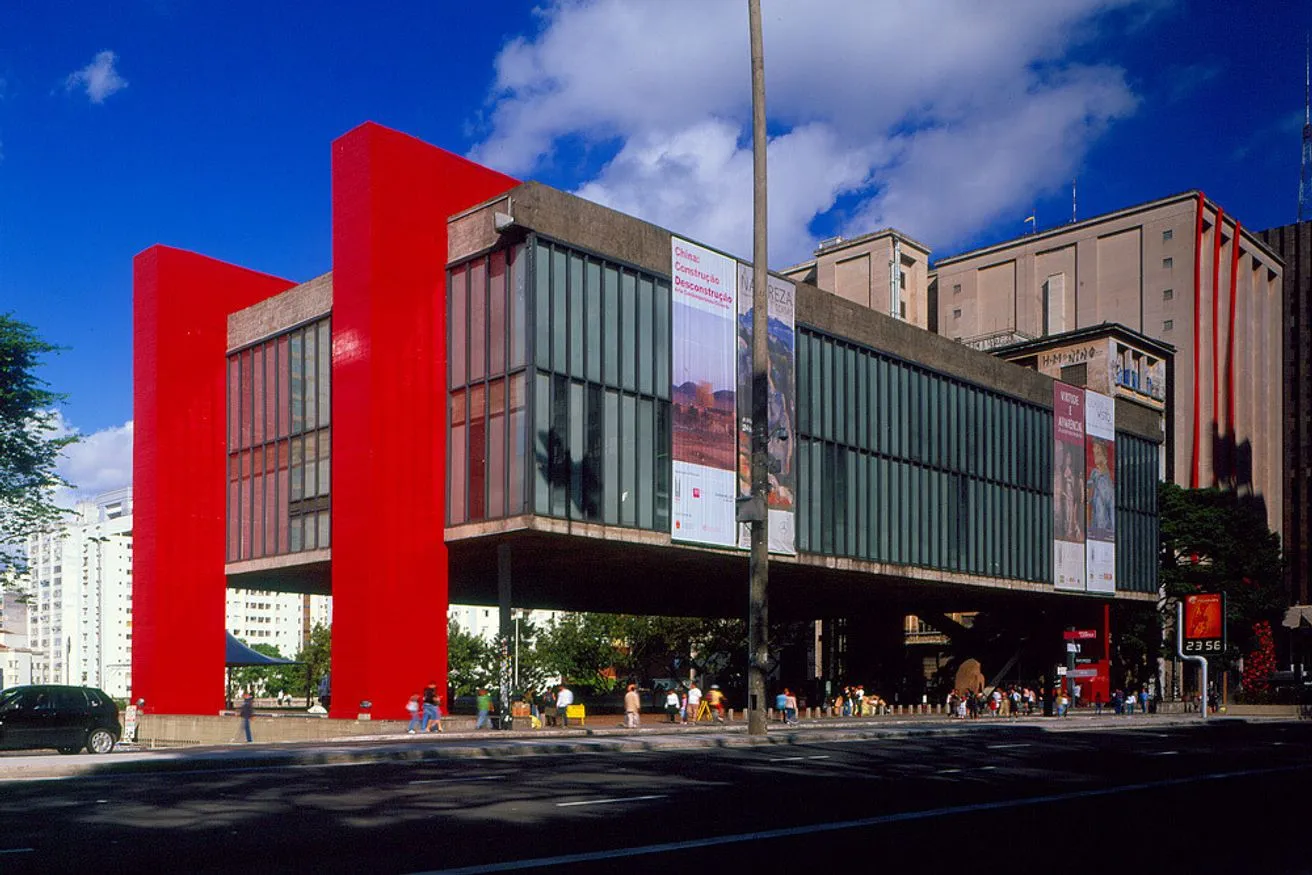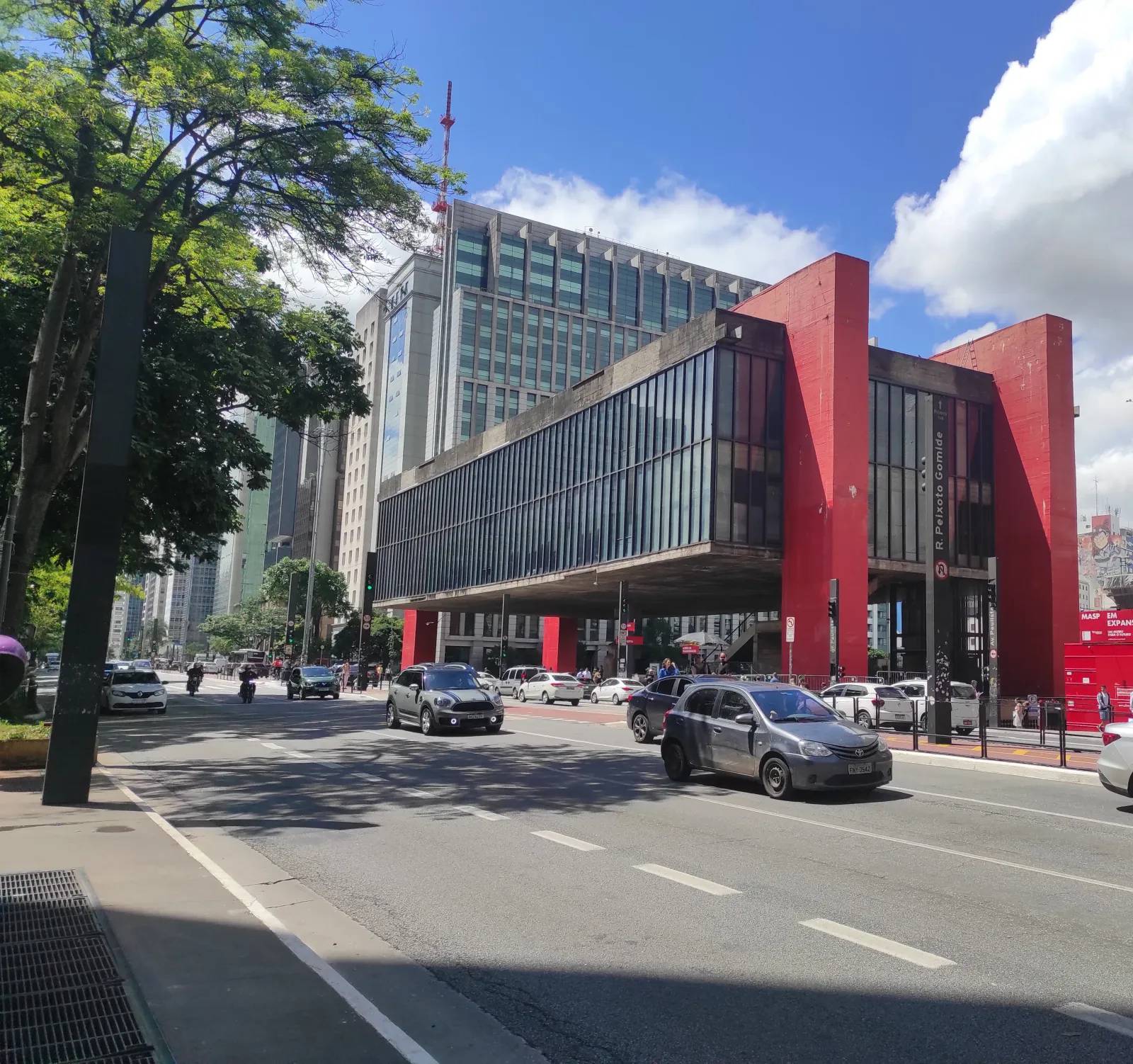
The Museum of Art of São Paulo floats eight meters above Avenida Paulista on four red pillars, a concrete and glass box suspended over a public square that the architect Lina Bo Bardi insisted remain empty. She designed it in 1957 as a "belvedere" from which the city could see itself, and in the process built the clearest possible diagram of Brazilian modernism's central argument: that Brazil would take European ideas, suspend them over its own ground, and turn them into something the old world had never made.
That argument produced the world's second-oldest biennale, a modernist movement that literally declared it would eat European culture, and two art cities that between them contain the most important Latin American art of the last century. São Paulo is the market and the machine. Rio de Janeiro is the imagination and the body. This guide covers the Semana de Arte Moderna of 1922, the Bienal and its dictatorship-era boycotts, the Neo-Concrete revolution in Rio, the museums that hold it all, and the street art that made São Paulo a global capital of urban painting. For the broader continental picture, see our guide to Latin American art beyond Kahlo.
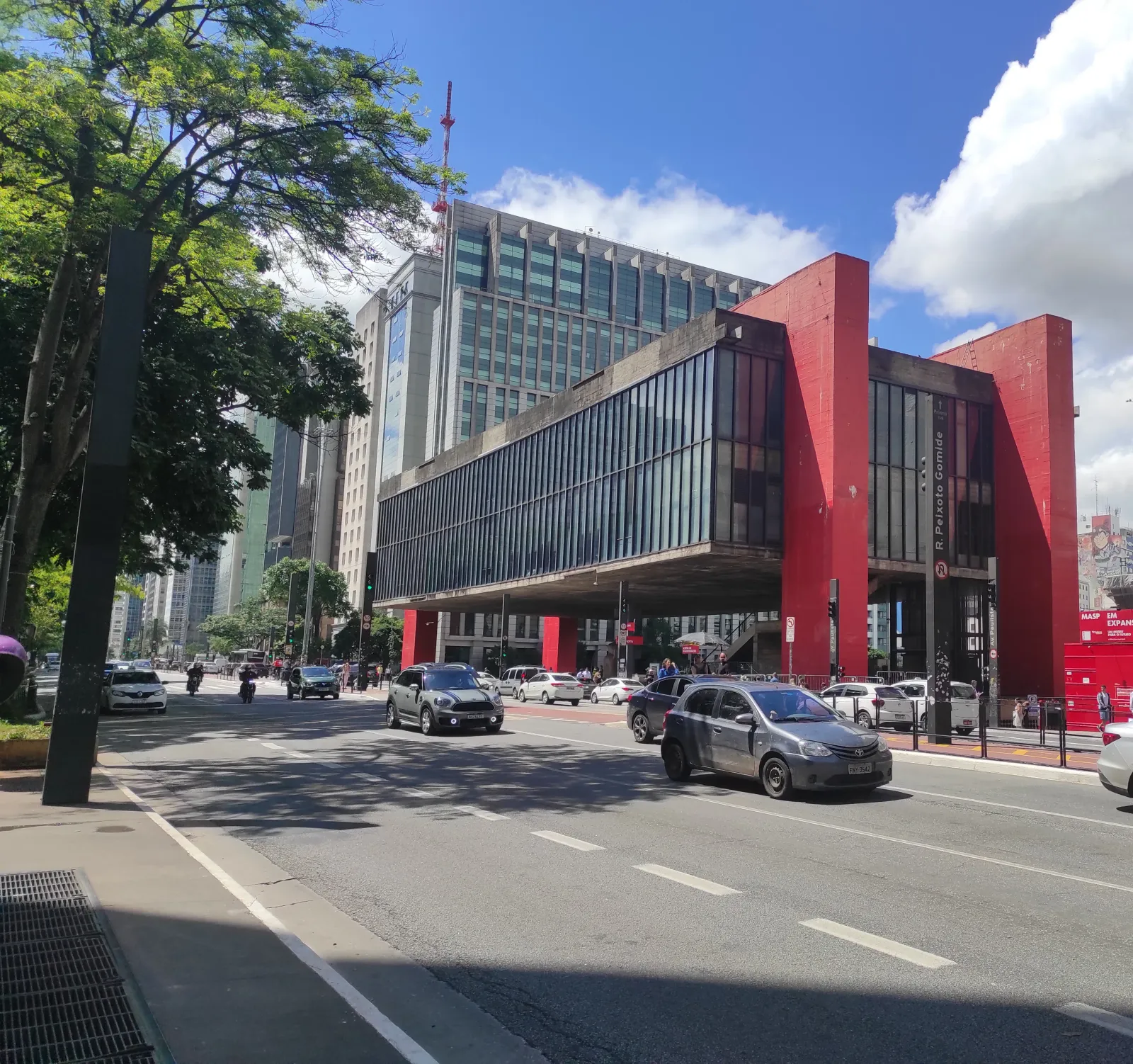
Museu de Arte de São Paulo (MASP), Avenida Paulista. Lina Bo Bardi designed the building to float eight meters above the ground on four red pillars, leaving the square beneath open to the city. Completed in 1968, it holds the largest European and Latin American collection in the southern hemisphere. Image via Wikimedia Commons.
1922: The Week That Started Everything
Brazilian modernism has a birthday: the Semana de Arte Moderna, held February 11 to 18, 1922 at the Theatro Municipal in São Paulo, deliberately timed to the centenary of Brazilian independence. The event showed paintings by Anita Malfatti and Tarsila do Amaral, sculpture by Victor Brecheret, and readings by the writer Oswald de Andrade. The São Paulo establishment hated it. Critics called Malfatti's distorted figures the work of someone who painted drunk. The organizers loved the scandal.
Tarsila do Amaral became the movement's central painter. Her 1928 "Abaporu," a monumental figure with a tiny head and an enormous foot planted on Brazilian soil, gave Oswald de Andrade the title and image for the Anthropophagic Manifesto he published that year. The manifesto argued that Brazil should "devour" European and industrial culture and digest it into a native product, turning colonial imitation into creative cannibalism. Tarsila's painting now hangs in the MALBA in Buenos Aires after selling at auction, and the manifesto remains the founding text of Brazilian modernism. For the theoretical context that made such a break necessary, see our post on modern versus contemporary art.
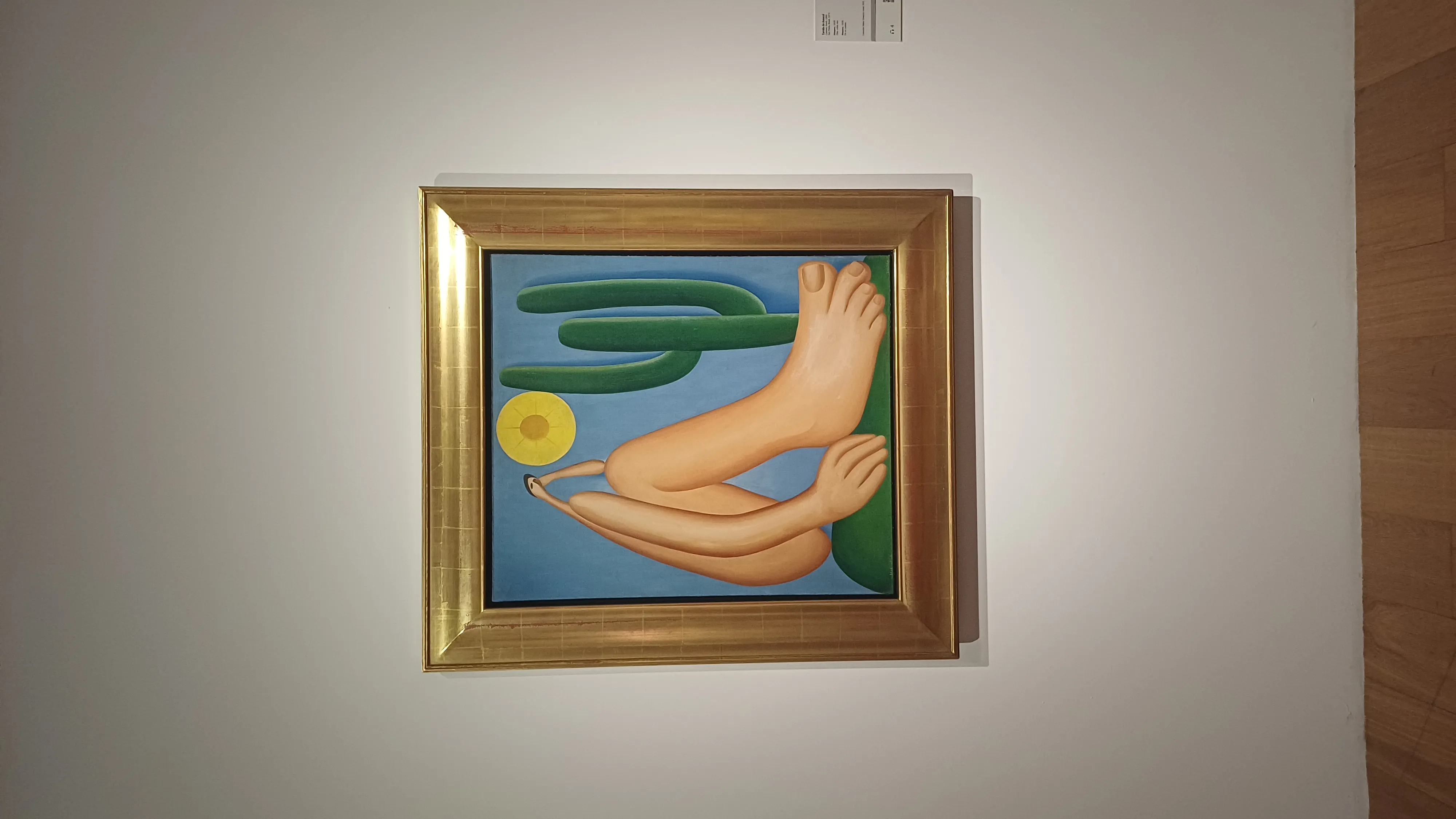
Tarsila do Amaral, "Abaporu" (1928), at the MALBA in Buenos Aires. The figure's oversized foot planted on Brazilian soil became the emblem of the Anthropophagic movement. Oswald de Andrade saw the painting and used its image for the 1928 manifesto that argued Brazil should devour European culture and digest it into something native. Image via Wikimedia Commons.
São Paulo: The Machine of Brazilian Modernism
São Paulo built the institutions that Rio's imagination needed. In 1951 the industrialist Ciccillo Matarazzo founded the Bienal de São Paulo, the first biennial anywhere in the world after Venice and still the only one that remained free to enter throughout most of its history. The 36th edition, titled "Not All Travellers Walk Roads: Of Humanity as Practice," ran from September 6, 2025 through January 11, 2026 at the Ciccillo Matarazzo Pavilion in Ibirapuera Park, an Oscar Niemeyer building from 1954, with free admission and 125 artists. The chief curator was Bonaventure Soh Bejeng Ndikung, making it the first edition led by an African curator, a fact Brazil's Afro-Brazilian majority noted.
The Bienal survived the military dictatorship of 1964 to 1985, but not cleanly. In 1969, most of the Western art world boycotted the 10th edition after the regime passed Institutional Act 5, and Brazil's own best artists refused to show. The boycott worked partly because São Paulo had already made the Bienal matter enough to damage by skipping it. For the political context of what artists faced under the regime, see our guide to art under authoritarian rule.
The city's museums map that history. MASP, founded in 1947 by the press magnate Assis Chateaubriand and Pietro Maria Bardi and housed since 1968 in Lina Bo Bardi's building, holds the largest European and Latin American collection in the southern hemisphere, displayed for decades on Bo Bardi's famous "crystal easels," glass stands that make paintings float in space. The Pinacoteca, founded in 1897 and the oldest art museum in the state, was renovated by Paulo Mendes da Rocha in the 1990s into a luminous sequence of galleries. The Museu Afro Brasil Emanoel Araujo, founded in 2004 in another Niemeyer pavilion in Ibirapuera Park, holds more than 6,000 works centered on Afro-Brazilian history and art.
Rio: The Body and the Idea
If São Paulo built the machine, Rio produced the artists who redefined what it could make. In 1959 the poet Ferreira Gullar published the Neo-Concrete Manifesto, and the painters Lygia Clark, Lygia Pape, and Hélio Oiticica declared that the pure geometry of the earlier Concrete movement was dead. They wanted art that involved the body, the viewer, and time itself.
Clark made her "Bichos," hinged metal sculptures that viewers were required to fold and unfold with their hands, turning the spectator into the maker. Oiticica made "Tropicália" in 1967, an installation of sand, tropical plants, parrots, and a television set that named an entire cultural movement. For the line this draws from conceptual art, see our guide to when the idea is the artwork.
Rio's museums hold this legacy in Niemeyer's most theatrical buildings. The Museum of Modern Art, founded in 1948 and built by Affonso Eduardo Reidy on the Flamengo seafront, was nearly destroyed by fire in 1978 but rebuilt and remains the city's main modern venue. The Museum of Tomorrow, designed by Santiago Calatrava and opened in 2015 on the redeveloped Pier Mauá, is a science museum that became Rio's most photographed building. Across Guanabara Bay in Niterói, the Museum of Contemporary Art, opened in 1996, is Niemeyer's white UFO-shaped museum on a cliffside, the building Brazilians use to say their architecture can compete with anyone's.
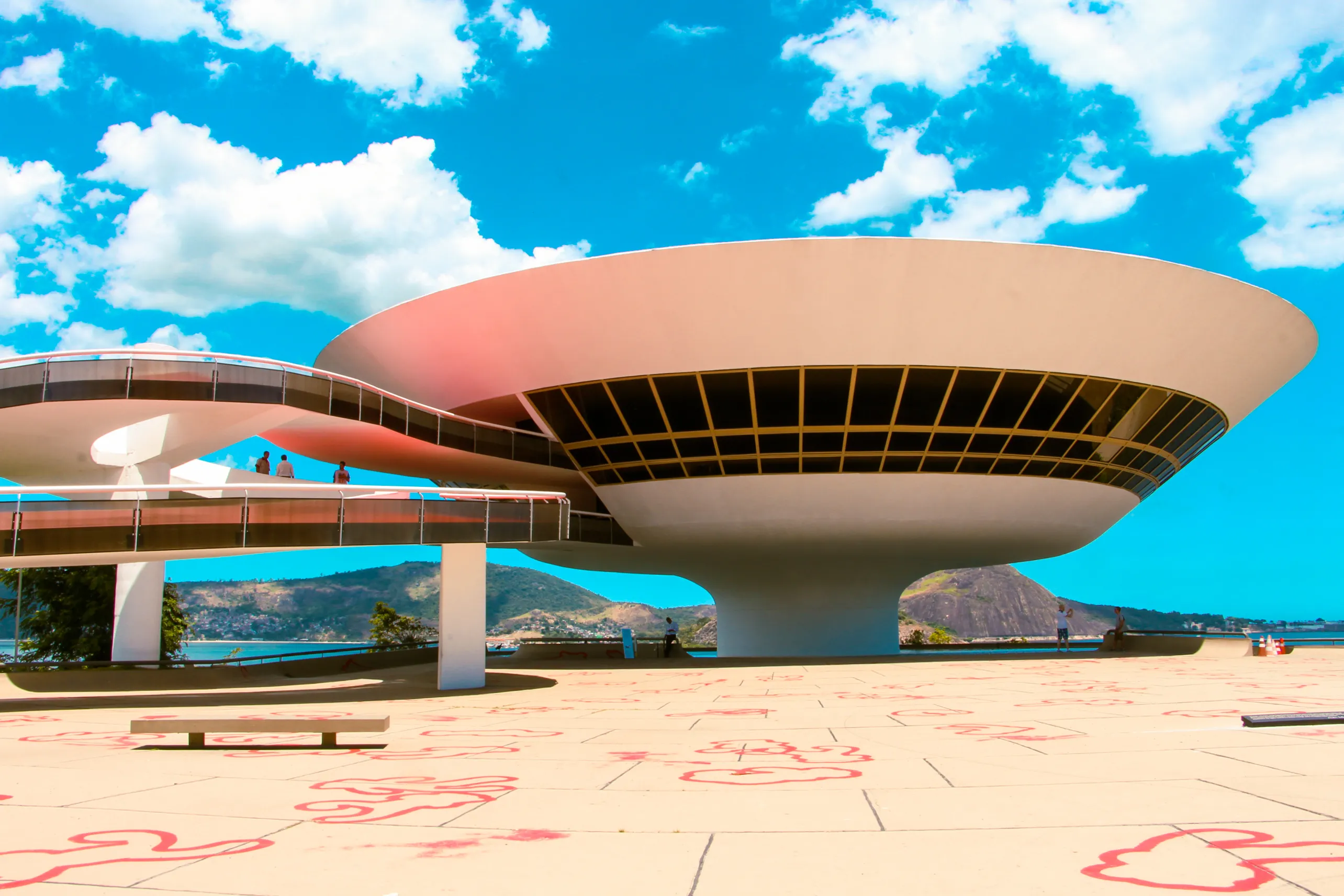
The Museum of Contemporary Art in Niterói, designed by Oscar Niemeyer and opened in 1996. The white disk on a cliffside across Guanabara Bay from Rio is Niemeyer's most famous museum and one of the most photographed buildings in Brazil. Image via Wikimedia Commons.
Pichação, Street Art, and the Market
São Paulo's other contribution is written on its walls. Pichação, the aggressive, angular tagging style unique to the city, covers the undersides of its viaducts and the sides of its buildings, a visual language closer to concrete poetry than to graffiti. Over it, São Paulo built a legitimate street art industry. The twin brothers OSGEMEOS turned the yellow characters of their drawings into international art careers. Eduardo Kobra paints building-sized historical murals across the city. The alleys of Vila Madalena, especially Beco do Batman, function as an open-air gallery where new work goes up daily.
The commercial infrastructure followed. São Paulo's gallery district holds Nara Roesler, Fortes D'Aloia & Gabriel, and Mendes Wood DM, the three galleries that export Brazilian artists to Art Basel. SP-Arte, the art fair founded in 2005 and held each spring at the Bienal pavilion, is the largest art fair in Latin America. For how the gallery-and-fair system works in general, see our post on what happens at an art fair.
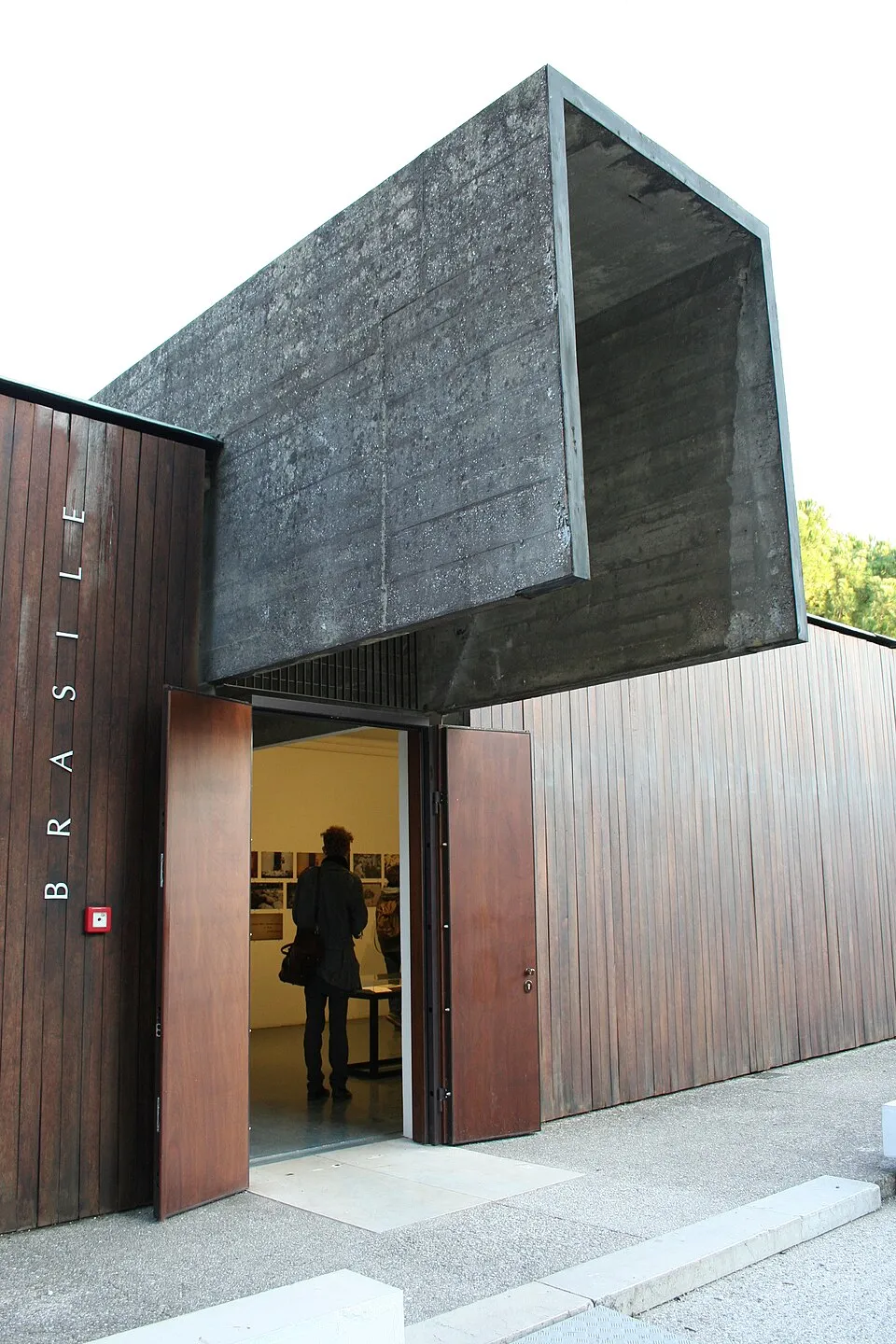
The Brazilian pavilion at the Venice Biennale's Giardini. Brazil's presence at Venice, and its own Bienal de São Paulo founded in 1951, made the country the only Latin American nation with a permanent national pavilion infrastructure at the world's oldest biennial. Image via Wikimedia Commons.
Two Cities, One Argument
The useful way to read São Paulo and Rio together is as the two halves of Brazilian modernism's split personality. São Paulo produced the manifestos, the money, the museums, the market, and the machine that turned art into a national industry. Rio produced the body, the beach, the carnival, the Neo-Concrete experiment, and the idea that art should be lived rather than looked at. Oiticica's "Tropicália" was made in Rio and named by a São Paulo critic. The Bienal was funded by São Paulo coffee money and filled with Rio artists. The cities need each other, and they have spent a century pretending they do not.
What that means for a visitor is that you cannot understand Brazilian art from one city alone. You have to see MASP's collection, walk Ibirapuera Park's Niemeyer pavilions, stand in front of "Abaporu"'s descendants at the Pinacoteca, then fly to Rio and stand under the MAC in Niterói and feel how completely different the same country looks. For the pre-Columbian and colonial substrate under all of this, see our guide to Pre-Columbian art.
Final Thoughts
Brazil did not copy European modernism. It ate it, digested it, and produced something the old world could not have made: a modernism built for tropical light, for a mixed-race nation, for cities that refused to separate the museum from the street. São Paulo built the machine and Rio gave it a body. Between them they made Latin America's most complete art world.
Start at MASP and the Pinacoteca for the collections, walk through Ibirapuera Park to see the Niemeyer pavilions and the Afro Brasil museum, then go to Rio for the Museum of Modern Art, the Museum of Tomorrow, and the drive across the bay to the MAC in Niterói. For the artists whose work fills these museums, see our guide to Latin American art, and for the political context that shaped the Bienal boycotts, art and politics.
Frequently Asked Questions
What is the São Paulo Bienal?
The Bienal de São Paulo is the world's second-oldest art biennial, founded in 1951 by industrialist Ciccillo Matarazzo. The 36th edition, titled Not All Travellers Walk Roads, ran from September 6, 2025 to January 11, 2026 with free admission at the Ciccillo Matarazzo Pavilion in Ibirapuera Park.
What was the Semana de Arte Moderna of 1922?
The Week of Modern Art was a February 1922 festival at São Paulo's Theatro Municipal that introduced modernism to Brazil. Painters Anita Malfatti and Tarsila do Amaral showed work the public mocked, but the event triggered the Anthropophagic movement that defined Brazilian modernism.
What is the Anthropophagic Manifesto?
Written by Oswald de Andrade in 1928 and inspired by Tarsila do Amaral's painting Abaporu, the Anthropophagic Manifesto proposed that Brazilian culture should devour European influences and digest them into something new. It remains the founding text of Brazilian modernism.
Which museum did Oscar Niemeyer design in Rio?
The Museum of Contemporary Art in Niterói, across Guanabara Bay from Rio. Opened in 1996, the white UFO-shaped building on a cliffside is Niemeyer's most famous museum and one of Brazil's most photographed buildings.