NYSCA Support for Artists: The $10,000 Grant Most New York Artists Ignore
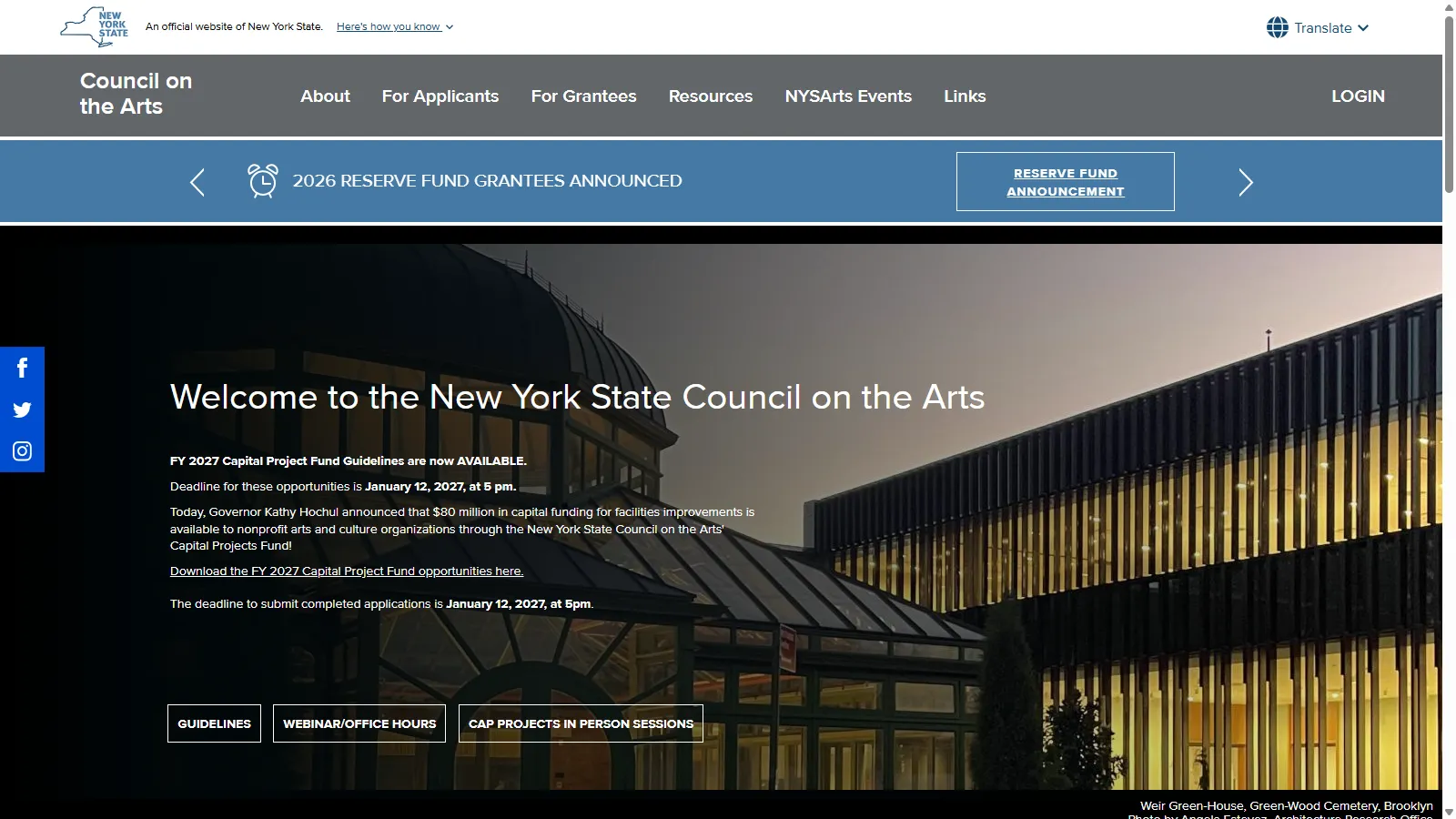
Every year, the New York State Council on the Arts pays $10,000 to individual artists to make new work, and most eligible artists never apply. The reason is structural: NYSCA cannot fund individuals directly, so the application runs through a nonprofit fiscal sponsor. That one extra step filters out everyone who does not know it exists, which is exactly the gap this guide is meant to close.
The Support for Artists opportunity funds a commissioning or artist fee across eight areas: choreography commissions, composer compositions, film/media/new technology, folk and traditional arts, interdisciplinary work, literature, theater commissions, and visual arts. For FY2026 every award is a flat $10,000, treated as a fee for your creative labor rather than a production budget.
How the Fiscal Sponsor Works
You do not apply alone. An eligible New York State nonprofit 501(c)(3), local government, or Native American nation sponsors your application, the grant lands in their account, and they pass the money to you. Sponsors may deduct up to $500 as an administrative fee, leaving you $9,500 or more.
Finding a sponsor is the real work, and it is easier than it sounds. Regional arts service organizations like Arts Services Inc. in Buffalo or the New York Foundation for the Arts run established fiscal sponsorship programs that pair individual artists with the grant. If you already show with a nonprofit, ask them first.
What the Money Is For
NYSCA is unusually clear about this: the $10,000 is your fee for making the work, not your materials budget. If your project needs more than the grant covers, the application asks you to explain how you will complete it, but no matching funds are required. That structure treats the grant as compensation for your time, which is rarer in public arts funding than it should be.
Eligible artists must be 18 or older and New York State residents at the application deadline. Career stage is irrelevant; the program welcomes emerging and established artists equally. The funded work happens inside the fiscal year's project window.
What Separates It From Other Grants
Compared to Creative Capital, which funds bigger sums over multi-year cycles, NYSCA is faster, flatter, and more accessible. Compared to NYFA fiscal sponsorship, this is not a pass-through service but an actual grant competition. And unlike the NEA, which funds organizations, this money lands on individual artists directly through the sponsor.
What Panels Actually Fund
The peer panels score projects on artistic merit, feasibility, and public benefit, in roughly that order. Visual arts applications typically need a concrete project, not a promise to keep painting: a defined body of work, exhibition, public work, or commission outcome that the $10,000 fee makes possible.
Because awards are uniform, the comparison inside the jury pool is unusually direct. Panels are not weighing a $10,000 project against a $50,000 one; every application competes at identical cost, which rewards tight, honest project design over ambition theater.
NYSCA's Broader Funding Landscape
Support for Artists sits inside a much larger machine. NYSCA is the largest state arts funder in the country, distributing tens of millions annually to organizations through its Support for Organizations program, which is where most of the money goes but requires 501(c)(3) status directly. For individuals, the Support for Artists route is the only door.
Fiscal-year timing matters. Applications open in late spring or summer for the following fiscal year, with funded projects typically running through the subsequent calendar year. The FY2026 cycle funded projects taking place in 2026, so the FY2027 call is the one to watch.
The Fiscal Sponsor Shortlist
Regional arts services organizations are the practical route for most applicants. Arts Services Inc. in Buffalo, the New York Foundation for the Arts, and similar statewide nonprofits run standing fiscal sponsorship programs specifically to pair artists with NYSCA-eligible sponsors. Your own exhibiting nonprofit, community arts center, or university gallery can also serve if it meets the 501(c)(3) and New York location requirements.
Insider Tips
Line up your fiscal sponsor months before the deadline, not weeks. The sponsor files paperwork on their end too, and the reputable ones fill their sponsorship slots early. Read the application manual for your specific discipline, because visual arts requirements differ from literature and media.
The narrative should focus on the new work itself. Panels fund compelling projects, not career summaries, and the $10,000 flat fee means the jury is comparing project ideas at equal cost. A focused, achievable project beats a sprawling one that obviously needs $50,000.
Who Should Apply
Any working artist living in New York State who has a concrete project ready to make and a nonprofit willing to sponsor them. If you are outside New York, your state arts council likely runs a parallel program; NYSCA's is simply among the most generous and clearly structured. For New Yorkers, this is the single most attainable five-figure grant in American art funding.