Arts Council England DYCP: Up to £12,000 for Individual Artist Development
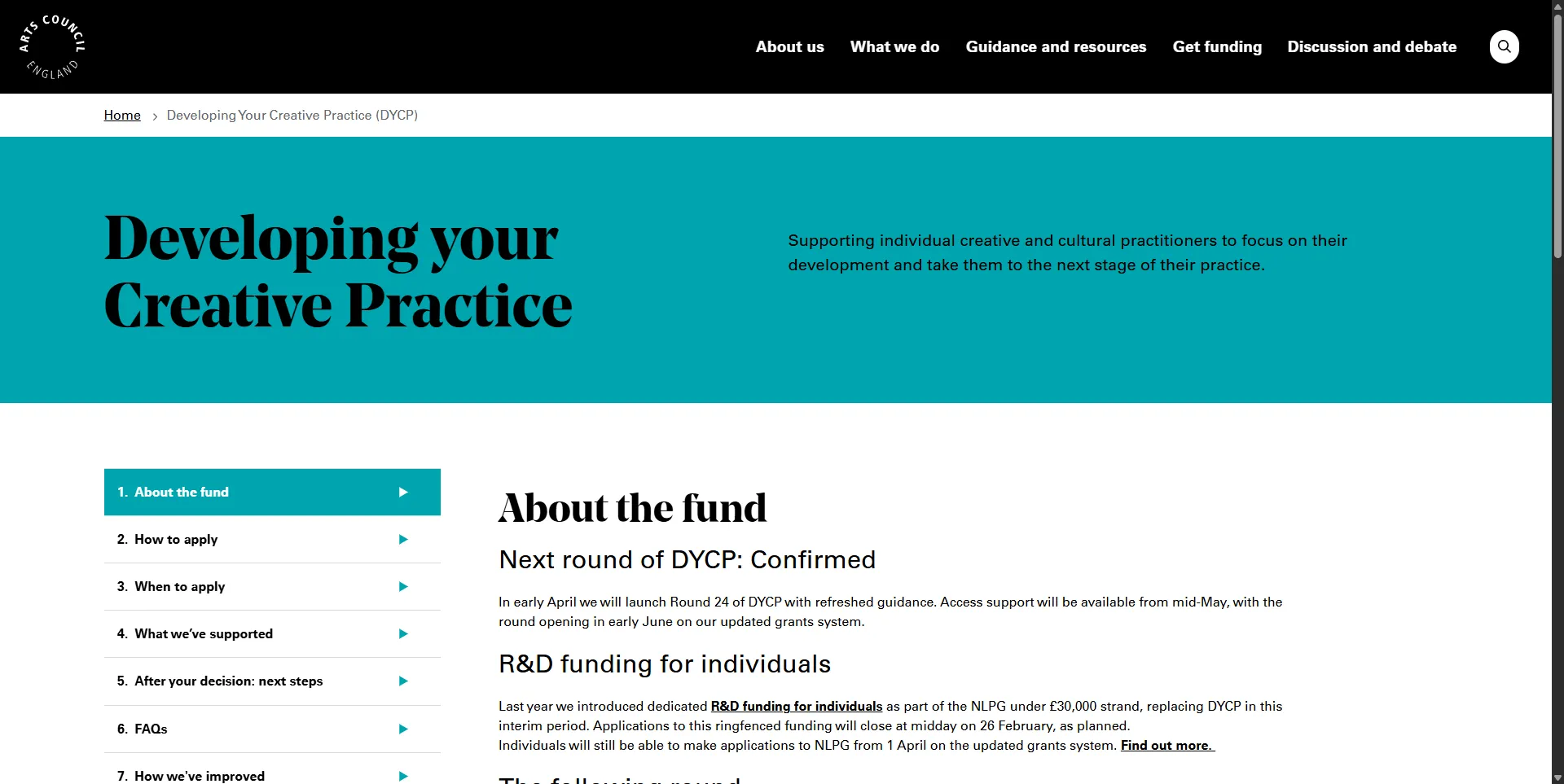
Developing Your Creative Practice (DYCP) is the grant that Arts Council England built specifically for individual artists who need time and money to take their work in a new direction. It is not for making finished work. It is not for mounting an exhibition. It is for the messy, unglamorous phase of research, experimentation, and skill-building that happens before the finished piece exists.
The grant offers up to £12,000 to individual creative and cultural practitioners in England. The next round, Round 24, opens at midday on Thursday, June 4, 2026 and closes at midday on Thursday, July 2, 2026. Decisions are expected by Thursday, October 8, 2026.
The Pause and What Happened
Here is something that caught many artists off guard: Arts Council England paused DYCP from late 2025 through April 2026. The reason was a combination of surging demand and system limitations. Between 2022 and 2025, DYCP applications rose by 11 percent, and the total amount applied for across DYCP and National Lottery Project Grants hit £355 million. The system could not keep up.
During the pause, Arts Council England redirected £7.5 million of DYCP budget into a time-limited Research and Development priority within the National Lottery Project Grants (NLPG) under £30,000 strand. This allowed individual artists to apply for R&D funding through NLPG while DYCP was being restructured. That time-limited priority closed on February 26, 2026.
DYCP is now back, relaunched in April 2026 with a revised application form. The new form has fewer, more tailored questions designed to make it easier to plan and explain your development opportunity. If you applied to the NLPG R&D priority during the pause, you can still apply to DYCP, but for different development activity.
What DYCP Funds
DYCP is specifically designed to support research and development, not the production of finished work for public presentation. This distinction is the most common reason applications get rejected. If your proposal reads like a project grant application (I will make this exhibition, I will produce this body of work, I will stage this performance), you are in the wrong program.
What DYCP will fund:
- Research trips to visit collections, archives, or locations relevant to your practice
- Skills development through workshops, courses, or mentoring that extends your technical or conceptual range
- Experimentation with new materials, techniques, or approaches you have not had time or resources to pursue
- Residencies that provide time and space for focused creative development
- International exchange connecting you with practitioners and contexts outside the UK
The grant trusts artists to identify what their practice needs. It does not prescribe what form the development should take. But it does require you to make a compelling case for why this specific development activity, at this specific point in your career, will produce a meaningful shift in your practice.
Who Is Eligible
DYCP is open to individual creative and cultural practitioners based in England. You must be:
- At least 18 years old
- Based in England (live in or have a business address in England)
- Working in one of Arts Council England's supported disciplines (visual arts, music, theatre, dance, literature, combined arts, museums, libraries)
- Not in full-time arts education
- A UK national or someone with settled status
You must be able to demonstrate that you are a working professional artist, not a hobbyist or student. Evidence can include exhibition records, publication credits, professional memberships, or other documentation of sustained engagement with professional artistic practice.
If you are not eligible for DYCP, or if your proposed activity is more project-focused than development-focused, look at the National Lottery Project Grants instead, which supports specific creative projects rather than individual development.
The Application Process
Applications are submitted through Arts Council England's online grants system. The revised DYCP form (introduced with the April 2026 relaunch) has fewer questions than previous rounds, with tailored prompts designed to help you explain your development opportunity clearly.
You will need:
- A clear description of the proposed activity: What exactly will you do with the funding? Be specific. "I will spend three months experimenting with rust printing techniques at my studio, supplemented by a two-week research trip to the textile archives at the V&A" is better than "I will develop my printmaking practice."
- A detailed budget: Real costs based on actual research, not guesses. Arts Council England expects budgets to be accurate and well-justified. Poorly justified budgets are a primary reason for rejection.
- Evidence of professional practice: Documentation that you are a working professional artist
- A statement explaining how the activity will develop your practice: Why this activity, why now, and what will change in your work as a result
Arts Council England provides detailed guidance on its website, including examples of successful applications. If you are applying for the first time, read the guidance materials thoroughly before starting your application.
Assessment Criteria
Applications are assessed against several criteria:
- Quality of the proposed activity: Is it genuinely developmental? Will it produce meaningful growth? Applications for routine activities that you could fund yourself are less likely to succeed.
- Track record: Your professional history and the quality of your existing work. Strong applications show a clear trajectory of professional development.
- Potential impact: How will this funding change your practice? What will you be able to do after this development that you cannot do now?
- Value for money: Is the budget realistic and well-justified?
The assessment is conducted by Arts Council England staff and peer assessors who have professional experience in the relevant artform.
How DYCP Compares to Other UK Arts Funding
- vs. National Lottery Project Grants: NLPG funds specific projects with public outcomes (exhibitions, performances, events). DYCP funds individual development with no required public outcome. If you want to make a show, apply to NLPG. If you want to spend three months learning a new technique, apply to DYCP.
- vs. Creative Scotland Open Fund: If you are based in Scotland rather than England, Creative Scotland's Open Fund for Individuals is the equivalent program, offering up to £100,000 for creative projects.
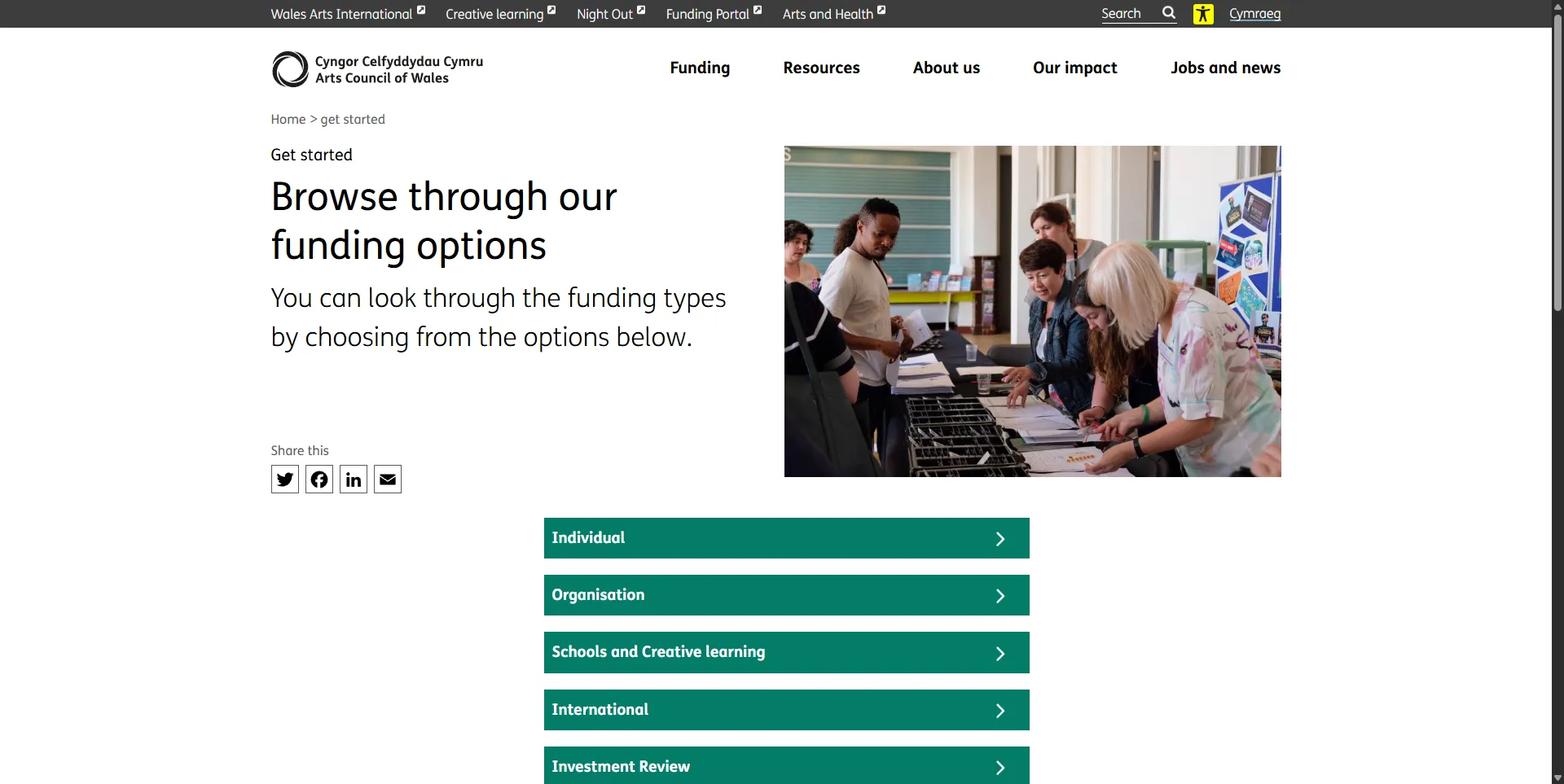
- vs. Arts Council of Wales Grants: If you are based in Wales, the Arts Council of Wales Creative Practice program offers £500 to £10,000 for individual artist development.
- vs. Arts Council of Northern Ireland: ACNI's Support for Individual Artists Programme (SIAP) offers £3,000 to £10,000 for artists in Northern Ireland.
Insider Tips for Applicants
- Do not apply to make finished work. This is the most common mistake. DYCP is for development, not production. If your proposal is "I will create a series of paintings for an exhibition," it will be rejected. If it is "I will spend four months experimenting with natural pigment making, testing how different mineral compositions affect color stability, with the goal of integrating these materials into my painting practice," that is development.
- Be specific about the activity. Name the workshops, the mentors, the archives, the residencies. Vague proposals get vague scores.
- Budget realistically. Research actual costs. Get quotes. Arts Council England can tell when a budget is guessed.
- Apply at a turning point. DYCP is designed for artists at a career crossroads who are ready to take a step change. Show that you have established a practice and are now ready to push it in a new direction.
- Access support is available. If you have a disability or specific access need, you can request access support to help with the application process. Access support requests for Round 24 open on May 14, 2026 and close on June 11, 2026.
Final Verdict: Who Is This Actually For?
DYCP is for professional artists in England who have hit a point in their practice where they need dedicated time and resources to experiment, research, or learn something new. It is not for beginners, not for students, and not for artists who want to fund the production of finished work.
The £12,000 maximum is enough to buy months of focused development time. If you have been stuck in a rut, if you have been making the same work for years and want to break out, or if you have identified a specific skill or body of research that would transform your practice, DYCP is designed for exactly this situation.
Apply between June 4 and July 2, 2026, through the Arts Council England website. Read the guidance documents first, talk to the access support team if you need accommodations, and be ruthlessly specific about what you will do and why it matters.