Art Students League of New York: 150 Years of Studio Art Without the Bureaucracy
No portfolio review. No application. No grades. No degree. You show up, you pay for the month, and you draw or paint alongside working professional artists in a Beaux-Arts building on West 57th Street that has been doing this since 1875. That is the Art Students League of New York, and after 150 years, it remains one of the most serious places in the world to study traditional studio art.
The League's refusal to adopt the structures of modern art education is not a marketing gimmick. It is the founding principle. In 1875, a group of students broke away from the National Academy of Design because they wanted to study art without rigid academic restrictions. That rebellious, student-directed philosophy still defines the institution today. Whether that freedom is liberating or terrifying depends entirely on what kind of learner you are.
How the League Actually Works
Classes run on a monthly schedule. You enroll in individual classes with specific instructors, pay tuition for the month, and show up. Tuition is due before the first of the calendar month, and if you want to keep your spot in a full class, you must pay for the next month by the 21st of the current month or risk forfeiting your place.
As of the Summer 2026 catalog, monthly tuition ranges from approximately $195 for a once-weekly evening class to $433 for a five-day-per-week morning session. A 15% discount applies if you register for both the AM and PM sessions of the same class. The League also charges an annual registration fee that is nonrefundable.
The flexibility is real. You can start mid-month with prorated tuition. You can try a class for one month and switch instructors the next. You can study with the same instructor for years if the relationship works. There are no semester start dates to wait for and no long-term commitments.
But here is the catch: that flexibility means you are entirely responsible for your own progress. Nobody is tracking your development, nobody is requiring you to show up, and nobody will notice if you stop coming. For self-directed artists who know what they want, this is ideal. For people who need structure and accountability, it is a recipe for stalling.
The Faculty: Working Artists, Not Career Academics
Every instructor at the League is a working professional artist with an active exhibition career. This is not a school where professors stopped making art decades ago to teach full-time. The faculty roster includes painters, sculptors, printmakers, illustrators, and mixed media artists whose work shows in galleries and museums in New York and internationally.
The historical lineage is serious. Thomas Hart Benton, George Bridgman, Robert Henri, Frank Reilly, and Kimon Nicolaides all taught at the League. Nicolaides' book "The Natural Way to Draw" remains one of the most influential drawing instruction texts ever written. That tradition of committed, working-artist instruction continues in the current faculty.
The teaching quality varies by instructor, which is true at any institution but especially visible at the League because there is no standardized curriculum. Some instructors are extraordinary teachers who have refined their pedagogy over decades. Others are brilliant artists who struggle to articulate their process. The monthly enrollment system is your safeguard here: if an instructor is not working for you, you can switch after one month without any bureaucratic process.
What You Can Study
The League offers instruction across the full range of traditional studio arts. The Summer 2026 studio catalog lists 84 classes across these categories:
- Drawing (20 classes): Life drawing, gesture, anatomy, portrait drawing, and observational drawing from still life and landscape. The drawing instruction is grounded in learning to see accurately and translate observation into marks on paper.
- Painting (37 classes): Oil, acrylic, watercolour, gouache, and mixed media. Instruction ranges from foundational colour mixing and value control to advanced composition and pictorial space. Instructors span classical realism through expressive abstraction.
- Sculpture (21 classes): Clay modelling, stone and wood carving, casting, and construction. Facilities include kilns, casting equipment, and a range of tools. Life modelling from the figure is central to the curriculum.
- Printmaking (4 classes): Etching, lithography, screenprinting, woodcut, and relief printing. The printmaking studios are fully equipped and rival dedicated printmaking schools.
- Additional categories: Metal sculpture (5 classes), mixed media (6 classes), comics and animation (3 classes), plein air (2 classes), and classes specifically for children and teens.
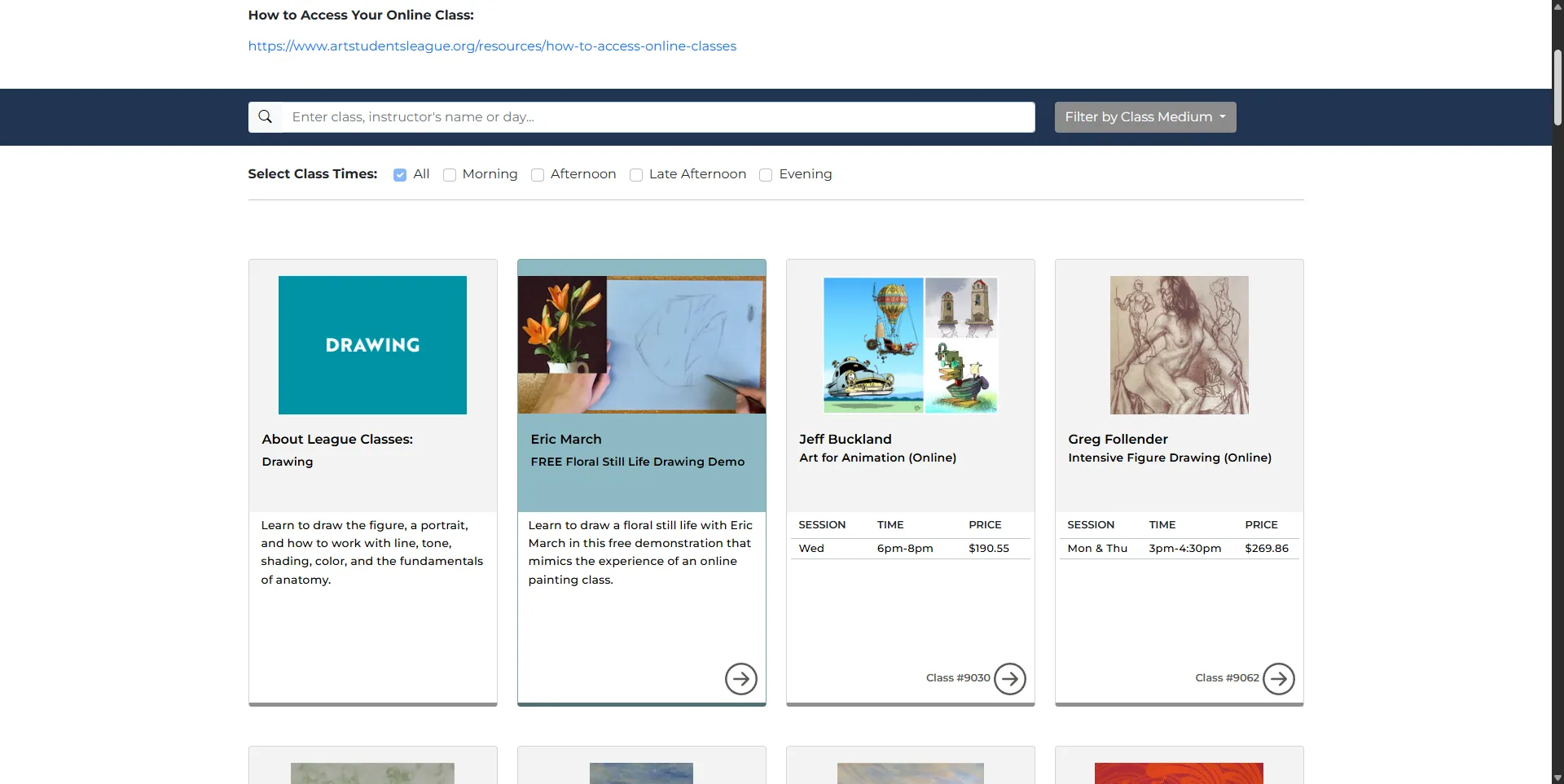
The League also offers online classes through its e-telier platform, which brings the same atelier-style instruction to remote students. The Spring 2026 online catalog included courses in fashion drawing, expressive watercolor, and even a workshop on art and AI. Online tuition is comparable, with classes like the 5-week Fashion Drawing course at $339.90.
The Building and the Neighborhood
The League occupies a landmark Beaux-Arts building at 215 West 57th Street, designed by Henry Janeway Hardenbergh, the same architect who designed the Plaza Hotel and the Dakota. The building houses studios, galleries, a library, and administrative offices. It has been the center of New York's art community for generations.
The neighborhood is Midtown Manhattan, which means you are walking distance from MoMA, Times Square, and Central Park. It also means you are paying Manhattan prices for everything outside of class. Lunch near the League will cost you $15 to $25. The convenience of the location is undeniable, but budget for the reality of being in one of the most expensive neighborhoods in the country.
Insider tip: The League's galleries host regular exhibitions of student and faculty work. These shows are free and open to the public, and they are one of the best ways to evaluate which instructors' students are producing work that resonates with you before you enroll in their class.
Financial Aid and Scholarships
The League offers work-study scholarships and merit-based grants for enrolled students. Work-study requires up to four hours of work per week and covers $335 of tuition (excluding fees) for one school year (September through May). Merit scholarships and grants are awarded through a juried competition each spring. Tuition aid scholarships are based on documented financial need.
The availability of financial aid makes the League accessible to students who could not otherwise afford New York art school tuition, though the aid amounts cover a portion of costs rather than full tuition.
How It Compares to Other Options
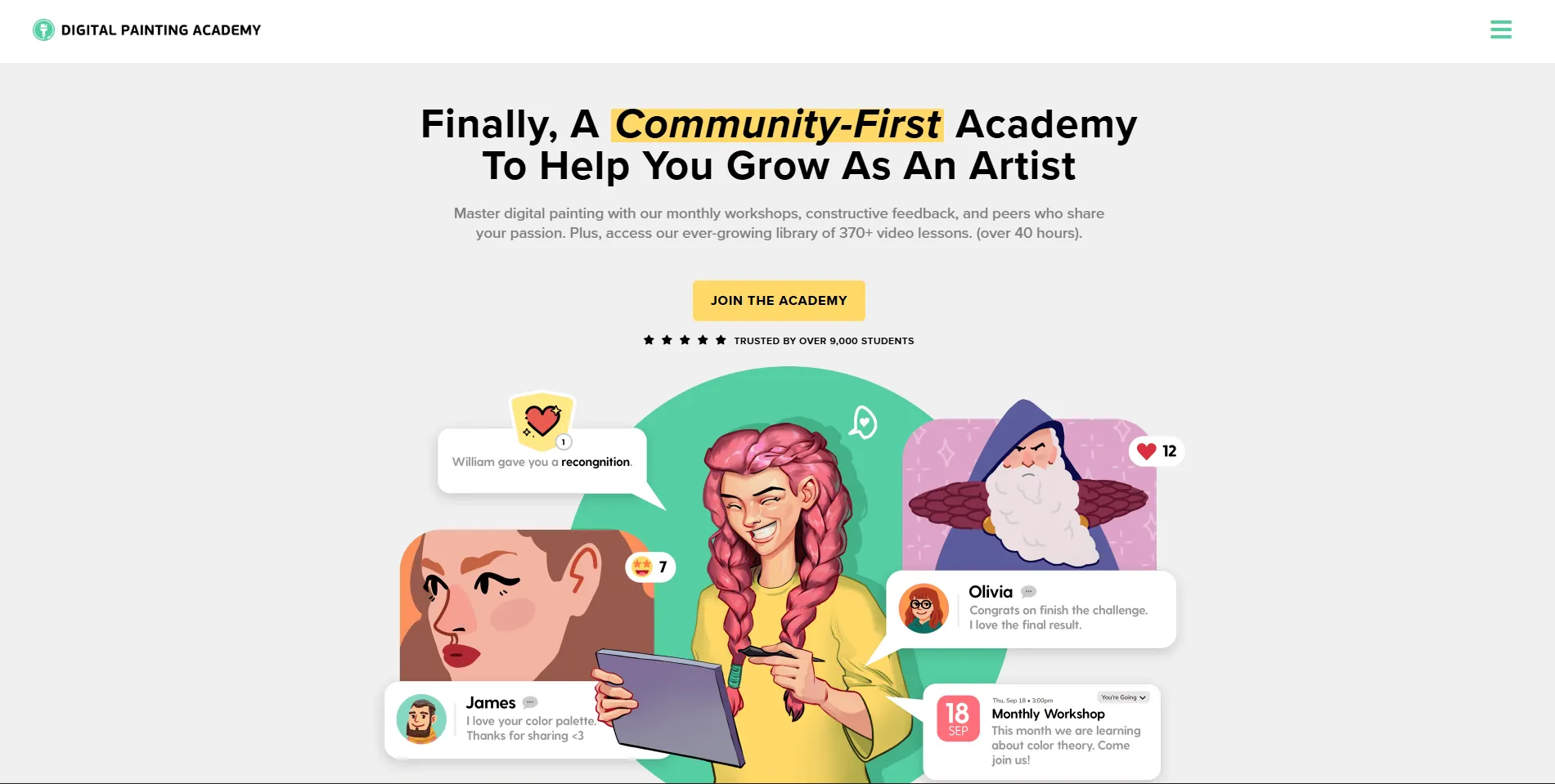
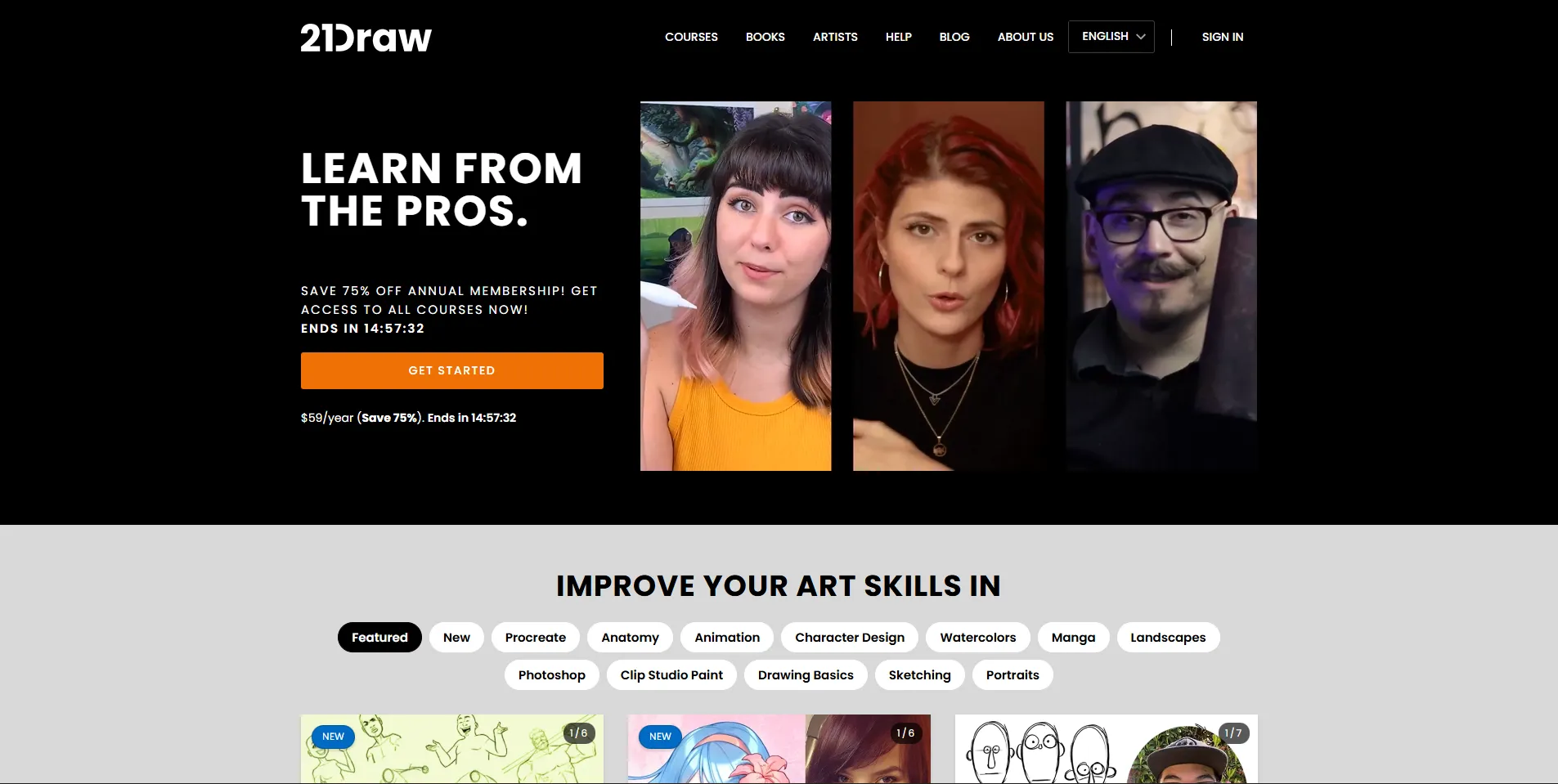
- Versus online platforms like 21 Draw or Ctrl+Paint: The League offers something no online course can replicate: sustained studio time with live models, physical materials, and in-person critique from working artists. But it requires being in New York and paying Manhattan living costs. Online platforms win on accessibility and price; the League wins on depth and physicality.
- Versus degree-granting art schools: The League costs a fraction of what schools like RISD or SVA charge, and you can study exactly what you want without general education requirements. But you leave with no degree, no credential, and no alumni network in the traditional sense. The League's network is informal but extends across generations of working artists.
- Versus Aaron Blaise's Creature Art Teacher: Different worlds. Aaron teaches specialized animal drawing and creature design online. The League teaches traditional fine art in a physical studio. If your goal is entertainment industry concept art, the League is not the right fit. If your goal is painting, sculpture, or printmaking, it is.
Final Verdict: Who Is This Actually For?
The Art Students League is for artists who are serious about developing traditional studio skills and who can get themselves to New York regularly. It is not for people who need structure, grades, or a degree credential. It is not for digital artists looking for software training or entertainment industry portfolio preparation.
The League works best for two types of students: self-directed artists who know what they want to learn and need studio access, live models, and professional critique to accelerate their progress, and working artists who want to maintain a practice alongside peers in a serious, supportive environment.
If you are in New York and want to study painting, drawing, sculpture, or printmaking from working artists at a fraction of what degree programs cost, browse the current class catalog and enroll for a month. The lack of commitment means the only risk is one month of tuition. If the experience clicks, you will understand why artists have been coming here for 150 years.