
Sketchbook Prompts: 52 Ideas for a Year of Visual Exploration
52 sketchbook prompts, one for every week of the year. From "draw your morning coffee" to "copy a Renaissance master." No talent required, just a pencil and 15 minutes a week.
Your cart is empty
Browse the store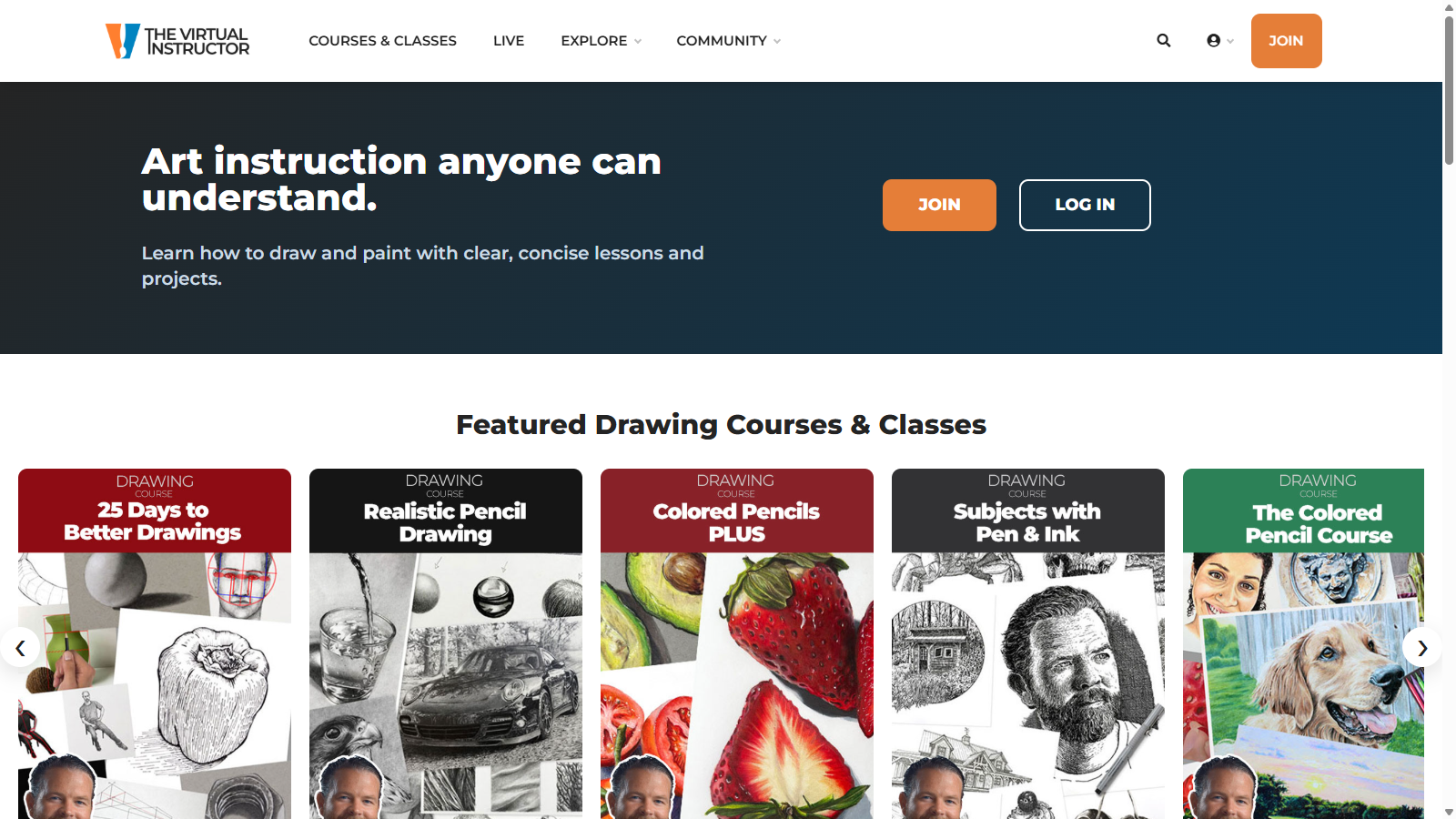
Matt Fussell's all-media drawing and painting curriculum with 150+ courses, weekly live lessons, and member critiques for $19 a month or $137 a year.
Last updated on November 15, 2026
Discover other art courses you might be interested in
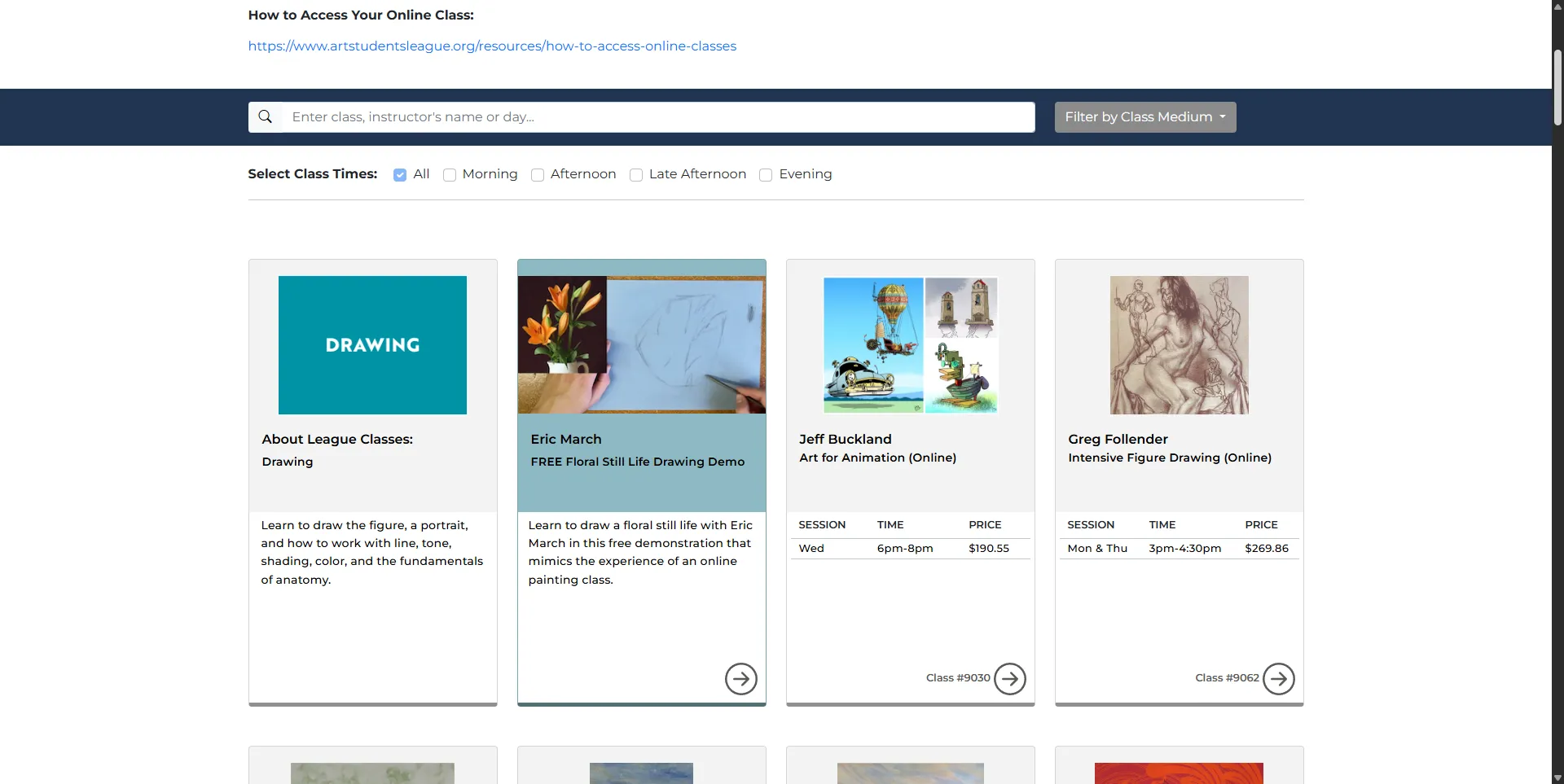
150-year-old NYC art school with no admissions requirements, monthly enrollment, and classes from $195/month. Honest review of the League experience.
View details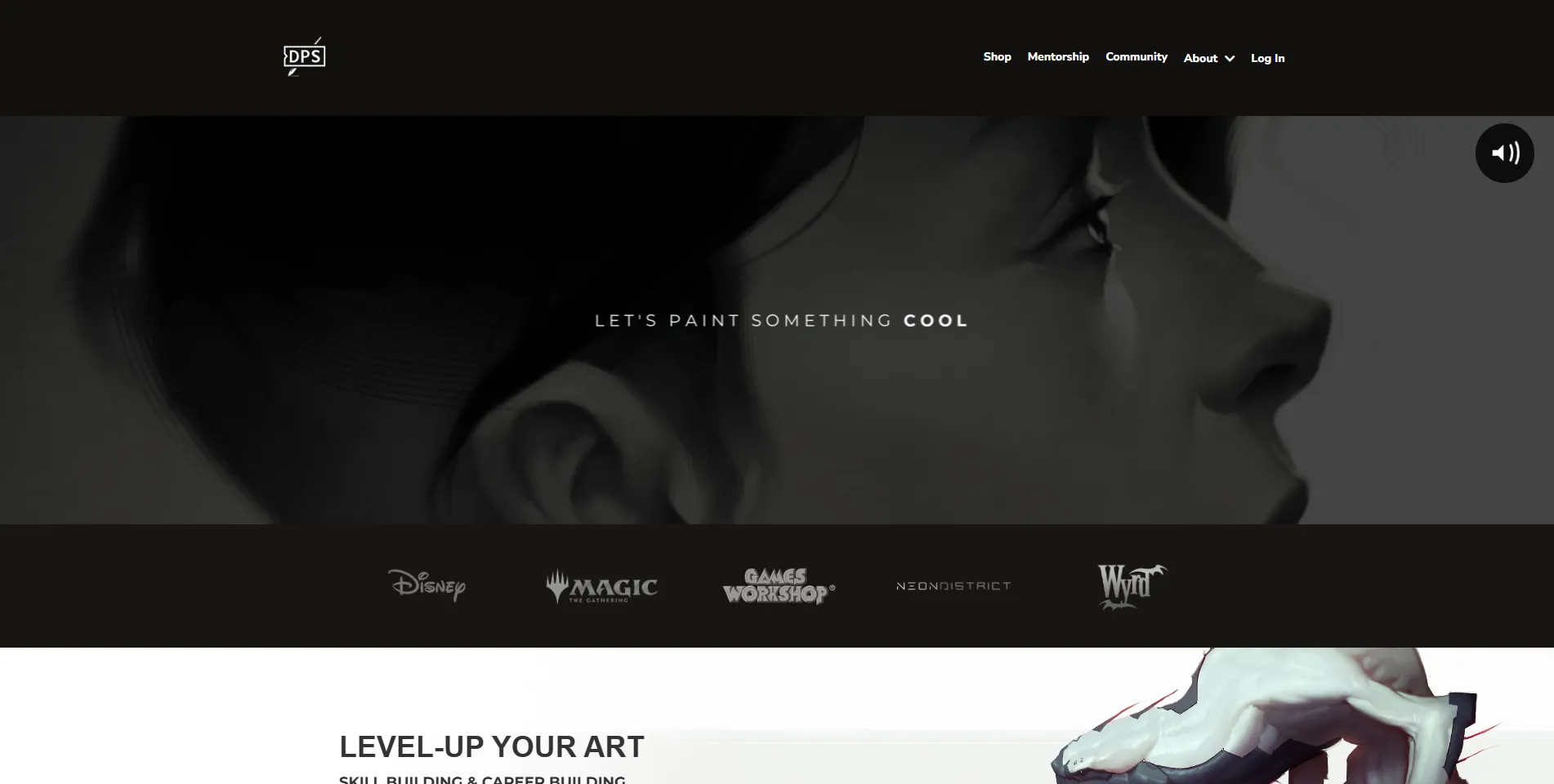
Digital Painting Studio offers project-based concept art courses from $39/month and a $2,850 mentorship program. Honest review of value and outcomes.
View detailsExplore definitions from our glossary that connect to this course
A viewfinder is a frame artists use to isolate and compose a scene. From Klimt's cardboard cutout to modern adjustable tools, learn how viewfinders shape composition.
Blind contour drawing is an exercise where you draw without looking at the paper, training observation over production. From Nicolaides to Betty Edwards, learn its history.
Read more about this topic on our blog
52 sketchbook prompts, one for every week of the year. From "draw your morning coffee" to "copy a Renaissance master." No talent required, just a pencil and 15 minutes a week.

Drawing every day accelerates motor learning. 15 minutes a day beats 3 hours once a week. Research shows consistent practice builds skill faster than talent. Here is what happens and how to start.

Never held a brush? Adult art classes welcome beginners with no experience. Here's what to expect, how to find the right class, and why it's never too late to start making art.
Most online art platforms are run by artists who figured out marketing. The Virtual Instructor is run by a working art teacher who figured out websites. Matt Fussell has been a board-certified high school art teacher for over a decade and has run the site since 2009, joined by co-instructor Ashley Hurst, a university Visual Art Department chair. The result is less flashy than the big platforms and more systematically educational than almost all of them.
The membership unlocks everything: 150-plus courses and classes across graphite, charcoal, colored pencil, pen and ink, pastel, watercolor, acrylic, oil, gouache, and digital basics, plus two one-hour live broadcasts every week and a weekly video critique of member-submitted work.
At $137 a year, a full curriculum with weekly live contact undercuts a single month of most competitors. Over 19,000 students and teachers have passed through the membership since launch, and the catalog keeps expanding.
Flagship courses include 25 Days to Better Drawings, The Secrets to Drawing, the Colored Pencil Course, Oil Painting Master Series, The Pen and Ink Experience, The Acrylic Painting Academy, and The Watercolor Workshop. Each course is built like a school unit: sequenced modules, an HD video, and an illustrated eBook per lesson, assuming zero prior knowledge.
The weekly live broadcasts are real classes with real demonstrations, and the archive holds hundreds of recorded sessions. A full year-long curriculum for visual arts teachers is included, which makes this a quiet favorite among actual classroom educators, not just self-learners.
The production is a teacher's desk camera, not a studio crew. Students expecting Domestika polish or New Masters Academy cinematography should recalibrate. The ceiling is also lower: this is beginner-to-intermediate instruction, and advanced painters wanting anatomy depth should go to Proko or Watts Atelier.
The two-instructor model is a strength and a limit; nobody else means no guest specialists and a house style across the whole catalog. Live broadcasts happen on a fixed weekly schedule, so shift workers and distant time zones mostly watch recordings.
Membership cancellation is a two-click self-serve process, a small but meaningful contrast with platforms that hide the button. New lessons publish weekly, so the catalog keeps widening even inside a single subscription year.
The free trial plus 30-day guarantee stacks to roughly five weeks of evaluation, the most forgiving entry window in online art education. Teachers should treat the included classroom curriculum as the real prize; it maps onto an actual school year and is already paced. Members' weekly critique videos are worth watching even without submitting, since common mistakes repeat across student work.
If you only want one medium, the $57 to $197 standalone courses with permanent access can beat a year's subscription. If you want two or more, the math favors membership immediately.
A detail competitors miss: the membership includes a full year-long visual arts curriculum written for classroom use, with lesson plans, sequencing, and assessments. For the thousands of art teachers who subscribe, that alone justifies the fee. Homeschool families use it the same way, treating the site as a structured art department rather than a tutorial pile.
The eBooks accompanying every lesson are another quiet strength. Illustrated, downloadable, and aligned with each video, they work as printable handouts, which is why the platform circulates heavily in actual classrooms.
The catalog continues growing weekly, with two new live broadcasts added every week alongside permanent lessons. Digital art basics appear alongside the traditional media, though the site's heart stays firmly with pencil, paint, and pastel.
Fussell's pedagogy is conventional in the best sense: elements of art, value scales, proportion methods, media handling, in a sequence a state-certified teacher would defend. That makes it slower and more methodical than artist-led platforms, and more likely to transfer into real skill rather than copied demonstrations. The weekly critique video format means feedback culture exists without live pressure, useful for shy students who never post on Discords.
True beginners who want one structured place covering every traditional medium, homeschool and classroom art teachers, and hobbyists who value weekly live contact and critiques at a fraction of coaching prices. Intermediate artists pursuing a single medium to a professional level will outgrow it, but as a foundation nothing at this price competes.
Hand-picked matches from our other directories

America's oldest and largest art supply retailer with 72 stores nationwide after acquiring Plaza Art in 2026, offering 110,000+ professional-grade materials and exceptional service since 1911.
View details
International grant for early-career representational artists. First grants of CAD $17,000, second and third grants of CAD $20,000. Rolling deadline, no application fee.
View detailsQuiet Canvas is a space for artists and art lovers: essays, glossary terms, tools, and curated directories to support your creative practice.
Learn more →


