Domestika: Beautiful Creative Courses with a Pricing Trap You Need to Know About
Domestika courses look like Netflix documentaries about creative processes. Multiple camera angles, close-up demonstrations, atmospheric studio settings, polished editing. This is not someone recording their screen in a bedroom. The production quality is genuinely cinematic, and it sets Domestika apart from every other online learning platform in the creative space.
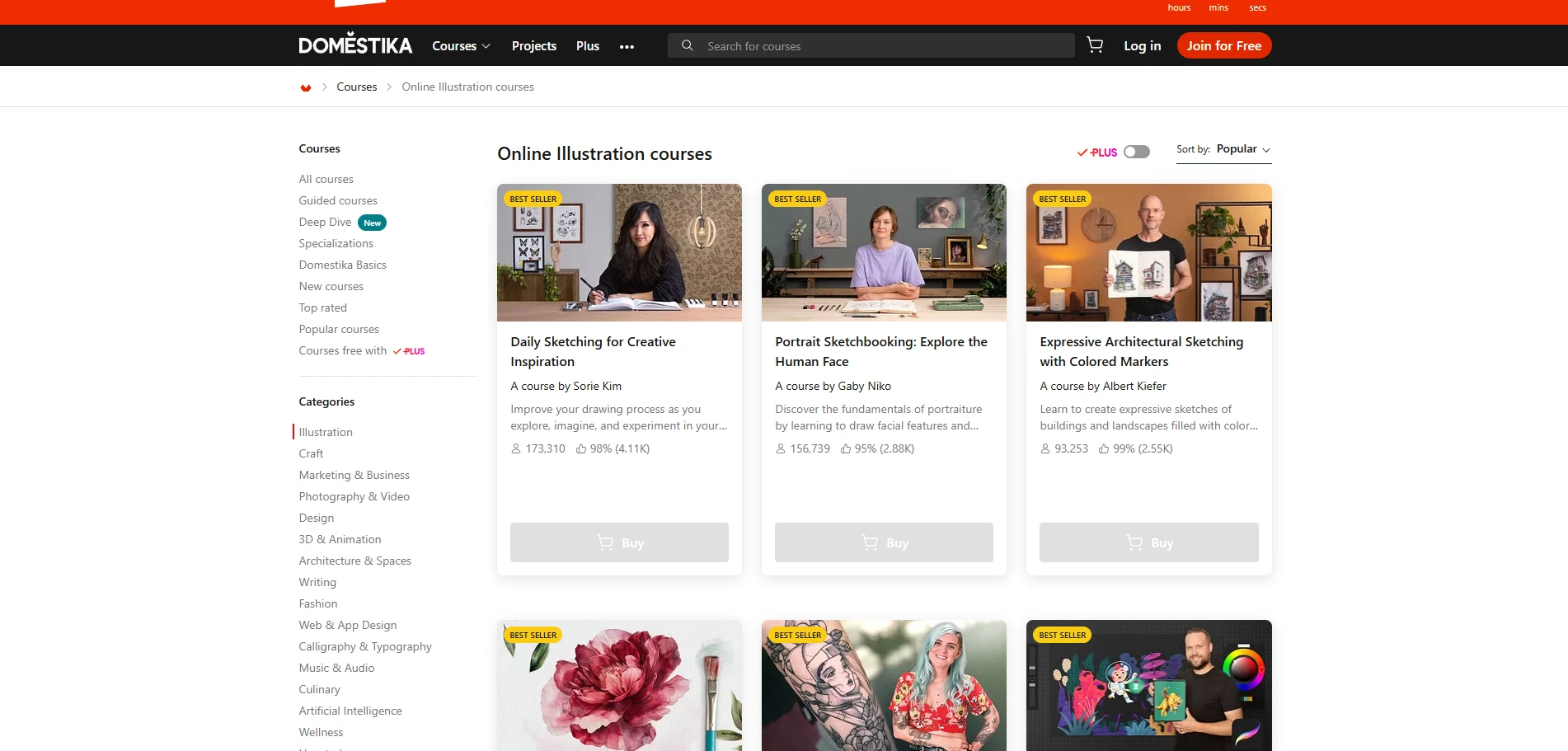
With over 4,000 courses taught by award-winning artists from more than 100 countries, Domestika has built the broadest creative education catalog available online. Courses cover illustration, watercolor, digital painting, graphic design, photography, 3D modeling, calligraphy, ceramics, embroidery, bookbinding, and dozens of other disciplines. Prices start at $9.99 per course. A subscription option called Domestika Plus offers streaming access to 1,000+ courses.
But before you swipe your card, you need to understand the pricing structure, because it has a trap that has generated significant consumer complaints. Trustpilot reviews for Domestika sit at 1.3 out of 5 as of April 2026, and the number one complaint is unauthorized annual renewals after a promotional purchase or free trial. This is a platform with excellent courses and a billing model that deserves scrutiny.
How the Pricing Actually Works in 2026
Domestika operates two parallel pricing paths, and the gap between them is where the trouble starts.
Individual Courses: List prices typically range from $60 to $100, but Domestika runs near-constant sales with discounts of 50% to 80%. In practice, most courses are available for $9.99 to $19.99 if you wait a week or two. You own individual courses forever. Lifetime access, no subscription required. This is the straightforward, no-surprises option.
Domestika Plus: The subscription costs $14.59/month billed annually, which works out to $174.50 for the first year. You get streaming access to 1,000+ courses, 12 credits per year (one per month) that you can exchange for any course to keep forever, 100+ new courses added weekly, certificates for completed purchased courses, and offline viewing.
Here is the trap: the $174.50 first-year price is promotional. When it renews, the price jumps to $349/year, nearly double. Multiple users report being charged $349 with no email warning. The cancellation flow has been described as intentionally confusing, with a "Keep Enjoying" button that looks like a confirmation but actually activates the annual plan.
The fix: If you subscribe to Plus, set a calendar reminder for 11 months from now to evaluate whether you want to keep it. The renewal will be $349, not $174.50. Many users report the best strategy is to subscribe for one year, use all 12 credits, then cancel and switch to per-course purchases.
What Makes Domestika Courses Different
Every Domestika course is produced in-house by Domestika's production team. This is not a marketplace where anyone can upload a course. Domestika curates instructors, flies them to a production studio, and films the course with professional equipment. The result is a consistency of quality that marketplace platforms like Udemy or Skillshare cannot match.
Each course follows a standard structure: an introduction to the instructor and their work, foundational lessons, practical demonstrations showing the complete creative process, and a final project that students complete and share with the community. Course lengths range from 2 to 6 hours of video content, organized into digestible lessons.
The instructor caliber is genuinely high. The roster includes internationally recognized artists, award-winning illustrators, gallery-exhibited painters, published authors, and creative directors at major agencies. These are accomplished professionals sharing techniques refined through years of practice.
The international perspective is Domestika's other major differentiator. While most online learning platforms are dominated by English-speaking instructors from the US and UK, Domestika features artists from Spain, Mexico, Brazil, Argentina, Colombia, France, Japan, and dozens of other countries. Courses are available in their original language with subtitles in multiple languages, including Spanish, English, Portuguese, French, German, and Italian. This global perspective exposes you to creative approaches and aesthetic traditions that English-language platforms rarely represent.
Course Categories for Artists
Illustration: Hundreds of courses covering editorial illustration, children's book illustration, botanical illustration, character design, and fashion illustration. Each course is taught by a working illustrator whose style provides both technical instruction and creative inspiration.
Watercolor and Traditional Media: Domestika's watercolor courses are among its most popular, with instructors from Spain, South America, and Asia bringing diverse approaches. Courses on gouache, ink, colored pencil, oil painting, and mixed media extend the traditional offerings.
Digital Art: Courses on Procreate, Photoshop, Illustrator, Blender, and other digital tools. The focus is on artistic application rather than software features, which distinguishes these courses from generic software tutorials.
Calligraphy and Lettering: Domestika has become one of the leading platforms for calligraphy and hand lettering, with courses covering brush lettering, pointed pen calligraphy, Gothic scripts, and modern calligraphy. The visual nature of calligraphy instruction is particularly well-served by the high production values.
Crafts: Courses on ceramics, textile art, embroidery, bookbinding, printmaking, and other craft disciplines reflect Domestika's broad definition of creative education.
How It Compares to Other Platforms
- Versus 21 Draw: 21 Draw charges $59/year for 70+ illustration courses taught by Disney and Marvel artists. Domestika charges $9.99 to $19.99 per course or $174.50/year for Plus. 21 Draw is more focused and cheaper for illustration specifically. Domestika is broader and has higher production quality. If you want illustration only, 21 Draw is better value. If you want to explore multiple creative disciplines, Domestika wins on breadth.
- Versus Ctrl+Paint: Ctrl+Paint is free for the core library and $10 for premium packs. Domestika courses cost $9.99 to $19.99 each. Ctrl+Paint is more structured for sequential digital painting learning. Domestika is better for exploring specific techniques from specific artists. They serve different purposes and complement each other well.
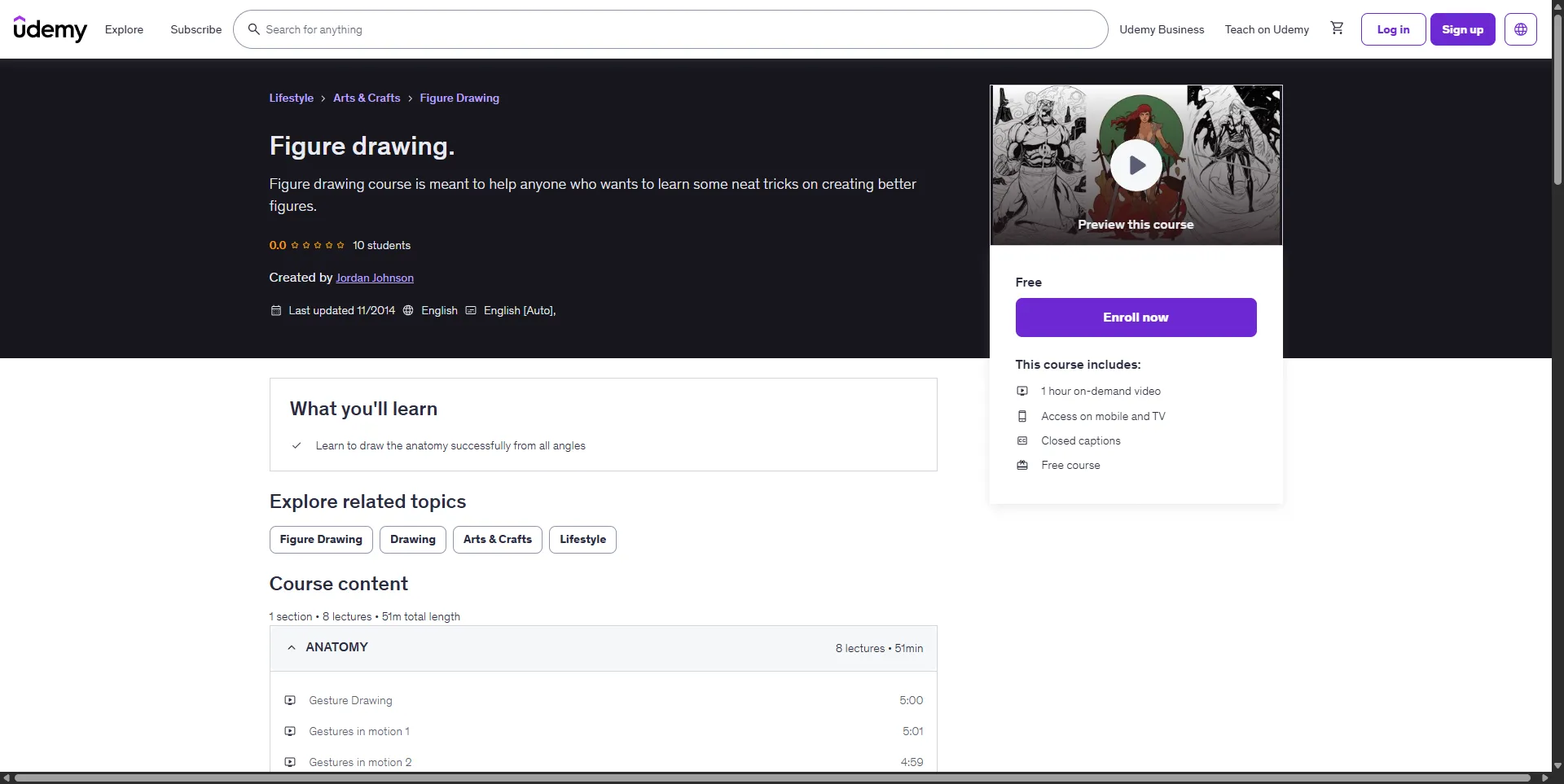
- Versus Skillshare: Skillshare charges $14/month or $99/year for a subscription with variable production quality. Domestika's per-course model gives you lifetime ownership, while Skillshare's subscription removes access when you cancel. Domestika has higher and more consistent production quality. Skillshare has a broader range beyond creative topics.
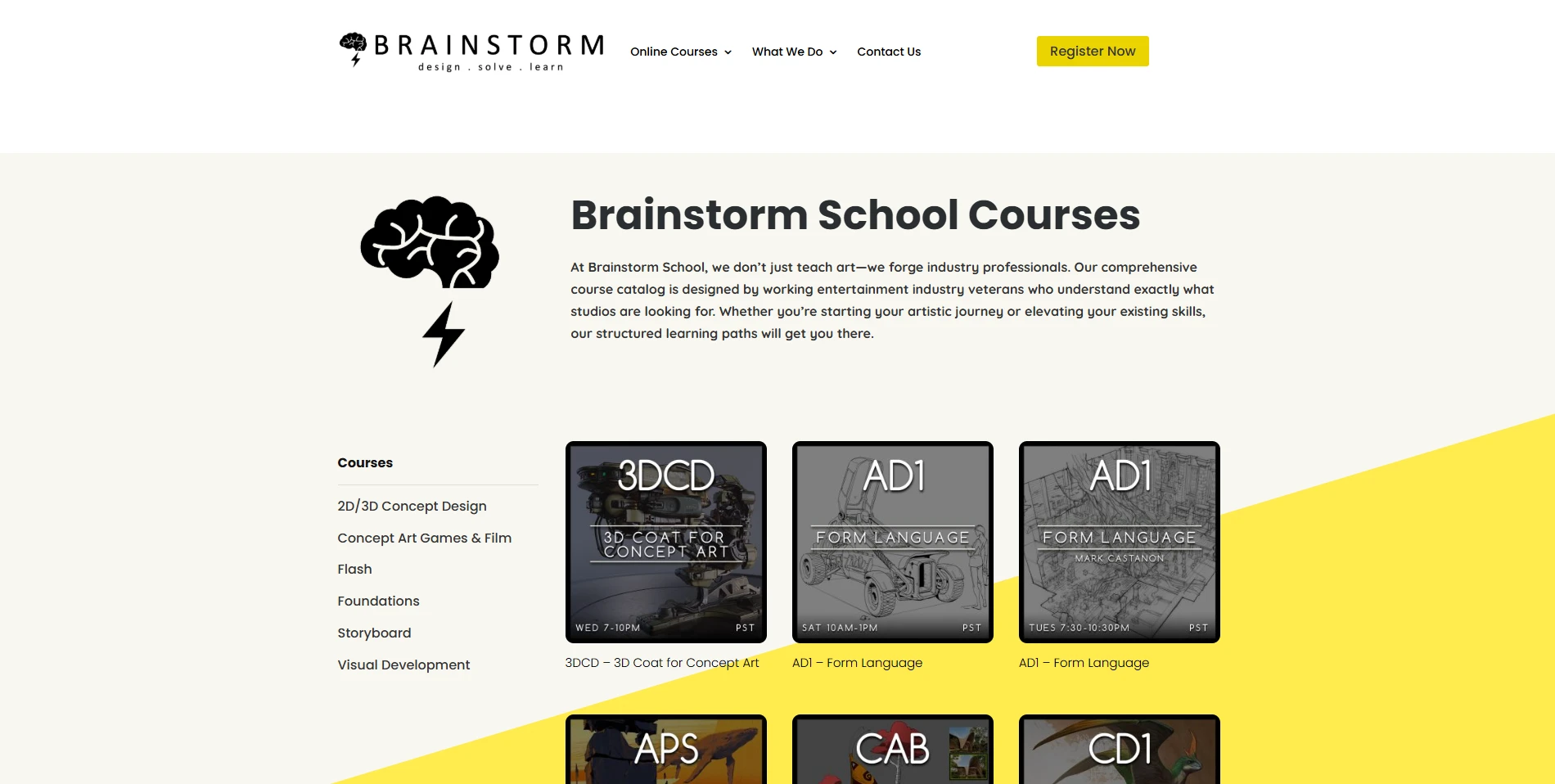
- Versus CGMA or Brainstorm School: These platforms offer live courses with professional feedback at $699 to $1,200 per course. Domestika offers pre-recorded courses with no feedback at $9.99 to $19.99. They serve entirely different needs. Domestika is for exploring techniques and getting inspired. CGMA and Brainstorm are for professional career preparation with live critique.
The Trustpilot Problem
The 1.3 out of 5 Trustpilot rating deserves attention. The complaints are overwhelmingly about billing, not course quality. G2 reviews, which focus on the product itself, rate Domestika at 4.5 out of 5. The gap between these scores tells you exactly where the friction is: the courses are excellent, but the billing practices have angered a lot of customers.
Specific complaints include: unauthorized annual renewals after a $0.99 course purchase or free trial, no email reminder before renewal, difficulty canceling, and the "Keep Enjoying" button that looks like a cancellation confirmation but actually continues the subscription.
How to protect yourself: Buy individual courses rather than subscribing to Plus. If you do subscribe to Plus, set a calendar reminder for month 11 to cancel before the renewal price doubles. Check your credit card statements for unexpected Domestika charges, especially if you have ever purchased a course during a promotional period.
Insider Tips
- Wait for sales. Domestika runs promotions so frequently that paying full list price is almost never necessary. If a course you want is at full price, wait a week or two. It will almost certainly go on sale.
- Buy individual courses rather than Plus if you take fewer than 6 courses per year. At $9.99 to $19.99 per course on sale, buying 6 courses costs $60 to $120. Plus costs $174.50 in year one and $349 in year two. The math favors individual purchases for most learners.
- Check the language before buying. Many courses are originally in Spanish with English subtitles. If you prefer English-language instruction, filter by language to avoid disappointment. The subtitles are generally good, but some learners find subtitled instruction less engaging.
- Use the project gallery to evaluate courses. Each course has a gallery showing student projects. Browsing these galleries tells you what kind of results you can realistically expect, which is more useful than the polished promotional materials.
- The break-even for Plus is around 12 courses per year. That is exactly what the annual credits give you. But remember, year two doubles the cost.
Final Verdict: Who Is This Actually For?
Domestika is the best platform for exploring creative disciplines and learning specific techniques from accomplished international artists. The production quality, instructor caliber, and course breadth are genuinely impressive, and the per-course pricing (during sales) is fair for what you get.
It is not the right platform if you need structured, sequential curriculum with feedback (look at Ctrl+Paint for free fundamentals or CGMA for professional training). It is not the right choice if you want entertainment industry career preparation (look at Brainstorm School or Digital Painting Studio). And the Plus subscription requires careful attention to avoid the renewal price trap.
For most creative learners, the best approach is simple: buy individual courses on sale, own them forever, and skip the subscription entirely. Browse the Domestika catalog, wait for the next sale, and pick up courses from instructors whose work you admire. The courses themselves are excellent. Just keep your guard up on the billing side.