
"This book has 52 prompts, one for every week of the year to keep you drawing all through the year! Small enough to travel with, at the size of 8.5 inches by 5.5 inches. Get kids, teens and adults to make, create, draw and sketch with this prompt sketchbook journal!" (Amazon, "52 Sketch Prompts"). The concept is simple: one prompt per week, 52 weeks, one year. By the end, you have a sketchbook full of drawings, a visual diary of a year of seeing. The prompts are not assignments. They are invitations. Each one opens a door to a different way of looking, a different subject, a different technique. Some are observational (draw what you see), some are imaginative (draw what you imagine), some are technical (draw using a specific method), and some are art-historical (copy a master). Together, they cover the full range of drawing practice, from the simplest observation to the most complex composition. "If people knew how hard I worked to get my mastery, it wouldn't seem wonderful at all" (Michelangelo, quoted in Foxborough High School's sketchbook prompt list). The prompts are the work. The sketchbook is the record. The year is the practice.
Sketchbook prompts are a solution to the blank page problem, the paralysis that sets in when you open a sketchbook and do not know what to draw. The prompt removes the decision. You do not have to choose what to draw, only how to draw it. This frees the mind to focus on the act of drawing, not the subject of drawing. This guide provides 52 sketchbook prompts, one for every week of the year, organized into four quarters (observation, imagination, technique, art history). Each prompt includes instructions, suggested materials, and time estimates. Plus: how to use the prompts, what to do when you miss a week, and what happens after 52 weeks.
An open sketchbook. "This book has 52 prompts, one for every week of the year to keep you drawing all through the year!" (Amazon, 52 Sketch Prompts). Image via Wikimedia Commons.
How to Use These Prompts
The weekly rhythm is one prompt per week. Draw it once, or draw it every day for a week. Your choice. The prompt is a starting point, not a constraint. If the prompt is "draw a cup" and you end up drawing ten cups, that is the prompt working. The time commitment is 15 minutes minimum per prompt. You can spend more, an hour, an afternoon, but 15 minutes is the commitment. "It removes the white pages from the book and allows you to be more expressive with the drawings on the pages. It also makes the sketchbook less intimidating and shows that every page does not need to be perfect" (Kostich Art).
The materials are a sketchbook and a pencil. Some prompts suggest specific materials (ink, watercolor, charcoal), but substitutions are always fine. The prompt is about the subject, not the medium. The order matters. The prompts are organized in quarters: Q1 (weeks 1-13) is observation, Q2 (weeks 14-26) is imagination, Q3 (weeks 27-39) is technique, Q4 (weeks 40-52) is art history. You can follow the order or skip around, but the order is designed to build skills progressively. Every prompt is a suggestion, not a command. If a prompt does not inspire you, modify it. If "draw a cup" does not inspire you, draw a bowl. If "draw a bowl" does not inspire you, draw a vase. The point is to draw, not to follow instructions. For the daily version of this practice, see our guide on drawing every day.
Q1: Observation (Weeks 1-13) — Draw What You See
The first quarter is observation. Draw what you see, not what you imagine. Observation is the foundation of drawing, and these prompts train your eye to look at the world as it is.
- Week 1: Draw your morning coffee (or tea). The cup, the liquid, the steam. 15 minutes.
- Week 2: Draw your hand. Your non-drawing hand, posed in different positions. 15 minutes.
- Week 3: Draw a shoe. Any shoe, yours, someone else's, a child's. 15 minutes.
- Week 4: Draw a piece of fruit. An apple, a banana, an orange, whole and cut. 15 minutes.
- Week 5: Draw a window in your home. The view through it, or the window itself. 15 minutes.
- Week 6: Draw a kitchen utensil. A whisk, a spatula, a can opener. 15 minutes.
- Week 7: Draw a plant. A houseplant, a weed, a flower, with leaves and stems. 15 minutes.
- Week 8: Draw your room. A corner, a wall, a view from your bed. 15 minutes.
- Week 9: Draw a bookshelf. The books, the spines, the titles. 15 minutes.
- Week 10: Draw a crumpled piece of paper. The folds, the shadows, the creases. 15 minutes.
- Week 11: Draw a key. A house key, a car key, an old key. 15 minutes.
- Week 12: Draw an egg. Whole, cracked, and scrambled. Three drawings. 15 minutes.
- Week 13: Draw a self-portrait. In a mirror, from a photo, from memory. 15 minutes.
For more on the looking skills these prompts build, see our guide on how to look at art.
Q2: Imagination (Weeks 14-26) — Draw What You Imagine
The second quarter is imagination. Draw what you imagine, not what you see. Imagination drawing is where observation meets invention, and these prompts push you to invent.
- Week 14: Draw a creature that does not exist. Combine two animals. 15 minutes.
- Week 15: Draw a city on another planet. Buildings, streets, sky. 15 minutes.
- Week 16: Draw a dream you remember. Any dream, any fragment. 15 minutes.
- Week 17: Draw a map of your neighborhood. Not accurate, impressionistic. 15 minutes.
- Week 18: Draw a machine that does not exist. What does it do? How does it work? 15 minutes.
- Week 19: Draw a character from a book you have read. Your interpretation, not the cover. 15 minutes.
- Week 20: Draw a tree that grows something other than leaves. What does it grow? 15 minutes.
- Week 21: Draw a door to somewhere else. Where does it lead? 15 minutes.
- Week 22: Draw a meal from the future. What do people eat in 100 years? 15 minutes.
- Week 23: Draw a musical instrument that does not exist. What does it sound like? 15 minutes.
- Week 24: Draw a house for a specific animal. A house for a cat, an owl, a spider. 15 minutes.
- Week 25: Draw a landscape from a memory. A place you have been, from memory. 15 minutes.
- Week 26: Draw yourself as a character in a story. What story? What character? 15 minutes.
If you are new to all of this, pair these prompts with our guide on art for beginners.
Q3: Technique (Weeks 27-39) — Draw Using a Specific Method
The third quarter is technique. Draw using a specific method. Each prompt restricts how you draw, and the restriction is the lesson. Constraints force you to solve problems you would otherwise avoid.
- Week 27: Continuous line drawing. Draw an object without lifting the pencil. 15 minutes.
- Week 28: Cross-hatching. Draw a sphere using only cross-hatching for shading. 15 minutes.
- Week 29: Negative space. Draw the space around an object, not the object itself. 15 minutes.
- Week 30: One-point perspective. Draw a room using one-point perspective. 15 minutes.
- Week 31: Two-point perspective. Draw a building using two-point perspective. 15 minutes.
- Week 32: Gesture drawing. Draw a figure (from life or photo) in 30-second sketches. 15 minutes.
- Week 33: Stippling. Draw an object using only dots. 15 minutes.
- Week 34: Blind contour. Draw an object without looking at the paper. 15 minutes.
- Week 35: Value scale. Draw a value scale from white to black in 10 steps. 15 minutes.
- Week 36: Foreshortening. Draw a hand reaching toward you. 15 minutes.
- Week 37: Charcoal. Draw a landscape using charcoal. 15 minutes.
- Week 38: Ink. Draw a portrait using ink (brush or pen). 15 minutes.
- Week 39: Watercolor. Draw (paint) a still life using watercolor. 15 minutes.
For the painting techniques these lead into, see our guide on oil painting techniques.
Q4: Art History (Weeks 40-52) — Copy the Masters
The fourth quarter is art history. Copy the masters. Copying master drawings is the oldest art education method. It teaches you how the master saw, how they composed, how they used line and tone. You are not forging. You are learning.
- Week 40: Copy a Leonardo da Vinci drawing. Any drawing, hands, faces, machines. 15 minutes.
- Week 41: Copy a Rembrandt self-portrait etching. Any self-portrait. 15 minutes.
- Week 42: Copy a Van Gogh drawing. Any drawing, landscapes, hands, faces. 15 minutes.
- Week 43: Copy a Holbein portrait drawing. Any portrait study. 15 minutes.
- Week 44: Copy a Michelangelo figure study. Any figure from the Sistine Chapel studies. 15 minutes.
- Week 45: Copy a Dürer engraving. Any engraving, "Praying Hands," "Melencolia I." 15 minutes.
- Week 46: Copy a Käthe Kollwitz drawing. Any drawing, workers, mothers, grief. 15 minutes.
- Week 47: Copy a Hokusai manga sketch. Any sketch from the manga. 15 minutes.
- Week 48: Copy a Picasso line drawing. Any single-line drawing. 15 minutes.
- Week 49: Copy a Matisse cutout. Any cutout, the blue nudes, the jazz series. 15 minutes.
- Week 50: Copy an Egon Schiele drawing. Any drawing, hands, figures, self-portraits. 15 minutes.
- Week 51: Copy a contemporary artist's drawing. Any living artist. 15 minutes.
- Week 52: Draw your own masterpiece. Using everything you have learned this year, draw your best work. No time limit.
For the stories behind the works you are copying, see our guide to famous paintings explained and our piece on Rembrandt.
What to Do When You Miss a Week
If you miss a week, skip it. Do not go back. Do not try to catch up. Move to the current week's prompt. The prompts are not a syllabus. They are a practice. Missing a week is not failing. It is living. The exception: if you miss a week and the prompt interests you, do it later. Add it to the end. The order is not sacred. The practice is.
The mindset matters. "If people knew how hard I worked to get my mastery, it wouldn't seem wonderful at all" (Michelangelo). The work is the point, not the completion, not the streak, not the perfection. The work is the drawing, and the drawing is the seeing, and the seeing is the point. For the daily version of this discipline, see our guide on drawing every day.
What Happens After 52 Weeks
You will have a sketchbook with 52 drawings, or more if you drew daily, you may have 365. The sketchbook is a visual diary, a record of a year of seeing. Page through it. Compare week 1 to week 52. The improvement will be visible, not because you discovered talent but because you practiced. You will have practiced observation (Q1), imagination (Q2), technique (Q3), and art history (Q4). You will have drawn from life, from memory, from imagination, and from masterworks. You will have used pencil, ink, charcoal, and watercolor. You will have a foundation, not mastery, but a foundation.
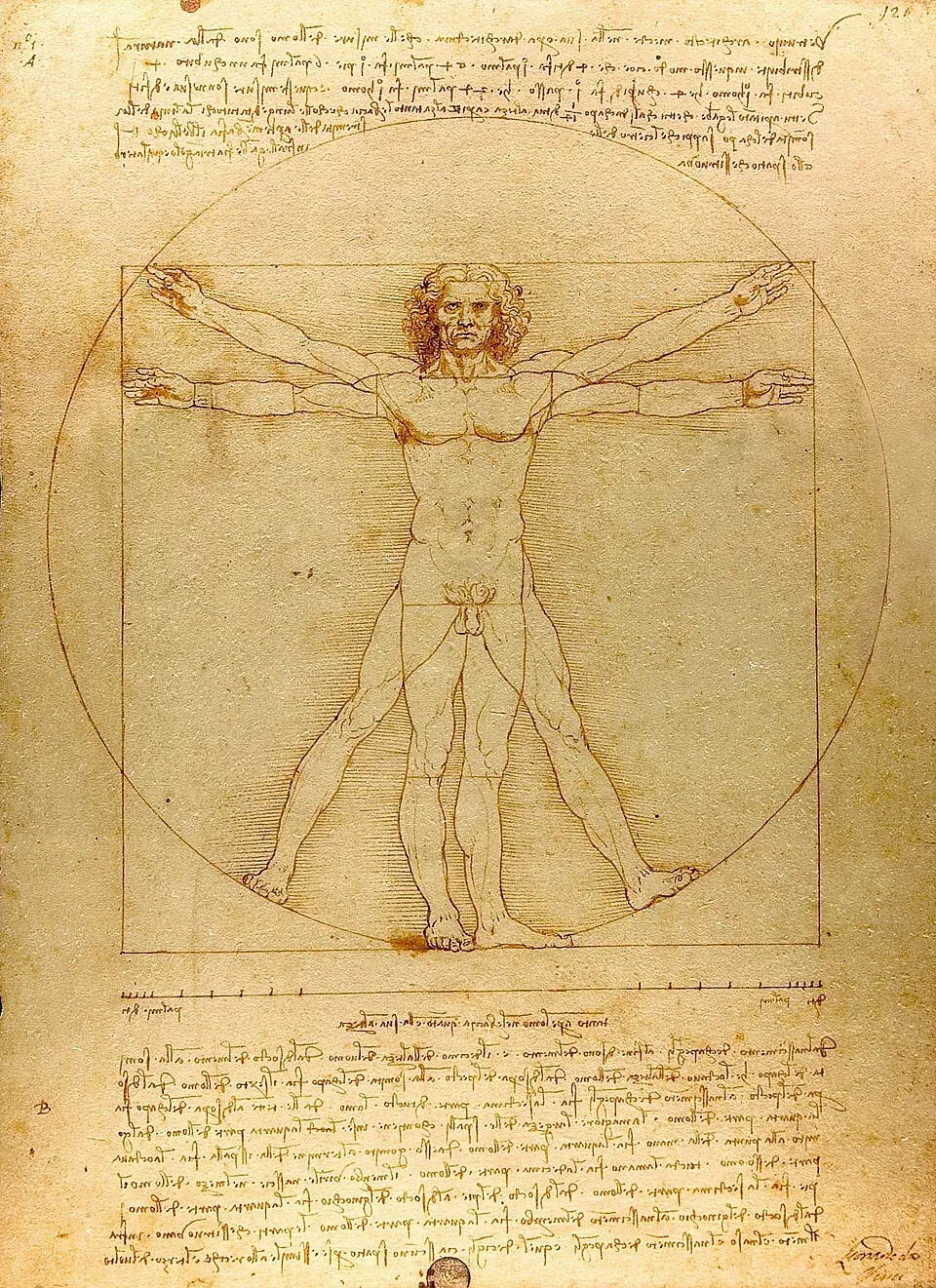
Leonardo da Vinci's sketchbook pages are the model of visual exploration. Every page is an experiment, a question, and a discovery. Image via Wikimedia Commons.
If you have drawn every week for a year, you have a drawing habit. The habit is more valuable than any single drawing, because the habit will produce thousands of drawings over a lifetime, and thousands of drawings are how you get good. Start a new sketchbook. Make your own prompts, or repeat these. The prompts are a beginning, not an end. After 52 weeks, you know enough to direct your own practice. That is the goal, not to follow prompts forever but to internalize the practice of weekly drawing until it is as natural as breathing. For more on building the habit, see our guide on drawing every day, and for finding a group to keep you accountable, our guide to adult art classes.
A completed sketchbook spread. After 52 weeks of prompts, your sketchbook becomes a visual diary, a record of a year of seeing, thinking, and making. Image via Wikimedia Commons.
Final Thoughts
52 sketchbook prompts, one for every week of the year, organized into four quarters: Q1 observation (draw what you see, coffee, hands, shoes, fruit, windows, rooms, self-portraits), Q2 imagination (draw what you imagine, creatures, cities, dreams, maps, machines, characters), Q3 technique (draw using a specific method, continuous line, cross-hatching, negative space, perspective, gesture, stippling, blind contour, foreshortening, charcoal, ink, watercolor), Q4 art history (copy the masters, Leonardo, Rembrandt, Van Gogh, Holbein, Michelangelo, Dürer, Kollwitz, Hokusai, Picasso, Matisse, Schiele). Each prompt takes 15 minutes minimum. "This book has 52 prompts, one for every week of the year to keep you drawing all through the year!" (Amazon, 52 Sketch Prompts). The prompts solve the blank page problem: "it removes the white pages from the book and allows you to be more expressive... it also makes the sketchbook less intimidating and shows that every page does not need to be perfect" (Kostich Art). If you miss a week, skip it. The prompts are not a syllabus, they are a practice. After 52 weeks, you will have a sketchbook full of drawings, a foundation in observation, imagination, technique, and art history, and, most importantly, a drawing habit. "If people knew how hard I worked to get my mastery, it wouldn't seem wonderful at all" (Michelangelo). The work is the point. The sketchbook is the record. The year is the practice.
Open your sketchbook to page 1. Read prompt 1: "Draw your morning coffee." Set a timer for 15 minutes. Draw. Next week, prompt 2. The year will pass whether you draw or not. The question is: at the end of it, do you want a sketchbook full of drawings, or an empty sketchbook? The choice is yours, 15 minutes at a time. For reference, see 52 Sketch Prompts on Amazon, 365 Drawing Ideas at Art Makes People, and Foxborough High School's sketchbook prompts.


