NYPL Digital Collections: Fashion Plates, Historical Menus, and 900,000 Free Items
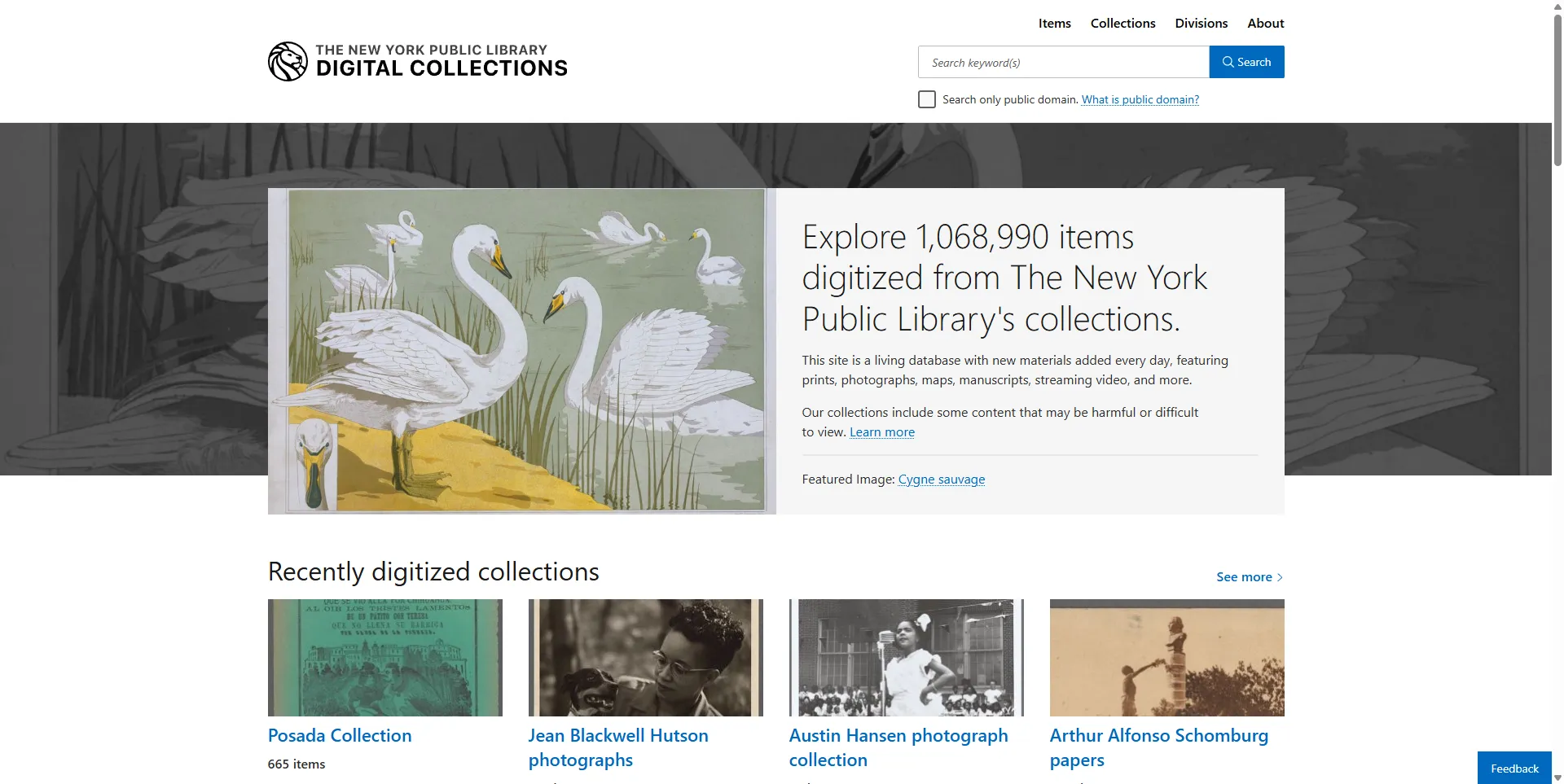
The New York Public Library Digital Collections is one of the most extraordinary free image resources available anywhere, providing access to over 900,000 items from the library's holdings including photographs, maps, fashion plates, menus, historical illustrations, prints, and manuscripts. The NYPL has been a leader in the open access movement since 2016, when it released over 180,000 public domain items as high-resolution downloads with no restrictions, and it continues to add newly digitized public domain materials on an ongoing basis.
What makes the NYPL collections genuinely unique is the specificity and variety of its holdings. Where other open access repositories focus on fine art or general photography, the NYPL offers collections you will not find anywhere else: a massive fashion plate archive, a historical menu collection, sheet music cover illustrations, and postcard collections that document everyday visual culture in ways that fine art museums rarely capture.
Important note for developers: The NYPL's Repo API is being deprecated and will no longer be available starting August 1st, 2026. No public API replacement has been announced. If you currently rely on the API for programmatic access, plan accordingly. The digital collections website itself remains fully operational for browsing and downloading.
The Photography Collections
Photography is one of the most important categories in the NYPL digital collections, with hundreds of thousands of images documenting New York City and the broader world across more than 150 years of photographic history. The photography collections cover every aspect of New York City life, from the formal portraits of prominent New Yorkers through the documentary photography that captured the everyday lives of ordinary city residents.
The Berenice Abbott photographs are among the most celebrated in the collection, with Abbott's extraordinary documentation of New York City in the 1930s providing a comprehensive visual record of the city at a pivotal moment in its history. The Abbott photographs are particularly valuable for artists and designers who work with New York City subjects, providing detailed documentation of the specific appearance of the city's streets, buildings, and people in the 1930s.
The Byron Company photographs document New York City life in the late nineteenth and early twentieth centuries, with thousands of images covering everything from theatrical productions and society events through street scenes and commercial establishments. The Byron Company photographs are particularly valuable for artists and designers who work with late Victorian and Edwardian New York subjects.
The Fashion Plate Collection
The fashion plate collection is one of the most distinctive and celebrated aspects of the NYPL digital collections, with thousands of fashion plates from major European and American fashion publications of the nineteenth century. The fashion plates document the extraordinary development of fashion in the nineteenth century, from the Empire silhouettes of the early century through the elaborate crinolines and bustles of the mid and late century.
The fashion plates are valuable both as historical documents and as works of art in their own right, with many examples demonstrating extraordinary skill in engraving, lithography, and hand-colouring. The specific techniques used in fashion plate production, including the characteristic way that colours are applied and the specific conventions for representing fabric texture and drape, are of genuine interest to illustrators and designers who want to understand historical illustration techniques.
The Map Collection
The map collection is another important category, with thousands of historical maps documenting New York City and the broader world across several centuries of cartographic history. The map collection is particularly strong in New York City maps, with detailed documentation of the city's development from the colonial period through the twentieth century.
The historical New York City maps are particularly valuable for artists and designers who work with New York City subjects, providing detailed documentation of the specific layout and character of the city at different periods in its history. The maps show how the city's street grid, neighbourhoods, and landmarks have changed over time, providing a visual record of the city's development that is genuinely fascinating.
The Menu Collection
The menu collection is one of the most distinctive and unusual aspects of the NYPL digital collections, with thousands of menus from New York City restaurants spanning more than a century of dining history. The menus are valuable both as historical documents and as examples of graphic design and typography from different periods, with many examples demonstrating the specific design conventions and printing techniques of their era.
The menu collection is particularly valuable for designers and illustrators who work with historical New York City subjects, providing detailed documentation of the specific graphic design and typography of different periods. The menus also provide fascinating insight into the specific foods, prices, and dining customs of different periods, making them valuable historical documents as well as design references. The NYPL has even run a public transcription project called "What's on the Menu?" to crowdsource data extraction from the collection.
The Illustration and Print Collections
Historical illustrations and prints are another important category, with thousands of images from books, periodicals, and other publications documenting the full range of historical illustration traditions. The illustration collections are particularly strong in nineteenth-century American illustration, with major examples of the specific illustration styles and techniques that characterised different periods and publications.
The sheet music cover illustrations are a particularly distinctive aspect of the collections, with thousands of illustrated sheet music covers from the nineteenth and early twentieth centuries documenting the specific graphic design and illustration styles of the popular music publishing industry. The sheet music covers are particularly valuable for designers and illustrators who work with historical popular culture subjects.
Licensing and Rights
The NYPL's rights framework is more nuanced than the Smithsonian or Rijksmuseum, which release all open access content under a single CC0 designation. The NYPL uses multiple rights categories:
- Public domain items are free to use for any purpose without restriction. Many of these carry a CC0 mark.
- No known copyright restrictions items are available for use but the library cannot guarantee public domain status with certainty.
- In copyright items may be viewable online but cannot be downloaded or used without permission from the rights holder.
The rights information for each item is clearly indicated on its page, and the search interface includes a public domain filter that narrows results to only freely usable items. Always check the rights statement before downloading, especially for commercial projects.
NYPL vs. Other Open Access Repositories
The NYPL occupies a different niche from art museum open access programs. The Smithsonian offers 5.1 million items focused on art, science, and history. The Rijksmuseum offers 800,000+ Dutch masterworks in ultra-high resolution. Paris Musees provides 312,000+ images from 14 Parisian museums. The NYPL's strength lies in its everyday visual culture collections (menus, fashion plates, sheet music covers, postcards) that document how ordinary people encountered visual design in their daily lives. For fine art, the museum programs are stronger. For graphic design history and everyday visual culture, the NYPL is unmatched.
For curated public domain content from multiple institutions with a design-focused interface, Rawpixel also hosts NYPL material alongside other museum and library collections.
Insider Tips
When searching the NYPL digital collections, always use the "Show only public domain items" checkbox to filter results to freely usable content. Without this filter, search results include in-copyright items that cannot be downloaded or used commercially.
For high-resolution downloads, look for the download options on each item page. Public domain items typically offer JPEG and TIFF downloads at various resolutions. The TIFF versions are significantly larger but provide the maximum quality for print and detailed study.
The Universal Viewer on each item page allows zooming into high-resolution images without downloading the full file. This is useful for quick reference and for examining specific details before committing to a large download.
Final Verdict: Who Is This Actually For?
Graphic designers and illustrators working with historical American subjects will find the fashion plates, menus, sheet music covers, and postcard collections provide reference material that is not available from any other source.
Art historians and researchers benefit from the depth and specificity of the collections, which document everyday visual culture in ways that fine art collections do not capture.
Educators can use the public domain items freely in teaching materials, presentations, and publications without licensing costs.
Collage and mixed-media artists will find the diverse visual material (photographs, prints, illustrations, maps) provides rich source content for creative reuse under the CC0 license.
For fine art reference, the Rijksmuseum or Smithsonian are better choices. For contemporary stock photography, Unsplash or Pexels serve better. But for the specific combination of historical graphic design, everyday visual culture, and distinctive collections you will not find anywhere else, the NYPL Digital Collections is an essential resource.
Start exploring at digitalcollections.nypl.org.