
Canon Formation: Who Decides Which Artists Get Into the History Books
Vasari decided who mattered in 1550. The canon he created excluded women, people of color, and non-Western artists for 400 years. Discover who decides what art history remembers.
Your cart is empty
Browse the store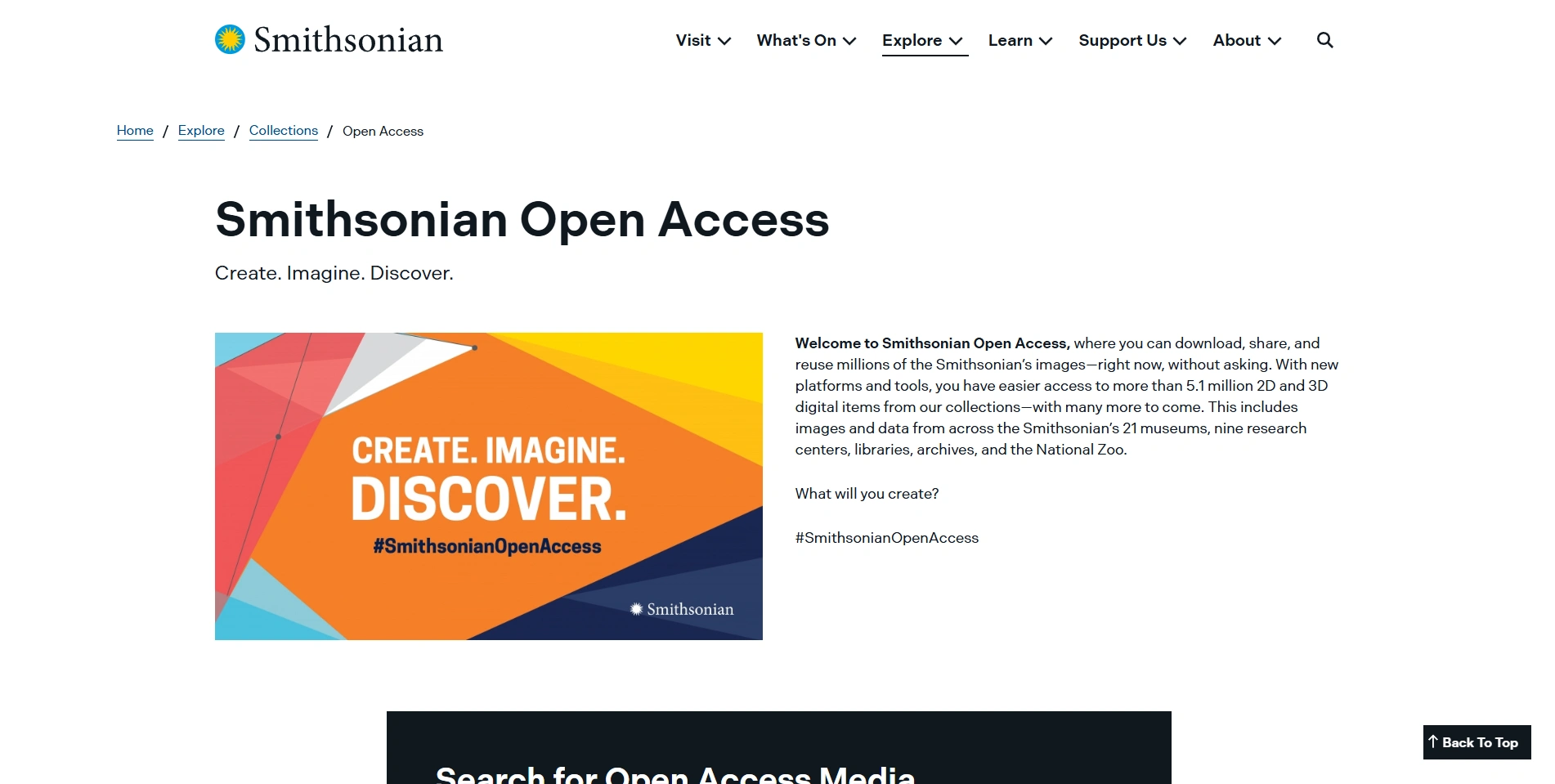
The Smithsonian released 5.1 million CC0 images and 3D models from 21 museums and 9 research centers. Now mirrored on AWS at 784 TB with weekly updates, it is the largest museum open access project in the world.
Discover other stock image sites you might be interested in
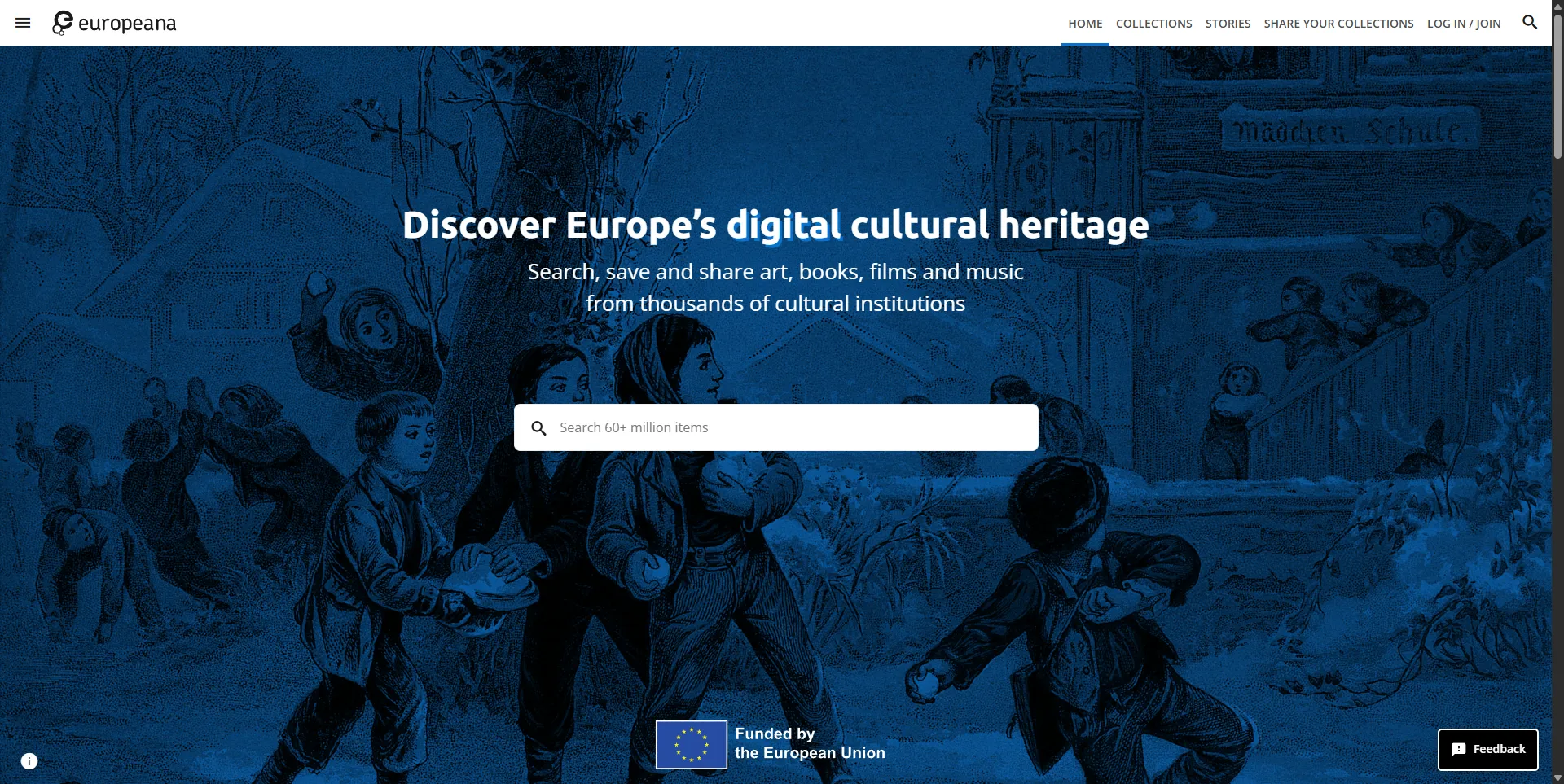
Europeana aggregates 61M+ cultural heritage items from 3,700+ European institutions. Free access with CC0, CC BY, and CC BY-SA licensing options for artists and researchers.
View details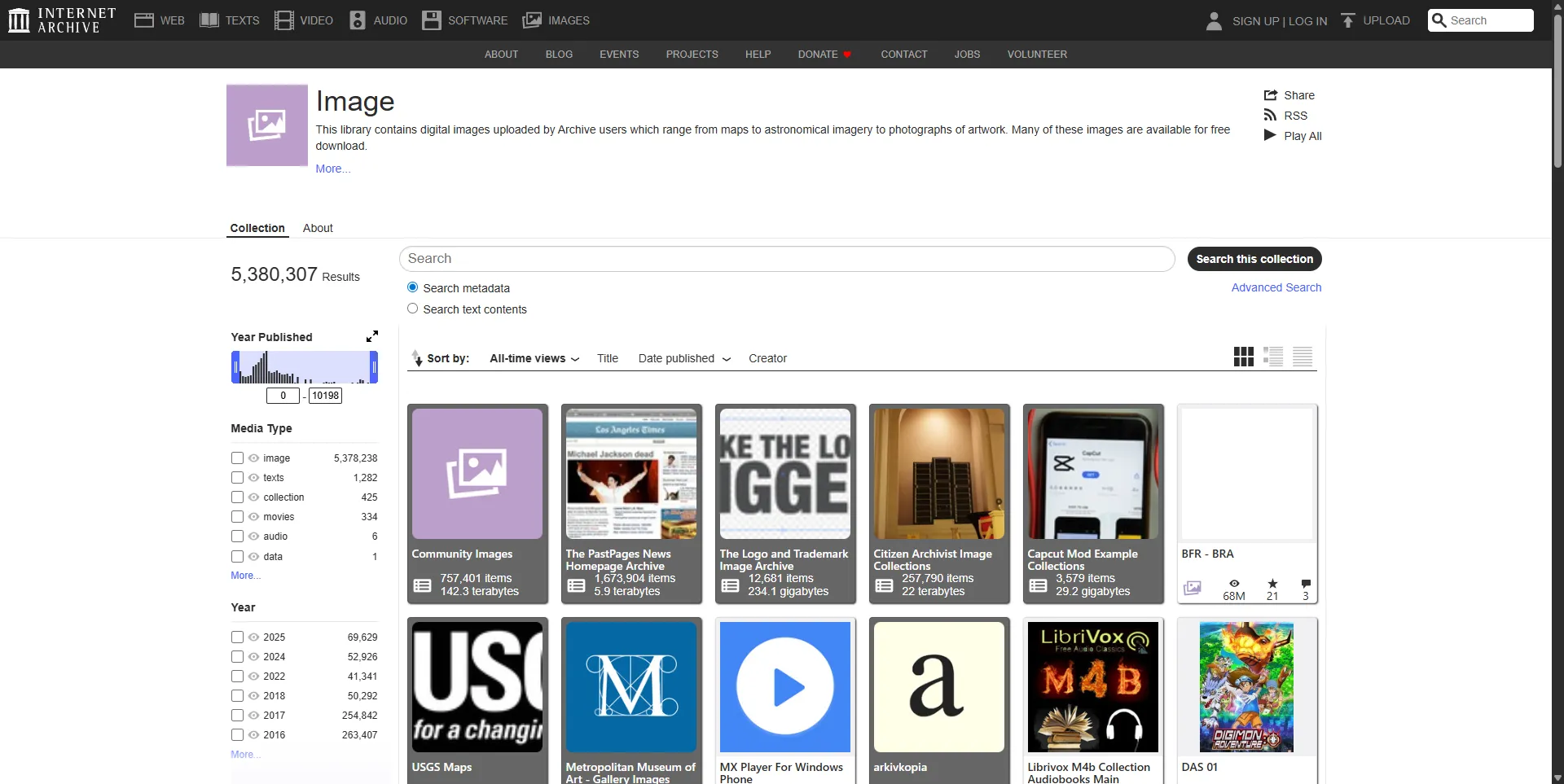
The Internet Archive hosts millions of free historical images from digitised books, with 2M+ images on Flickr alone. Public domain and CC licensed, covering centuries of illustration.
View detailsExplore definitions from our glossary that connect to this stock site
Art academies were official schools and standards bodies that controlled art education and exhibitions. From the Academie royale to the Royal Academy, learn their history.
Action painting is the gestural, physical application of paint pioneered by Pollock and de Kooning. Learn its history, key artists, and how to spot it.
Read more about this topic on our blog
Vasari decided who mattered in 1550. The canon he created excluded women, people of color, and non-Western artists for 400 years. Discover who decides what art history remembers.

Learn what provenance means in art, why it affects value and authenticity, and why the ownership history of artworks raises serious ethical questions from Nazi looting to colonial acquisition. A clear guide for collectors, gallery visitors, and anyone who cares where art comes from.

Learn to estimate when a painting was made by reading its subject matter, technique, palette, and physical signs of age. A practical visual guide for gallery visitors who want to read art history directly from the canvas.
In February 2020, the Smithsonian Institution launched its Open Access initiative, releasing over 2.8 million 2D and 3D digital items from its collections into the public domain under a Creative Commons Zero (CC0) license. Anyone, anywhere, can download, use, modify, and share these images for any purpose without restriction, permission, or attribution. As of 2026, the collection has grown to over 5.1 million items, with new content added weekly.
The Smithsonian's 21 museums, 9 research centers, libraries, archives, and the National Zoo hold 155 million items spanning art, history, science, culture, natural history, and technology. Open Access makes a growing portion of this unparalleled collection freely available in digital form, creating one of the most extraordinary free image resources ever assembled.
In August 2025, the Harvard Library Innovation Lab mirrored the entire Smithsonian Open Access collection on Source Cooperative, providing approximately 784 terabytes (8.7 million files) of public domain data. This mirror is updated weekly to sync with the Smithsonian's S3 bucket, ensuring the archive stays current. The data is organized by Smithsonian unit code, with separate directories for 3D models, images, and metadata.
High-resolution scans of paintings, sculptures, prints, drawings, photographs, and decorative arts from the Smithsonian American Art Museum, the National Portrait Gallery, the Hirshhorn Museum, and the Freer and Sackler Galleries. This includes masterworks of American art, Asian art, contemporary art, and folk art spanning centuries of creative production.
The National Museum of Natural History contributes millions of specimen photographs, botanical illustrations, geological samples, and wildlife imagery. These scientific images are invaluable for artists seeking accurate biological and geological reference material.
Historical photographs, artifacts, documents, and cultural objects from the National Museum of American History, the National Museum of African American History and Culture, and the National Museum of the American Indian provide rich visual material for educational, artistic, and research purposes.
The Smithsonian has digitized thousands of objects as 3D models available in glTF, glb, and obj formats (both 150K and full resolution versions). These can be downloaded, viewed from any angle using the Voyager viewer, and even 3D printed. For artists, these models provide reference views of historical objects, sculptures, and artifacts that would otherwise require museum visits to study.
The collection provides an extraordinary source of artistic reference material: historical artwork for study and inspiration, natural history specimens for biological accuracy, cultural artifacts for historical research, and architectural photographs for environment reference. The CC0 license means these images can be used freely in any creative context.
High-resolution scans of paintings and drawings allow artists to study brushwork, composition, color relationships, and technique at a level of detail that surpasses what is visible in person at many museums. Zooming into a high-resolution scan of a Rembrandt or a Sargent reveals individual brushstrokes and technical decisions that inform your own practice.
The CC0 license explicitly permits modification and incorporation into new creative works. Artists working in collage, digital compositing, and mixed media can freely incorporate Smithsonian images into their artwork without legal concerns. This is a significant advantage over platforms like Unsplash or Pexels, whose licenses prohibit reselling unmodified images as standalone products.
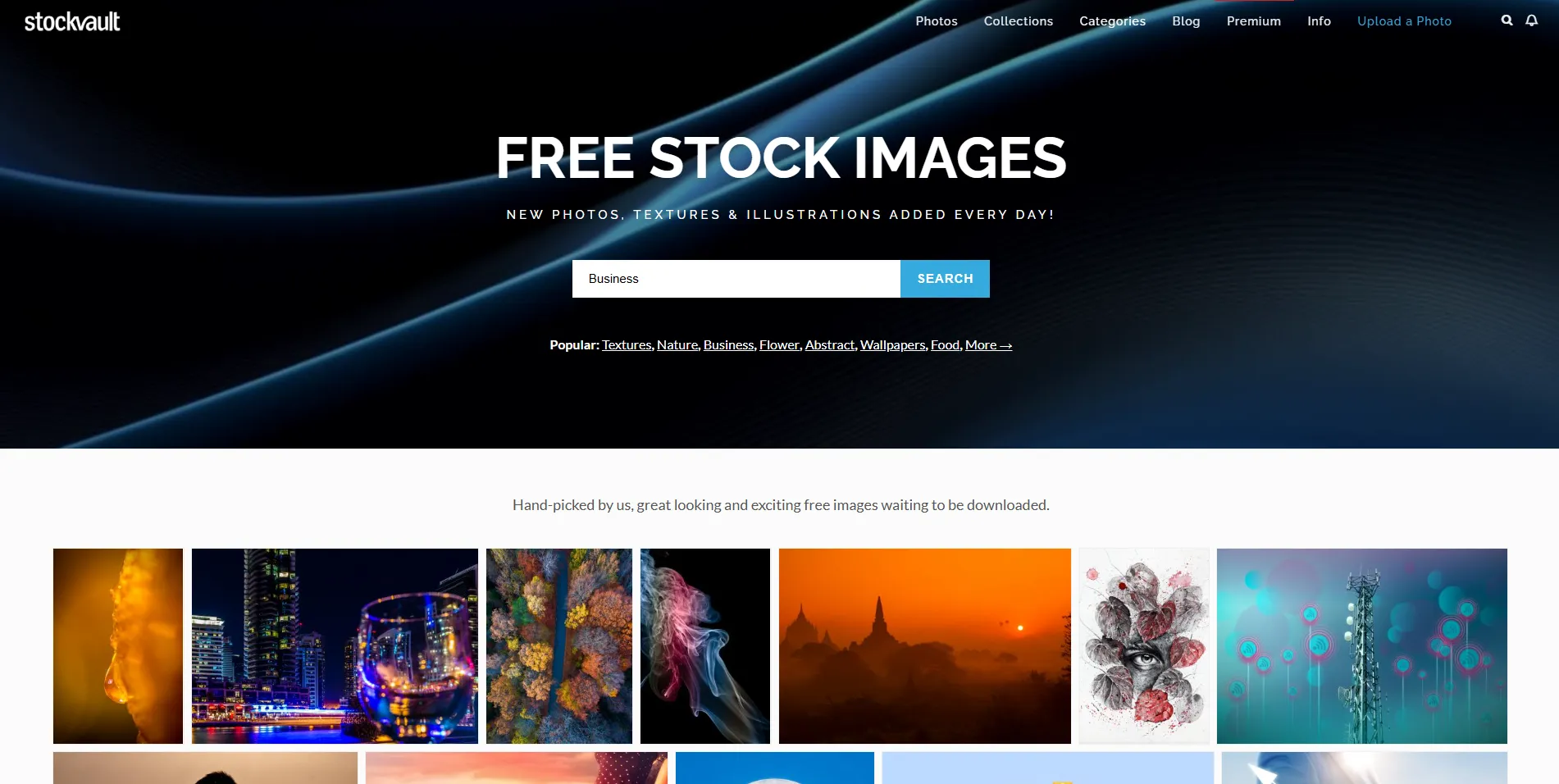
The natural history and decorative arts collections provide extraordinary texture and pattern references: mineral surfaces, textile patterns, ceramic glazes, botanical details, and architectural ornament that serve as both reference and inspiration for artists working in any medium. The resolution of many scans is sufficient for detailed study of surface qualities and material properties. For dedicated texture resources, also see StockVault.
The primary access point is the Smithsonian Open Access portal (si.edu/openaccess), which provides a unified search interface across all participating museums and research centers. Users can search by keyword, filter by museum, media type, date, and other criteria, and download high-resolution images directly. The interface is clean and functional, designed for efficient discovery and download rather than elaborate presentation.
For developers and researchers who need programmatic access to the collection, the Smithsonian API provides structured data access to metadata and image files. The API is hosted on api.data.gov, and registration for an API key is free. Documentation covers fields, departments, and data types. The API enables building custom applications, conducting large-scale research, and integrating Smithsonian content into digital projects: from educational apps to creative tools to data visualization projects.
For bulk access, the AWS Public Dataset mirror provides the entire collection as S3 objects, organized by Smithsonian unit code. The Harvard Library Innovation Lab mirror on Source Cooperative offers the same data with weekly syncs, organized into directories for 3D models, images, and metadata. This is the most efficient access method for researchers who need to download large portions of the collection.
Smithsonian Open Access images are also available through third-party platforms including Rawpixel, Wikimedia Commons, the Digital Public Library of America, the Internet Archive, and the Global Biodiversity Information Facility. These platforms sometimes provide additional curation, categorization, or presentation that makes specific subsets of the collection easier to discover and use.
The Smithsonian American Art Museum collection spans the entire history of American artistic production: from colonial-era portraiture through Hudson River School landscapes, American Impressionism, Abstract Expressionism, Pop Art, and contemporary practice. High-resolution scans of paintings by Winslow Homer, Edward Hopper, Georgia O'Keeffe, Jacob Lawrence, Nam June Paik, and hundreds of other American artists provide study material of extraordinary depth and quality.
The Freer Gallery of Art and Arthur M. Sackler Gallery contribute one of the finest collections of Asian art in the Western world: Chinese paintings, Japanese screens, Korean ceramics, Indian sculpture, and Islamic art spanning thousands of years of artistic production. For artists interested in Asian artistic traditions, these high-resolution scans provide access to masterworks that would otherwise require traveling to Washington, D.C.
The National Air and Space Museum collection includes historical photographs of aviation and space exploration, technical drawings, and images of aircraft and spacecraft. While not traditional art reference, these images serve concept artists, science fiction illustrators, and designers who need accurate visual reference for aerospace subjects.
The Smithsonian's photography collections include works by major American photographers spanning the history of the medium: daguerreotypes, Civil War photography, early 20th-century documentary work, and contemporary art photography. For photography students and practitioners, these collections provide a visual history of the medium that supplements any textbook.
The decision to release content under Creative Commons Zero rather than a more restrictive license was a deliberate and significant choice. CC0 places content in the public domain with no restrictions whatsoever: no attribution required, no commercial use limitations, no modification restrictions. This means Smithsonian Open Access content can be used in commercial products, modified into new artwork, printed on merchandise, incorporated into educational materials, or used in any other way without permission, payment, or attribution.
This contrasts with museum open access programs that use Creative Commons BY (attribution required) or non-commercial licenses. The Rijksmuseum and Paris Musees also use CC0 for their public domain holdings, while the New York Public Library uses CC0 for its public domain items. The Smithsonian's scale (5.1 million items from 21 museums) makes it the largest single CC0 museum release in the world.
This unrestricted access represents the Smithsonian's commitment to its founding mission of "the increase and diffusion of knowledge", a mission that digital technology and open licensing make possible at unprecedented scale.
The Smithsonian's program stands out for its scale and scope. The Rijksmuseum offers approximately 800,000 objects with high-resolution images, focused on Dutch Golden Age masterworks. Paris Musees provides 312,000+ images from 14 Parisian municipal museums. The New York Public Library offers hundreds of thousands of public domain items with a focus on historical photographs, maps, and manuscripts. The Smithsonian's 5.1 million items across art, science, history, and culture dwarf these collections in raw numbers, though each institution offers unique strengths in its specific areas of focus.
For artists who want curated public domain content with a more design-focused interface, Rawpixel offers Smithsonian content alongside material from other institutions, with additional curation and organization.
When searching the Smithsonian Open Access portal, use the museum filter to narrow results to specific institutions. The collection is so large that broad keyword searches return thousands of results across all museums, which can be overwhelming. Filtering by a single museum (e.g., Smithsonian American Art Museum) produces more targeted results.
For 3D models, download the full resolution versions when available. The 150K versions are optimized for web viewing but lack the detail needed for close study or 3D printing. Full resolution models are available in glb and obj formats.
For bulk downloading, use the AWS S3 bucket or the Harvard/Source Cooperative mirror rather than the web interface. The S3 bucket is at s3://smithsonian-open-access and is part of the AWS Public Dataset Program, meaning data transfer out of AWS is free.
Artists and illustrators seeking reference material, historical inspiration, and public domain source content will find the Smithsonian's collection unmatched in scope and accessibility. The CC0 license removes all legal barriers to creative reuse.
Educators at every level use Smithsonian Open Access content in classroom instruction, course materials, textbooks, and research. The CC0 license eliminates the copyright concerns that typically limit the use of museum imagery in educational contexts.
Designers needing authentic historical imagery can source period-accurate visual material from the history, culture, and decorative arts collections without licensing fees.
Researchers and developers benefit from the API and bulk download options, which enable large-scale analysis, machine learning training, and integration into custom applications.
For contemporary stock photography, Unsplash or Pexels are better choices. For curated public domain art with a design-focused interface, Rawpixel offers a more polished browsing experience. But for raw scale, unrestricted licensing, and institutional credibility, Smithsonian Open Access is the gold standard of museum open access programs.
Start exploring at si.edu/openaccess, or access the bulk data via the AWS Public Dataset.
Quiet Canvas is a space for artists and art lovers: essays, glossary terms, tools, and curated directories to support your creative practice.
Learn more →


