Unsplash: Free Photography That Changed the Internet (and Stirred Controversy)
If you have visited a website, read a blog post, or sat through a presentation in the last decade, you have almost certainly seen an Unsplash photograph. The platform has become so deeply embedded in the visual fabric of the internet that its influence is nearly invisible, which is precisely the point. Unsplash proved that free stock photography could be beautiful, and in doing so, it raised the visual standard of the entire web. It also sparked a heated debate about whether "exposure" constitutes fair compensation for working photographers.
Founded in 2013 by Mikael Cho, Luke Chesser, and Stephanie Liverani as a simple Tumblr blog sharing ten high-resolution photographs, Unsplash has grown into a library of over 3 million images contributed by a global community of photographers. In March 2021, Getty Images acquired the platform for an undisclosed sum, a move that validated Unsplash's model while raising questions about the future of free creative resources. As of July 2026, Unsplash continues to operate as a standalone brand within the Getty family, which also includes iStock and the newly launched single-seat professional subscriptions.
The Unsplash Aesthetic
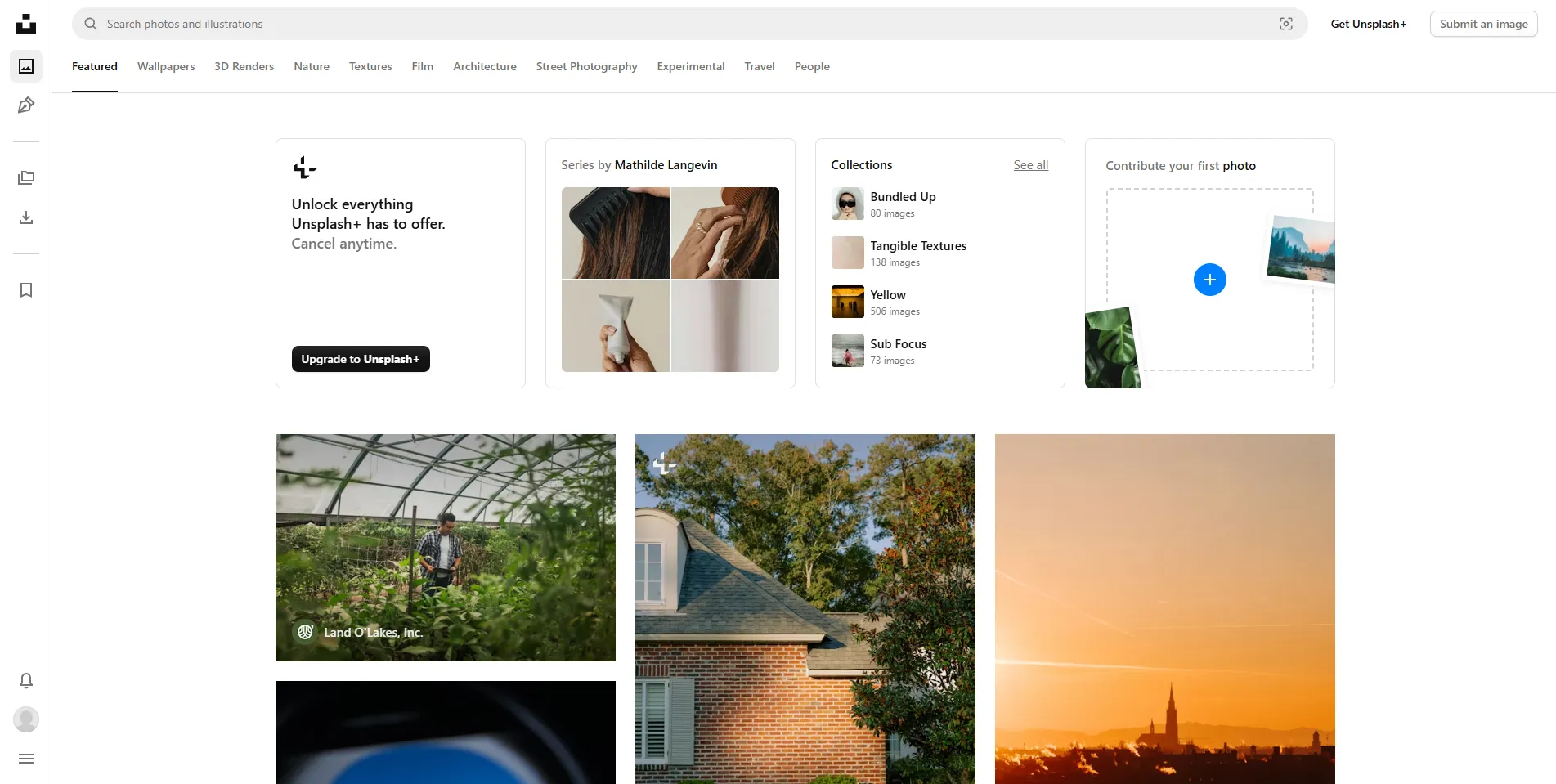
What originally set Unsplash apart from other free stock photo sites was not just the price. It was the quality and style. In the early 2010s, free stock photography was synonymous with awkward poses, harsh lighting, and painfully staged scenarios. Unsplash's contributors brought a different sensibility: moody landscapes, candid street photography, minimalist compositions, and the kind of atmospheric, cinematic imagery that had previously been the exclusive domain of expensive agencies.
This distinctive aesthetic, sometimes described as "Instagram meets editorial," became the visual language of modern web design. Startups, blogs, SaaS companies, and nonprofits adopted Unsplash images for hero sections, blog headers, and social media posts because they conveyed authenticity and sophistication without the corporate stiffness of traditional stock photography.
The community of contributors includes both amateur enthusiasts and professional photographers who use the platform for exposure and portfolio building. Some of Unsplash's most prolific contributors have parlayed their visibility on the platform into commercial photography careers, brand partnerships, and gallery exhibitions. Others have left, frustrated that their work generates millions of views and downloads with zero financial return.
The Unsplash License: Permissive and Controversial
The Unsplash License is one of the most permissive content licenses on the internet. Under its terms, you can use any photograph on the platform for both commercial and non-commercial purposes. You can modify, crop, recolor, and composite images without restriction. Attribution is appreciated but not required, a distinction that eliminates the legal friction of tracking and displaying photographer credits across hundreds of assets.
This license is not Creative Commons, though it shares some similarities. The key restrictions are that you cannot sell unmodified Unsplash photos as prints or on print-on-demand products, and you cannot compile Unsplash images to create a competing stock photography service. Beyond those limitations, the freedom is extensive.
For designers, bloggers, and developers working under tight deadlines, this simplicity is invaluable. There is no need to parse complex licensing tiers, worry about usage limits, or track expiration dates. You find an image, download it, and use it. The entire process takes seconds.
But the license has drawn sharp criticism from professional photographers. The "give your work away for free" model, critics argue, devalues professional photography and makes it harder for working photographers to earn a living. Unsplash counters that contributors choose to participate and benefit from exposure, community, and opportunities. The tension between these positions has defined much of the platform's public discourse.
Unsplash+ and the Premium Tier
Following the Getty acquisition, Unsplash launched Unsplash+, a premium tier offering exclusive content, higher-resolution downloads, and additional legal protections for commercial use. This premium layer coexists with the free library, giving users the option to pay for enhanced features without affecting the core free experience.
Unsplash+ is aimed at businesses and agencies that need more legal certainty than the free tier provides. The premium subscription includes model releases and property releases for featured content, addressing one of the most significant gaps in the free library. For teams producing commercial work at scale, this added layer of protection may justify the subscription cost.
Integration Ecosystem
Because Unsplash established itself as the default source for free photography, it has been integrated into an extraordinary number of third-party tools and platforms. This ecosystem of integrations is arguably as valuable as the photo library itself.
Design tools like Figma, Sketch, and Adobe XD offer Unsplash plugins that allow designers to insert real photographs directly into mockups and prototypes. This eliminates the need for placeholder images during the design process and gives clients a more realistic preview of the final product.
Website builders including Squarespace, Wix, and WordPress have built-in Unsplash integrations, allowing users to search and insert images without leaving the page editor. Productivity tools like Notion, Trello, and Slack also support Unsplash, making it easy to add visual context to documents, boards, and messages.
Developers can access the Unsplash API, which is free for most use cases and provides programmatic access to the entire library. This API powers image search features in thousands of applications, from content management systems to mobile apps to AI training pipelines. The API documentation is well-maintained and the rate limits are generous enough for most production applications.
Unsplash vs. Pexels vs. Pixabay
The three major free stock platforms each occupy slightly different positions. Unsplash offers the highest average photography quality through selective curation, but its library is photography-only. Pexels has carved out a distinctive niche as the leading source of free stock video, with a growing library of vertical formats for TikTok and Reels. Pixabay provides the broadest media scope, with over 6 million assets spanning photos, illustrations, vectors, videos, music, sound effects, and 3D models.
Many creative professionals bookmark all three and use them for different purposes: Unsplash for hero images and premium photography, Pexels for video B-roll, and Pixabay for general-purpose assets and illustrations. For paid alternatives with legal guarantees and exclusive content, Shutterstock and Adobe Stock remain the safer options.
The Limitations
Unsplash's greatest strength is also its greatest weakness: popularity. Because the platform is so widely used, the most striking and versatile images appear on thousands of websites simultaneously. A designer might select a dramatic mountain landscape for a client's homepage only to discover that three competitors are using the exact same photograph. For brands that prioritize visual distinctiveness, this oversaturation is a genuine concern.
The search functionality, while adequate for general queries, lacks the granular filtering capabilities of paid platforms. You cannot filter by model release status, specific demographic characteristics, or precise compositional elements. For highly specific creative briefs, Unsplash's results will be far less targeted than what Shutterstock or Adobe Stock can deliver.
Model releases are another consideration. While many Unsplash contributors upload images of identifiable people, the platform does not systematically verify that model releases are on file. For major commercial campaigns like billboards, product packaging, or television advertisements, using Unsplash images of recognizable individuals carries legal risk that paid platforms mitigate through their vetting processes.
Insider Tips
If you are sourcing images for a client project, search Unsplash by color palette using the platform's color tool. This helps maintain visual consistency across a multi-page site without spending hours filtering manually. For projects that require people, filter by portrait orientation and look for contributors with large portfolios, as they tend to be more experienced with composition and lighting. Avoid the first page of results for popular search terms like "nature" or "business," since these images are the most overused. Pages two and three often contain equally strong photographs with a fraction of the download count.
For developers building applications that need image search, the Unsplash API is well-documented and free for up to 50 requests per hour. If you need higher rate limits, you can apply for a production key.
Final Verdict: Who Is This Actually For?
Unsplash fundamentally changed the economics and aesthetics of stock photography. It proved that a community-driven, free model could produce imagery that rivals paid alternatives in quality and style. The Getty acquisition has introduced some positive changes through Unsplash+, but the long-term trajectory remains uncertain. Getty's business model is built on monetizing visual content, and the tension between that model and Unsplash's free ethos will likely continue to shape the platform's evolution.
Web designers and developers will find Unsplash indispensable for hero images, blog headers, and placeholder content. The integration with design tools makes it the fastest path from concept to visual.
Bloggers and content marketers benefit from unlimited free downloads and a simple license. For teams publishing multiple articles per week, Unsplash eliminates the cost of sourcing featured images.
Startup founders and small businesses with limited budgets can build professional-looking websites and marketing materials without allocating funds to stock photography subscriptions.
For high-stakes commercial work requiring legal guarantees and exclusive imagery, paid platforms like Shutterstock remain the safer option. For artists seeking public domain artwork and museum collections rather than contemporary photography, platforms like Smithsonian Open Access and Rawpixel offer more specialized resources.
Start browsing free images at unsplash.com, or explore Unsplash+ for commercial-grade content with legal protections.