Pixabay: 6 Million Free Assets, Eight Media Types, One Big Catch
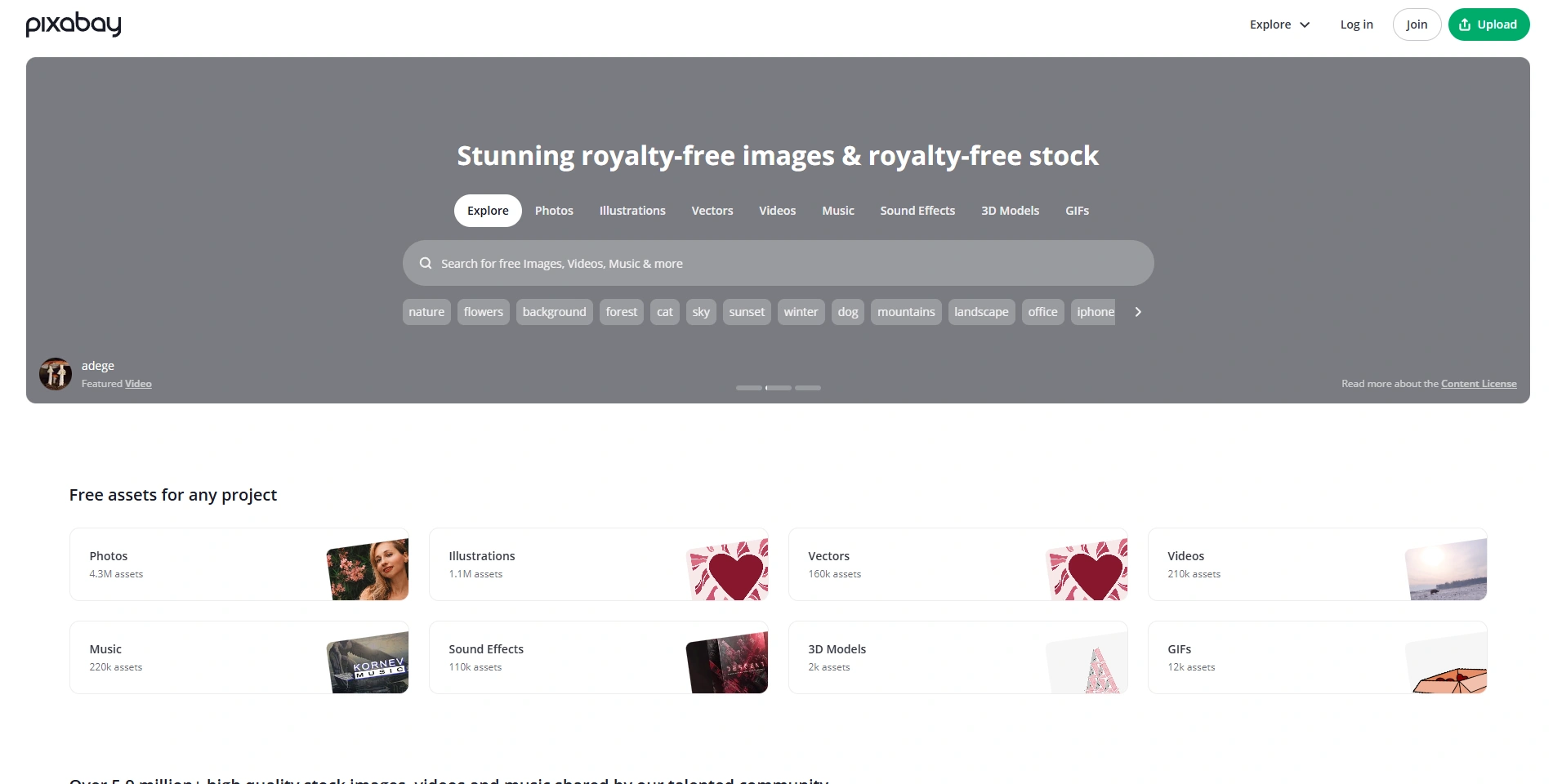
Pixabay is the Swiss Army knife of free stock media. No other platform matches its breadth: over 6 million assets spanning photographs (4.3 million), illustrations (1.12 million), vectors (160,000), videos (220,000), music tracks (230,000), sound effects (120,000), 3D models (2,000), and animated GIFs (12,000). Founded in 2010 in Ulm, Germany by Hans Braxmeier and Simon Steinberger, Pixabay has grown into a global resource serving over 200 million monthly visitors who need quality visual and audio content without licensing costs or attribution requirements.
Canva acquired Pixabay in 2019 alongside Pexels, and both platforms now feed into Canva's design ecosystem. Every image and video on Pixabay includes a direct "Edit image" or "Edit video" link that opens the asset inside Canva's editor, making it possible to go from finding an asset to customizing it in a single workflow.
What distinguishes Pixabay from photo-only platforms like Unsplash is this multi-media scope. A single search can return photographs, digital illustrations, vector graphics, video clips, and 3D models related to your query, making it a one-stop resource for projects that require diverse media types. The trade-off: quality varies more than on curated platforms, and sponsored iStock results are mixed into search results, which can be confusing if you are not paying attention.
The Pixabay Content License
The Pixabay Content License allows free use of all content for commercial and non-commercial purposes. No attribution is required, though credit is appreciated. The license prohibits selling unmodified content as standalone products and using identifiable people in ways that suggest endorsement without consent. Within these reasonable boundaries, the freedom is extensive.
One important note for video creators: some music tracks on Pixabay are marked as Content ID Registered. This transparency matters for YouTube creators, since Content ID registration can trigger monetization claims on videos that use the track. Always check the Content ID flag before downloading a music track for video production.
Beyond Photography
Illustrations and Vectors
Pixabay's collection includes over 1.1 million digital illustrations and vector graphics contributed by artists worldwide. These range from simple icons and clipart to detailed artistic illustrations. For designers and content creators who need stylized imagery rather than photographs, this collection fills a gap that Unsplash and Pexels do not cover.
Video Content
The video library includes 220,000 stock footage clips covering nature, technology, business, abstract backgrounds, and more. While smaller than Pexels for video specifically, the free availability makes it a solid supplementary resource for YouTubers, presenters, and social media creators who need B-roll footage.
Music and Sound Effects
Pixabay's audio library provides 230,000 royalty-free music tracks and 120,000 sound effects for video production, podcasts, and presentations. Tracks can be filtered by genre, mood, movement, theme, and duration. Individual tracks have accumulated millions of plays, with popular cinematic tracks reaching nearly 3 million plays and over 271,000 downloads. This transforms Pixabay from a visual resource into a comprehensive multimedia asset library.
3D Models
In 2025, Pixabay launched 3D model support, starting with .glb/.glTF files. Users can view models from all angles using the built-in model viewer, which supports zoom, 360-degree rotation, and a quick "rotate view" function. The collection is still small (around 2,000 models) and limited to single subjects rather than full scenes, but it adds yet another media type to the platform's already broad scope.
Animated GIFs
The platform also hosts 12,000 animated GIFs suitable for web design, social media, and digital presentations. While a smaller category, the availability of animated content under the same permissive license adds another dimension of utility.
The Community Contributor Model and Quality Control
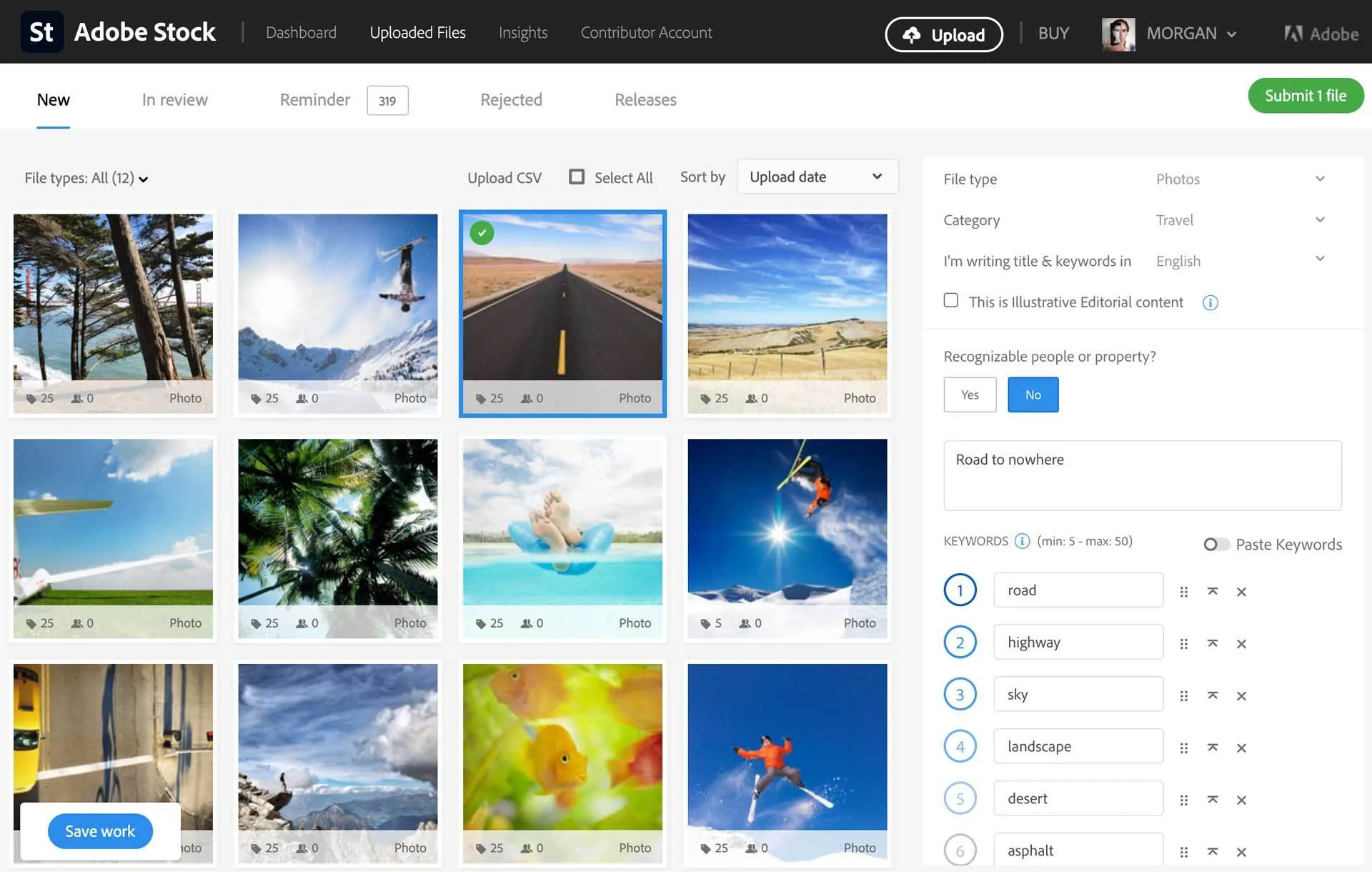
Pixabay's content is contributed by a global community of photographers, illustrators, videographers, and musicians who share their work freely. In May 2025, Pixabay updated its upload system to prioritize quality over quantity. Upload limits now increase automatically based on the quality of a contributor's recent submissions, with consistent high-quality uploads growing the limit in increments of 10, capped at 150. This means the best contributors can upload more, while low-quality submissions are naturally throttled.
Despite this quality control measure, photography quality on Pixabay remains variable. The platform includes millions of excellent photographs, but it also contains images that would not meet the editorial standards of curated platforms like Unsplash. Effective use of Pixabay requires evaluating image quality individually rather than assuming consistent professional standards across all results.
A persistent annoyance: sponsored iStock results are mixed into search results. These paid images appear alongside free results and can be confusing if you are not paying attention. They are marked, but the labeling is subtle enough that casual users may click through expecting free downloads.
Search and Discovery
Pixabay's search functionality supports keyword-based queries with filters for media type, orientation, image size, color, and category. The ability to filter by media type is particularly valuable given the platform's multi-media scope. Narrowing results to only photographs, only illustrations, or only videos streamlines the discovery process.
Related image suggestions and collection pages organized by theme help users discover content beyond their initial search terms. For artists seeking reference material or inspiration, browsing themed collections often surfaces unexpected images that keyword searches would miss.
Pixabay vs. Unsplash vs. Pexels
The comparison between Pixabay and Unsplash is the most common question for users choosing a free stock platform. Unsplash offers higher average photography quality through more selective curation, but Pixabay provides greater breadth through its multi-media scope and larger overall library. Unsplash is the better choice when you need a single stunning photograph. Pixabay is the better choice when you need diverse media types or when Unsplash's smaller library does not contain what you need.
Pexels sits between the two, with stronger video content than Pixabay but less media variety overall. Many creative professionals bookmark all three and use them for different purposes: Unsplash for hero images and premium photography, Pexels for video B-roll, and Pixabay for general-purpose assets, illustrations, vectors, and audio content.
Insider Tips
When searching on Pixabay, always check the left sidebar to confirm you are viewing free results and not sponsored iStock content. The sponsored results appear at the top of search pages and are marked with a small "Sponsored" label, but they blend in visually. For music tracks, always check for the Content ID Registered flag before downloading. If a track is registered, YouTube's Content ID system may claim your video even though the track is free to use.
For 3D model downloads, keep file sizes under 50MB. Pixabay's current 3D viewer struggles with larger files, and the platform explicitly recommends single-subject models rather than complex scenes.
Final Verdict: Who Is This Actually For?
Pixabay is the most versatile free stock media platform available. Its combination of 6 million+ assets across eight media types, a single permissive license with no attribution required, and direct Canva integration makes it a practical one-stop resource for creators who need diverse media without licensing complexity.
Content creators producing YouTube videos, social media content, online courses, and presentations benefit most from Pixabay's multi-media scope. The ability to source photos, video clips, music, and sound effects from a single platform simplifies the rights management that multimedia production typically requires.
Graphic designers use Pixabay's illustrations, vectors, and photographs as components in composite designs, presentations, marketing materials, and web content. The ability to find multiple media types through a single search streamlines the asset-gathering phase of design projects.
Artists and illustrators use Pixabay's vast photography collection as reference material for paintings, illustrations, and design projects. The permissive license means reference photographs can be closely referenced without copyright concerns.
For creators who prioritize photography quality above all else, Unsplash remains the stronger choice. For video-first creators, Pexels has the edge. For public domain art and museum collections, Smithsonian Open Access or Rawpixel are better specialized resources. But for sheer breadth and convenience, Pixabay is hard to beat.
Start exploring free media at pixabay.com.