
Game Design as Art: Environmental Storytelling and Visual World-Building
Game design is one of the most sophisticated visual arts of the 21st century. Discover how environmental storytelling and visual world-building make games fine art.
Your cart is empty
Browse the store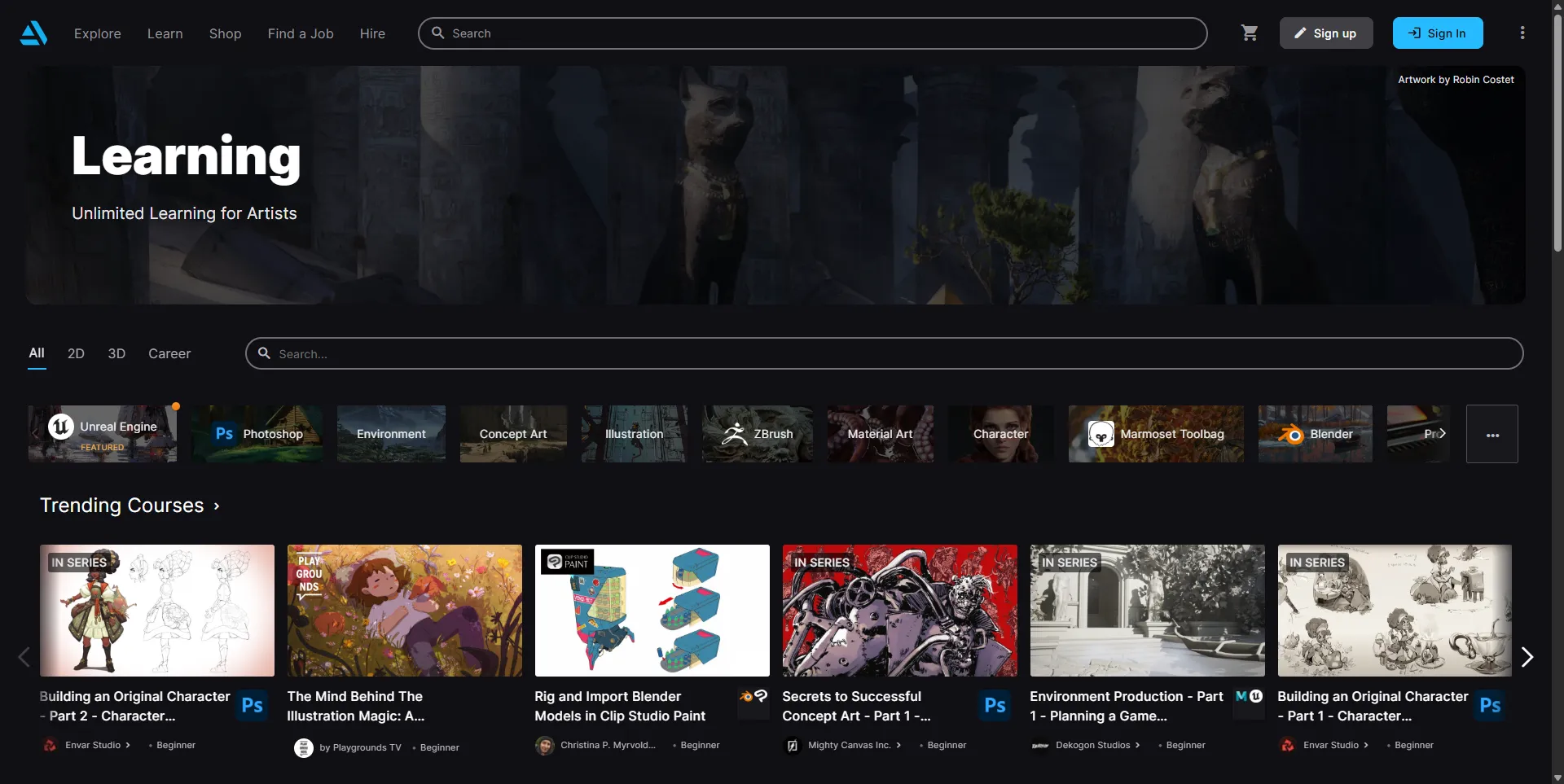
ArtStation Learning offers professional-grade courses from working entertainment artists, covering 3D, concept art, and VFX skills the industry actually hires for.
Discover other art communities you might be interested in
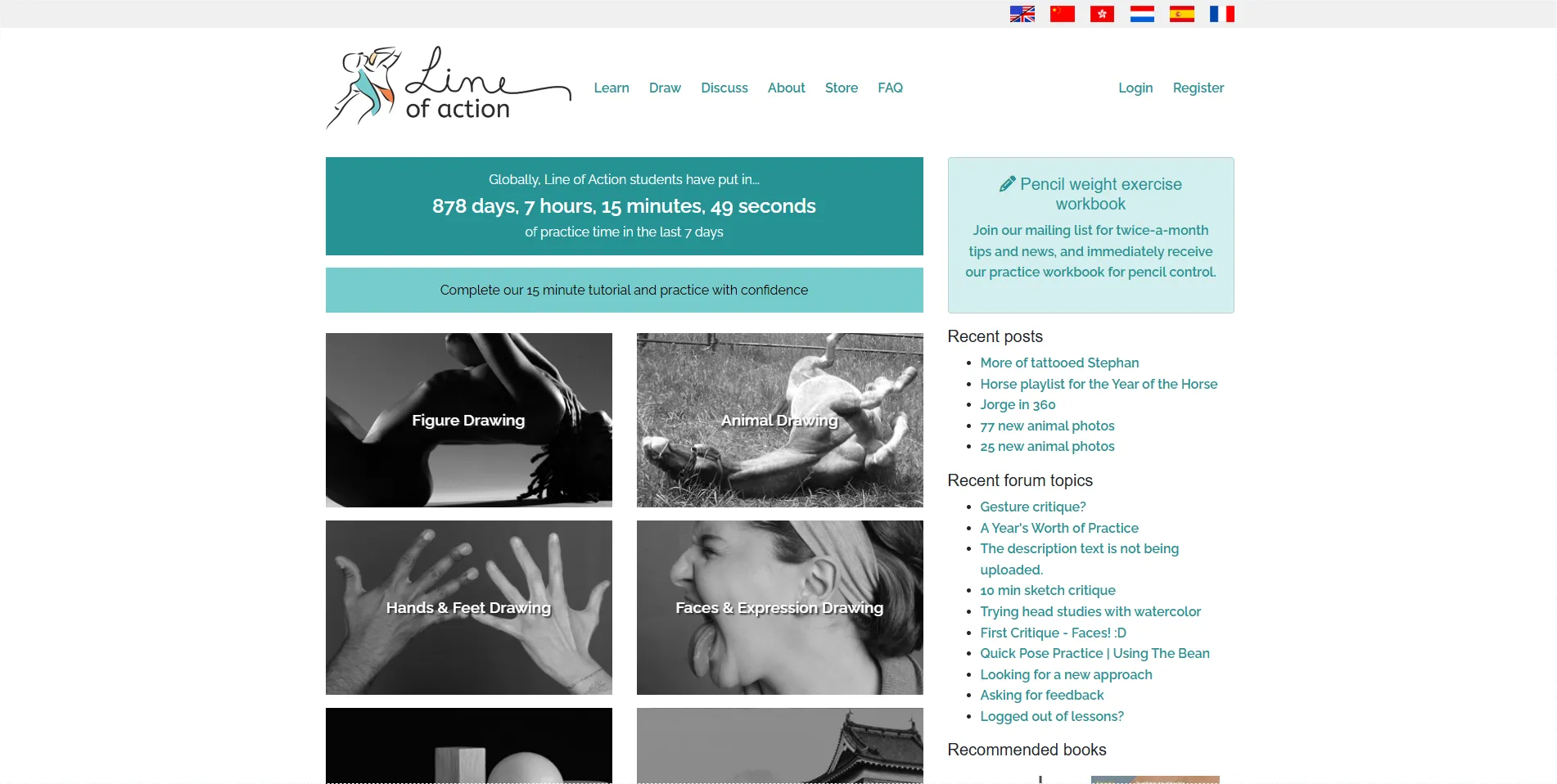
Line of Action is a free figure drawing practice tool with timed pose references. Revamped tools in 2025, new models in 2026. Honest look at its strengths and limitations.
View details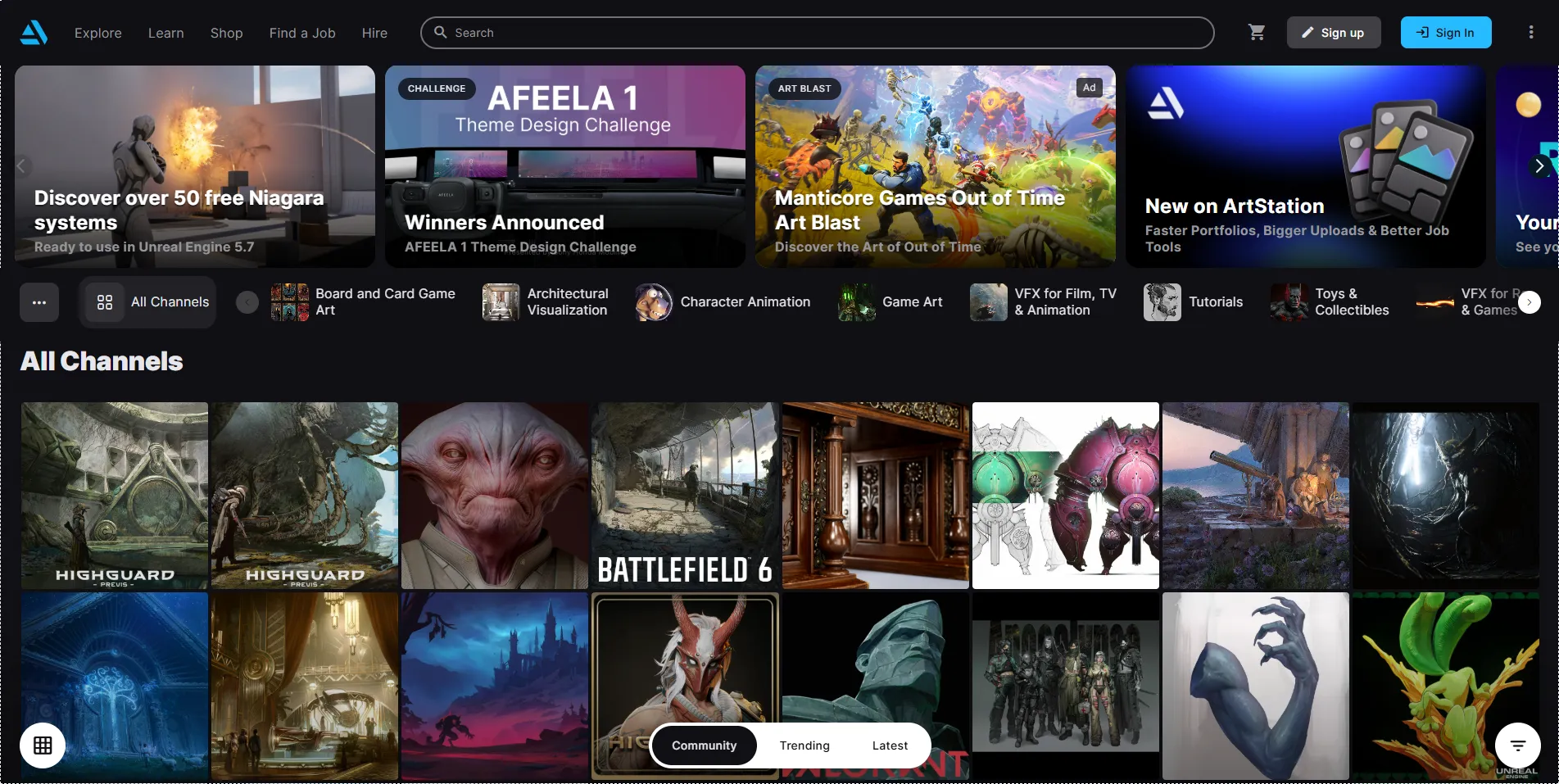
The industry-standard portfolio platform for 10M+ entertainment artists, with a job board, challenges, learning resources, and the State of the Art Report tracking hiring trends.
View detailsExplore definitions from our glossary that connect to this community
Concept art is visual development art for games, film, and animation. Learn its history from Disney's Snow White to AI-assisted workflows in 2026.
3D modeling is the process of creating three-dimensional objects in digital space. Learn its history from the 1975 Utah teapot to Meta's SAM 3D and Roblox's AI Build in 2026.
Read more about this topic on our blog
Game design is one of the most sophisticated visual arts of the 21st century. Discover how environmental storytelling and visual world-building make games fine art.

How video games became a serious visual art form: from the painterly worlds of Journey and Shadow of the Colossus to Elden Ring's gothic mythology. A guide to game art direction, concept art, and what makes interactive visuals different.

Trace digital art from 1960s plotter drawings to AI image generation. This complete history covers every landmark moment in creative computing and digital making.
The ArtStation State of the Art Report 2026, published in April 2026, surveyed over 2,000 artists and revealed something that anyone working in entertainment art already knows: 3D modeling has overtaken every other skill as the top proclaimed skill in artist portfolios. Concept art and illustration follow. 3D animation grew by 14.4% year over year, and 2D animation by 12.8%. The most popular software pairings are Maya plus Substance 3D Painter, Substance 3D Painter plus ZBrush, and Blender plus Photoshop. If your learning resources are not teaching these tools and workflows, you are learning the wrong things.
This is where ArtStation Learning comes in. Launched as part of the broader ArtStation platform (acquired by Epic Games in 2021), the learning section offers courses and tutorials taught by working professionals with credits at major game studios, film studios, and animation companies. The instructors are not hobbyists who learned the software last year. They are artists who have shipped titles at studios like Riot Games, Blizzard, Naughty Dog, ILM, and Weta.
The platform's advantage is proximity. ArtStation is where entertainment artists already host their portfolios, browse job listings, and follow industry trends. The learning section sits inside that same ecosystem, which means the courses are taught by the same artists whose work you see trending on the homepage. That connection between instruction and visible professional output is something that standalone education platforms like Domestika or YouTube tutorials cannot replicate.
The course library covers the full range of skills the State of the Art Report identifies as in demand: 3D modeling, texturing, concept art, character design, environment art, VFX, and animation. The courses are project-based, meaning you finish with a portfolio piece rather than just a set of notes. For artists targeting entertainment industry roles, this matters because recruiters consistently list "lack of professional polish" and "weak fundamentals" as the top problems with candidate portfolios.
Insider tip: The report also revealed that 57% of surveyed artists struggle with inconsistent income and 51% struggle with promotion. ArtStation Learning does not address these business challenges directly. If you need career strategy and client management skills, pair the technical courses with resources from Behance, which has built out freelancer tools specifically for this gap.
ArtStation Learning operates on a subscription model that provides access to the full course library for a monthly or annual fee. The pricing is competitive compared to standalone platforms, and the subscription includes access to community challenges and some marketplace resources. For artists who are already paying for an ArtStation Pro subscription, the learning access may be bundled or discounted depending on current Epic Games pricing tiers.
Insider tip: Epic Games has been consolidating its marketplace infrastructure. The old ArtStation Marketplace has been migrated to Fab, Epic's unified marketplace that replaced the Unreal Marketplace, Quixel Bridge, Sketchfab's commercial offering, and ArtStation Marketplace in one storefront. If you are used to buying assets or brushes through ArtStation, that workflow has changed. The learning platform itself remains on ArtStation, but asset purchases now route through Fab.
The ArtStation Challenges are one of the most effective learning features on the platform. These are regular themed competitions with briefs that simulate real production assignments. Past challenges have been sponsored by major studios and software companies, with prizes that include cash awards, software licenses, and industry exposure.
The challenges are where the learning platform and the community converge. Thousands of artists work on the same brief simultaneously, posting work-in-progress updates and receiving feedback. The competitive pressure and the public nature of the work push participants to produce at a higher level than they would in isolation. Winning or placing well in a major ArtStation Challenge is a genuine resume line that recruiters notice.
Insider tip: The challenges are judged by industry professionals, and the judging criteria tend to reward the same qualities that studios look for in portfolio reviews: technical execution, creative problem-solving within the brief, and presentation quality. Read the brief carefully. Many strong entries fail because they ignored specific constraints in the brief in favour of a more visually impressive but off-topic piece.
ArtStation Learning is not the only option for digital art education, but it is the most industry-aligned. Gnomon Workshop offers higher-end production training but at a significantly higher price point. CGMA (CG Master Academy) offers structured mentorship programs with live feedback, which ArtStation Learning's pre-recorded format does not provide. YouTube is free but inconsistent in quality and rarely covers the full production pipeline.
The trade-off with ArtStation Learning is depth versus breadth. The platform covers a wide range of entertainment art skills at a reasonable price, but individual courses are sometimes shorter and less detailed than dedicated programs. For artists who need structured mentorship and critique, pairing ArtStation Learning with a CGMA course or a mentorship program will give better results than relying on pre-recorded content alone.
The ArtStation Jobs board is integrated with the learning platform in a way that creates a natural progression: learn the skills, build a portfolio, apply for the jobs. The board lists positions at every level, from entry-level to senior and lead roles, at studios worldwide. The State of the Art Report confirmed that games remain the biggest hiring sector, with Animation, Film and TV, Asset Creation, Advertising, and AR/VR also showing consistent demand.
The most required software in job listings, according to the report, is Photoshop, Unreal Engine, Blender, Maya, and Unity. If your learning plan does not include at least two of these tools, you are limiting your employability.
ArtStation Learning is for aspiring and early-career entertainment artists who need to build industry-relevant skills without paying Gnomon prices. If you are targeting a role in games, film, animation, or VFX, the courses here teach the tools and workflows that studios actually use, taught by artists who actually work in those studios.
It is not for fine artists, traditional media painters, or hobbyists looking for casual instruction. The content is specifically oriented toward entertainment industry pipelines, and if that is not your goal, the courses will feel narrowly technical.
It is also not a complete education on its own. Pair it with structured mentorship, active challenge participation, and consistent portfolio work on ArtStation itself. For artists who also need business and freelancing skills, Behance has better tools for managing client work and finding paid opportunities.
Start with a free ArtStation account to browse the learning catalog and see if the course selection matches your goals before committing to a subscription.
Quiet Canvas is a space for artists and art lovers: essays, glossary terms, tools, and curated directories to support your creative practice.
Learn more →


