ArtStation: The Portfolio Platform That Entertainment Artists Cannot Avoid
If you work in games, film, animation, or any entertainment field that requires visual art, not having an ArtStation portfolio will hurt your career. That is not marketing copy. That is the practical reality in 2026. Art directors at Riot Games, Blizzard, Naughty Dog, ILM, and Weta browse ArtStation daily to source talent. Job postings explicitly request ArtStation profile links. The State of the Art Report 2026, based on surveys of over 2,000 ArtStation users, confirmed that games remain the biggest hiring sector, with Animation, Film and TV, Asset Creation, Advertising, and AR/VR showing consistent demand. The platform is not optional infrastructure for this industry. It is the infrastructure.
Founded in 2014 by Leonard Teo and Beibei Wang and acquired by Epic Games in 2021, ArtStation has grown to over 10 million artists. It is the LinkedIn of visual arts, except more useful because the work speaks louder than the resume.
The Portfolio: Your Professional storefront
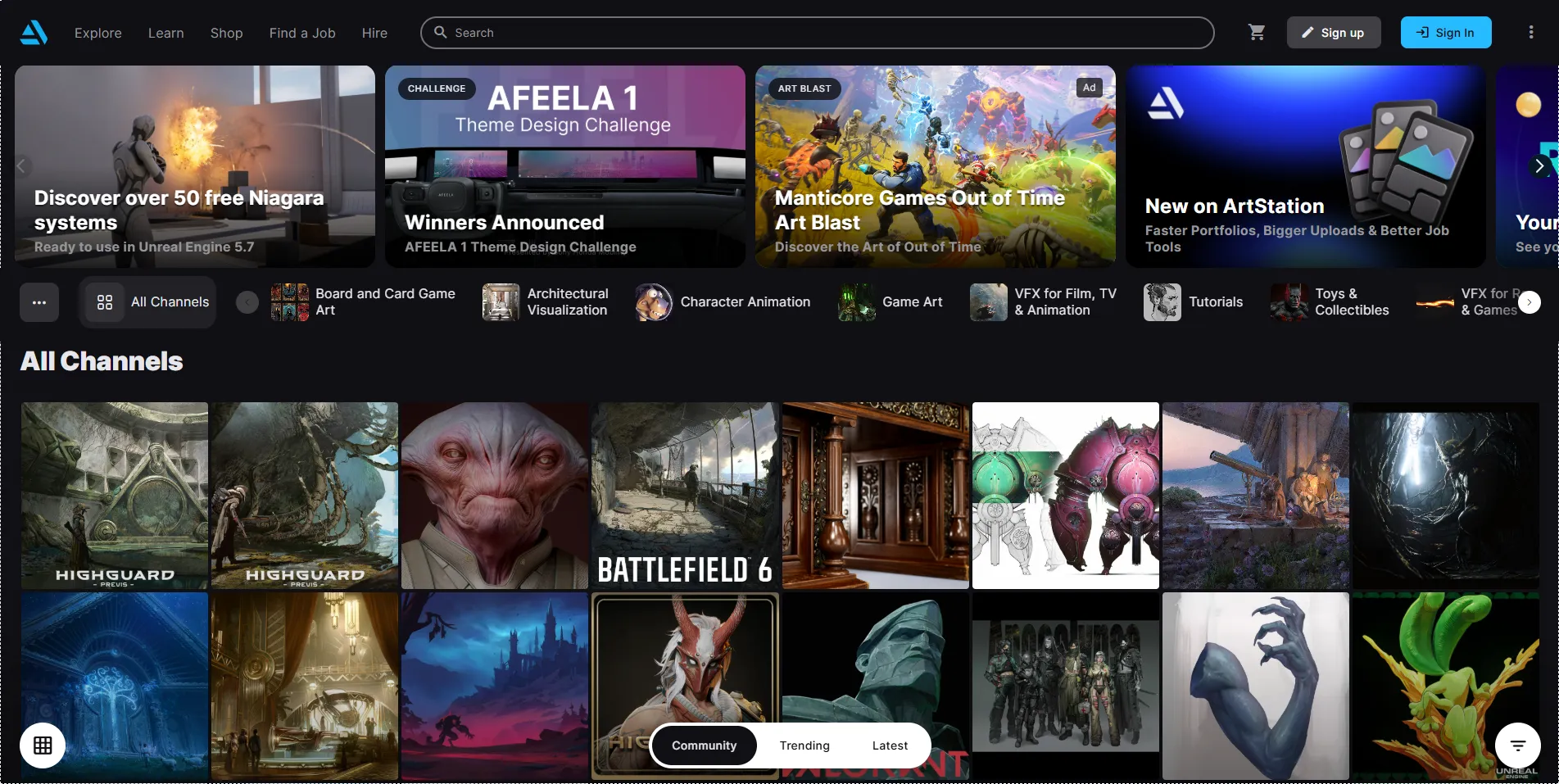
ArtStation's portfolio tools are designed specifically for visual artists, not adapted from a general social media template. Clean, customisable portfolio pages present artwork without the distracting interface clutter of Instagram or Twitter. High-resolution image support, project-based organisation, and the ability to include process breakdowns and behind-the-scenes content let artists present work with the context it deserves.
The platform supports multiple presentation formats: single-image showcases for finished pieces, multi-image projects that document process from concept to completion, embedded video for animation and VFX reels, and 3D model viewers that allow recruiters to rotate and examine models directly in the browser. This versatility means every entertainment art discipline can present work in its optimal format.
Insider tip: Recruiters consistently list "poor presentation or navigation" as one of the top problems with candidate portfolios. A messy ArtStation profile with inconsistent project naming, missing tags, and no clear separation between personal and professional work will hurt you even if the art itself is strong. Spend an afternoon organising your projects before applying anywhere.
The State of the Art Report 2026: What the Industry Actually Wants
The State of the Art Report 2026 is required reading for anyone pursuing an entertainment art career. The data points are specific and actionable:
- 3D modeling is the top proclaimed skill in artist portfolios, followed by concept art and illustration. 3D animation grew 14.4% year over year, and 2D animation by 12.8%.
- The most popular software is Photoshop, followed by Blender, Substance 3D Painter, Maya, and ZBrush. The most common software pairings are Maya plus Substance 3D Painter, Substance 3D Painter plus ZBrush, and Blender plus Photoshop.
- 50% of respondents switch software because of price changes. 24% find better alternatives, 22% cite licensing changes, and 17% are concerned about ethical and business matters.
- 57% of artists struggle with inconsistent income. 51% struggle with promotion. 46% face geographic limitations.
- Recruiters list the top problems with candidates as: missing technical skills or workflows, lack of professional polish, weak fundamentals, unrealistic portfolio scope, poor presentation, and unclear role in team projects.
Insider tip: The report is free to download. Read it before your next job application. If your portfolio demonstrates skills that the report shows are in demand, and avoids the problems recruiters list, you are already ahead of most applicants.
The Job Board
The ArtStation Jobs board is one of the most targeted resources for creative industry employment. Listings span concept art, 3D modeling, animation, VFX, game design, and illustration at studios worldwide. The integration between job listings and artist portfolios creates an efficient hiring pipeline: a recruiter sees a listing, clicks through to the applicant's ArtStation portfolio, and evaluates the work directly.
The most required software in job listings, according to the State of the Art Report, is Photoshop, Unreal Engine, Blender, Maya, and Unity. If your portfolio does not demonstrate proficiency in at least two of these tools, you are limiting your employability.
Insider tip: The job board is not the only way studios find talent on ArtStation. Many recruiters browse the trending and featured sections proactively, contacting artists whose work catches their eye even when no job has been posted. Keep your portfolio updated and properly tagged even when you are not actively job hunting.
The Challenges
ArtStation hosts regular community challenges that attract participation from artists worldwide, including working professionals at major studios. These challenges are themed around character design, environment art, or specific creative briefs, and they simulate real production assignments. Winners and featured entries gain significant exposure within the community.
The challenges are also the best way to build a portfolio piece under deadline pressure with a specific brief, which is exactly what studios want to see. Many artists have landed jobs as a direct result of challenge entries that went viral on the platform.
Insider tip: The challenges are judged by industry professionals who reward the same qualities studios look for: technical execution, creative problem-solving within the brief, and presentation quality. Read the brief carefully. Many strong entries fail because they ignored specific constraints in favour of a more visually impressive but off-topic piece.
The Marketplace Migration to Fab
One significant change since the Epic Games acquisition: the old ArtStation Marketplace has been migrated to Fab, Epic's unified marketplace. Fab launched in October 2024 as the replacement for the Unreal Marketplace, Quixel Bridge, Sketchfab's commercial offering, and ArtStation Marketplace. By spring 2026, the live listing count on Fab exceeded 420,000, with over 20,000 publishers.
The migration has been controversial. A 12-month retrospective from a Fab seller noted that the first six months were rough, with missing analytics, delayed payouts, and inconsistent tax documentation. By mid-2025, the core seller tooling had reached parity, and in 2026 it is competent but not industry-leading. The Fab search has improved dramatically with semantic matching, but the platform now serves four overlapping audiences (Unreal developers, Unity developers, DCC artists, and casual hobbyists from the Fortnite side), which makes targeting a specific audience harder for sellers.
Insider tip: If you were selling brushes, textures, or 3D models on the old ArtStation Marketplace, your content has been migrated to Fab. Check your Fab seller dashboard to verify that your listings, pricing, and tax documentation transferred correctly. Some sellers reported issues with the migration that required manual fixes.
ArtStation Pro
ArtStation Pro subscriptions provide enhanced portfolio customisation, analytics, and promotional tools. Pro features include custom domain mapping, advanced analytics that show who is viewing your work, and priority placement in search results. For artists whose careers depend on online visibility, the Pro subscription provides tangible professional advantages.
Recent platform updates include a new Community Wall homepage experience, a reactions and message request system, and improved showcasing of pro artists. The platform continues to evolve its community features alongside the core portfolio functionality.
Competitor Comparison
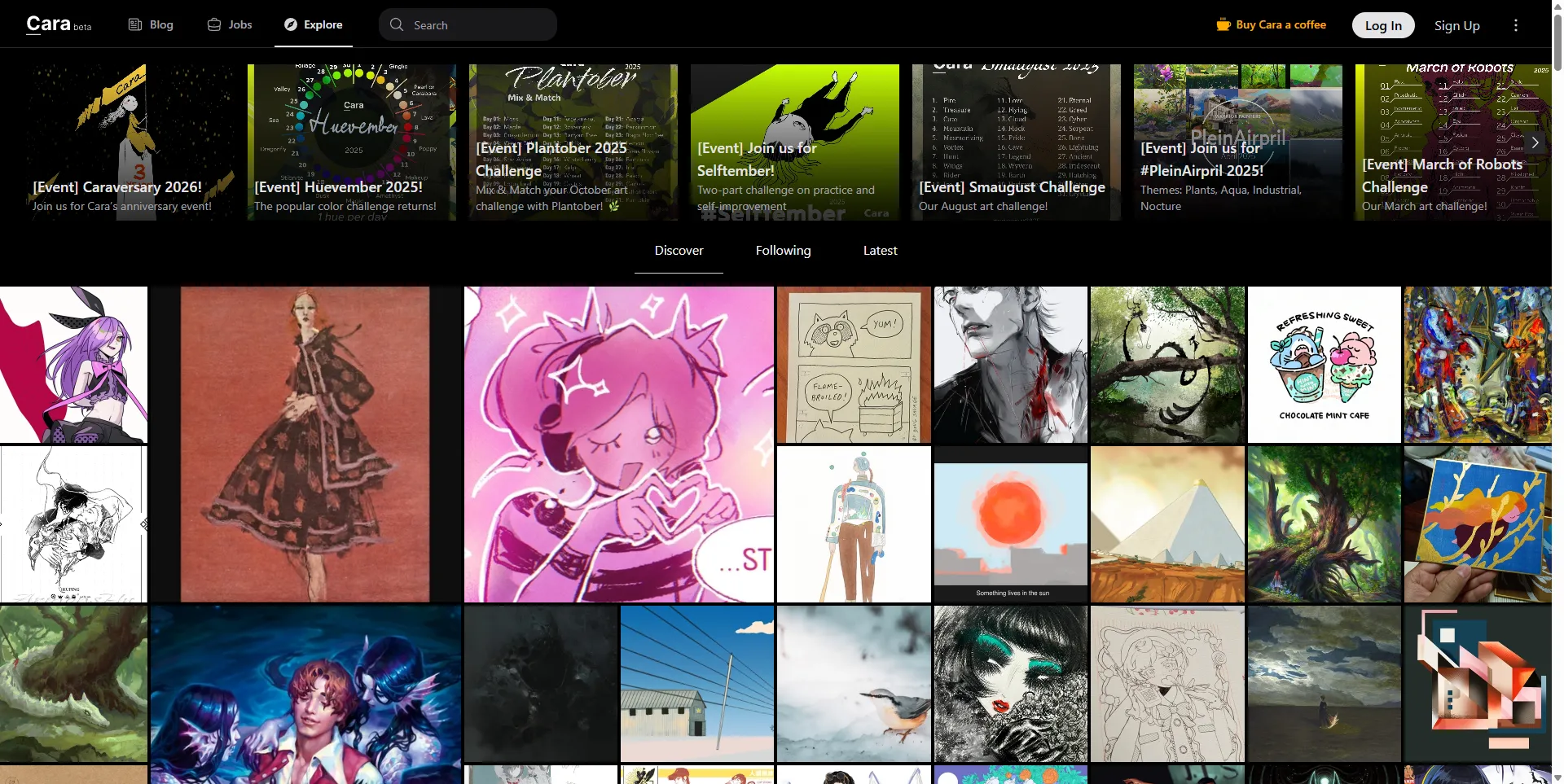
ArtStation dominates entertainment art but does not serve every creative discipline. Behance serves a broader creative audience including graphic designers, photographers, UI/UX designers, and commercial illustrators. Cara has emerged as the anti-AI alternative for artists who want a portfolio platform that prohibits AI-generated content. DeviantArt remains the largest art community by membership but has lost professional relevance.
For entertainment artists specifically, none of these alternatives replace ArtStation. The concentration of industry talent, the integrated job board, the challenges, and the State of the Art Report data make ArtStation the only platform that entertainment industry recruiters actually use as a hiring tool.
Final Verdict: Who Is This Actually For?
ArtStation is mandatory for any artist pursuing a career in games, film, animation, or entertainment illustration. If you are in this industry or trying to break into it, you need an ArtStation portfolio, full stop. The platform is where recruiters look, where jobs are posted, where industry standards are visible, and where your work will be evaluated against the best in the field.
It is not for fine artists, traditional media painters, or graphic designers. Behance is the better choice for commercial design portfolios, and Artists Network serves traditional media painters. If you are a hobbyist who creates art for fun without industry ambitions, ArtStation's professional culture may feel intimidating rather than welcoming.
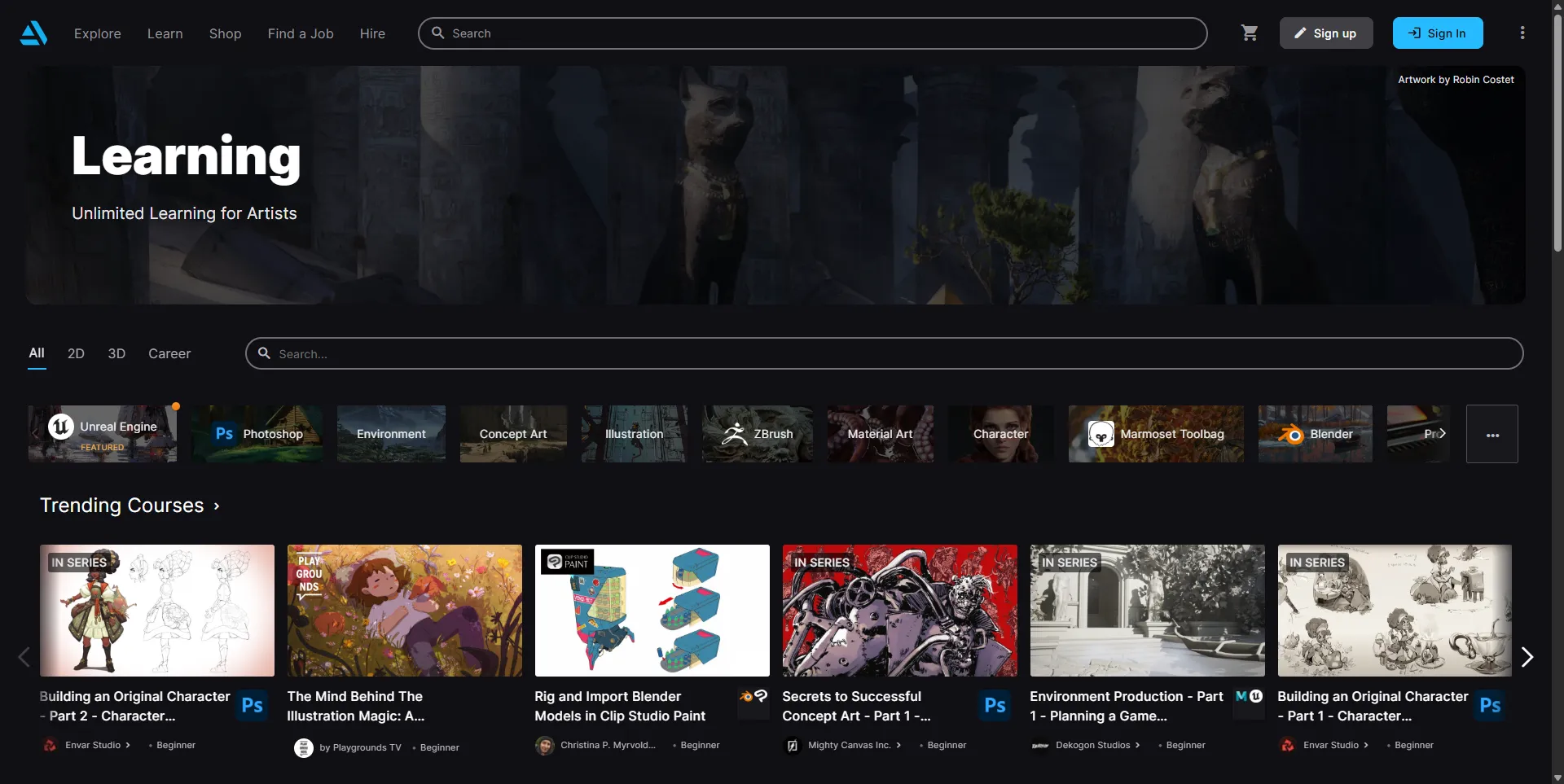
Create a free ArtStation account to start building your portfolio. Upgrade to Pro when you need custom domain mapping and analytics. For related resources, see our profiles on ArtStation Learning, Concept Art World, and Cara.