
Adult Art Classes: What to Expect and How to Find the Right One
Never held a brush? Adult art classes welcome beginners with no experience. Here's what to expect, how to find the right class, and why it's never too late to start making art.
Your cart is empty
Browse the store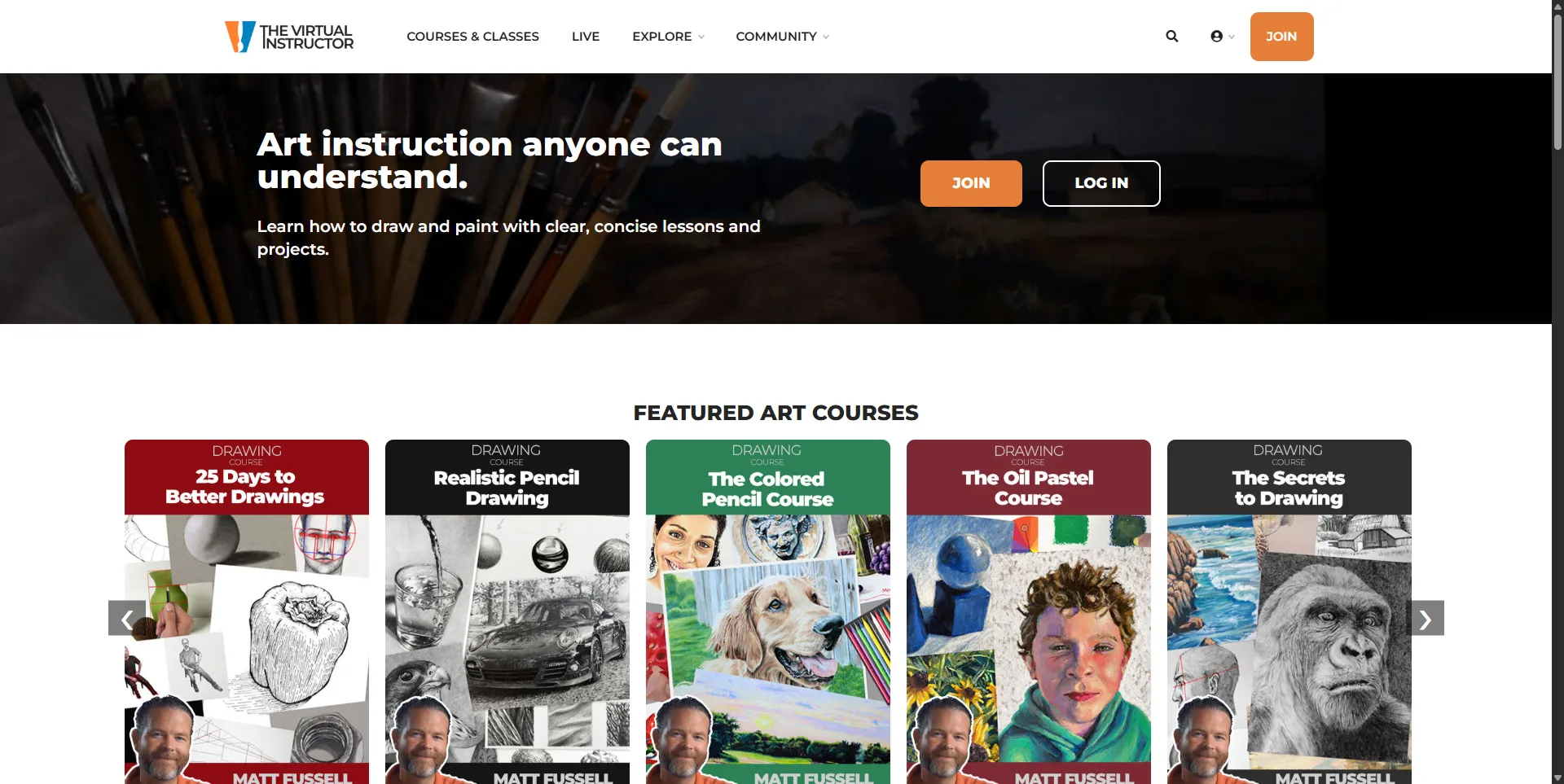
Matt Fussell's structured online art education platform offering 150+ courses in traditional media, weekly live classes, member critiques, and a community forum for artists who want a guided learning path.
Discover other art communities you might be interested in
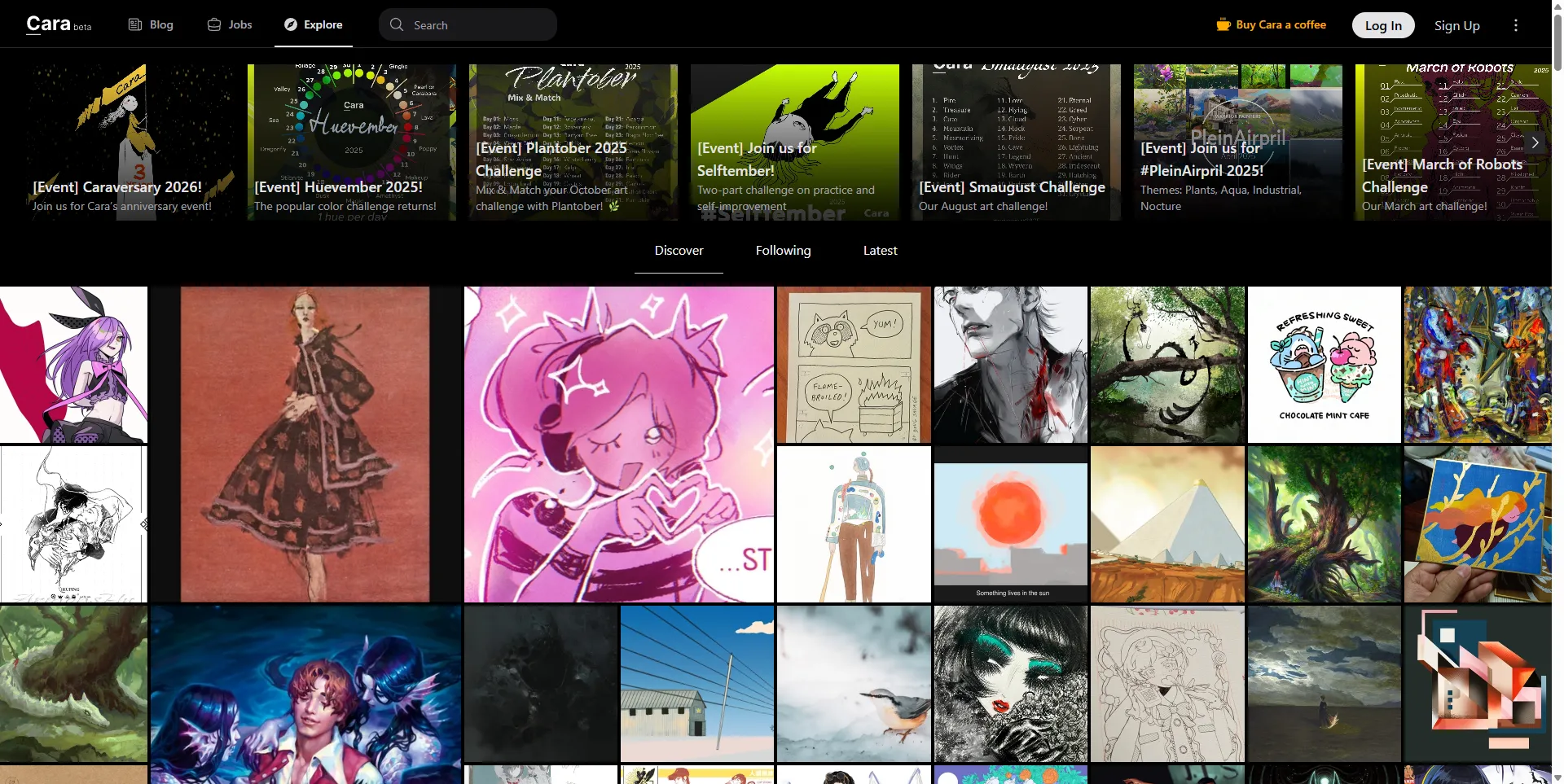
The anti-AI artist platform founded by Jingna Zhang, now hosting 1M+ artists and 5M+ images with Glaze protection and a chronological feed free of algorithmic manipulation.
View details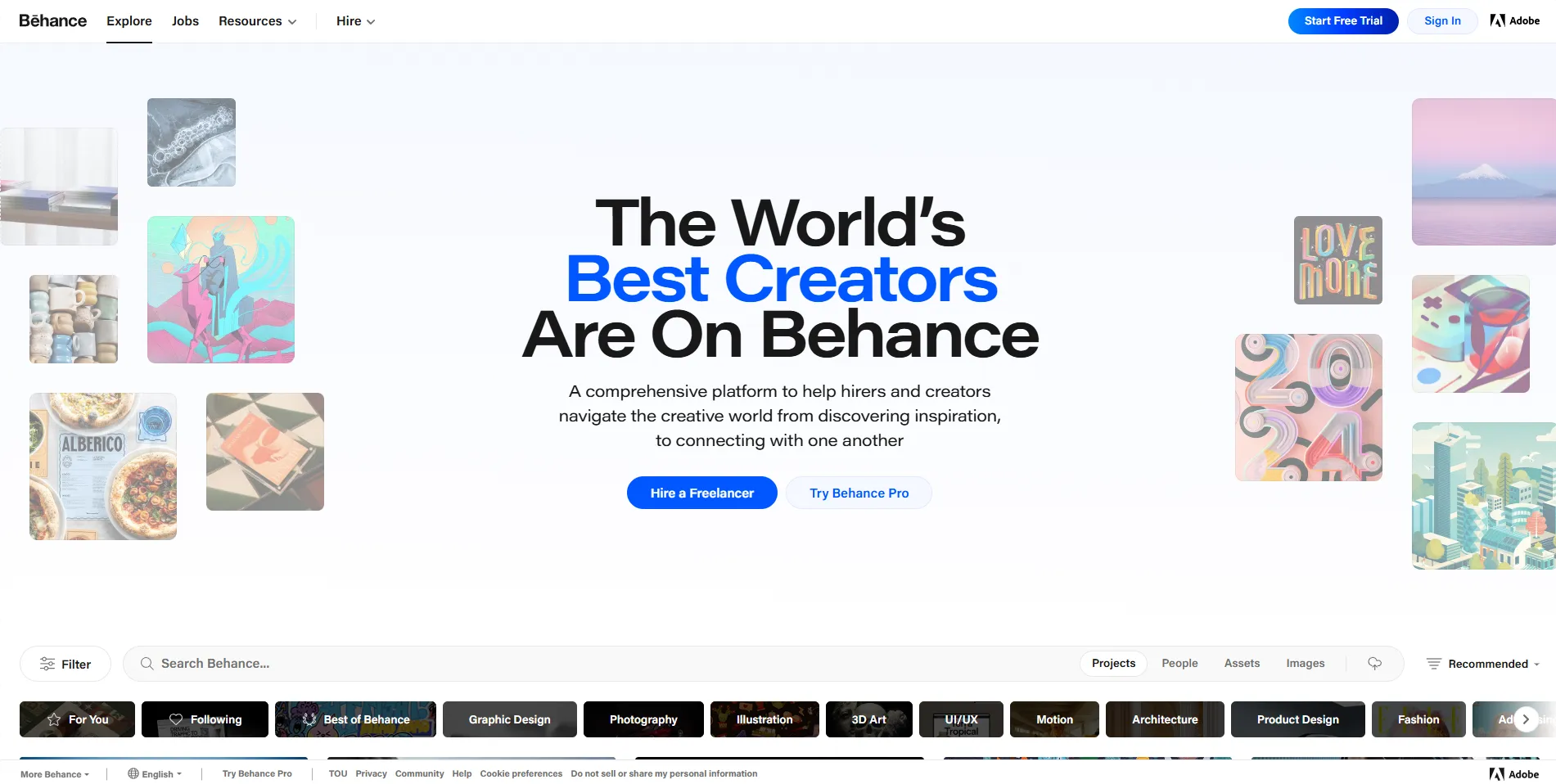
Adobe's creative portfolio platform with 50M+ members, a rebuilt job board, freelancer dashboard, and $80M in job opportunities facilitated in 2025 alone.
View detailsExplore definitions from our glossary that connect to this community
Blind contour drawing is an exercise where you draw without looking at the paper, training observation over production. From Nicolaides to Betty Edwards, learn its history.
Bone black, or ivory black, is a carbon pigment made from charred animal bones. Used since antiquity, it remains one of the oldest and most enduring black pigments in art.
Read more about this topic on our blog
Never held a brush? Adult art classes welcome beginners with no experience. Here's what to expect, how to find the right class, and why it's never too late to start making art.

52 sketchbook prompts, one for every week of the year. From "draw your morning coffee" to "copy a Renaissance master." No talent required, just a pencil and 15 minutes a week.

Drawing every day accelerates motor learning. 15 minutes a day beats 3 hours once a week. Research shows consistent practice builds skill faster than talent. Here is what happens and how to start.
Most online art education is a content firehose. YouTube gives you thousands of tutorials with no sequence, no progression, and no way to know what you should learn next. Skillshare and Domestika offer individual courses but leave you to figure out the curriculum yourself. The Virtual Instructor solves this problem by doing what its name implies: it instructs. Sequentially. With a plan.
Founded in 2009 by Matt Fussell, a former high school art teacher who led over 100 teachers in a large school system, The Virtual Instructor offers 150+ courses and classes covering drawing, watercolor, oil painting, acrylic, pastel, colored pencil, pen and ink, and mixed media. The platform is built around a simple proposition: learning art is easier when someone who knows how to teach structures the path for you. Fussell brings actual pedagogical training to the job, not just art skills, and the difference shows.
The core offering is a library of structured courses organized by medium and skill level. Each course is broken into multiple lessons, with every lesson including an HD video and an accompanying ebook. Concepts build sequentially: the drawing curriculum starts with mark-making and basic shapes, progresses through proportion and perspective, then value, then specific subjects. You do not jump into portrait drawing without first learning how to construct a head from simple forms.
The watercolor curriculum covers the full range of techniques from basic wet-on-wet and wet-on-dry through glazing, lifting, and negative painting. The oil painting curriculum addresses the specific challenges of a slow-drying medium: managing drying times, using mediums, and building paintings in layers. The acrylic curriculum covers the fast-drying properties that make acrylic both versatile and tricky. Each curriculum is designed to be followed in order, which is the thing that separates The Virtual Instructor from tutorial-dump platforms.
Insider tip: If you are new to the platform, start with "25 Days to Better Drawings." It is the closest thing to a foundations prerequisite and will surface gaps in your understanding that you did not know you had. Many members skip it because they want to get straight to painting, and then struggle because their drawing fundamentals are weak.
The platform runs two live classes per week, streamed from the studio. Wednesdays at 8:00 PM EDT with Matt and Ashley Hurst, and Mondays at noon EDT with "Mondays with Matt." There is also "Gettin' Sketchy Live" on Wednesdays at 6:30 PM EDT, and a 24-hour live stream of premium content called "TVI Television."
The live classes are interactive: you can join the class discussion and ask questions while the art develops in real time. If you cannot make the live broadcast, every lesson is recorded and added to your on-demand library. The current series as of mid-2026 is the Acrylic Painting Starter Series, designed to introduce beginners to acrylic through easy-to-follow lessons and practical demonstrations.
Insider tip: The live classes are where you see Fussell's teaching experience shine. He explains decisions as he makes them, which is more instructive than watching a finished demo. The mistakes, corrections, and adjustments are where the actual learning happens. If you only watch the recorded versions, try to pause before each major decision and predict what he will do. Then watch and compare.
Every week, a new critique video is released featuring member-submitted artwork. "The Member's Minute" (despite the name, the episodes are longer than a minute) provides specific, actionable feedback on real student work. You see the artwork, hear the critique, and learn what decisions the artist made well and what decisions need revision.
This is valuable in two directions. If you submit your own work, you get personalized feedback from an experienced instructor. If you watch other members' critiques, you learn to see artwork through a teacher's eyes, which accelerates your own ability to self-critique. The critique archive is a hidden gem of the platform: hundreds of hours of specific, practical feedback on real artwork at various skill levels.
The Artist's Community connects members who are working through the same curriculum. It provides peer feedback, accountability, and shared experience. The forum culture reflects Fussell's teaching philosophy: encouraging without being falsely positive, constructive without being harsh.
For beginners working independently without access to a local art class, the community forum provides a connection to other learners that makes the process less isolating. The ability to share work, receive feedback, and engage with others facing the same challenges is a meaningful supplement to the video instruction.
Fussell's teaching style is the platform's competitive advantage. He has over a decade of experience teaching at the high school level and led art curriculum for a large school system. He knows how to break complex skills into learnable steps, how to sequence instruction, and how to explain concepts in language that beginners can follow without feeling condescended to.
Ashley Hurst co-teaches the live classes and brings a complementary perspective. The two-instructor format means you get more than one approach to the same concepts, which is useful because different explanations resonate with different learners.
Fussell's commitment to traditional media is a defining characteristic of the platform. While most online art education has shifted toward digital tools, The Virtual Instructor maintains a focus on drawing, watercolor, oil, acrylic, and pastel. This is a deliberate choice, not a failure to keep up. If you want to learn Procreate or Photoshop, this is not the platform for you. If you want to learn to draw and paint with physical materials, it is.
An often-overlooked feature of the membership is "The Ultimate Lesson Plan," a complete classroom solution for middle and high school art teachers. Each lesson plan includes a description, procedures, materials list, introduction videos, supplemental videos, Essential Questions, PowerPoint and Keynote presentations, an example of completed work, art history examples, an artwork evaluation form, printable full-color handouts, and a quiz.
This makes The Virtual Instructor one of the few online art education platforms that serves both individual learners and classroom teachers. If you are an art teacher looking for structured, ready-to-use curriculum materials, the membership pays for itself in lesson planning time saved.
The Virtual Instructor is not the only online art education platform, but its combination of structured curriculum, live instruction, and traditional media focus makes it unique.
New Masters Academy offers a more classical, atelier-style approach with a heavier emphasis on figure drawing and anatomy. It is more rigorous and more expensive, and better suited to artists pursuing professional-level fine art skills.
Domestika offers individual courses from various instructors at lower prices, but without the structured curriculum path or live instruction. It is better for exploring specific techniques than for systematic learning.
Skillshare is a general creative learning platform with thousands of art classes but no curriculum structure. It is cheaper but requires you to build your own learning path.
Drawabox is a free, rigorous fundamentals course focused exclusively on drawing construction and perspective. It is narrower in scope but deeper in its specific focus, and its strict homework submission process provides more accountability than The Virtual Instructor's self-paced format.
For artists who want a guided, structured path through traditional media with live instruction and community support, The Virtual Instructor is the best value option. It is not free, but it is significantly cheaper than most structured alternatives.
The Virtual Instructor is for beginners and intermediate artists who work in traditional media and want a structured learning path. If you have tried learning from YouTube and felt overwhelmed by the lack of sequence, this is the platform that solves that problem. The curriculum structure, live classes, and weekly critiques create a guided experience that is closer to taking a class than to watching tutorials.
It is not for you if you want to learn digital art. The platform's commitment to traditional media is a feature, not a limitation, but it means you will not find Procreate, Photoshop, or digital painting instruction here. For digital art education, Ctrl+Paint is the better option. And if you are an advanced artist looking for specialized, professional-level instruction, New Masters Academy or Watts Atelier offer more rigorous training.
Start with a free account on The Virtual Instructor to explore the course library, or watch Fussell's free YouTube content to get a sense of his teaching style before committing to a membership. For related resources, see our profiles on New Masters Academy, Drawabox, and r/learnart.
Quiet Canvas is a space for artists and art lovers: essays, glossary terms, tools, and curated directories to support your creative practice.
Learn more →


