
In March 2026, the Victoria and Albert Museum in London opened "Virtual Realms: Videogames Transformed," an exhibition that commissioned six contemporary game studios to create interactive installations specifically for gallery display. The show, co-curated with the Barbican, followed the V&A's 2018-19 "Videogames: Design/Play/Disrupt" exhibition and represented the most sustained institutional effort to date to present game design as a visual art practice rather than a commercial product. The studios involved included thatgamecompany, Tequila Works, and Enhance, and the installations ranged from a room-scale light environment responding to player movement to a sound-driven spatial experience with no visual content at all. The exhibition traveled to the Mori Art Museum in Tokyo in September 2026.
The question of whether video games are art has been asked so many times, argued so many ways, and answered so comprehensively in practice that it has become something of a category error. The more interesting questions are about what kind of art games are, what specific visual and spatial practices they have developed, and what they can do that no other medium can. Those questions point toward something genuinely new: an art form that uses real-time inhabited space as its primary expressive context.
When a player moves through the ruined city of Yharnam in "Bloodborne," they are navigating a visual environment designed to produce specific emotional and atmospheric effects at specific moments. The collapsed towers in the distance, the scale of the architecture against the human figure, the light falling through broken windows: all of these are compositional decisions of the same kind that a landscape painter makes, except that they are arranged in three dimensions and encountered sequentially through movement. The person who designed that sequence is doing something with light, scale, color, and form that is continuous with the history of visual art, even if it looks nothing like a painting.
What Is Environmental Storytelling?
Environmental storytelling is the practice of embedding narrative information in the physical environment of a game world, rather than delivering it through text, dialogue, or cutscenes. A room whose shelves have been swept clear of objects, with a single chair overturned by the window, tells you something happened here. A kitchen with food still on the table but dust on every surface tells you the departure was sudden and the absence has been long. A child's bedroom with drawings on the wall and toys arranged carefully tells you something about who lived here and what they valued.
These observations are not unique to games. Film production designers, architects, and novelists all work with the same principles. But games add something that none of these other forms can provide: the viewer is mobile and has agency. You choose what to look at, what to approach, what to examine closely. The environmental storyteller in a game is designing an experience in which the viewer's movement through space is the reading, and the information is distributed across the space waiting to be found rather than presented in sequence. The stories embedded in the environment of a well-designed game are never encountered in the same order by any two players.
Visual World-Building: The Art of Consistent Universes
World-building in games is the practice of creating a visual and spatial universe with enough internal consistency and enough carefully developed detail that it reads as a coherent place with a history. This is different from mere setting. A setting is background. A world is a system with its own logic, its own visual language, its own ecosystem of objects and architectures and lighting conditions that all suggest a place that existed before the player arrived and will continue after they leave.
The visual language of a world is established through art direction, the discipline that determines the consistent visual principles applied across everything in the game: the color palette, the level of detail, the scale relationships, the material qualities of surfaces, the way light behaves in the environment. Great art direction is recognizable at a glance. You can identify a frame from "Wind Waker" or "Hollow Knight" without being told what game it comes from, not because the style is unusual but because it is applied with perfect consistency across every element of the visual environment.
This consistency is labor-intensive. The art direction document for a major game may specify everything from the preferred color temperatures of interior and exterior lighting to the degree of weathering on stone surfaces to the shape language of enemy silhouettes. Every artist working on the game applies these principles to every asset they create. The result, at its best, is a visual world that feels discovered rather than designed.
Games That Demonstrate the Art Form
Journey (thatgamecompany, 2012) is the most cited example of a game whose visual design operates at the level of fine art. Designed by Jenova Chen, with art direction by Matt Nava, the game places the player in a vast desert landscape and points them toward a distant mountain. There is no dialogue, no text, and no explicit narrative. The entire story is told through the landscape: the scale of the dunes against the tiny figure, the ruins of a previous civilization half-buried in sand, the quality of light that changes as you ascend. The game won a BAFTA for Artistic Achievement and was among the first games considered for the Smithsonian American Art Museum's permanent collection. It runs in approximately two hours and produces emotional responses in players that have little rational explanation beyond the quality of the visual and spatial design. In 2025, thatgamecompany released "Sky: Children of the Light" on PC and console after years as a mobile exclusive, bringing the studio's environmental design philosophy to a larger audience and prompting renewed critical attention to Journey's legacy.
Shadow of the Colossus (Team Ico, 2005, remastered by Bluepoint Games, 2018) creates one of the most powerful examples of environmental storytelling through absence. The world of the game is vast, ancient, and almost entirely empty of life. Ruins of a civilization that no longer exists are distributed across a landscape of enormous geographical variety: grassland, desert, lake, forest, cliff. The player's task is to find and kill sixteen enormous creatures, each occupying a different landscape. Between encounters, the world is silent. The silence is the story. Something happened here, the environment says, and it was worse than whatever the player is doing now.
The Last of Us (Naughty Dog, 2013) demonstrates how environmental storytelling can carry emotional weight comparable to literature. Twenty years after a fungal pandemic, human civilization has been largely reclaimed by vegetation. Shopping malls have trees growing through their roofs. Highways are overgrown with grass. The visual contrast between the remembered world the characters describe and the world the player inhabits produces a specific kind of grief that no other art form quite duplicates. The game's environmental team studied photographs of Chernobyl's abandoned city of Pripyat to understand how quickly and in what ways vegetation reclaims human-built space. That research produced visual precision that audiences without any knowledge of Chernobyl responded to as emotionally true. The 2024 HBO television adaptation brought these environments to a non-gaming audience, and the production design explicitly referenced the game's visual language, which is a rare case of a game's environmental art direction being treated as the primary source for a subsequent adaptation in another medium.
Disco Elysium (ZA/UM, 2019) takes a different approach: an explicitly painterly visual style that makes the art reference visible rather than naturalistic. The game's environments are rendered in a style that references Socialist Realist painting and mid-century illustration, and the writing treats the city of Revachol as a character in its own right: a place whose visual history, layers of architecture, and quality of light in specific neighborhoods carry the weight of decades of political failure and cultural resilience. The game won BAFTA awards for Narrative and Original Property and demonstrated that games could carry the weight of serious literary fiction while remaining games. The 2025 documentary "No Truce With the Furies," directed by Egil Rask, chronicled the development and subsequent internal collapse of ZA/UM, and the film includes extensive footage of the painting process behind the game's environments, making visible the labor and artistic decision-making that produced its distinctive visual world.
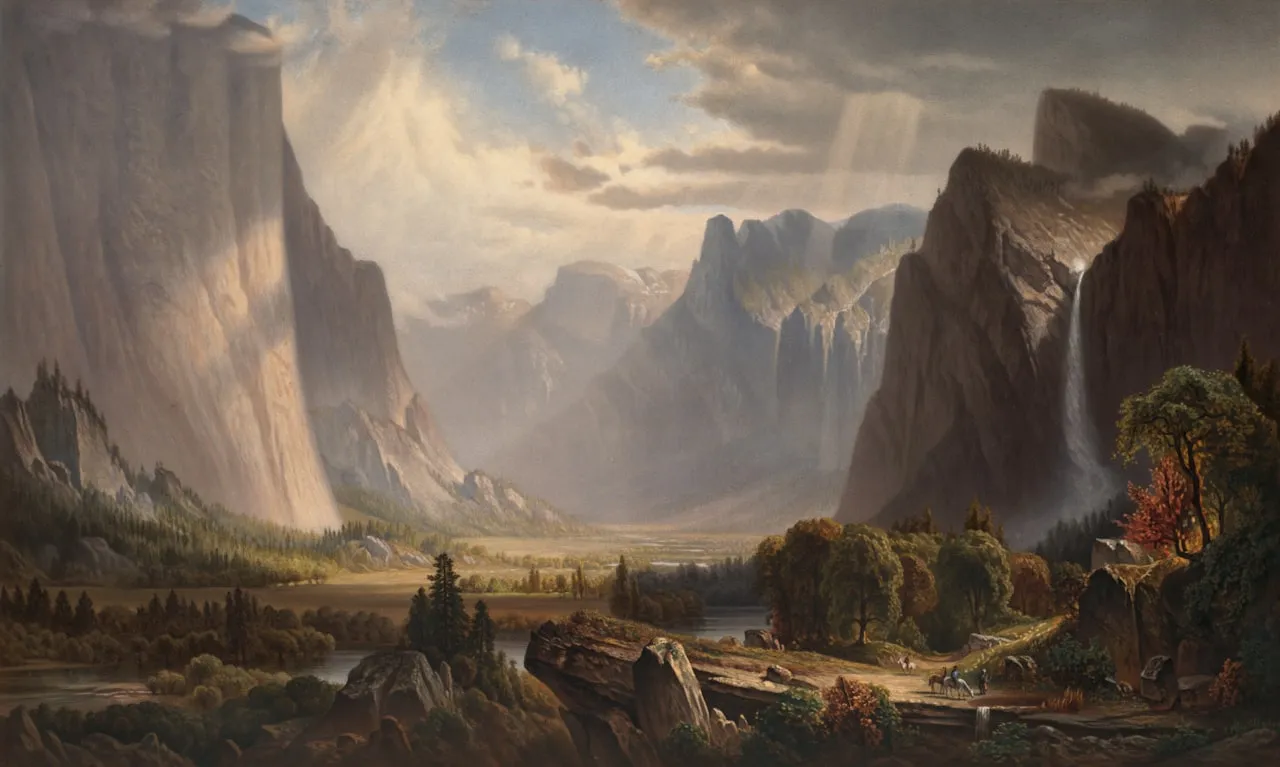
Concept art and environment painting in game design. The visual language of a game world is established through art direction that applies consistent principles across every element of the environment. Photo: Unsplash.
Concept Art as Fine Art
The concept art produced during game development occupies an unusual position in the art world. It is made to communicate visual ideas to a production team, and most of it never leaves the company that commissioned it. But the best concept art is also independently compelling as visual work: paintings of spaces and characters and atmospheres made by skilled artists working at the height of their ability, under the pressure of a production schedule, producing images that define imaginary worlds.
Artists including Craig Mullins, Sparth (Nicolas Bouvier), and Feng Zhu have influenced the visual language of games across the industry through concept art that has been widely shared online and studied by aspiring artists worldwide. Their work is collected on platforms like ArtStation, which has become the professional portfolio standard for concept artists, and in published art books that serve as both documentation and inspiration. The ArtStation platform, acquired by Epic Games in 2021, now hosts over 10 million portfolio pieces and has become the de facto professional standard for the industry.
Some concept artists have moved into the fine art market. Syd Mead, the futurist designer who created the visual language of "Blade Runner" (1982) and influenced game aesthetics for decades, showed his work in gallery contexts throughout his career until his death in 2019. The British artist Ian McQue, known for his industrial flying machine sketches, has exhibited and sold original work through galleries. The boundary between commercial concept art and gallery-worthy illustration is largely maintained by institutional habit rather than any quality distinction.
Game Art in Galleries and Museums
The institutional recognition of games as art has accelerated significantly since the early 2010s. The Smithsonian American Art Museum acquired several games for its permanent collection, including "Flower" and "Halo 2600." The Museum of Modern Art in New York added fourteen games to its permanent design collection in 2012, including "Pac-Man," "Tetris," "SimCity 2000," and "Portal." The 2026 V&A/Barbican exhibition "Virtual Realms" represents the next stage: not displaying games as artifacts but commissioning new work from game studios for gallery contexts, treating the medium the way a museum would treat any other contemporary art form. These are not curiosity acquisitions. They are institutional statements that games represent a significant category of visual and design culture that merits preservation and scholarly attention.
The relationship between the broader history of video games and visual creativity goes back further than many people realize. The visual systems of early arcade games, constrained by hardware limitations to a handful of pixels and colors, developed their own distinctive aesthetic vocabulary that has continued to influence design culture decades after the technical constraints that produced it were removed. Pixel art is now a conscious aesthetic choice, not a technical necessity.
Final Thoughts
Game design as art is not a marginal claim made by enthusiasts looking to elevate their hobby. It is a description of what the medium does at its best: uses light, scale, color, space, and time to produce aesthetic experiences and emotional responses. The fact that the viewer moves through the work rather than observing it from outside does not diminish the visual artistry involved. It changes what that artistry must do, making it more demanding in some ways and opening possibilities that static media cannot access.
The environmental storyteller designing a sequence of spaces, the art director establishing the visual language of an entire world, the concept artist painting the atmosphere of a place that does not yet exist: these are visual artists working at the intersection of many traditions. They are sculptors designing inhabited space, painters making environmental light, architects whose buildings are navigated but never built, illustrators whose work is a world rather than an image. The visual practice is rich, the best work is extraordinary, and the critical vocabulary for discussing it is still being developed. That is an exciting place for a medium to be.
For the full context of how games connect to the digital art tradition, the guides to digital art and the history of digital art provide the broader landscape within which this work sits.


