
Neoclassicism: Order, Reason, and the Return to Ancient Rome
Neoclassicism rejected Rococo excess and returned to the order, reason, and moral clarity of ancient Rome. Discover how David and Ingres shaped an era.
Your cart is empty
Browse the store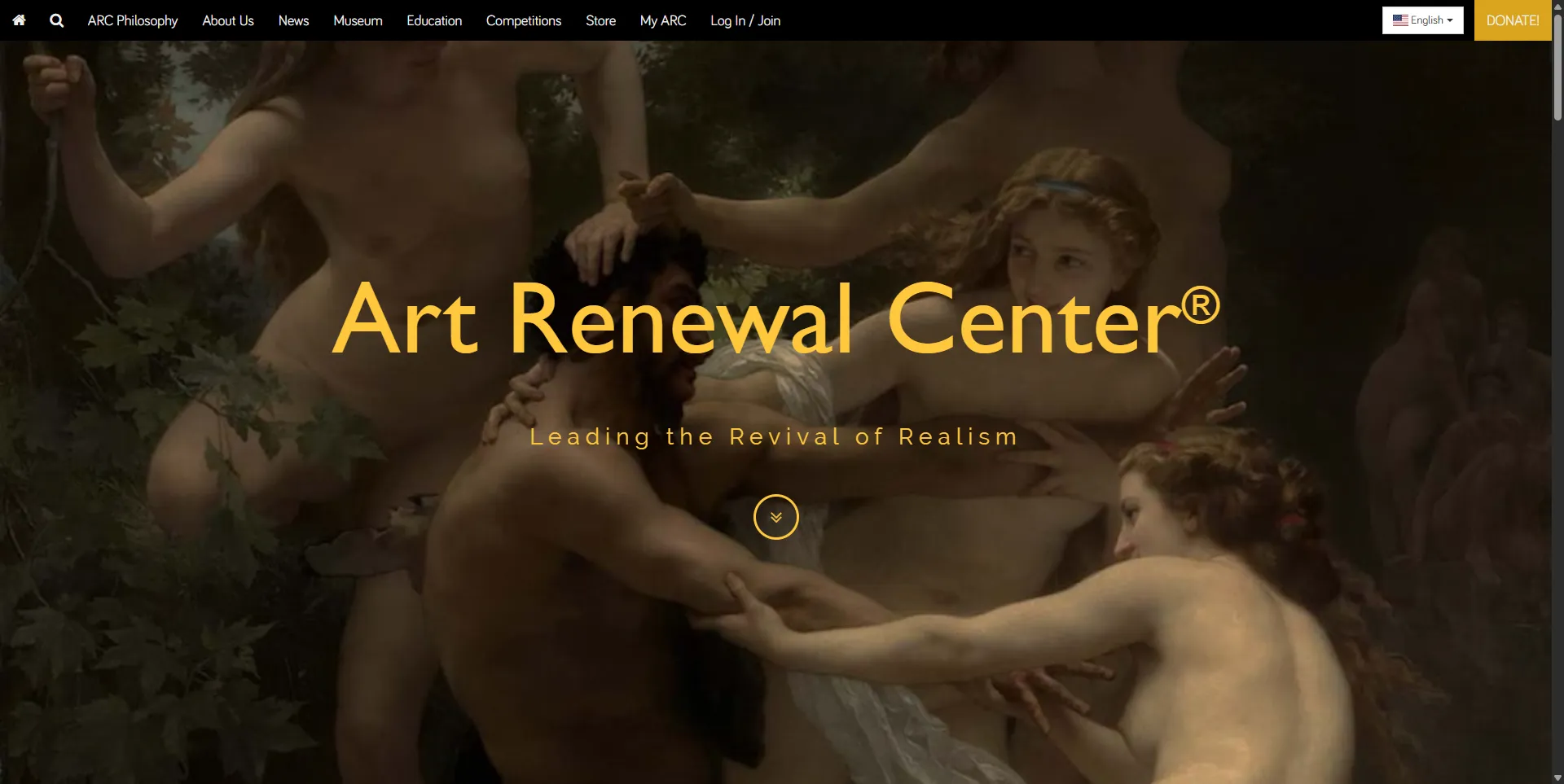
The Art Renewal Center runs the world's largest representational art competition and online museum of classical realism, with 70,000+ images and a vetted atelier directory.
Discover other art communities you might be interested in

An independent blog at colorandlight.art covering the physics of light, optical phenomena, and practical colour theory for working painters, founded in 2020.
View details
ArtStation Learning offers professional-grade courses from working entertainment artists, covering 3D, concept art, and VFX skills the industry actually hires for.
View detailsExplore definitions from our glossary that connect to this community
Art academies were official schools and standards bodies that controlled art education and exhibitions. From the Academie royale to the Royal Academy, learn their history.
An atelier is an artist's studio and the studio-based teaching model that trained artists for centuries. From Rembrandt to Beaux-Arts de Paris, learn how it worked.
In July 2026, nearly 100 winning works from the Art Renewal Center's 17th and 18th International Salon Competitions went on display at Sotheby's New York on Madison Avenue. Over 8,500 artworks from 87 countries had competed. More than $260,000 in cash awards had been distributed. The Best in Show winner from the 18th Salon, "Antigone" by Sean Layh, hung alongside the 17th Salon winner "Watching the Dance" by Pavel Sokov. This is not the behaviour of a fringe movement. This is the Art Renewal Center, and after 27 years, it has forced the art world to pay attention to representational painting again.
Founded in 1999 by Fred Ross, the ARC operates as a 501(c)(3) public charity dedicated to the revival of classical realist and academic art. Its website receives over 2 million visitors annually. That audience is not accidental. The ARC built it by doing something no other organisation managed: assembling the largest online museum of classical realist painting in the world, with over 70,000 images of academic and realist works spanning the 19th century to the present day.
The ARC's image archive is the single best free resource for studying 19th-century academic painting. The collection is deep where it counts. French academic masters like William-Adolphe Bouguereau, Jean-Leon Gerome, and Alexandre Cabanel are represented with high-resolution images that hold up to zoomed-in study of brushwork and glazing layers. The British Pre-Raphaelites, the American academic painters, and smaller European academic traditions all have dedicated sections.
The contemporary realist section is where the archive becomes genuinely surprising. If you think classical realism died with the Salon des Refuses, spend an hour browsing the work of living painters who trained in the atelier tradition. The quality ranges from competent student work to paintings that would hold their own against any 19th-century master. For artists working in this tradition today, the contemporary section is the most efficient way to see what the best practitioners are actually doing in 2026.
Insider tip: The image resolution on the ARC museum varies wildly. The 19th-century French academic works are generally available in very high resolution, but some of the contemporary entries are only posted at display resolution. If you want to study brushwork up close, filter for the historical collection first.
If you want to learn classical realism, you need an atelier. The problem is that "classical realism" has become a marketing term used by schools that teach nothing of the sort. The ARC's Approved Atelier Directory cuts through this by only listing programs that have been vetted and approved as meeting the ARC's standards for genuine classical realist training.
The directory covers ateliers in the United States, Europe, Australia, and other countries. Each listing includes curriculum details, instructor backgrounds, and the specific approach the atelier takes. Compared to simply Googling "classical realist atelier near me," the ARC directory saves you from wasting years and thousands of dollars on a program that does not actually teach what it claims.
Insider tip: The ARC's approval criteria are strict but not transparent. The directory does not publish its evaluation rubric, which means you should still visit the atelier and talk to current students before committing. The approval is a floor, not a ceiling. Some excellent ateliers are not listed simply because they have not applied for approval.
The ARC International Salon is the headline event. The 18th Salon received approximately 3,500 entries from 72 countries, with 816 works selected as finalists (roughly 23%). The 17th Salon was even larger, with over 5,000 entries from 87 countries and 213 awards given out. Categories include Figurative, Portraiture, Imaginative Realism, Drawing, Landscape, Still Life, Plein Air Painting, Fully From Life, Sculpture, Animals, and a special Teen category.
With over $130,000 in cash awards per salon cycle and partnerships with prestigious magazines, galleries, and museums, the ARC Salon has become the most significant competition for contemporary representational art. The live exhibition at Sotheby's in July 2026, which included 46 works offered in a curated benefit auction, represents a level of institutional validation that would have been unthinkable for classical realism 20 years ago.
Insider tip: The entry fee structure is tiered, and the salon accepts entries in multiple categories with no limit on the number of submissions. If you are entering, study the past winners carefully. The jurors consistently reward technical command and compositional sophistication over novelty. A well-executed still life will outscore an ambitious but unfinished figurative piece.
The ARC occupies a unique position. No other organisation runs a competition of this scale for representational art, maintains an image archive of this depth, or operates an atelier approval system. The closest comparison is the Portrait Society of America, which runs excellent but more narrowly focused competitions. The Oil Painters of America also runs national exhibitions, but neither organisation matches the ARC's international scope or its online museum.
For artists looking at art communities more broadly, platforms like ArtStation and Cara serve digital and entertainment artists, while the ARC serves the traditional representational painting community. If you work in oils, study classical technique, or train in an atelier, the ARC is your home base. If you work in digital media or concept art, those other platforms are more relevant.
The ARC does not pretend to be neutral. Its advocacy for classical realism is explicit and sometimes combative. Fred Ross and the ARC team have spent decades arguing that the mid-20th-century dismissal of academic painting was driven by ideological fashion rather than aesthetic judgment. This stance has made the ARC unpopular in certain corners of the contemporary art establishment, but it has also given the organisation a clarity of purpose that more diplomatic groups lack.
Whether you agree with the ARC's position on the art historical canon or not, the results speak for themselves. The Sotheby's exhibition, the growing atelier movement, and the increasing visibility of contemporary realism in galleries and museums all trace back in part to the ARC's persistent advocacy over 27 years.
Beyond the museum and salon, the ARC publishes articles on technique, art history, and the atelier tradition. The quality is inconsistent. Some articles are genuinely insightful, written by experienced practitioners with deep knowledge of their subjects. Others read like position papers for the advocacy mission. The technique articles are generally the most useful, particularly those covering specific aspects of 19th-century academic method.
For artists who want to go deeper, the ARC also offers a scholarship program for students at approved ateliers, which is worth investigating if you are enrolled or planning to enroll.
The Art Renewal Center is not for everyone. If you work in abstract, conceptual, or digital art, the ARC has little to offer you directly. If you are a hobbyist who paints occasionally and is not interested in rigorous training, the atelier directory and salon competition will feel intimidating rather than welcoming.
But if you are serious about classical realist painting, whether as a student looking for training, a professional looking for competition opportunities, or a researcher looking for high-quality reference images of 19th-century academic work, the ARC is the single most important online resource in your field. The image archive alone justifies bookmarking the site. The salon competition, with its Sotheby's exhibition and substantial cash awards, is the highest-profile venue for contemporary representational art in the world. And the atelier directory, despite its limitations, is the best starting point for finding legitimate training.
Visit artrenewal.org to explore the museum, browse the atelier directory, or learn about the next ARC Salon. For related resources, check out our profiles on ArtStation, Concept Art World, and Artists Network.
Quiet Canvas is a space for artists and art lovers: essays, glossary terms, tools, and curated directories to support your creative practice.
Learn more →


