Cara: The Anti-AI Platform That Hit a Million Artists in a Week
On May 31, 2024, Meta announced that it would train its generative AI on Instagram posts. Within one week, Cara went from 40,000 users to 650,000. By the time the surge stabilised, the platform had surpassed 1 million users with 4 million posts and 5 million images. TechCrunch reported a 1,525% increase in users over a single weekend. The app shot to the top of the App Store charts. This was not a marketing campaign. It was a protest migration.
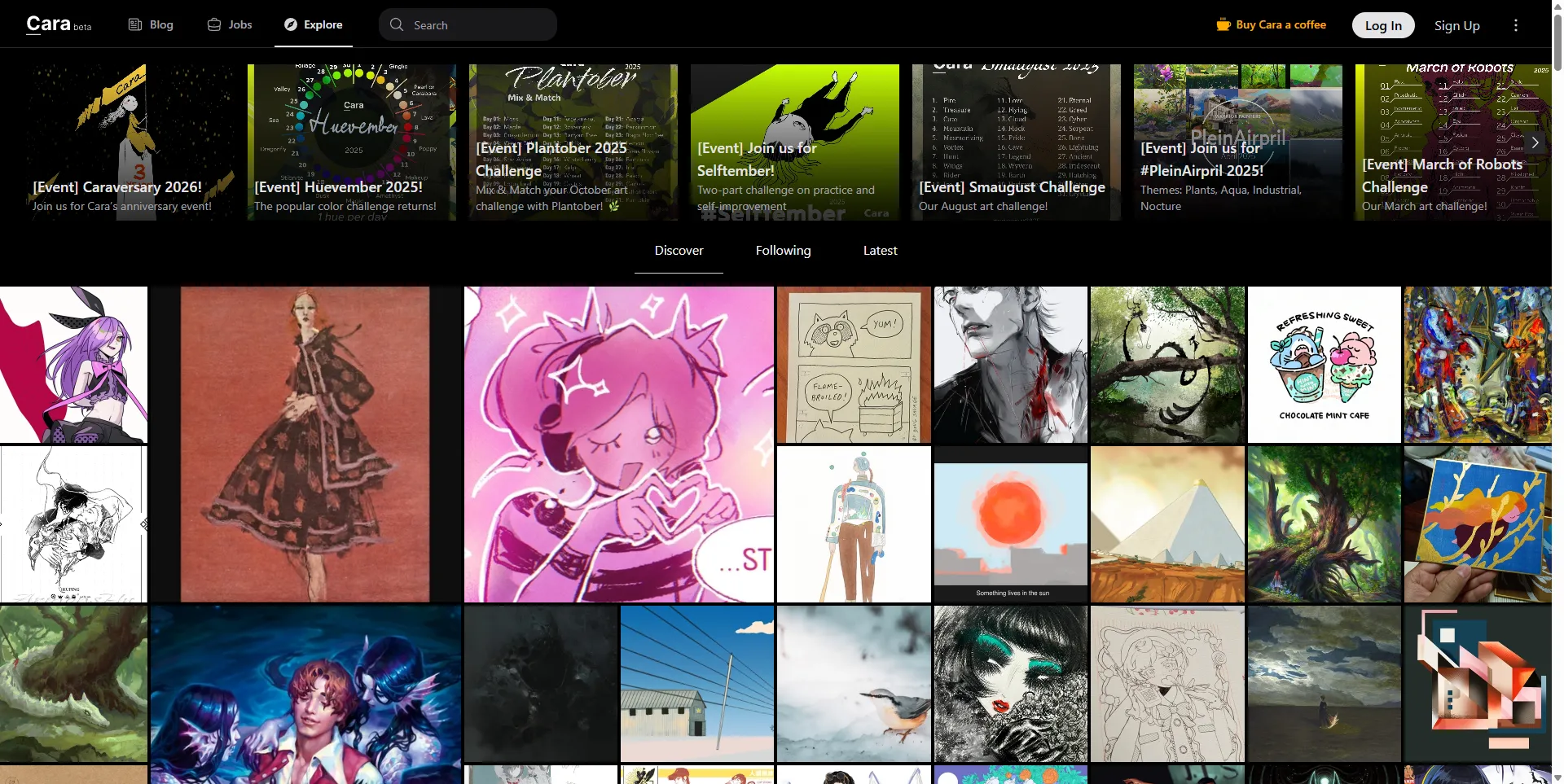
Founded in late 2022 by Jingna Zhang, a professional photographer and artist who experienced firsthand the impact of AI on creative communities, Cara combines the portfolio functionality of ArtStation with the social feed dynamics of Instagram. The difference is that every piece of artwork on Cara was created by a human being. AI-generated content is not permitted.
The Financial Reality: $660,000 Per Year in Hosting
The viral growth came with a serious cost. According to Zhang's blog post, hosting charges surged from $2,000 per month to $100,000 for a single week of traffic during the viral spike. Once growth stabilised, Zhang estimated it would cost $660,000 per year to host Cara. The platform is fully bootstrapped, with much of its engineering support coming from volunteers.
As of June 2026, traffic analytics show cara.app receiving approximately 796,500 visits per month with a 16.81% month-over-month increase and an average session duration of over 5 minutes. The platform has 4.93 million backlinks from 25,390 referring domains. These numbers indicate that Cara has moved beyond the initial viral spike and established itself as a sustained presence in the art platform ecosystem.
The team has been focused on optimising code for cost reduction and scale, developing in-app subscriptions, and exploring partnership enquiries as potential income streams. The financial sustainability question remains the platform's biggest challenge.
Insider tip: Cara is free to use, but the platform's financial survival depends on user support. If you find value in the platform, engage with the subscription features as they roll out. The alternative is that the platform cannot sustain its hosting costs and shuts down, which would leave the anti-AI artist community without a home.
Anti-AI Commitment: More Than a Policy
Cara's prohibition on AI-generated content is not merely a policy. It is the platform's foundational identity. In a landscape where Instagram, Twitter, and DeviantArt have been overwhelmed by AI-generated images, Cara provides a space where artists can be confident that every piece they see was genuinely created by another artist.
The platform integrates with Glaze, a tool developed by University of Chicago researchers that applies imperceptible perturbations to artwork images, making them resistant to AI style mimicry. Cara also uses HTML metadata tags to deter AI scrapers. The actual efficacy of these tools is debatable, but the commitment is genuine.
Insider tip: Glaze protection is applied automatically to images uploaded to Cara, but it is not a silver bullet. If you are seriously concerned about AI training on your work, use Glaze on your images before uploading them anywhere, not just on Cara. No platform-level protection is foolproof against determined scrapers.
Portfolio and Social Combined
Cara combines a professional portfolio section for presenting polished work with a social feed for sharing process work, thoughts, and community interaction. This dual functionality means artists can maintain a professional presence while also engaging casually with their community, something that required separate platforms before Cara.
The portfolio section supports high-resolution image uploads that preserve the quality of artwork. For artists whose work involves fine detail, subtle colour gradation, or texture that compression destroys, Cara's image quality is a significant advantage over platforms like Instagram that aggressively compress images.
The social feed provides a chronological timeline of posts from followed artists, free from the algorithmic manipulation that makes Instagram and Twitter unpredictable. When you follow an artist on Cara, you see their posts. That simple promise is something the major platforms have abandoned in favour of engagement-optimised algorithms.
Insider tip: The chronological feed means that posting at times when your followers are active matters more than on algorithmic platforms. Unlike Instagram, where the algorithm may surface your post hours later, Cara shows your post in real-time. Post when your audience is online.
The Community Culture
The community that has formed on Cara is notable for its supportive, professional, and artist-focused culture. The anti-AI stance attracts artists who are thoughtful about creative ethics and the future of human artistry, which creates a community oriented toward substantive engagement rather than hollow metrics-chasing.
The platform's moderation actively maintains this culture by enforcing community standards that prohibit harassment, art theft, and toxic behaviour. This proactive approach creates an environment where artists feel safe sharing work and engaging authentically with peers.
Insider tip: Because Cara does not use algorithmic amplification, building an audience requires more deliberate effort than on Instagram or Twitter. Engage with other artists' work, participate in community discussions, and share consistently. The growth is slower but the audience is more genuine.
Competitor Comparison
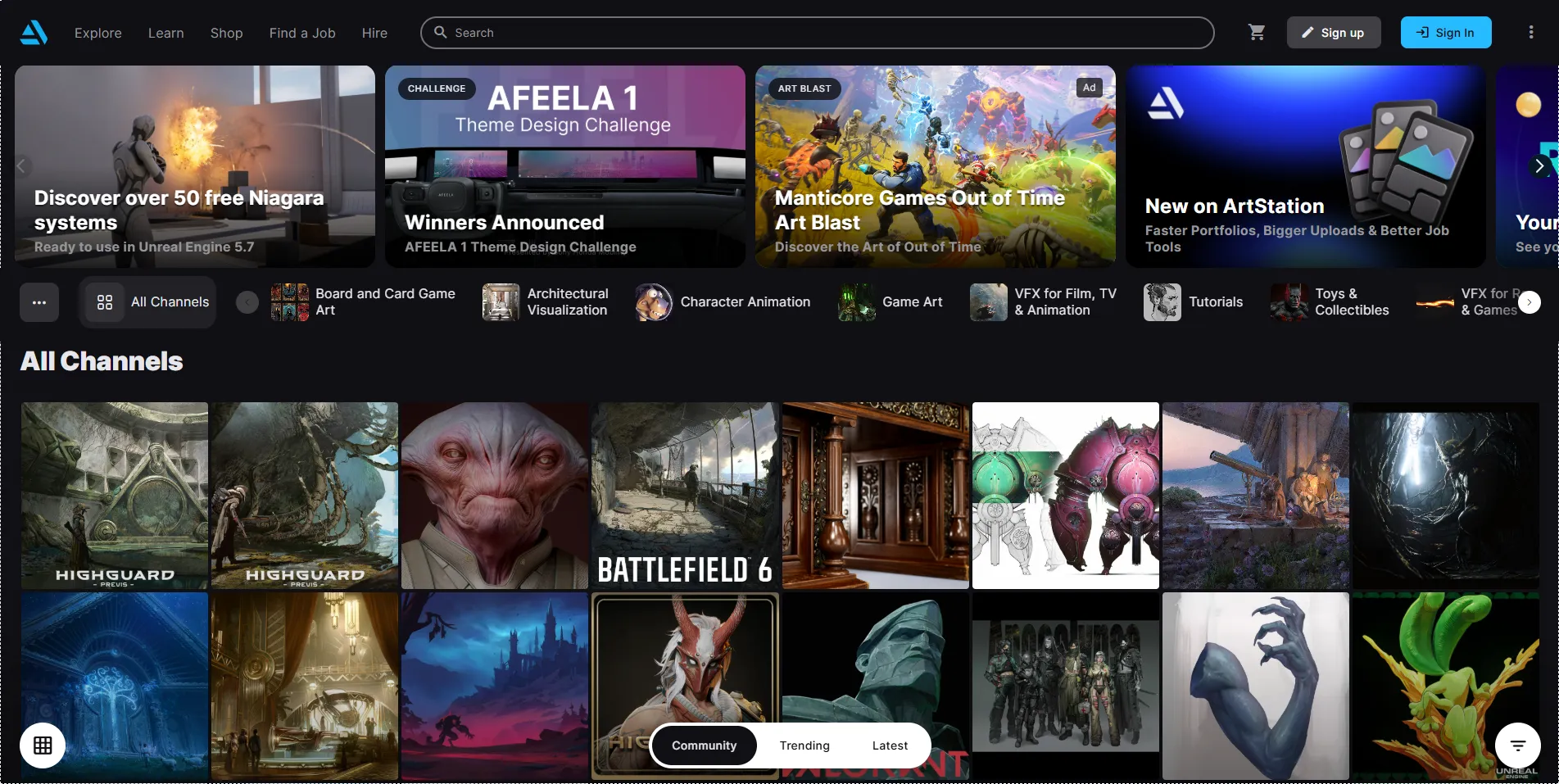
Cara occupies a distinct position that no other platform matches. ArtStation is the industry-standard portfolio platform for entertainment artists, but it allows AI-generated content in portfolios, which alienates the anti-AI community. Behance serves commercial creatives with freelancer tools and job matching, but has no anti-AI stance. DeviantArt launched its own AI tool (DreamUp), which drove many artists to Cara in the first place.
For artists who want both professional portfolio tools and an anti-AI community, Cara is the only option. The trade-off is that Cara lacks the job board infrastructure, learning resources, and marketplace features that ArtStation and Behance offer. It is a social and portfolio platform, not a full career ecosystem.
Insider tip: Many artists maintain a presence on both Cara and ArtStation. Use ArtStation for job applications and industry visibility, and Cara for community engagement and sharing work with an audience that values human-made art specifically.
Final Verdict: Who Is This Actually For?
Cara is for artists who want a social and portfolio platform that explicitly prohibits AI-generated content. If you are an illustrator, concept artist, comic artist, fine artist, or photographer who is concerned about AI training on your work without consent and wants to be part of a community that values human creativity, Cara is the platform that was built for you.
It is not for artists who use AI tools in their workflow, for artists who need a full-featured job board and career platform, or for artists who require the industry visibility that ArtStation provides. The financial sustainability question also means that artists who rely on Cara as their sole platform should maintain a backup presence elsewhere.
The platform is free to use. Visit cara.app to create an account. For related resources, see our profiles on ArtStation, Behance, and Concept Art World.