
The British Museum holds 8 million objects spanning 2 million years of human history. It was founded in 1753 around the collection of Sir Hans Sloane, a physician and naturalist who left 71,000 objects to the nation in his will. It opened to the public in 1759 in Montagu House, the first free national public museum in the world. Free entry has been part of the plan from the start. The current building, designed by Sir Robert Smirke in Greek Revival style, was built between 1823 and 1852. The Queen Elizabeth II Great Court at the center was added by Foster + Partners and opened in 2000. It is the largest covered public square in Europe.
The British Museum is the most controversial museum in the world. The controversy is not about the quality of the collection. Everyone agrees it is extraordinary. The controversy is about how the objects got here. The Rosetta Stone was taken from the French after the Battle of Alexandria in 1801. The Parthenon Marbles were removed from Athens by Lord Elgin between 1801 and 1805 under a disputed Ottoman permit. The Benin Bronzes were looted from Benin City in 1897 by a British military expedition. The museum's position is that it holds legal title and that the objects are free to see by millions. The counter-argument is that legal title acquired under colonial occupation is not the same as legitimate ownership.
This guide covers the five must-sees (Rosetta Stone, Parthenon Marbles, Egyptian mummies, Sutton Hoo, Lewis Chessmen), the repatriation controversy, the 2026 Bayeux Tapestry exhibition, what most visitors miss, and practical tips.
The Five Must-Sees: A 90-Minute Route
The five must-sees form a 90-minute route through the museum: Rosetta Stone, Parthenon Sculptures, Egyptian mummies, Sutton Hoo helmet, Lewis Chessmen.
Room 4 holds the Rosetta Stone (196 BCE), measuring 112.3 x 75.7 cm, a fragment of a larger stele. The same royal decree is carved in three scripts: hieroglyphs, Demotic, and Ancient Greek. French soldiers found it in 1799 near the town of Rosetta during Napoleon's campaign in Egypt. The British took it after the French defeat in 1801. Jean-François Champollion used it to crack hieroglyphs in 1822. The stone is smaller and darker than most people expect. You can stand three feet from it.
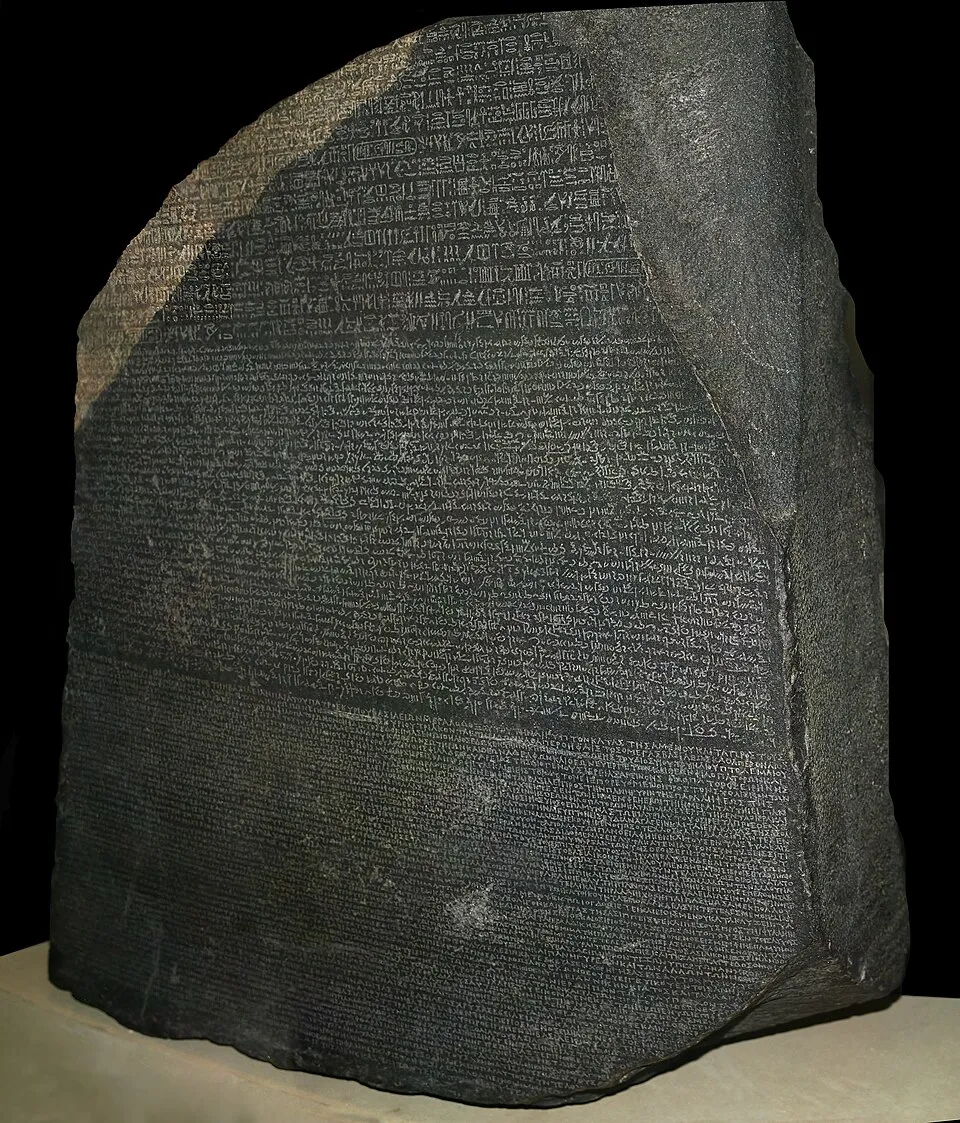
The Rosetta Stone (196 BCE). Granodiorite, 112.3 x 75.7 cm. British Museum, Room 4. Wikimedia Commons.
Room 18 holds the Parthenon Sculptures (447-432 BCE), the 5th-century BCE friezes from the Athenian Acropolis. They are displayed at eye level in the Duveen Gallery so you can walk the full 75-meter frieze. The British Museum holds 15 metopes, 17 pediment figures, and 247 feet (75 m) of the original frieze, roughly half of what survives. The rest is in the Acropolis Museum in Athens.
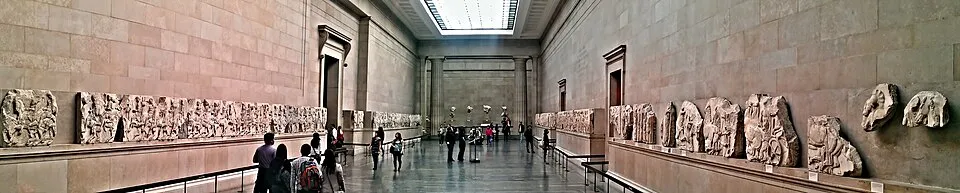
Parthenon Sculptures (447-432 BCE). Marble. British Museum, Room 18 (Duveen Gallery). 75 meters of frieze, 15 metopes, 17 pediment figures. Wikimedia Commons.
Rooms 62-63 hold the Egyptian mummies. The British Museum has the largest collection of Egyptian mummies outside Cairo. The mummy of Katebet (c. 1300 BCE) is the most famous: her gilded coffin, her cartonnage mask, her mummified body, all visible through the case.
Room 41 holds the Sutton Hoo Helmet (early 7th century), a 7th-century Anglo-Saxon burial helmet with a face formed by eyebrow ridges, nose guard, and moustache, in reconstructed iron. Discovered in 1939 in a ship burial at Sutton Hoo, Suffolk. The helmet was found in 500 pieces and reconstructed over 30 years.
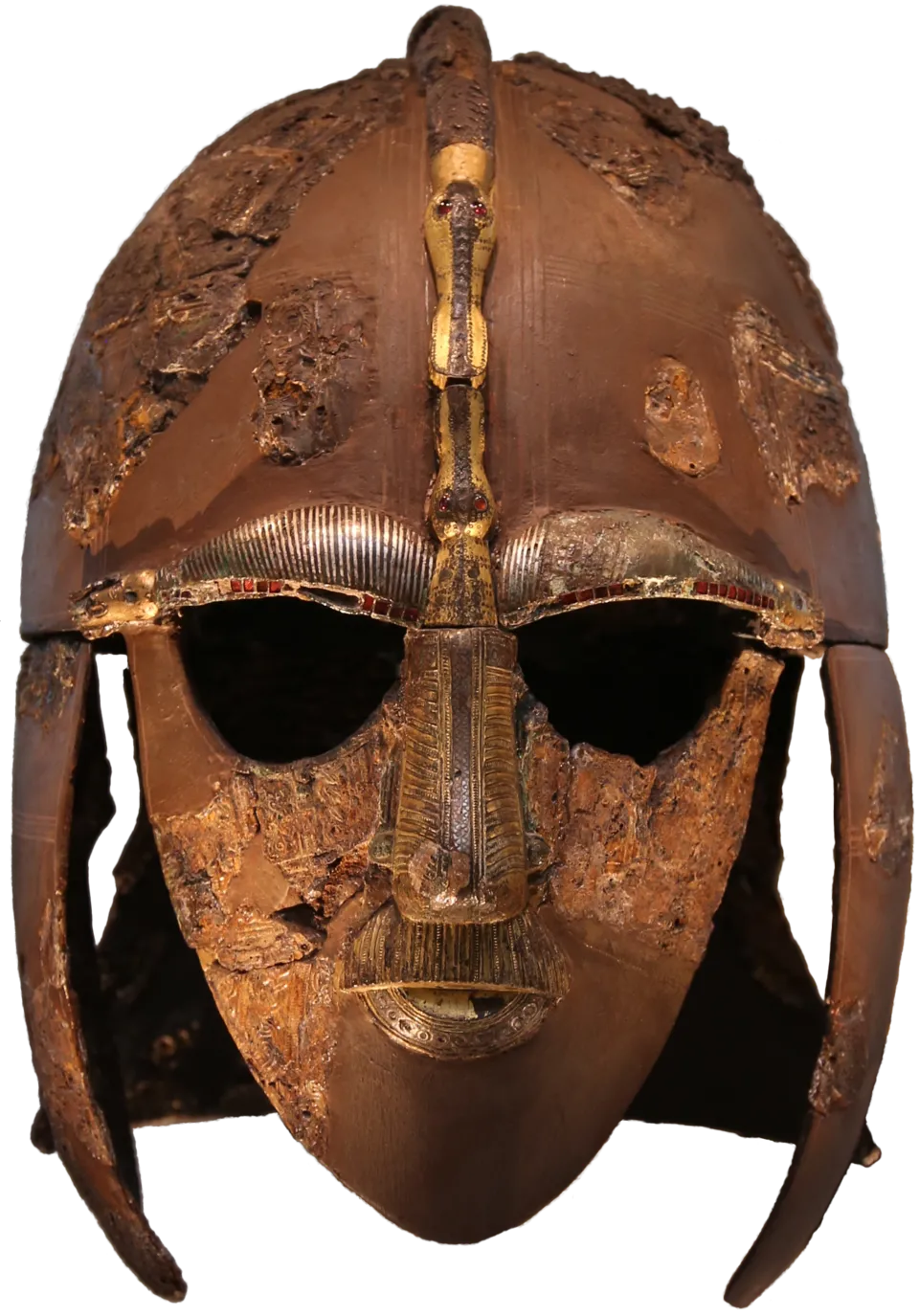
The Sutton Hoo Helmet (early 7th century). Iron with bronze and tinned copper alloy. British Museum, Room 41. Wikimedia Commons.
Room 40 holds the Lewis Chessmen (c. 1150-1200), 93 chess pieces carved from walrus ivory, found on the Isle of Lewis in 1831. The most famous chess set in the world. The queen holds her chin in concern. The berserker chews his shield. The British Museum has 82 pieces. The other 11 are in the National Museum of Scotland. For more on the British Museum highlights, the Art Visit Guide has a detailed walkthrough.
The Parthenon Marbles and the Repatriation Debate
Lord Elgin was the British Ambassador to the Ottoman Empire. Between 1801 and 1805, acting under a permit (firman) from the Ottoman authorities, Elgin removed about half of the surviving sculptures from the Parthenon. The original permit does not survive. What exists is an Italian translation of a copy, and scholars disagree about what it authorized. Elgin sold the sculptures to the British government in 1816 for £35,000 (he had spent £75,000 removing them). A Parliamentary Select Committee investigated and found the acquisition legal.
Greece has formally requested the permanent return of all Parthenon Sculptures since 1983. The Acropolis Museum, opened in 2009, has a top floor built specifically to hold the complete frieze, in sight of the Parthenon. The Greek government refuses to acknowledge the British Museum's title and will not request a loan, which is the museum's precondition for considering return.
The British Museum's current position, as stated in 2026, is that "discussions with Greece about a 'Parthenon Partnership' are on-going and constructive." The museum says it believes "this kind of long-term partnership would strike the right balance between sharing our greatest objects with audiences around the world, and maintaining the integrity of the incredible collection we hold at the museum." In practice, this means a long-term or indefinite loan, which Greece rejects because it would require acknowledging British ownership.
The debate has intensified. At the 25th Session of the UNESCO Intergovernmental Committee, Greece received strong support from member states including Italy, Brazil, China, Egypt, and Poland. UNESCO adopted a new recommendation that, for the first time, officially recognizes the Parthenon Marbles as "an integral part of Greek cultural heritage and Greek identity." Turkey reiterated that no Ottoman firman exists legitimizing the removal, undermining the British Museum's legal argument. Meanwhile, UK Prime Minister Andy Burnham, who took office in 2026, has been a public supporter of returning the marbles for over two decades. "Send them back, no strings," he wrote on social media in 2023. Whether this translates into policy change remains unclear, because the British Museum operates independently of the government and the British Museum Act 1963 prohibits trustees from permanently disposing of collection items without parliamentary approval.
The broader context: the Parthenon Marbles are the most visible case, but the British Museum also holds the Benin Bronzes (looted in 1897), the Hoa Hakananai'a from Easter Island, and thousands of other contested objects. The repatriation debate is the defining issue of 21st-century museology. The argument that the sculptures are best understood in a universal museum is increasingly difficult to maintain when the Acropolis Museum exists, a purpose-built museum 10 km from the Parthenon with a gallery waiting for them. But the argument that returning the marbles would open the floodgates for every contested object in every museum is real. This is not a simple question, and anyone who tells you it is simple is selling you something. The British Museum's own page on the Parthenon Sculptures presents its institutional position.
2026 Exhibition: The Bayeux Tapestry in London
The Bayeux Tapestry (c. 1070) is 70 meters long and depicts the Norman Conquest of England in 1066. It has been on permanent display in Bayeux, Normandy, France, and had never been displayed in the UK in nearly 1,000 years. That changed in July 2026, when the tapestry arrived at the British Museum in the dead of night, transported from a secret location in northern France through the Channel Tunnel under police guard. Director Nicholas Cullinan announced the arrival at approximately 6 AM on July 10.
The tapestry will be displayed in the Sainsbury Exhibitions Gallery from September 10, 2026 until July 2027. It will be shown flat for the first time, a requirement of the loan. A mezzanine will allow visitors to see the entire 70-meter length at once before walking closer to examine the 58 scenes, 626 figures, 202 horses, and the famous arrow-in-eye death of Harold. Visitors will have 40 minutes to view it. The museum expects 1 million visitors, which would rival the 1972 Tutankhamun exhibition.
Tickets went on sale July 1, 2026, and the museum sold 100,000 on the first day, generating over £2.5 million in the single biggest day of ticket sales in its history. More tickets will go on sale in the autumn. The loan is backed by the French government as part of a bilateral cultural exchange between the UK and France. In return, the British Museum is sending the Sutton Hoo Helmet and other Anglo-Saxon treasures to Normandy for exhibition in 2027.
The tapestry is technically on loan from France, not a contested object. But its display in London raises the same questions as the Parthenon Marbles: should cultural objects travel, and who benefits? The Bayeux Tapestry is the most important surviving record of the Norman Conquest. It shows Harold's oath to William, the death of Edward the Confessor, Harold's coronation, the Norman invasion fleet, the Battle of Hastings, and Harold's death. Seeing it in London, where the consequences of 1066 shaped every institution that followed, is a different experience from seeing it in Normandy.
Also opening in 2026: a Korea exhibition (October 1, 2026 through January 31, 2027), featuring sculpture, painting, and decorative arts from the Bronze Age onward, most never shown in the UK before. See the British Museum exhibitions page for the full program.
What Most Visitors Miss
The Enlightenment Gallery (Room 1) is the oldest gallery in the museum, unchanged since the 18th century. It shows how the first collectors organized knowledge: natural history, antiquities, books, coins, all together before modern museum disciplines separated. The gallery is a museum of the museum.
The Mesopotamian galleries (Rooms 55-59) hold the Royal Lion Hunt reliefs from Nineveh (c. 645 BCE), showing Ashurbanipal hunting lions from his chariot. The carving is the finest Assyrian relief work in existence. These galleries are almost always empty.
The Hoa Hakananai'a (Room 24) is a moai from Easter Island, 2.4 meters tall, taken by the crew of HMS Topaze in 1868. Easter Island has requested its return. The moai is one of the most powerful objects in the museum: a stone face looking at the wall, away from its home.
The Great Court, the Foster + Partners addition from 2000, is the largest covered public square in Europe. The Reading Room in the center is where Marx, Lenin, and Orwell worked. It is currently closed to the public, so check the status before planning your visit.
Practical Tips
Admission is free for everyone, every day, for the permanent collection. Book a free timed ticket on britishmuseum.org for priority entry. A £5 donation is suggested but not required. Special exhibitions are ticketed separately. Bayeux Tapestry tickets are selling fast; more will go on sale in the autumn.
Hours are daily 10 AM to 5 PM, with late opening on Fridays until 8:30 PM. The museum is closed December 24-26. Friday evening after 5 PM is the calmest time to visit. Most visitors do not know the museum stays open late on Fridays.
The best time to visit is 10:00 AM opening on a weekday. The Rosetta Stone fills up first, so head there in the first hour. Plan 90 minutes for the five highlights and 4 to 5 hours for a thorough visit.
Free guided tours depart from the Great Court daily, no booking required. The 60-minute highlights tour is worth it on a first visit. The museum has two entrances: Great Russell Street (main, often crowded) and Montague Place (north side, usually quieter). Use Montague Place if there is a queue at the main entrance.
For more on navigating large museums, read our guide on how to visit an art museum without getting overwhelmed. For a broader timeline of the periods represented in the collection, see our complete guide to art movements.
Final Thoughts
The British Museum is the most important museum in the world for understanding human history, and the most controversial. The 8 million objects span 2 million years, and the collection is free to all. The repatriation debate is not going away. The museum's position is increasingly difficult to defend, but the argument that returning one object opens the floodgates for all is real and serious.
The collection itself is extraordinary, and the 2026 Bayeux Tapestry loan is one of the cultural events of the decade. Book a free timed ticket at britishmuseum.org. Go at 10 AM. Rosetta Stone first, then Parthenon Marbles. Book Bayeux Tapestry tickets now if they are still available. Come back on a Friday evening for the quieter galleries.
For more context, read our art history cheat sheet, our guide to famous paintings explained, and our overview of Renaissance art. For more on how art reflects cultural identity and power, read our guide on art and society. And if you are new to museum visits, our guide on how to look at art for beginners will help you get more out of your time there.


