
"The Parthenon Marbles have not budged from the literal and figurative centre of the British Museum in London since they were purchased from Lord Elgin in 1816," according to The Economist. "The restitution of cultural heritage will race ahead in 2025." That prediction has held. The repatriation debate is the most contentious issue in the museum world. It is a debate about ownership, about history, about power, about who gets to hold the art that was taken, looted, or acquired under colonial rule. The British Museum holds the Parthenon Marbles. The Humboldt Forum in Berlin holds the Benin Bronzes. The Musée du Quai Branly in Paris holds thousands of African objects. The Metropolitan Museum of Art holds works whose provenance is clouded by wartime looting.
The debate has now reached the highest level of British politics. In July 2026, Andy Burnham became UK prime minister, and he has backed the return of the Parthenon Marbles for nearly 30 years, according to the Greek paper Ta Nea. His 2023 tweet was blunt: "Send them back, no strings," as Artnet reported. The British Museum, which operates independently of the government, has said that "discussions with Greece about a 'Parthenon Partnership' are on-going and constructive." According to sources familiar with the negotiations, the two sides "have reached an agreement covering 80% of the outstanding issues." The question is not just whether museums should return what colonialism took. The question is how, through what legal framework, through what political process, and what happens to the museums, the objects, and the communities when they do. For more on the works at the center of these disputes, see our guide to famous paintings.
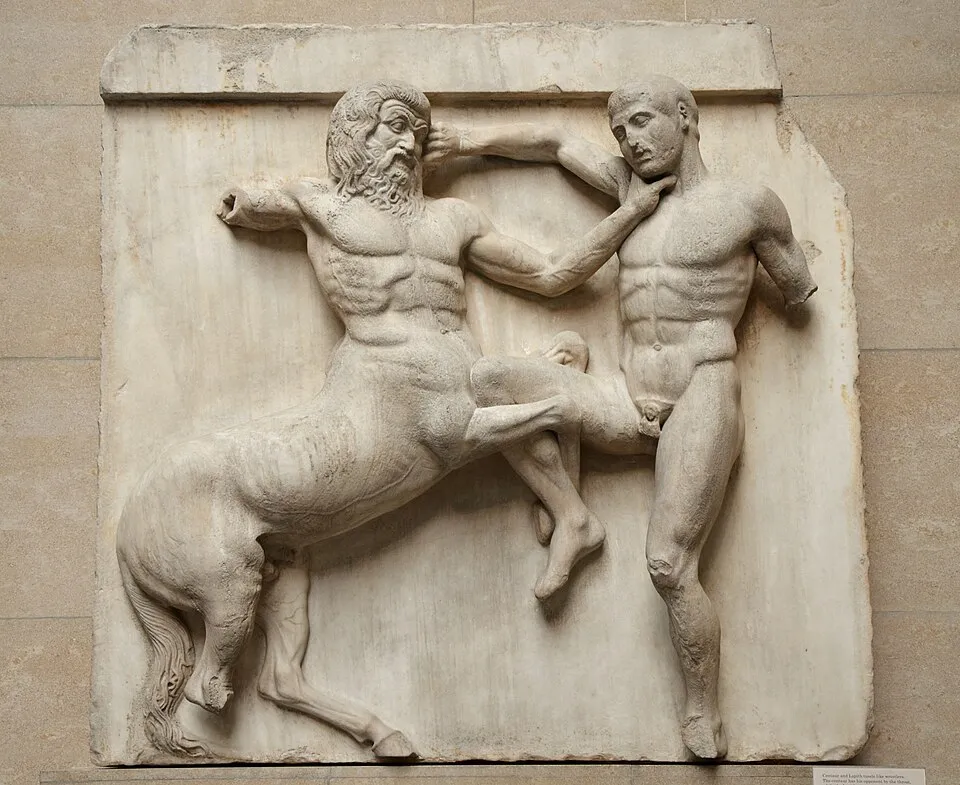
Parthenon Marbles, British Museum, Room 18. "The Parthenon Marbles have not budged from the literal and figurative centre of the British Museum in London since they were purchased from Lord Elgin in 1816" (The Economist). "Room 18 should be Empty" (ItsArtLaw). Image via Wikimedia Commons
The Parthenon Marbles: The Most Famous Dispute
Lord Elgin, the British ambassador to the Ottoman Empire, removed the marbles from the Parthenon between 1801 and 1812. He claimed to have a firman, a permit, from the Ottoman authorities. The firman has never been found, and its exact terms are disputed. The British government purchased the marbles from Elgin in 1816 and transferred them to the British Museum. They have been in Room 18 ever since.
Greece argues that the marbles were removed without proper authority, that they are an integral part of the Parthenon, a UNESCO World Heritage Site, and that they should be returned to Athens, where the Acropolis Museum was built specifically to house them. "Advocates argue that the Parthenon Marbles' return to Greece is a fitting case, as the sculptures are uniquely tied to the Parthenon's integrity and wholeness, unlike other cases," as Greek City Times reports. The British Museum argues that the marbles were legally acquired, that they are part of a global collection that tells the story of world culture, and that more people see them in London than would in Athens. The British Museum Act 1963 prevents the museum from deaccessioning objects unless they are duplicates or unfit for retention. The museum's trustees do not have the legal power to give them back, even if they wanted to.
That legal barrier is why the "permanent loan" proposal has circulated. "Is a permanent loan enough to resolve the Parthenon Marbles dispute?" asks ItsArtLaw. The British Museum has explored a "permanent loan" arrangement, in which Greece would technically own the marbles but they would remain in London. Greece has rejected this, arguing that a loan implies the British Museum is the rightful owner. The current negotiating formula, according to Greek press, is a loan with permanent characteristics: the marbles return to the Acropolis Museum, while important Greek antiquities travel to the British Museum on long-term exhibition in exchange. Athens wants the reunification to proceed immediately. The British side reportedly wants the reciprocal exchanges to stretch over a long period.
Then there is the empty space. "An empty space in a museum has the power to tell a story of its own, because it is not the existence, but the lack thereof, which becomes the monument. This is the case in the Acropolis Museum in the heart of Athens, where the five Caryatid sisters are presented in such a way that" the missing sixth is a visible absence. "Room 18 should be Empty." The Acropolis Museum, opened in 2009, was built with spaces left empty for the marbles still in London. The absence is the argument. For more on how art interacts with public life, see our guide to art and society.
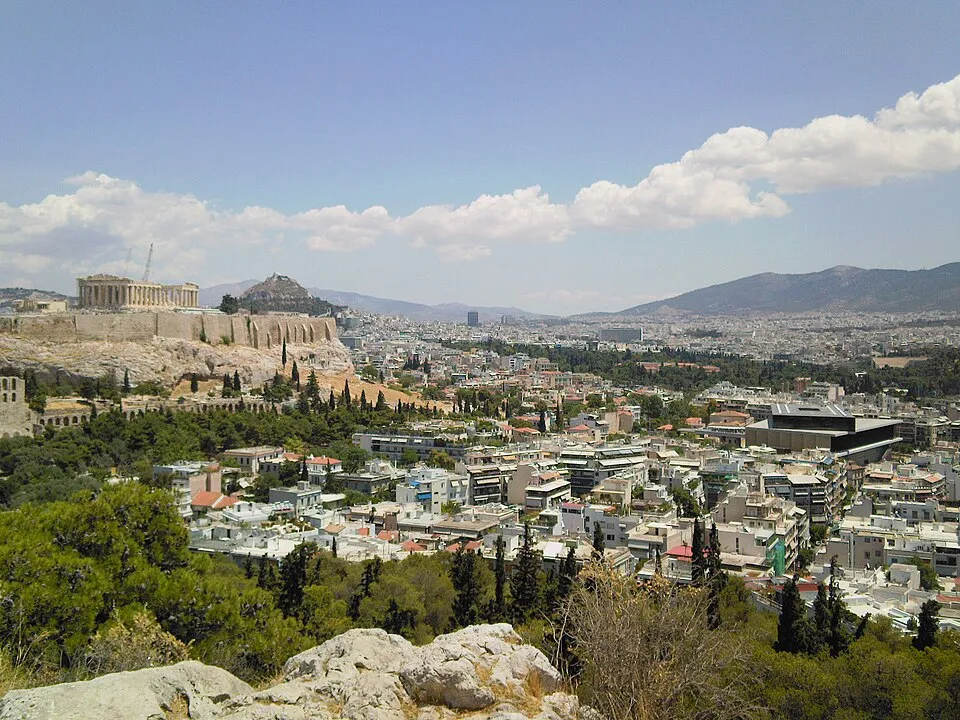
The Acropolis Museum, Athens. "An empty space in a museum has the power to tell a story of its own, because it is not the existence, but the lack thereof, which becomes the monument. This is the case in the Acropolis Museum in the heart of Athens, where the five Caryatid sisters are presented in such a way that" the missing sixth is a visible absence (ItsArtLaw). Image via Wikimedia Commons
The Benin Bronzes: 1897 and Its Aftermath
In 1897, a British military expedition sacked Benin City, in present-day Nigeria, looting thousands of objects from the royal palace. Bronzes, ivories, wood carvings. The objects were sold to museums and collectors across Europe and America. The British Museum holds about 900 Benin Bronzes. The Humboldt Forum in Berlin holds about 440. The Met holds about 160. The looting was not a quiet acquisition. It was a military operation, and the objects were the spoils.
In 2022, Germany signed an agreement to return its Benin Bronzes to Nigeria. The Humboldt Forum transferred ownership of its collection to the Nigerian government. Other museums, in the UK, France, the Netherlands, and the US, have also returned or pledged to return Benin Bronzes. The returns have not been without controversy. Some argue that the bronzes should go to the Oba of Benin, the traditional ruler, not to the Nigerian government. Others argue that the bronzes are part of a global heritage and should remain in Western museums for accessibility. But the principle, that objects looted in a colonial military expedition should be returned, is increasingly accepted. The 1897 expedition is not a complicated case. It was a raid.
The Legal Framework: 1963, 1970, 1998
The British Museum Act 1963 prevents the British Museum and other national museums in the UK from deaccessioning objects unless they are duplicates or unfit for retention. This is the legal barrier to returning the Parthenon Marbles. The museum's trustees do not have the legal power to give them back, even if they wanted to. Any permanent transfer would likely require legislative action by Parliament. With a prime minister who has publicly backed return for three decades, that political calculation has shifted, though Burnham has not yet announced new government policy on the sculptures.
The 1970 UNESCO Convention, the Convention on the Means of Prohibiting and Preventing the Illicit Import, Export and Transfer of Ownership of Cultural Property, establishes that cultural property illegally exported after 1970 should be returned. But it does not apply retroactively. Objects taken before 1970 are not covered, which means most colonial-era looting falls outside its scope. The 1998 Washington Conference Principles saw 44 countries agree to principles for identifying and returning art confiscated by the Nazis between 1933 and 1945. The principles are not legally binding but have been adopted by many museums. They established the principle that art looted during a specific period should be returned, a precedent that has been extended to colonial-era looting.
The legal framework is fragmented. There is no single international law governing repatriation. Each case is negotiated individually, between museums, governments, and communities. The result is a patchwork of agreements, some binding, some voluntary, some contested. For more on how provenance underpins these questions, see our guide to auction houses and valuation.
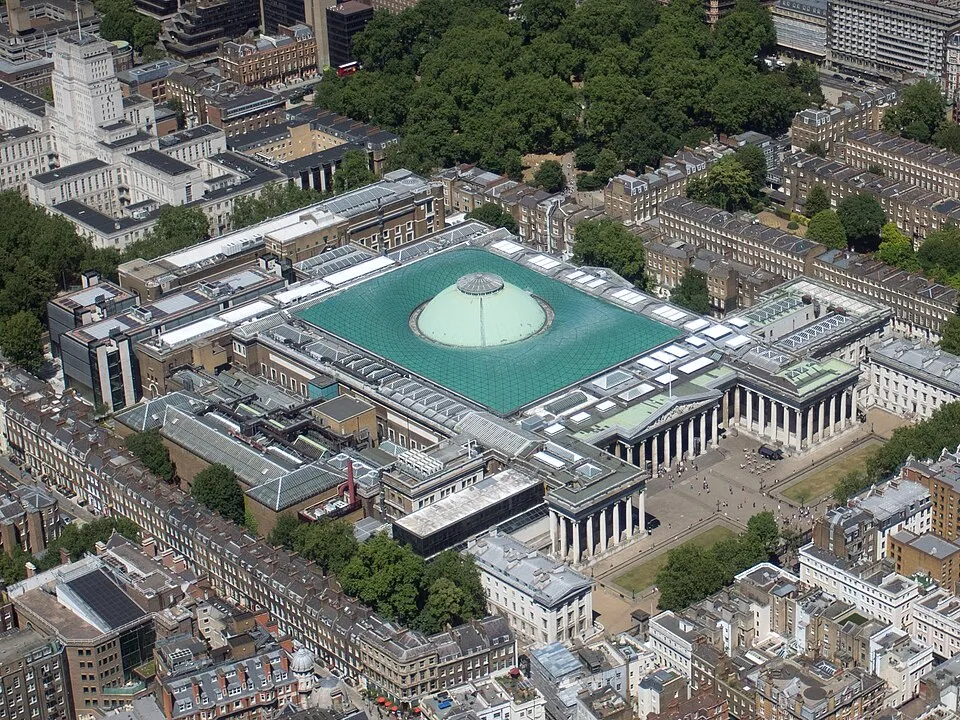
The British Museum, London. "The museum's reputation for being a bastion of colonialism, built on artifacts pillaged and despoiled from countries and cultures subjected by the British Empire is growing" (MovieJawn). Image via Wikimedia Commons
The Arguments For and Against
The case for repatriation is straightforward. The objects were taken without consent, by force, by coercion, or under colonial rule. They are part of the cultural heritage of the communities from which they were taken. Restitution is a matter of justice, of acknowledging the violence of colonialism and repairing its damage. Museums in the countries of origin are now capable of preserving and displaying the objects. The Acropolis Museum is a world-class institution built for this purpose. The Edo Museum of West African Art is under development in Benin City. Restitution does not empty Western museums. It opens a dialogue about shared heritage.
The case against repatriation rests on three claims. First, that the objects were legally acquired under the laws of the time. Second, that Western museums have preserved, studied, and displayed them for centuries, and that returning them would empty great museums and set a precedent that could dissolve universal collections. Third, that the objects belong to the world, not to a single nation, and that some countries of origin lack the infrastructure to preserve them.
These arguments are increasingly difficult to sustain. The "global heritage" argument is a colonial argument. It assumes that Western museums are the proper custodians of the world's art. The "legal acquisition" argument ignores the coercive context of colonial rule. A permit extracted from an occupying power is not consent. The "infrastructure" argument has been answered by the construction of world-class museums in Athens, Benin City, and elsewhere. The debate is shifting, from whether to return to how to return. For more on engaging with what you see, see our guide to how to look at art.
The Future of Repatriation
"The restitution of cultural heritage will race ahead in 2025," The Economist predicted, and it has. The Sarr-Savoy report (2018) recommended the restitution of African cultural heritage from French museums. Germany's return of the Benin Bronzes in 2022 set a precedent. The Parthenon Marbles negotiations have escalated, with a UK prime minister who backs return and a "Parthenon Partnership" reportedly 80% agreed. The challenges remain. The British Museum Act 1963 still blocks UK national museums from returning objects without legislation. Some objects are claimed by multiple communities or countries. Some museums fear that restitution will set a precedent that could lead to the dissolution of their collections.
But the opportunities are real. Restitution is not just about returning objects. It is about building relationships, between museums, between countries, between communities. Loan agreements, joint exhibitions, and collaborative research can maintain connections between objects and the museums that once held them, even after restitution. The future of repatriation is not the emptying of Western museums. It is the transformation of museums, from colonial repositories to global partners. The museums that embrace this transformation will thrive. The museums that resist it will find themselves on the wrong side of history. For more on getting started with the history behind these objects, see our guide to art for beginners.
Final Thoughts
The Parthenon Marbles have not budged from the centre of the British Museum since they were purchased from Lord Elgin in 1816. "The restitution of cultural heritage will race ahead," and it has. The 1897 British expedition sacked Benin City. Germany returned the Benin Bronzes in 2022. The British Museum holds about 900 Benin Bronzes. The Humboldt Forum holds about 440. The Met holds about 160. The British Museum Act 1963 prevents deaccessioning. The 1970 UNESCO Convention does not apply retroactively. The 1998 Washington Conference Principles established a framework for Nazi-looted art, a precedent now extended to colonial looting. In July 2026, a new UK prime minister who has backed return for 30 years took office, and the "Parthenon Partnership" is reportedly 80% agreed. "Room 18 should be Empty." The debate has shifted from whether to return to how to return.
Go to the British Museum. Go to Room 18. Look at the Parthenon Marbles, the sculptures that Phidias and his workshop created for the Parthenon in the 5th century BCE, that Lord Elgin removed between 1801 and 1812, that the British government purchased in 1816. Then go to Athens. Go to the Acropolis Museum, built in 2009 to house the marbles, with spaces left empty for the ones in London. Look at the empty spaces. "An empty space in a museum has the power to tell a story of its own." Then decide: should the marbles go back? The answer involves law, politics, history, and identity. But the question is being asked, and the museums that embrace it will thrive. The museums that resist it will find themselves on the wrong side of history. "Room 18 should be Empty." The question is when. For a wider view of how art history is constructed and contested, see our guides to the complete guide to art movements and teaching yourself art history.


