On the first VIP preview day at Art Basel 2026, Hauser and Wirth sold a 1963 Picasso painting for $35 million before noon. Gagosian moved a Willem de Kooning in the first hour for a high seven-figure sum. David Zwirner completed 57 sales across 40 artists by late afternoon and said the breadth of support was broader than any previous year. The fair drew 90,000 visitors from 103 countries over six days, with representatives from more than 270 museums and foundations in attendance.
That is the most visible version of what happens at a major art fair. The less visible version is what makes fairs genuinely interesting: the curator negotiating a loan for next year's exhibition in a quiet booth conversation, the emerging gallery getting its first serious institutional attention, the collector who came to look at one thing and left with a completely different understanding of where their taste was going. Art fairs are the most concentrated environment in which the art world does its work, commercial and otherwise. This guide explains how they function.
What Is an Art Fair?
An art fair is a temporary exhibition, typically lasting between four and ten days, where galleries pay for booth space to present and sell work by the artists they represent. Unlike a permanent gallery, a fair concentrates hundreds of exhibitors in one venue for a short period. The format dates back to the 1960s, when Cologne's Kunstmarkt Köln (1967) established the template that Art Basel and all subsequent fairs have followed.
From the gallery's perspective, a fair is an expensive investment: booth fees at Art Basel can exceed $100,000, and when you add the costs of installation, shipping, staff travel, and accommodation, a major international fair can cost a gallery several hundred thousand dollars to participate in. This investment makes sense only if the gallery sells enough work to cover costs and make a profit. This commercial pressure shapes every aspect of the fair experience.
From the collector's perspective, a fair offers something impossible at any individual gallery: the ability to compare work from hundreds of different programs in the same afternoon, to encounter artists you didn't know existed, and to buy from galleries that you could not otherwise visit without traveling the world.
The Major Art Fairs
Art Basel (Basel, Miami Beach, Hong Kong, Paris)
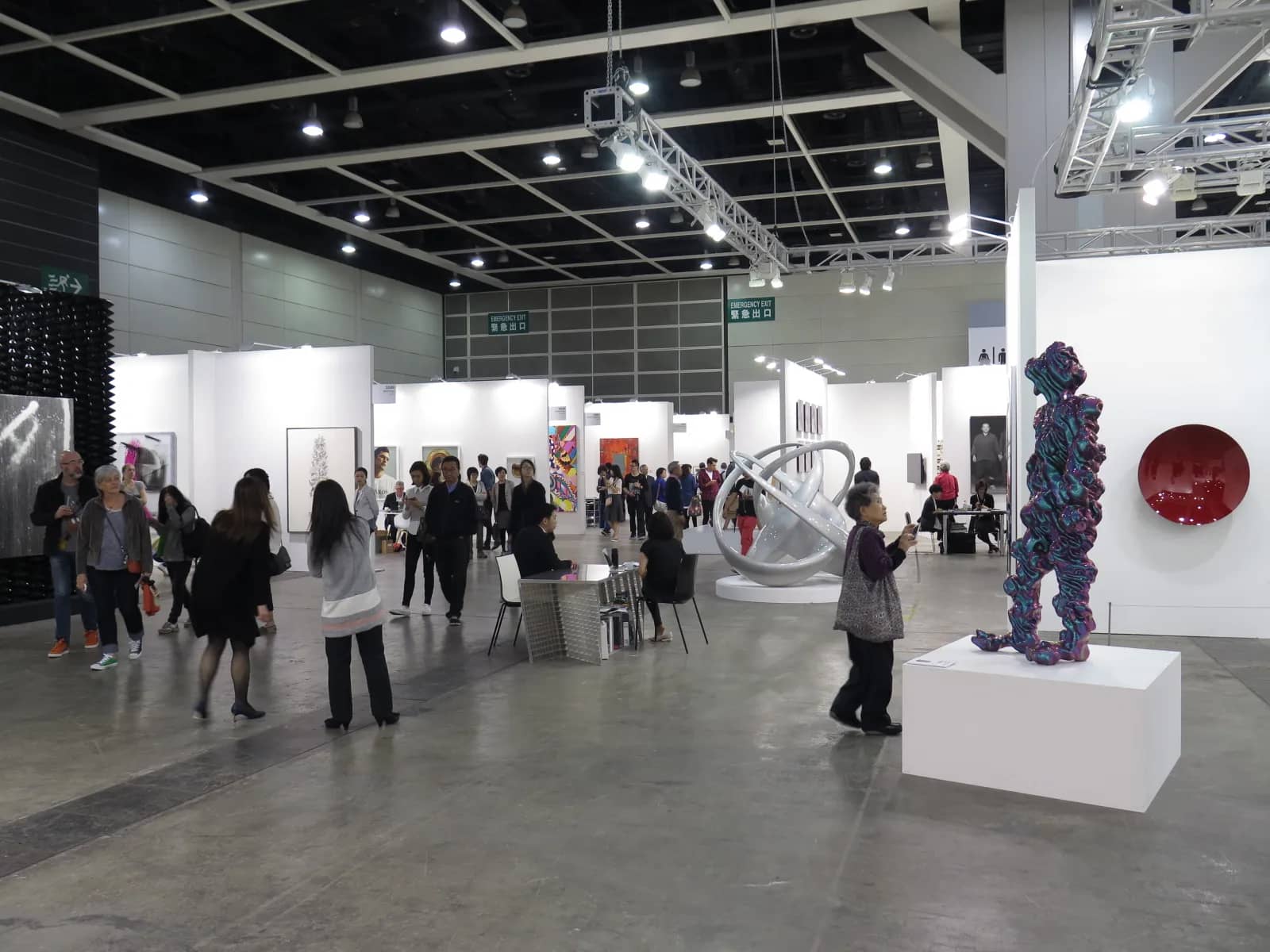
Art Basel is the most commercially significant art fair in the world, operating four editions per year. The Basel edition (June) is the senior fair, with the most rigorous selection process and the densest concentration of major gallery programs. Art Basel Miami Beach (December) has a more relaxed atmosphere and has developed particular strength in Latin American art and photography. Art Basel Hong Kong (March) serves as the primary international fair for Asia-Pacific galleries and collectors. Art Basel Paris, which replaced FIAC at the Grand Palais from 2022 onward, has become the primary autumn fair for European collectors and galleries.
All four editions are jury-selected: galleries apply and a committee of gallerists reviews applications against the fair's standards. Being accepted is a commercial signal. Being rejected is also significant. When a gallery loses its place at Art Basel, other galleries, collectors, and institutions notice. The selectivity is part of the value proposition for galleries that are admitted.
The 2026 Basel edition brought together 290 galleries from 43 countries. Among the new initiatives was Basel Exclusive, in which more than 190 main-sector galleries reserved significant works for their public unveiling at the VIP preview opening, generating concentrated attention in the opening hours. According to Art Basel's official closing report, galleries reported strong sales across market segments and price points throughout the week.
Frieze (London, New York, Los Angeles, Seoul)
Frieze was founded in London in 2003 by Amanda Sharp and Matthew Slotover, publishers of Frieze magazine, and established itself quickly as the primary fair for contemporary art in the UK. The London edition (October) has a stronger focus on living artists and more experimental gallery programs than Art Basel, and its adjacent Frieze Masters section brings historical work into direct dialogue with the contemporary booths. Frieze New York (May) takes place at The Shed at Hudson Yards. Frieze Seoul, launched in 2022, has become a significant entry point for Korean and broader Asian-market galleries and collectors.
TEFAF (Maastricht and New York)
The European Fine Art Foundation fair, held in Maastricht in March, is the most important fair for old masters, antiquities, decorative arts, and historical art of all kinds. If Art Basel is the contemporary market's center of gravity, TEFAF is its historical counterpart. The quality threshold at TEFAF Maastricht is exceptionally high, and the fair is known for the rigor of its vetting committees, which examine every exhibited work for authenticity and condition.
Regional and Specialist Fairs
Beyond the flagship events, a global network of fairs serves specific markets, price points, and geographic communities. The Armory Show in New York, Liste in Basel (focused on emerging galleries), Sunday Art Fair in London, the Independent in New York and Brussels, SP-Arte in São Paulo, and dozens of others provide access points for collectors who are not ready for, or not interested in, the top-tier international market.
Specifically for new collectors, many fairs include dedicated sections for affordable work, often with a price cap of $5,000 to $10,000 per work. Frieze's "Frame" section (focused on solo presentations by emerging artists) and the Independent's programming regularly offer genuinely exciting work at accessible prices.
The Structure of a Fair Visit
Preview Days
The first day or two of a major art fair is reserved for VIP collectors, press, and invited guests. This is when the most significant purchases happen. Major collectors send their advisors to walk the floor before public opening. Galleries know that the best work must be presented on preview day, because anything that isn't sold or reserved by the end of day one is likely to stay unsold.
Access to preview days typically requires an invitation from a participating gallery or a press credential. If you have a relationship with any gallery attending the fair, ask to be on their preview guest list. Most galleries are happy to add genuine clients and serious browsers to their list.
Public Days
Public opening days are significantly less frantic than preview days. The galleries are fully staffed and welcoming, much of the commercial pressure has dissipated (either deals were made, or the fair has settled into a mode of relationship-building rather than hard selling), and the experience is more relaxed.
Give yourself at least a full day for a major fair. Walking an Art Basel or Frieze London in less than four hours means not properly seeing anything. Plan a route loosely, allow yourself to be surprised, revisit booths that caught your attention earlier in the day, and build in time for food and rest.
How to Talk to Gallery Staff
Gallery staff at fairs are there to sell, but the best of them are also genuinely knowledgeable and interested in talking about the work. The most productive opening is a genuine observation or question: "I'm interested in this painting, can you tell me about the artist's practice?" is more effective than either silence or an immediate price inquiry.
If you're interested in buying, it is entirely appropriate to ask the price, to ask for an artist's biography and recent exhibition history, and to take a gallery card and follow up after the fair. Not every purchase happens at the fair itself; many sales are completed in the weeks following.
Why Art Fairs Matter Beyond Commerce
The commercial function of art fairs is real and worth understanding. It is not the only function. Major fairs are also moments when the international art world becomes physically concentrated in one place, and the density of informed attention creates things that dispersed gallery visits cannot.
Basel week gives institutional curators access to 290 gallery programs in five days. Museums use that access to negotiate loans, develop programming relationships, and assess artists for future acquisition consideration. Representatives from more than 270 museums and foundations attended the 2026 Basel fair. For those institutions, the fair is primarily a professional working event that happens to take place alongside a large commercial fair.
For artists, particularly emerging artists without international gallery representation, fair week creates concentrated visibility. A critic who encounters your work at Liste Basel in June might write about it in September. A curator who sees you in a gallery's Statements booth might include you in an institutional show two years later. The same chain of attention that produces those $35 million Picasso sales also produces the first serious institutional notice for artists whose work will be worth discussing in twenty years.
For new collectors, a fair is primarily an education. Seeing what 290 gallery programs have decided to bring to the most important commercial week of the year gives you a concentrated view of where the market thinks contemporary art is going. Even if you buy nothing, a day at a well-curated fair develops your eye faster than months of individual gallery visits. For context on the commercial data underlying what you see at fairs, our guide to Art as Investment: What You Should Know Before Buying for Value covers the Art Basel and UBS market data in detail. And for finding artists before they reach the main fair floor, see how to find emerging artists before they're famous.
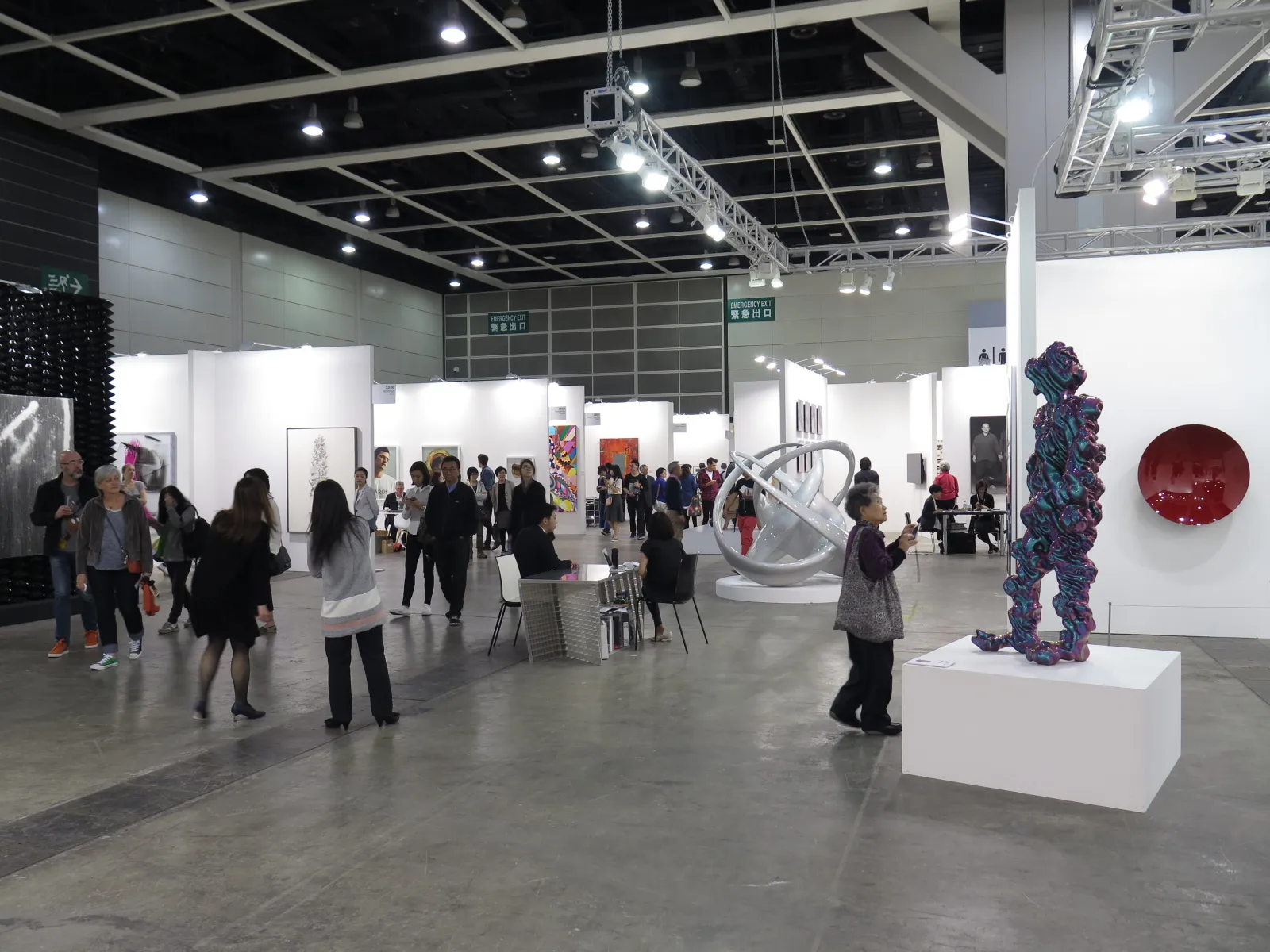
Art Basel Hong Kong 2015 at the Hong Kong Convention and Exhibition Centre. The fair brings together galleries from across Asia-Pacific and beyond each March. Image: Wing1990hk, Wikimedia Commons, CC BY 3.0


