
Auction houses do not value art in the abstract. They value what they believe they can defend in a live market, under competition, disclosure obligations, and reputational pressure, as FAE LLC puts it. In November 2025, Sotheby's New York series totaled about $1.17 billion, its strongest since 2021, led by a Gustav Klimt portrait that hammered at $205 million and reached $236.4 million with fees, the second-highest auction price ever recorded, according to Masterworks. Six bidders drove the Klimt from a $130 million opening to above $200 million, a clear sign of renewed top-end demand. Also in November 2025, the most expensive work by a female artist ever sold at auction was set: Frida Kahlo's "El sueno (La cama)" at $54.66 million.
But how did the auction house decide what the Klimt was worth before the bidding started? How did they set the estimate? How did they assess its provenance, its condition, its comparability to other Klimt works? An auction valuation is not the same as an insurance appraisal, a tax appraisal, or a private advisory opinion. It is a market-facing estimate tied to expected bidding behavior within a specific sales context. That context includes the season, the category, the geographic audience, the consignor profile, and the auction house's confidence in the object's documentation. The major auction houses, Christie's, Sotheby's, and Phillips, are the most visible players in the art market, but they are not the largest. While auctions dominate public perception, they represent only around 33% of the global art market, about $20 billion of roughly $60 billion total. The majority of transactions occur privately, about $40 billion of $60 billion. Understanding auction valuation is understanding the most public, most transparent part of the market, and the one that sets the prices everyone else follows. This guide covers attribution and authorship, provenance, condition, comparables, the estimate, the fees, and the November 2025 sales as a case study. For broader context, see our complete guide to art movements.

Christie's auction room. Auction houses do not value art in the abstract. They value what they believe they can defend in a live market, under competition, disclosure obligations, and reputational pressure (FAE LLC). While auctions dominate public perception, they represent only around 33% of the global art market, about $20 billion of roughly $60 billion total. Image via Wikimedia Commons
Attribution and Authorship: "By" vs. "Attributed To"
Authorship sits at the center of everything. A work securely attributed to a recognized artist, supported by coherent provenance, catalogue raisonne inclusion, exhibition history, and literature references, is fundamentally different from a work carrying uncertainty. Even small shifts in attribution language can produce major changes in value. "By" an artist, "attributed to," "studio of," and "circle of" are not stylistic nuances. They are market categories with very different price consequences.
The signature matters. Christie's specialists note that it is important to make sure the signature is in keeping with the artist's known way of signing, and that it sits correctly with the original paint, not on top of the craquelure. Followers of artists were also known to forge the signatures of more established masters, and centuries later signatures were sometimes added by those looking to make a profit. Chinese painting adds another layer of complexity. Over the past 1,500 years of Chinese painting and calligraphy, reproducing works, and even the signatures, of past masters has been a cornerstone of an artist's development. Artists' seals are equally complex. Every seal has small nicks and indentations visible under close examination, and reproducing these perfectly is near impossible.
Provenance: The Evidentiary Chain
In the art world, "provenance" is the chronological record of ownership. For a lender, it is the bedrock of authenticity and legal title. A prestigious chain of ownership, mentioning renowned galleries, celebrated private collections, or inclusions in museum exhibitions, acts as a seal of approval that significantly bolsters the asset's value. The most critical document in establishing provenance is the catalogue raisonne. This is a comprehensive, annotated listing of all the known works by an artist. Inclusion in this volume is often the ultimate arbiter of authenticity. If a work is "absent from the Raisonne," it poses a significant risk, often resulting in a lower loan-to-value ratio or even a rejection of the asset as collateral until further scholarship can verify its status.
Collectors must be aware that gaps in provenance, particularly during the years 1933 to 1945, are scrutinized with extreme care due to the complexities of Nazi-era restitution. A "broken" chain of ownership introduces the risk of future legal claims, which can render a painting unsellable in the open market. Provenance is not social decoration. It is an evidentiary chain. Gaps, inconsistencies, geographic implausibilities, wartime issues, or unsupported family stories weaken auction confidence. A clean and documented ownership history increases liquidity because it reduces the burden on bidders to make speculative assumptions. For more on how art intersects with society and history, see our guide to art and society.
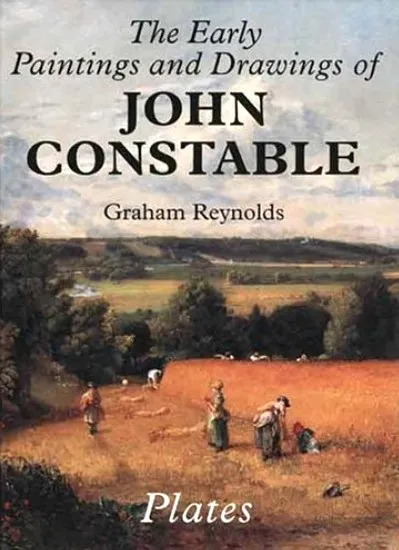
A catalogue raisonne. The most critical document in establishing provenance is the catalogue raisonne, a comprehensive, annotated listing of all the known works by an artist. Inclusion in this volume is often the ultimate arbiter of authenticity. If a work is "absent from the Raisonne," it poses a significant risk, often resulting in a lower loan-to-value or even a rejection of the asset as collateral until further scholarship can verify its status. Image via Wikimedia Commons
Condition: UV Light, Raking Light, and What Lies Beneath
Ultraviolet light is perhaps the most important tool in condition assessment. Under UV light, newer pigments used in restoration "fluoresce" differently than the original paint. This allows specialists to see the extent of overpainting or repair that is invisible to the naked eye. Raking light, shining a light from the side, detects surface irregularities such as "cupping" (where paint edges lift), "craquelure" (fine cracking), or structural issues like "relining" (where a new canvas is bonded to the back of the original).
Condition has a direct effect on valuation, but not always in obvious ways. Visible damage matters, of course, yet hidden interventions can matter more. Relining, aggressive cleaning, overpaint, restored signatures, or structural instability can alter both valuation and bidder appetite. Two works with similar appearance may receive sharply different estimates once examined under UV, infrared, magnification, or pigment analysis. While a certain degree of "age-appropriate wear" is expected in Old Masters, the expectations for Modern and Contemporary works are significantly higher. Damage, even if expertly restored, almost always results in a "diminution of value." A piece in "pristine" or "original" condition will always command a higher valuation. Conversely, significant restoration, especially in focal areas like a portrait's face, can lead to a conservative valuation. When assessing a sculpture, Christie's specialists turn it upside down and examine the area that the artist did not mean to be seen, which helps tell how, when, and where it was made. For a bronze sculpture, they look for a cavity, which could suggest it was cast using the early lost-wax technique. For more on examining work closely, see our guide to how to look at art.
Comparables: Prior Results and Like-for-Like
Auction specialists rely heavily on prior public results, but comparable sales are only useful when the comparison is defensible. Medium, size, date, subject matter, period quality, condition, and level of acceptance all matter. A strong result for a major signed canvas does not automatically support the valuation of a weaker work on paper with incomplete documentation. Institutional-grade databases, including Artnet and Artprice, track real-time auction results. Analysts look at "sell-through rates," the percentage of works that actually sell versus those that "buy in" (remain unsold). An artist with a high sell-through rate across major houses like Sotheby's, Christie's, and Phillips indicates strong market demand.
The November 2025 results are a useful case study. After a subdued period, the 2025 autumn sales delivered a notably strong performance, driven by a $236 million top lot, a series of headline results, and renewed depth across major categories. Top performers crossed the $50 million mark: Klimt, Van Gogh, Rothko, Kahlo. The $40 million-plus tier included Basquiat, Monet, Picasso, and Hockney. At Christie's autumn sales 2025, 88% of revenue came from $1 million-plus lots. For more on what is happening in the market right now, see our guide to contemporary art trends.

Gustav Klimt, "Bildnis Elisabeth Lederer." The second-most expensive artwork ever sold at auction, at $236.36 million. Six bidders drove the work from a $130 million opening to above $200 million, a clear sign of renewed top-end demand. Image via Wikimedia Commons
The Estimate, the Reserve, and the Fees
A low estimate on a supposedly valuable painting is rarely an insult. More often, it is a warning. Higher is not always better. An inflated estimate can suppress bidding, increase buy-in risk, and damage later resale prospects if the lot fails publicly. A disciplined estimate, even if less flattering, may produce stronger competition and a better final result. The reserve is a confidential minimum below which the work will not sell. Set it too high and the work fails to sell. The reserve is typically set at or below the low estimate.
The fees matter on both sides. At auction the buyer pays a premium on top of the hammer price, and the seller pays a commission out of it, so a single sale carries fees on both sides. The two largest houses now charge buyers roughly 27% on the first slice of value, stepping down to 15% above $8 million. Many houses also charge a performance fee of roughly 1% to 2% when a work sells above its high estimate. There is also the private sale alternative. In 2025, private sales made up roughly 24% of revenue at Christie's and 17% at Sotheby's, with Christie's private sales steady at about $1.5 billion and Sotheby's at about $1.2 billion. Christie's reported that its three biggest individual sales of the entire year were private, each exceeding its top public-auction lot. For more on getting started, see our guide to art for beginners.
Final Thoughts
Auction houses do not value art in the abstract. They value what they believe they can defend in a live market, under competition, disclosure obligations, and reputational pressure. While auctions dominate public perception, they represent only around 33% of the global art market, about $20 billion of roughly $60 billion total. Attribution categories like "by," "attributed to," "studio of," and "circle of" are not stylistic nuances but market categories with very different price consequences. The catalogue raisonne is the most critical document in establishing provenance, and inclusion in it is often the ultimate arbiter of authenticity. Gaps in provenance, particularly during the years 1933 to 1945, are scrutinized with extreme care. Under UV light, newer pigments used in restoration fluoresce differently than the original paint, and hidden interventions can matter more than visible damage. A strong result for a major signed canvas does not automatically support the valuation of a weaker work on paper. In November 2025, Sotheby's New York series totaled about $1.17 billion. The Klimt at $236.4 million was the second-most expensive artwork ever sold at auction. The Kahlo at $54.66 million was the most expensive work by a female artist ever sold at auction. Buyers pay roughly 27% on the first slice of value, stepping down to 15% above $8 million. Private sales made up roughly 24% of revenue at Christie's and 17% at Sotheby's.
Go to Christie's or Sotheby's website. Look at the catalogs for upcoming sales. Each lot has an estimate range, provenance, condition report, and literature references. Look at the November 2025 results, the Klimt at $236.4 million, the Kahlo at $54.66 million. Then go to Artnet or Artprice, which track auction results going back decades. Search for an artist you like. Look at the sell-through rate, what percentage of their works actually sell. Look at the price range, the gap between the top lots and the bottom lots. The art market is not one market. It is many markets, layered by artist, period, medium, condition, and provenance. Understanding how auction houses value art is understanding how those markets work, and how to navigate them. For more on the stories behind individual works, see our guide to famous paintings, and for building your knowledge, see our guide to teaching yourself art history.


