
E. H. Gombrich's "The Story of Art" (1950) has sold over 8 million copies, been translated into more than 30 languages, and is now in its 16th edition. It is included in Time magazine's list of the 100 best nonfiction books of all time. The first two sentences have become famous: "There really is no such thing as Art. There are only artists." Gombrich wrote the book for teenagers, with the intention not to mention any work of art that he could not also include as an illustration, and it became the most widely read art history book in the world. The art historian T. S. R. Boase wrote that Gombrich "writes conversationally and intimately." The artist and writer Wilfrid Blunt declared that it "fully deserve[s] a place in any educational library." You do not need a university course to learn art history. You need Gombrich, a museum membership, and an internet connection. Khan Academy had 189.6 million registered users as of its SY24-25 annual report, with 104.9 million yearly active learners, and offers free art history courses. Smarthistory, founded in 2005 by Dr. Beth Harris and Dr. Steven Zucker, provides free videos on hundreds of artworks. Crash Course Art History, hosted by Sarah Urist Green and launched in 2024, offers 22 episodes filmed at the Indianapolis Museum of Art at Newfields. The resources for self-directed art history education are better in 2026 than they have ever been, and most of them are free.
Self-directed art history education is not a compromise. It is, for many people, the best way to learn. University courses are expensive, inflexible, and often taught by professors who specialize in one period and neglect others. Self-directed learning allows you to follow your interests, move at your own pace, and spend more time on what fascinates you and less on what does not. This guide covers the foundational books, free online resources, a structured 12-month curriculum, museum visits as education, how to read art history (footnotes, bibliographies, following the leads), and how to build a personal art library. For more on where to start with art, see our guide to art for beginners.
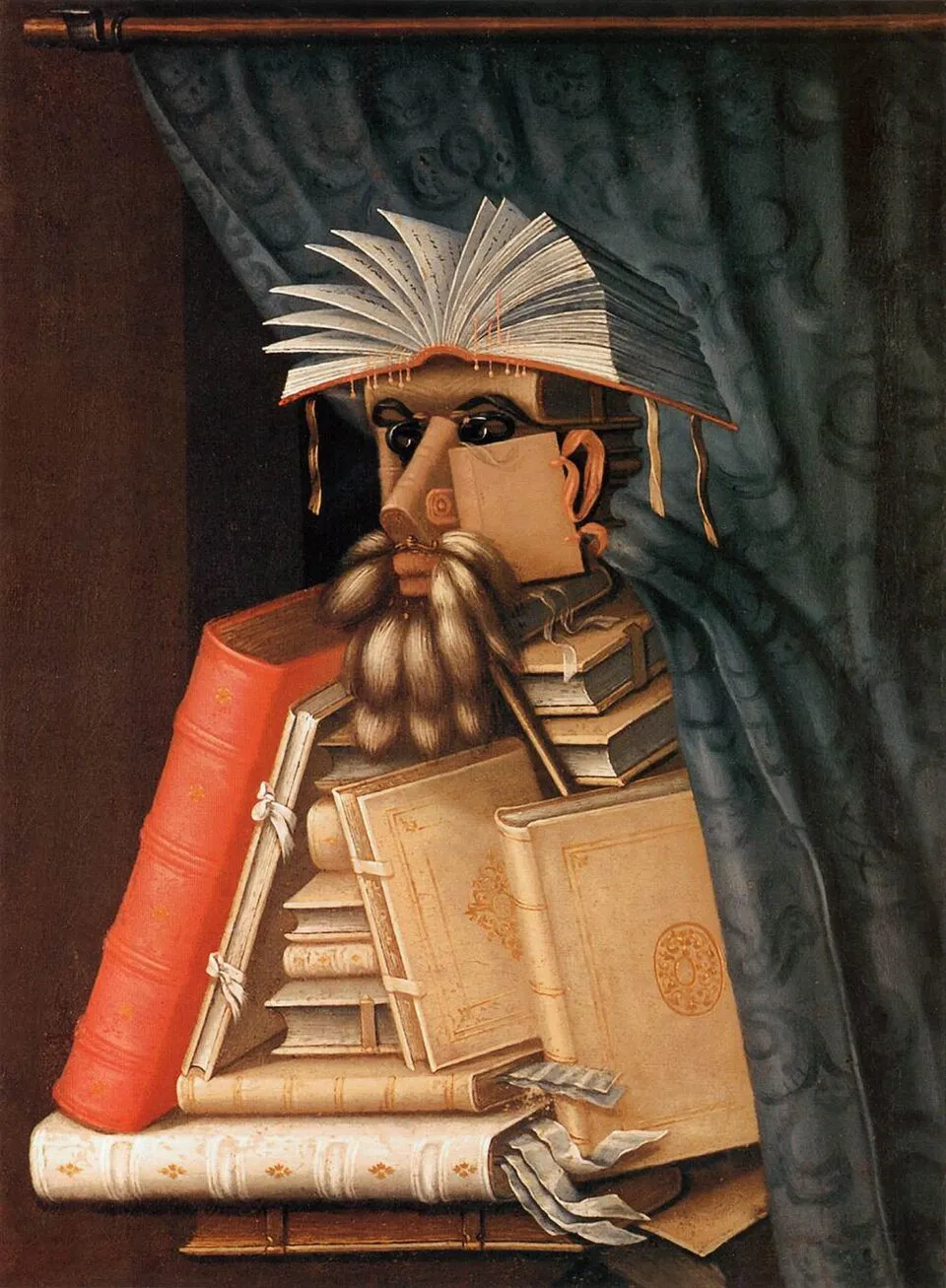
Giuseppe Arcimboldo, "The Librarian" (c. 1566). Oil on canvas, 97 x 71 cm. Skokloster Castle, Sweden. Image via Wikimedia Commons
The Foundational Books: Start with Gombrich
Gombrich, "The Story of Art" (1950, 16th edition, 8 million copies, 30+ languages): the starting point. Gombrich covers the entire history of art from cave paintings to the 20th century in 28 chapters, with "plain language" and minimal "art historian's conventional terms." The book is "widely regarded both as a seminal work of criticism and as one of the most accessible introductions to the visual arts," according to the Wikipedia article on The Story of Art. Read it first. Read it cover to cover. Then read it again.
Janson, "History of Art" (first published 1962, now in 8th edition): the standard university textbook. More detailed and more heavily illustrated than Gombrich, but also more academic and less readable. Use Janson as a reference, look up specific periods or artists, rather than reading it cover to cover.
Stokstad, "Art History" (first published 1995, now in 6th edition): the most inclusive of the major textbooks, with more coverage of non-Western art and women artists. Stokstad is the best choice for readers who want a broader, less Eurocentric survey.
Honour and Fleming, "A World History of Art" (first published 1982, 7th edition): the most global of the surveys, with extensive coverage of Asian, African, and Islamic art. Use Honour and Fleming if you want to go beyond the Western canon.
The advice from r/ArtHistory: "Whatever you read, check all the footnotes. Check for more information, check for names of artists, check for galleries and museums, just follow the leads there." The footnotes are the curriculum. They lead you from the survey to the specialized literature.
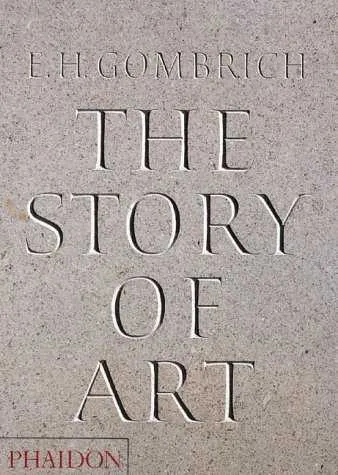
E. H. Gombrich, "The Story of Art" (1950). Over 8 million copies sold, 30+ languages, 16th edition. Time magazine's list of 100 best nonfiction books of all time. Image via Wikimedia Commons
Free Online Resources: Khan Academy, Smarthistory, Crash Course
Khan Academy had 189.6 million registered users as of its SY24-25 annual report, with 104.9 million yearly active learners who logged 66.8 billion learning minutes. It serves users across more than 190 countries and 55 languages. The art history section, built in partnership with Smarthistory, covers "prehistoric depictions of bison to contemporary abstraction" with video lectures by Dr. Steven Zucker and Dr. Beth Harris. The courses are organized by period and culture, with quizzes and progress tracking. Khan Academy's art history section is 100% free. Start with "Why is this art? Andy Warhol, Campbell's Soup Cans" (7 minutes), a perfect introduction to the questions of art history.
Smarthistory, founded in 2005 by Dr. Beth Harris and Dr. Steven Zucker, is "a leading resource for students, educators, and enthusiasts of art history." The videos are "highly informative and engaging, with a focus on making complex ideas accessible to a broad audience." Average length: 5 minutes. Topics: paintings, sculpture, and architecture. Smarthistory is the closest thing to a free art history degree: hundreds of videos, organized by period, culture, and theme.
Crash Course Art History launched in 2024, hosted by Sarah Urist Green, a curator and art educator, filmed at the Indianapolis Museum of Art at Newfields. The series runs 22 episodes. The first episode, "Why We Study Art" (12 minutes), covers the fundamentals: what is art history, how it developed, and how the canon is shaped by "what survives." Green explains: "art history is really about thinking critically by observing closely. It's the study of objects and images to understand the people, places and time periods they come from." Later episodes cover the Medicis, Vasari, the canon, and how art history is constructed, not discovered. Episode 18 tackles whether AI-generated art is original.
Great Art Explained, created by James Payne (curator, gallerist), launched in 2020. Each episode focuses on one artwork, analyzed in detail, using "clear and concise language free of 'art-speak'." Average length: 15 to 20 minutes. The channel has nearly 2 million subscribers. In October 2025, "Great Art Explained: the Book" was released worldwide by Thames & Hudson, described by Stephen Fry as "an instant classic." The book covers 30 masterpieces from a 12th-century Chinese scroll to Monet's Water Lilies, a Frida Kahlo self-portrait, and Jean-Michel Basquiat's Hollywood Africans. For more on YouTube channels, see our guide to the best art history YouTube channels.
Smarthistory, founded by Dr. Beth Harris and Dr. Steven Zucker in 2005, provides free art history videos to millions of learners worldwide. Khan Academy, with 189.6 million registered users, offers free art history courses. Image via Wikimedia Commons
A Structured Curriculum: Chronological and Thematic
Phase 1: The Survey (months 1 to 3). Read Gombrich cover to cover. Watch the corresponding Smarthistory videos for each chapter. This gives you the chronological framework, from cave paintings to contemporary art, with the major movements, artists, and artworks in their historical context.
Phase 2: Deep Dives (months 4 to 6). Pick three periods or movements that interest you most. For each, read one specialized book (not a survey). For the Renaissance, read Kenneth Clark's "Civilization" or Giorgio Vasari's "Lives of the Artists" (1550). For Impressionism, read T. J. Clark's "The Painting of Modern Life." For contemporary art, read Hal Foster's "The Return of the Real." Watch the corresponding Smarthistory and Great Art Explained videos. Visit museums with these periods in mind.
Phase 3: Thematic Exploration (months 7 to 9). Move beyond chronology to themes. Read about art and politics, art and religion, art and science, art and gender, art and colonialism. This is where art history becomes not just a timeline but a way of understanding the world. Recommended: John Berger's "Ways of Seeing" (1972), Griselda Pollock's "Vision and Difference" (1988), Edward Said's "Orientalism" (1978).
Phase 4: Specialization (months 10 to 12). Pick one artist, one movement, or one period and go deep. Read everything you can find. Follow the footnotes. Read the scholarly articles (many are available free on JSTOR, which offers free access to 100 articles per month, Academia.edu, or Google Scholar). Visit the museums with collections in your area. Write about what you learn: a blog, a journal, even social media posts. Writing is the best way to consolidate learning. For more on getting started, see our guide to art for beginners.
Museum Visits as Education
Museums are not just for looking. They are for learning. A museum visit is a lesson in art history, available to anyone with a ticket (or free, in many cases). The key is to visit actively, not passively.
The focused visit: instead of trying to see the entire museum, pick one gallery or one artist and spend an hour. Look at every artwork in the gallery. Read the wall labels. Ask: what do these works have in common? How do they differ? What is the curator trying to tell me by putting them together?
The sketching visit: bring a sketchbook. Sketch one artwork, not to make a beautiful drawing but to understand the composition. Sketching forces you to look more carefully than you would otherwise. You will see things in the sketch that you did not see in the painting.
The repeat visit: visit the same museum multiple times. The first visit is orientation, you see what is there. The second visit is exploration, you focus on what interested you. The third visit is relationship, you develop favorites, return to specific works, and see them differently each time. Familiarity breeds not contempt but understanding. For more on how to look at art, see our guide to how to look at art for beginners.
How to Read Art History: Footnotes, Bibliographies, Following the Leads
The footnote rule: "check all the footnotes. Check for more information, check for names of artists, check for galleries and museums, just follow the leads there" (r/ArtHistory). The footnotes in an art history book are a map. They lead you from the survey to the specialized literature, from the general to the specific, from the summary to the argument.
Every art history book has a bibliography. The bibliography is a reading list, the author's recommendations for further reading. Start with the books cited most frequently. Then follow the bibliographies in those books. This is how you build a personal art library: not by buying everything but by following the leads from one book to the next.
Art history is not just books. It is also articles in scholarly journals (The Art Bulletin, The Burlington Magazine, October, Art History). Many articles are available free through JSTOR (which offers free access to 100 articles per month), Academia.edu, or Google Scholar. Articles are where the current debates are, where scholars argue about interpretations, challenge received wisdom, and propose new readings.
When a museum mounts a major exhibition, it publishes a catalogue, a scholarly book that accompanies the show. Exhibition catalogues are often the best source on a specific artist or period, with essays by multiple scholars and high-quality reproductions. They are expensive new but available in libraries and used bookstores. For more on specific artworks, see our guide to famous paintings and what they are about.
Building a Personal Art Library
Start with Gombrich. Then add the surveys you need (Janson for reference, Stokstad for inclusivity, Honour and Fleming for global coverage). Then add the specialized books from your deep dives. Then add the thematic books from your thematic exploration.
Art books are expensive new but cheap used. Used bookstores, library sales, and online used booksellers (AbeBooks, ThriftBooks) are the best sources for art books. A $75 exhibition catalogue can be found for $10 used.
Before you buy, borrow. Public libraries and university libraries (many of which are open to the public) have extensive art history collections. Interlibrary loan can get you almost any book. The library is the self-directed student's best friend.
Many art history books are available free online. The Internet Archive (archive.org) has digitized millions of books, including art history surveys and exhibition catalogues. Google Books has partial previews of most art books. Smarthistory and Khan Academy are free. The resources for self-directed art history education are better, and cheaper, than they have ever been. For more on YouTube resources, see our guide to the best art history YouTube channels.
Final Thoughts
Teaching yourself art history is not a compromise. It is, for many people, the best way to learn. The resources are better in 2026 than they have ever been. Gombrich's "The Story of Art" (1950, 8 million copies, 30+ languages, 16th edition, Time's 100 best nonfiction) is the starting point: "There really is no such thing as Art. There are only artists." Khan Academy (189.6 million registered users, 104.9 million yearly active learners, 100% free) offers video courses from prehistoric to contemporary. Smarthistory (founded 2005 by Dr. Beth Harris and Dr. Steven Zucker) provides hundreds of free 5-minute videos. Crash Course Art History (2024, Sarah Urist Green, 22 episodes, filmed at the Indianapolis Museum) offers 12-minute episodes. Great Art Explained (James Payne, 2020, 15 to 20-minute episodes on single artworks, nearly 2 million subscribers) was published as a book in October 2025 by Thames & Hudson, called "an instant classic" by Stephen Fry.
A structured curriculum, Phase 1: the survey (Gombrich + Smarthistory, months 1 to 3), Phase 2: deep dives (3 periods, months 4 to 6), Phase 3: thematic exploration (Berger, Pollock, Said, months 7 to 9), Phase 4: specialization (one artist/movement/period, months 10 to 12), provides a roadmap. Museum visits are education: focus on one gallery, sketch one artwork, visit the same museum multiple times. The footnote rule, "check all the footnotes, check for names of artists, check for galleries and museums, just follow the leads there," is how you go from survey to specialization. Build a personal art library through used bookstores, libraries, and free digital resources. For the broader context, see our guide to art movements timeline.
Buy Gombrich. Or borrow it from the library. Or read it free on the Internet Archive. Then start. Read one chapter. Watch one Smarthistory video. Visit one museum. The curriculum is self-directed, which means you direct it. Follow your interests, follow the footnotes, and follow the art. There is no exam. There is no grade. There is only the pleasure of learning to see.


