
A standard property policy is not designed to protect fine art. Every work of art is individual and when damaged requires a knowledge and understanding of conservation and any consequent depreciation in value, as AXA XL puts it. If you own art, a painting, a sculpture, a collection of prints, a single photograph worth $5,000 or $5 million, your standard homeowners or property insurance policy probably does not cover it adequately. To protect against this significant exposure, your valuable collection requires separate, specialized art coverage as well as specific risk management guidance. AXA XL, one of the largest fine art insurers in the world, has been insuring art for over 60 years and in 2025 became a Global Lead Partner of TEFAF, supporting both TEFAF Maastricht and TEFAF New York. Many owners of art work and collectible objects do not realise they could benefit from specialist fine art policy.
The question is not just whether your art is insured. The question is whether it is insured correctly, for the right value, against the right risks, with the right expertise behind the policy. Art insurance is not property insurance. It is a specialized product, built on an understanding of art, the art market, and the specific risks that art faces, from transit damage to fire, from theft to water damage, from restoration costs to depreciation in value after a repair. The major providers, AXA XL, Chubb, AIG, and Hiscox, insure private collections, museum collections, gallery inventory, corporate collections, and art in transit. The policies are bespoke, tailored to the specific collection, with valuations, condition reports, and risk management plans. This guide covers what art insurance covers, what it does not cover, who needs it, how it is priced, the claims process, and the major providers. For more on how art is valued in the first place, see our guide to auction houses and valuation.
Fine art insurance. A standard property policy is not designed to protect fine art. Every work of art is individual and when damaged requires a knowledge and understanding of conservation and any consequent depreciation in value (AXA XL). For over 60 years, AXA XL's passionate in-house experts have supported collectors, museums, galleries, conservators, and artists across the Americas, Asia, and Europe. Image via Wikimedia Commons
What Art Insurance Covers
All-risks coverage is the foundation. AXA XL provides "all risks of physical loss or damage for corporate art collections" and "worldwide all-risks cover." All-risks means the policy covers any cause of loss or damage unless specifically excluded. This is the opposite of named-peril policies, which only cover specifically listed risks. Unlike most standard property carriers, fine art insurers provide coverage for accidental damage to works of art including the consequences in terms of repair, restoration, conservation, and depreciation in value. This is the key distinction from standard property insurance, which typically does not cover accidental damage to art.
Depreciation coverage is what separates art insurance from property insurance. If a painting is damaged and restored, its value may decrease, even if the restoration is expert. Art insurance covers this depreciation, which standard property insurance does not. Transit is covered too. Fine art insurers provide transportation, shipping, and handling consultation. Art in transit is one of the highest-risk moments. Works are packed, moved, unpacked, exposed to temperature changes, vibration, and handling. Art insurance covers transit, and insurers provide guidance on how to move art safely. Newly acquired property is also covered. AXA XL provides coverage on newly acquired property of up to 25% of the scheduled class limit within a 90-day reporting obligation. This means if you buy a new work, it is automatically covered for up to 90 days, but you must report it to the insurer within that period. For more on how valuation works in the market, see our guide to auction houses and valuation.
Art in transit. Fine art insurance offers worldwide all-risks cover, compensation for depreciation, specialist knowledge on transportation and storage, advice on restoration, and access to skilled restorers (AXA XL). When writing a fine art insurance policy, an underwriter will take into consideration the frequency and methods of transportation. Image via Wikimedia Commons
What Art Insurance Does Not Cover
Art insurance does not cover gradual deterioration, inherent vice (materials that self-destruct over time), or damage from normal aging. "Age-appropriate wear" is expected and is not a covered loss. Damage that develops slowly, fading from sunlight, cracking from temperature fluctuations, foxing on paper, is typically excluded unless it results from a sudden, accidental event. Nuclear and war risks are standard exclusions in most insurance policies, including art insurance. Unexplained disappearance is a particular issue. If a work simply vanishes without evidence of theft or forced entry, some policies may not cover it. This is a particular issue for high-value, portable works.
The principle is straightforward. Art insurance covers sudden, accidental, physical loss or damage. It does not cover the slow, inevitable processes of decay. Those are the owner's responsibility, addressed through preventive conservation and environmental controls. For more on examining work and understanding its condition, see our guide to how to look at art.
Who Needs Art Insurance
The test from AXA XL is direct. Your client may need specialist fine art insurance if they could answer yes to one of the following questions: Do you have valuable items that would be difficult to repair or replace if they were damaged? Do you have sets of objects, such as furniture, silver or ceramics, whose value would fall materially if one piece were lost or damaged? Do you often buy new art works or collectibles? Do you sell others? Do you lend your paintings, sculptures or other art works for exhibitions? Do you have valuable items in storage?
Museum insurance is a specialized product. Museums insure their permanent collections, traveling exhibitions, and loans. The policies are complex, covering multiple locations, transit, and the specific risks of each venue. Galleries and dealers insure their inventory, the works on display, in storage, in transit, and at art fairs. Gallery insurance also covers liability, if a visitor damages a work in the gallery. Many corporations hold art collections for display in offices, as investments, or as part of their brand identity. Corporate art insurance covers these collections, which are often spread across multiple locations. Artists can insure their studios, their works in progress, and their inventory of unsold works. This is particularly important for artists working in fragile media like glass, ceramic, and installation. For more on getting started as a collector, see our guide to art for beginners.
How Art Insurance Is Priced
When writing a fine art insurance policy, an underwriter will take into consideration a range of criteria applying to the particular work or works to be covered, including the type and condition of object or objects, the type of material, methods of storage and display, frequency and methods of transportation, exposure to natural perils, quality of security arrangements, fire detection systems, and the loss history of the policyholder. The insured value is typically based on an appraisal, either a retail replacement value (the cost to replace the work in the retail market) or a fair market value (what the work would sell for at auction or in a private sale).
Valuation for lending purposes differs fundamentally from insurance appraisals. While an insurance appraisal focuses on the "Retail Replacement Value," the cost to replace an item in the shortest possible time from a retail source, a loan valuation is centered on the "Fair Market Value" and "Marketability," as Borro explains. Art insurance policies typically have deductibles, which can range from $1,000 to $25,000 or more, depending on the value of the collection and the insurer's requirements. Art insurance pricing is individualized. Each collection is assessed on its own risks. A collection of Old Master paintings in a climate-controlled, fire-suppressed, security-monitored home will be priced differently from a collection of contemporary photographs in a loft with minimal security. For more on the current market, see our guide to contemporary art trends.
The Claims Process: Restoration and Depreciation
The claims process is where art insurance proves its value. AXA XL offers quick, expert and discreet claims handling service based on an understanding of the inherent worth and value of the work of art and a knowledge of the specialist conservators, framers and loss adjustors. The insurer typically directs the damaged work to a specialist conservator, not a general restorer. The goal is to restore the work to its pre-loss condition, using conservation-grade materials and techniques. AXA XL's global network of restoration specialists brings skill in restoring artworks from various eras and artists worldwide.
If the restored work is worth less than it was before the damage, the insurer pays the difference. Compensation for depreciation is a critical coverage that standard property insurance does not provide. There is also the buy-back option. The insurer offers the opportunity to buy back a missing item that is found later for the value of the claim. If a stolen work is recovered after the claim has been paid, the owner has the right to buy it back from the insurer. The claims process is where the distinction between art insurance and property insurance becomes concrete. A standard property insurer will write a check. An art insurer will restore the work, compensate for depreciation, and return the art to the owner, because the point of art insurance is not to replace the art but to keep it. For more on the cultural value of what is being protected, see our guide to art and society.
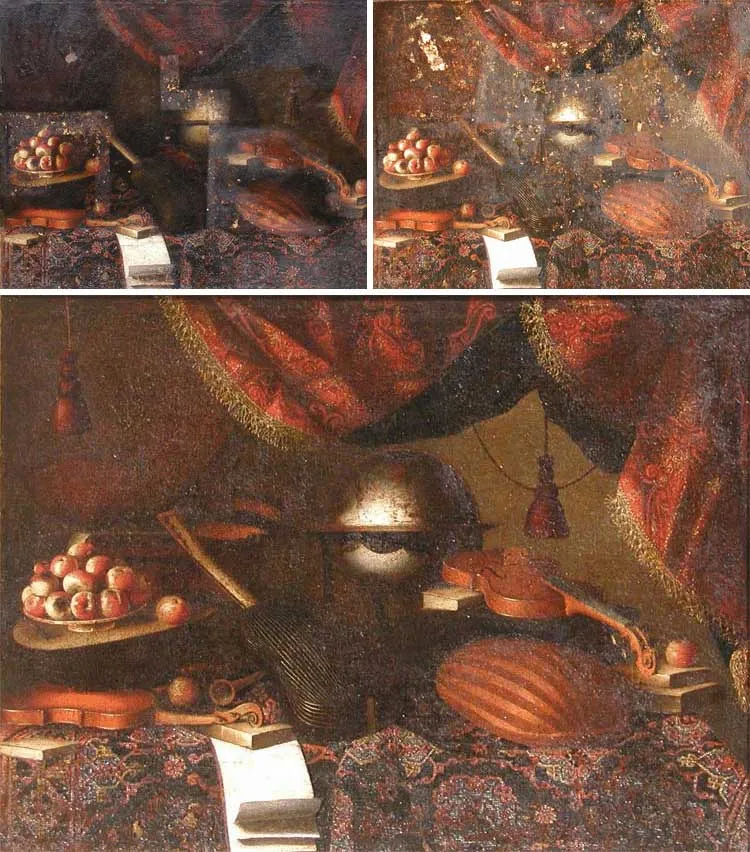
Art conservation. AXA XL's global network of restoration specialists brings skill in restoring artworks from various eras and artists worldwide. The insurer offers quick, expert and discreet claims handling based on an understanding of the inherent worth and value of the work of art and a knowledge of the specialist conservators, framers, and loss adjustors. Image via Wikimedia Commons
The Major Providers
AXA XL has been insuring art for over 60 years. Its passionate in-house experts have supported collectors, museums, galleries, conservators, and artists across the Americas, Asia, and Europe. In 2025, AXA XL became a Global Lead Partner of TEFAF, supporting both TEFAF Maastricht and TEFAF New York. The firm carries an A.M. Best A+ and S&P AA- rating. Its private collections insurance products cover private collectors, museums, galleries, corporate collections, and artists.
Other providers include Chubb, AIG, Hiscox, and Berkley One. Each has different strengths. Chubb is known for high-net-worth personal insurance. AIG is known for large corporate collections. Hiscox is known for galleries and contemporary art. The choice of insurer should be based on the type of collection, the value, the location, and the specific risks. A collector of Old Masters needs different coverage than a collector of contemporary photography. A museum needs different coverage than a gallery. The right insurer is the one that understands your collection and your risks. For more on the works that drive the market, see our guide to famous paintings.
Final Thoughts
A standard property policy is not designed to protect fine art. Every work of art is individual and when damaged requires a knowledge and understanding of conservation and any consequent depreciation in value. For over 60 years, AXA XL has been insuring art. In 2025, AXA XL became a Global Lead Partner of TEFAF. Coverage includes all risks of physical loss or damage, worldwide all-risks cover, accidental damage to works of art including the consequences in terms of repair, restoration, conservation, and depreciation in value, compensation for depreciation, transportation, shipping, and handling consultation, and coverage on newly acquired property of up to 25% of the scheduled class limit within a 90-day reporting obligation. What it does not cover: wear and tear, gradual deterioration, nuclear and war risks, unexplained disappearance. Who needs it: anyone with valuable items that would be difficult to repair or replace, sets of objects whose value would fall materially if one piece were lost, anyone who often buys new art, anyone who lends paintings, anyone with valuable items in storage. How it is priced: by the type and condition of objects, methods of storage and display, frequency and methods of transportation, exposure to natural perils, quality of security arrangements, fire detection systems, and loss history. Claims: quick, expert and discreet claims handling, a global network of restoration specialists, compensation for depreciation, and the option to buy back a missing item that is found later. Providers: AXA XL, Chubb, AIG, Hiscox. Many owners of art work and collectible objects do not realise they could benefit from specialist fine art policy.
Check your current insurance policy. Does it cover your art? Does it cover accidental damage? Does it cover depreciation after restoration? Does it cover transit? Does it cover newly acquired works automatically for 90 days? If the answer to any of these questions is no, and if you own art worth more than your standard policy's sublimit, call a fine art insurance broker. Ask for a specialist policy. Get an appraisal. Document your collection with photographs, condition reports, provenance, and purchase receipts. Many owners of art work and collectible objects do not realise they could benefit from specialist fine art policy. The point of art insurance is not to replace the art. It is to keep it, to restore it, to compensate for depreciation, to return it to the wall. Every work of art is individual. Treat it that way. For more on the advisors who help manage collections, see our guide to art advisors.


