
The art school vs. self-taught debate generates enormous heat online and remarkably little light. Artist forums, YouTube comment sections, and social media threads relitigate it constantly, usually with each side talking past the other. Self-taught artists who built serious practices without institutional training resent the implication that they missed something essential. Art school graduates who spent two to four years (and often significant debt) acquiring a credential resist suggestions that the whole thing was overpriced and unnecessary.
Both positions have real evidence behind them. Both also involve significant distortions. And the debate itself keeps distracting from the more productive question, which is not "which path is better?" but "what do you actually get from each, what does each fail to provide, and how do you build what you need regardless of where you started?"
This guide is not going to tell you whether art school is worth it. That depends entirely on which school, which program, which career stage, and how you define "worth it." What it will do is be specific about what art school actually delivers, what it reliably does not, what self-taught artists genuinely have and lack, and how to think clearly about building a practice from either starting point.
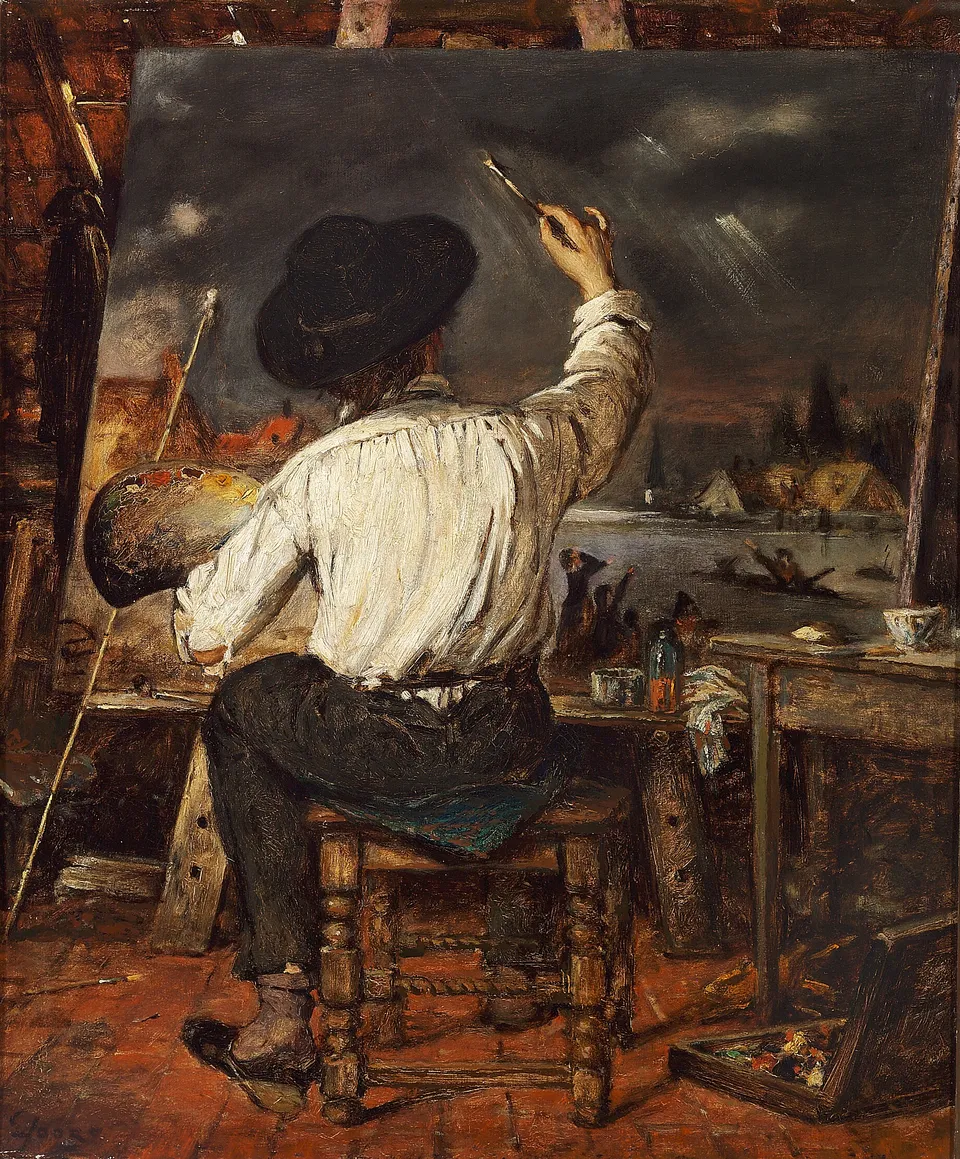
Eugène Joors, "A Painter at the Easel" (late 19th century). Whether in a school studio or a private workspace, the fundamental act of painting, standing at the easel and working, is the same. Image: Public domain, via Wikimedia Commons
What Art School Actually Provides
The case for art school is often made in vague, defensive terms that collapse under scrutiny. So let's be specific about what a good program actually delivers, because some of it is genuinely valuable and some of the arguments made on its behalf are not.
Protected Time
The most underrated thing a structured art program provides is time: four years (or two, for an MFA) where your primary obligation is to make work and think about making work. For most people, this is the only extended period in their adult lives when they will not have to balance art against competing demands. It is genuinely valuable, and it is not reproducible in any other form unless you are independently wealthy or have won a substantial grant or fellowship.
Structured Feedback
Regular critique, from instructors and peers with different practices and sensibilities, forces you to articulate what you're trying to do and to defend or reconsider it under pressure. The habit of receiving and giving critique, of being challenged to say precisely what you mean, is a discipline that shapes how artists think about their own work for decades after graduation.
The quality of critique in art programs varies enormously. The best provide genuinely rigorous intellectual engagement that forces you to articulate what you are trying to do and defend it under pressure. The worst provide mostly peer validation and fashionable theoretical language. Knowing which you are getting before you enroll requires research: talking to current students and recent graduates, attending open critiques if possible, and looking carefully at what people who finished the program are actually making now.
Peer Network
The people you go to art school with become, in many cases, the colleagues, collaborators, and collectors of your adult professional life. The cohort network of a good program is often cited by graduates as the most durable benefit of their education. This is not about nepotism; it is about the relationships that form between people who have spent years thinking hard about similar problems from different positions.
This is also, frankly, one reason the MFA retains market value even as credentials matter less for their academic content. An MFA from Yale or the Royal College of Art puts you in a cohort of people who will go on to significant positions across the art world. That network has real, concrete professional value that has nothing to do with what you learned in the studio.
Technical Infrastructure
Good art schools provide access to studios, equipment, materials, workshops, and specialized facilities, from printing presses and foundries to digital fabrication labs and darkrooms, that most artists cannot afford independently. For practices that require expensive infrastructure (large-scale sculpture, printmaking, certain film and video work, bronze casting), school may be the only accessible context in which to develop those skills.
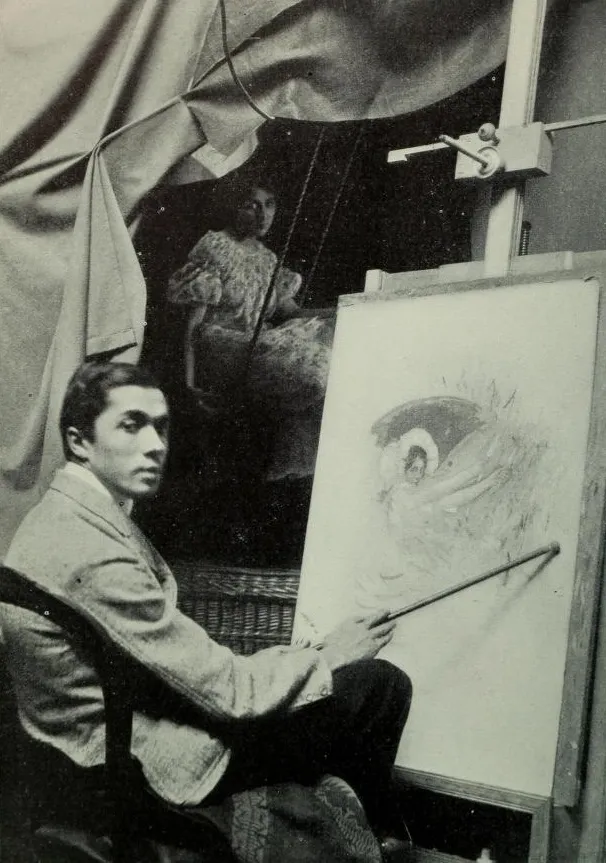
Frank Xavier Leyendecker in his studio, c. 1905. Leyendecker, like many successful illustrators and painters, developed his craft through disciplined self-directed studio practice. Photo: Public domain, via Wikimedia Commons
What Art School Does Not Provide
The case against art school is also specific, and it is worth making it honestly rather than as a reaction against the institution.
A real audience. Art school creates an artificial environment in which your work always has an engaged, critical audience: your cohort, your instructors, visiting critics. That audience disappears on graduation day. Many graduates report that the most disorienting adjustment in the year after finishing is making work in silence, with no built-in feedback structure and no guaranteed viewers. Artists who have spent four years developing work in a community of serious peers can find the post-graduation studio genuinely difficult to navigate.
Commercial awareness. Most art school curricula treat the business of an art career as an embarrassing afterthought. This is changing slowly, but the majority of graduates leave without a working understanding of how galleries take their cut (typically 40 to 50 percent), how to price work, how to write grant applications, or how to manage irregular income. The guides on how the art market works and how artists price their work cover exactly what art school typically does not.
A finished practice. Art school gives you the conditions to develop a practice, but the practice itself is something you have to build yourself. Artists who leave expecting to have arrived at a settled, defined way of working are usually disappointed. The work of developing a distinctive and sustainable practice continues for years after graduation. Art school accelerates that process by removing obstacles and providing feedback. It does not complete it.
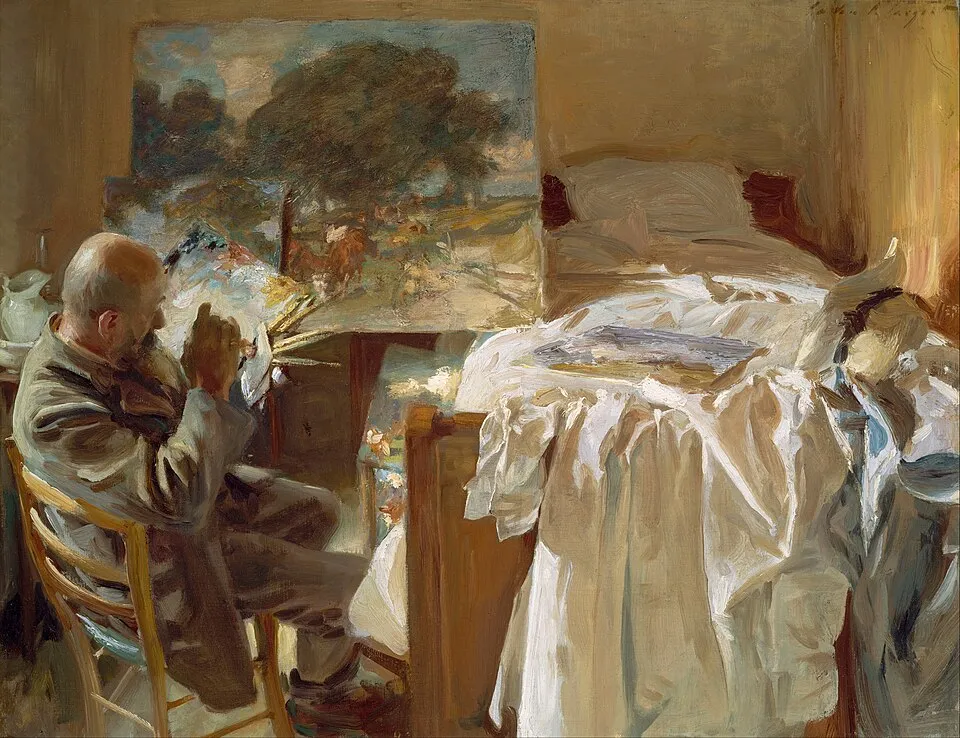
John Singer Sargent, "An Artist in His Studio" (1904). The structured environment of the studio, with its easel, materials, and focused practice, is what art school provides and self-taught artists must create for themselves. Image: Public domain, via Wikimedia Commons
What Self-Taught Artists Have and Lack
Self-taught artists typically have what art school often erodes: a direct, unmediated relationship with the work that is not filtered through critical theory or peer approval. Many self-taught artists make work that is more visually immediate, more personally rooted, and more accessible to general audiences than art school work, precisely because it hasn't been trained out of those qualities.
What self-taught artists frequently lack is the specific set of things art school provides: structured feedback, peer network, technical depth, and the institutional credibility that comes with a recognized credential. The question for a self-taught artist is how to build functional equivalents of these things.
Building the Equivalents
For structured feedback: Join a serious critique group of artists at similar career stages who are committed to rigorous, honest engagement with each other's work. This requires finding people who are willing to challenge rather than validate, which is harder than it sounds. Alternatively, seek out mentorship relationships with more established artists.
For peer network: Attend the open studios, group critiques, and social events of your local art community consistently. The relationships that develop through genuine participation in a scene over time are comparable in their professional value to art school cohort networks, though they take longer to build.
For technical depth: Workshops, short courses, and independent study can fill specific technical gaps. The internet has made this dramatically more accessible than it was for previous generations of self-taught artists.
For institutional credibility: Build your CV through exhibitions, residencies, and published work. A self-taught artist with a strong exhibition record, significant residencies, and work in notable collections is at no disadvantage relative to a credentialed artist with a comparable record.
The Question That Actually Matters
The useful version of this question is not "art school or self-taught?" but "what specific capacities do I have, what do I lack, and what is the most effective way to build what I need?" For some people at some career stages, a structured program is the right answer. For others, the debt load, the time commitment, or the specific program's culture make it the wrong one, and the same resources are better spent on residencies, workshops, and building an exhibition record.
Many of the most compelling practices in contemporary art are made by artists who had some formal training, left before finishing, supplemented it with self-directed study, and built careers that owe something to both paths. The clean binary of the debate misrepresents how artists actually develop. For a framework for building the portfolio that any practice needs, regardless of starting point, the guide to building an art portfolio from scratch addresses the output side of development. And for understanding what residencies can provide as an alternative to institutional training, read the guide to artist residencies: a structured residency at a program like Skowhegan or MacDowell provides feedback, community, and protected time in a way that overlaps with what art school offers, at a fraction of the cost and debt.


