Painting Perceptions: On Sabbatical, But the Archive Is Still the Best Resource for Realist Painters
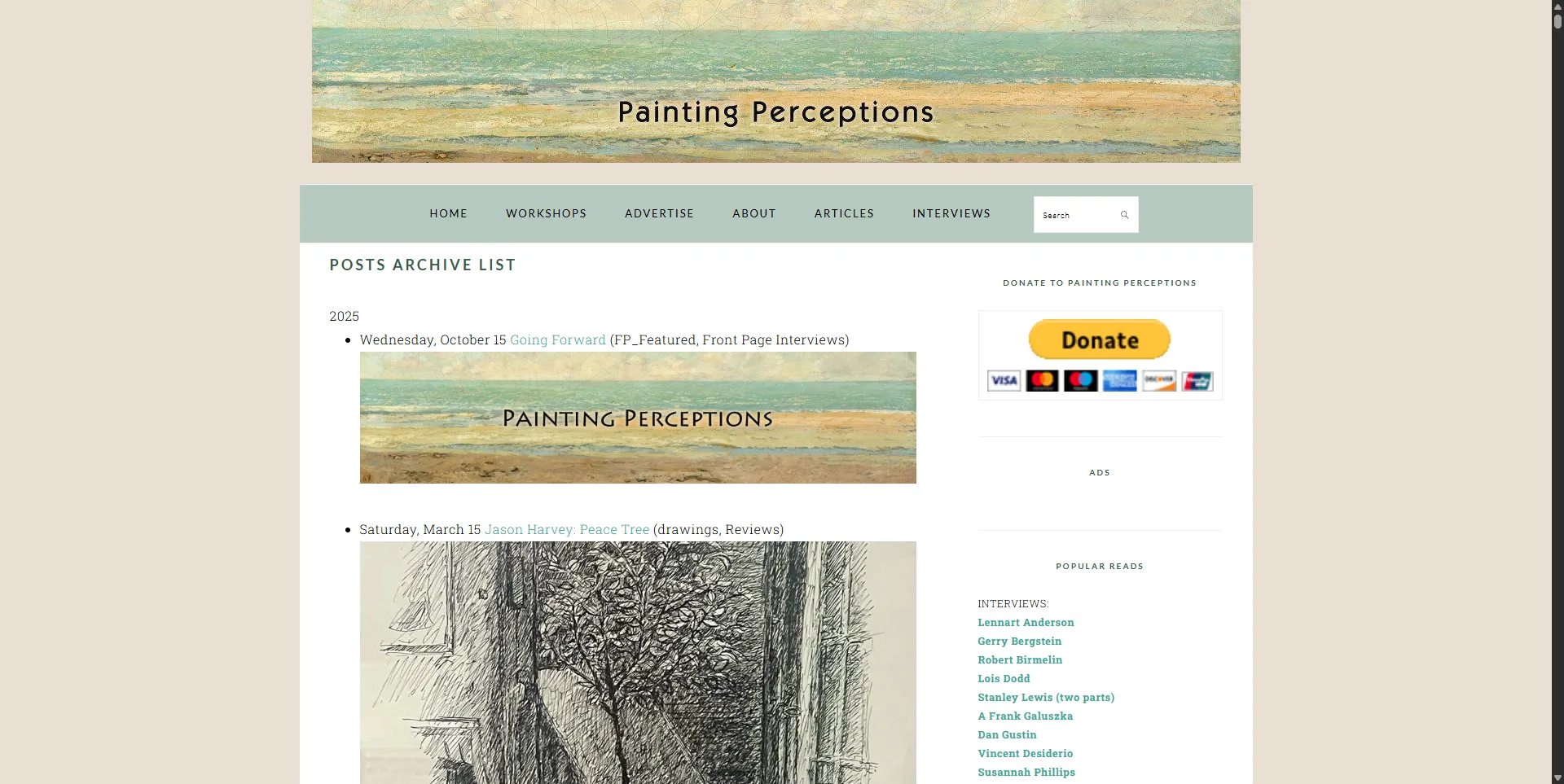
In a post titled "Going Forward", Larry Groff announced that Painting Perceptions would be going on an extended sabbatical. "Since launching Painting Perceptions in February 2009, I've shared over 400 interviews, reviews, videos, and reflections," he wrote. "Over the past couple of years, I've gradually stepped back from posting as regularly. Like many of you, I've had to recalibrate where I put my time and energy, especially as I focus more on my own painting and life."
The site remains online. Groff plans to keep it up and may return in a more sustainable way, with shorter-form interviews or occasional pieces. He also hopes to redesign the site to make the archive easier to navigate. But for now, Painting Perceptions is not actively publishing. It is a completed archive, not an active blog.
This is not a sad ending. It is the natural conclusion of a 17-year project that produced over 400 interviews with some of the most important contemporary realist painters working today. The archive is still free, still online, and still the best resource of its kind on the internet.
Who Is Larry Groff?
Groff is a landscape and cityscape painter living in San Diego. He started Painting Perceptions in February 2009 because he felt perceptual painting was not getting enough attention in major art publications. "I haven't found any magazine or blog that specifically focuses on writing about perceptual painting with a contemporary sensibility," he wrote in his first post. "This blog aims to correct that problem."
His own painting practice has evolved significantly. According to his personal website, his recent work includes imaginary landscapes created using computer rendering and archival prints enhanced with acrylic paint and mixed media, alongside paintings done from direct observation. A 2025 exhibition at Santa Ysabel Art Gallery showed landscapes juxtaposing works painted from observation with landscapes conceived entirely from imagination. This evolution from pure perceptual painting to a hybrid practice informs the blog's openness to a wide range of approaches to realist painting.
The Interview Archive: Why It Still Matters
The interview archive is the most valuable component of Painting Perceptions. Groff conducted thorough, substantive interviews that go well beyond surface-level art journalism. He asked painters about their working methods, their materials, their influences, and the specific decisions that shape their practice.
The interviews cover painters across the full range of realist traditions, from classical academic realism to contemporary approaches that incorporate elements of abstraction or conceptual thinking. Painters interviewed include Lennart Anderson, Stanley Lewis, Kyle Staver, Zoey Frank, Israel Hershberg, Susannah Phillips, Gerry Bergsten, Sigal Tsabari, Robert Birmelin, and Ann Gale, among many others.
Insider tip: The sabbatical post mentions that Groff hopes to redesign the site to make the many interviews more easily discoverable. Until that happens, use the site's search function to find interviews by painter name. If you are interested in a specific painter, search their name. If you are exploring broadly, browse the interview category to scroll through the full list.
Plein Air and Perceptual Painting Coverage
Plein air painting is the area of strongest focus, reflecting Groff's own practice and his conviction that painting from direct observation is the foundation of serious realist work. The blog covers plein air painting from multiple angles: technical challenges of working outdoors, philosophical questions about observation and representation, and the specific approaches of individual painters to capturing light, atmosphere, and place.
Groff's definition of perceptual painting is broad. As he wrote in his first post: "Perceptual painting is painting with your vision as well as all the other senses. Not just the obvious easel set up in front of a landscape or still-life but also paintings done from studies, even photos and memory on occasion. Perceptual painting is not just copying nature but painting life from both vision and experience. As Cezanne said, 'Painting is nature seen through a temperament.'"
This openness to a range of approaches, from direct observation to memory and imagination, makes the archive relevant to painters who do not fit neatly into any single category.
Technique and Materials Discussions
The blog includes substantial content on painting technique and materials: colour mixing, value control, edge quality, composition, and the specific challenges of different subjects. These discussions are grounded in the actual practice of working painters, not theoretical frameworks.
The materials coverage addresses the specific properties of different paints, mediums, and supports, and how these properties affect the painting process. For painters who want to understand their materials at a technical level, the depth here is rare in art blogs.
How It Compares
Against Gurney Journey, which is one master painter's daily technical and scientific investigation, Painting Perceptions is a collection of interviews with many painters. Gurney gives you one deep mind thinking about painting every day. Painting Perceptions gives you access to many painters' minds through structured conversations. They complement each other perfectly.
Against Lines and Colors, which covers illustration, concept art, and fine art through curation, Painting Perceptions is narrowly focused on realist and perceptual painting. Lines and Colors is broad. Painting Perceptions is deep.
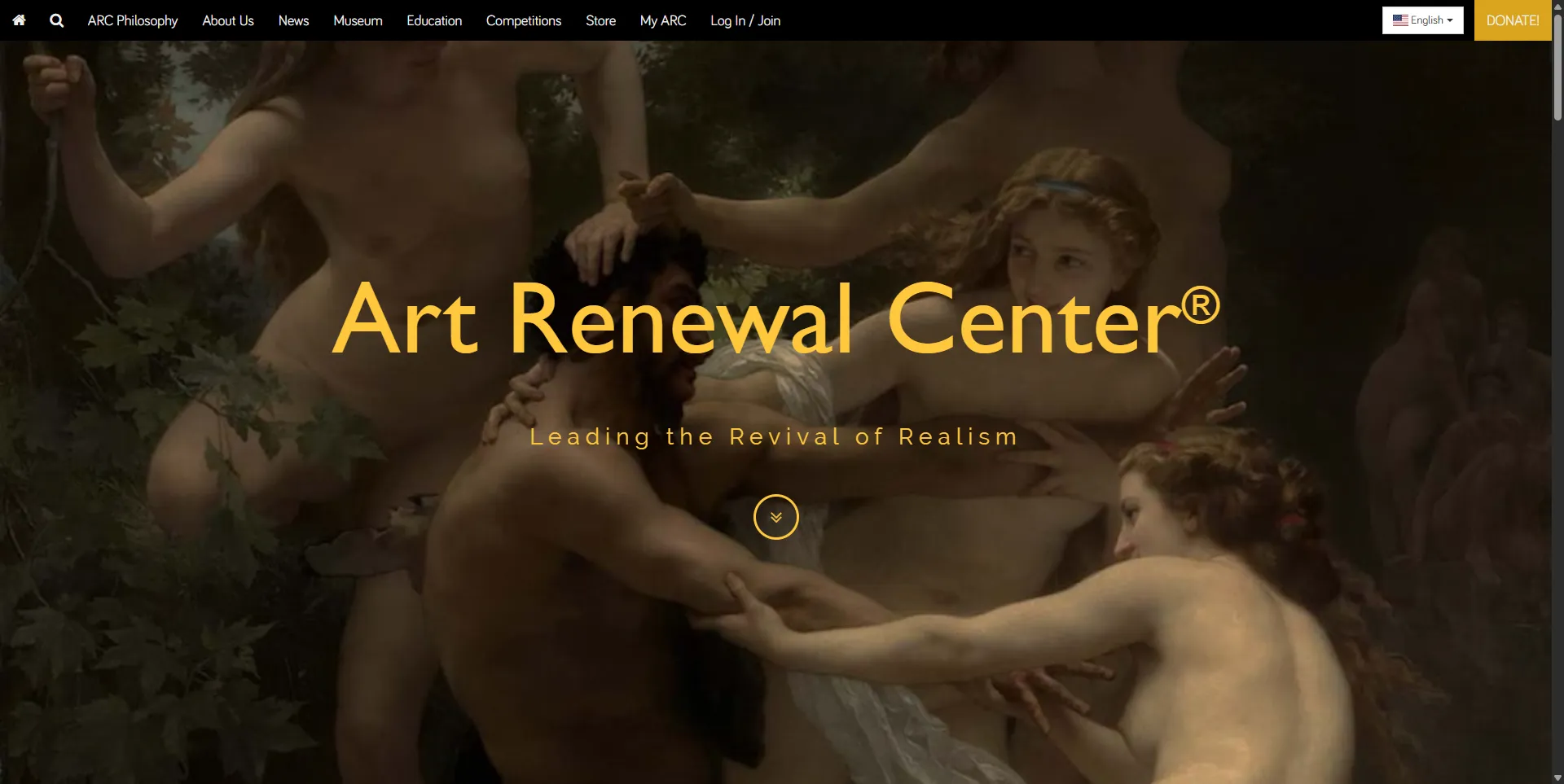
Against Art Renewal Center, which focuses on classical realism and academic art through competitions and a museum database, Painting Perceptions focuses on contemporary painters through interviews. ARC is an institution. Painting Perceptions is a conversation.
Against Empty Easel, which covers the business of selling art, Painting Perceptions covers the intellectual and technical practice of making art. Empty Easel tells you how to sell paintings. Painting Perceptions tells you how painters think about making them.
The Limitations
The blog is on sabbatical. No new content is being published. The archive is still valuable, but it is a finite resource. If you have read through the interviews that interest you, there is nothing new to come back for until Groff returns.
The site design is dated. Navigation is basic. The search function works but is not sophisticated. Groff acknowledged this in his sabbatical post and expressed intention to redesign, but until that happens, finding specific content requires patience.
The scope is narrow. If you are not interested in realist or perceptual painting, Painting Perceptions has little to offer. Abstract painters, digital artists, and illustrators will find minimal relevant content.
Who Should Use Painting Perceptions?
Realist painters working in oils, acrylics, or watercolour from observation will find the most directly relevant content. The interviews with contemporary realist painters address the specific challenges of representational painting from life.
Plein air painters get access to discussions of technique, philosophy, and practice from some of the best outdoor painters working today.
Art students interested in the realist tradition get a free education in contemporary perceptual painting. The interviews provide the kind of access to working painters' thinking that is normally only available through workshops or studio visits.
Painters working in isolation who do not have access to a local community of like-minded artists can use the archive as a connection to the broader world of contemporary realism.
Final Verdict: Who Is This Actually For?
Painting Perceptions is on sabbatical, but the archive of 400+ interviews is still the best free resource for serious realist painters on the internet. If you paint from observation, work in the realist tradition, or want to understand how contemporary perceptual painters think about their practice, spend time in the archive. The site may return in a new form, but even if it does not, what Groff built over 17 years is a permanent contribution to the literature of contemporary painting.
Visit paintingperceptions.com to explore the interview archive. For related resources, check out our profiles on Gurney Journey, Art Renewal Center, and Lines and Colors.