Empty Easel: The Art Blog That Treats Selling Art Like a Business, Not a Mystery
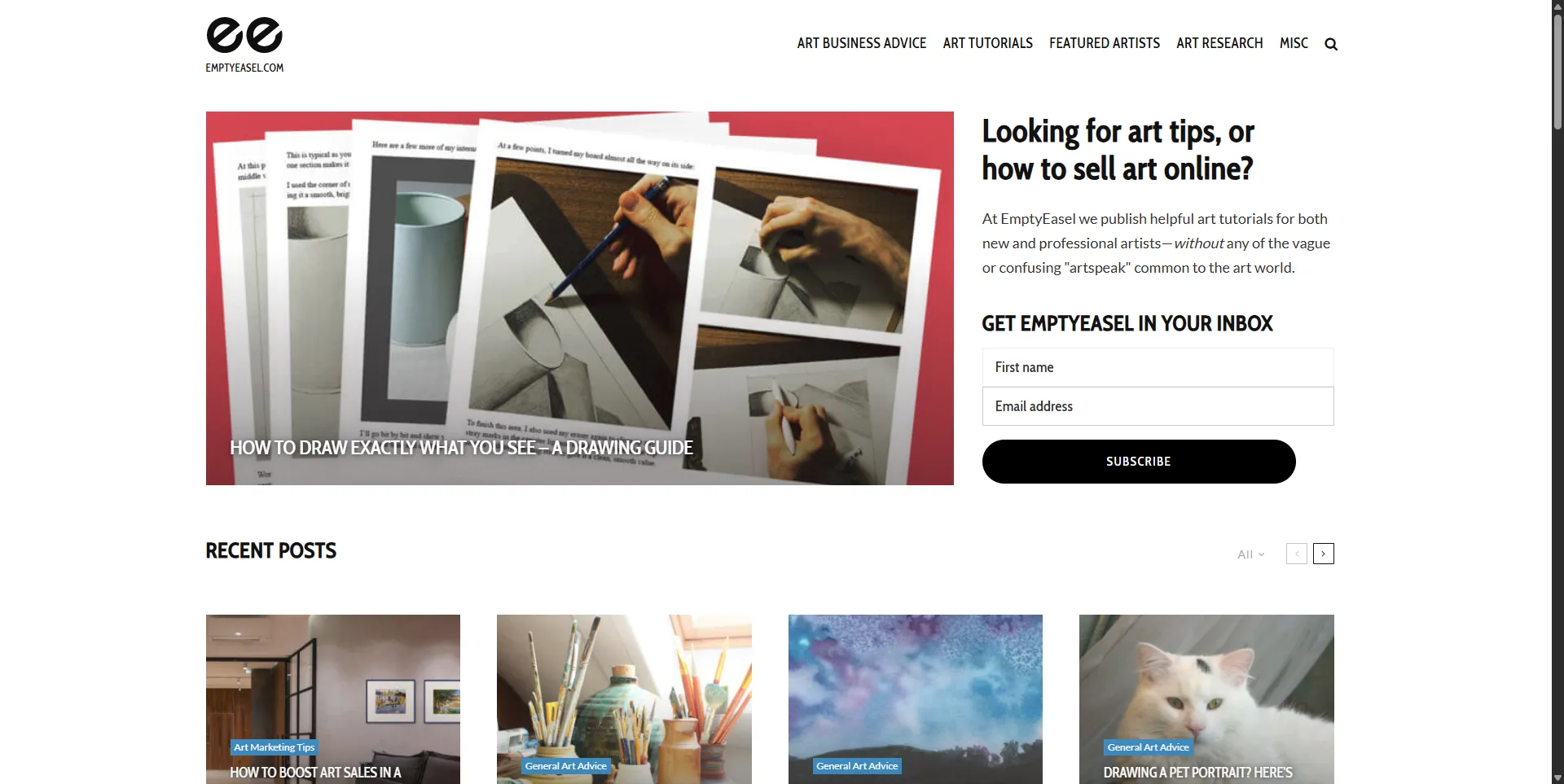
Dan Duhrkoop started Empty Easel in 2006 because he was tired of art resources that talked about technique but ignored business. He is a painter who also built Foliotwist, a website platform for artists selling work online, after being disappointed by the existing options. That dual identity as both artist and entrepreneur shapes everything on the site. Empty Easel does not treat selling art as a mystical process. It treats it as a set of learnable, practical skills.
Nearly two decades later, the blog is still publishing. In an internet where art blogs have died off by the dozen, Empty Easel survives because it solves a problem that has not gone away: most artists graduate from art school knowing how to paint but not how to price a painting, photograph it for sale, or build an email list of collectors.
The Business Content: Where Empty Easel Earns Its Keep
The art business content is the reason most readers find Empty Easel, and it is the area where the blog provides something most art resources do not. The archive covers pricing artwork, approaching galleries, selling art online, building email lists, using social media for art marketing, writing artist statements, and dozens of other practical topics that art schools routinely fail to teach.
Pricing artwork gets multiple articles because it is the single most common question independent artists ask. Duhrkoop breaks pricing down into concrete factors: size, medium, time, materials, market position, and sales history. He is blunt about common mistakes. Artists who price based on what they think their work is "worth" without looking at comparable sales data are setting themselves up for disappointment. Artists who underprice to get sales undermine their long-term market position.
Selling art online covers specific platforms, photography techniques, product descriptions, shipping, and packaging. This content has evolved over the years as platforms have come and gone. The advice on selling through personal websites remains evergreen because it does not depend on the survival of any third-party platform.
Insider tip: Duhrkoop's Foliotwist survey data from nearly 200 artists found that over 85% of artists who sold five or more works per year said half or more of their sales came from direct personal interactions with buyers, whether in person, by phone, or by email. The takeaway: your website needs a buy button, but the sale usually happens because you personally guided someone to it. This is the kind of granular, data-backed advice that separates Empty Easel from blogs that just repeat generic marketing advice.
The Technique Content: Competent but Secondary
The painting technique articles cover oil, watercolour, acrylic, pastel, and other media. These are written by guest contributors who are working artists, including Dianne Mize (painting tutorials), Margot Dinardi (digital tools and GIMP), and Denise Telep (art marketing and motivation). The technique content is solid and practical, but it is not the primary reason to read Empty Easel.
Colour mixing articles address specific pigment properties and mixing strategies across media. Composition articles cover design principles grounded in actual painting practice rather than abstract theory. Both are useful for artists who want targeted technique guidance alongside the business content.
The technique content has a limitation: it is text-and-image based in an era when YouTube video tutorials have become the dominant medium for art instruction. For learning how to mix a specific colour or handle a specific brush, a 10-minute video on YouTube will usually be more helpful than a written article. Empty Easel's technique content works best as supplementary reading, not as a primary learning resource.
How It Compares
Against The Virtual Instructor, which focuses on technique instruction, Empty Easel is stronger on business and marketing but weaker on structured technique lessons. The Virtual Instructor offers video courses and a more systematic curriculum. Empty Easel offers scattered but practical articles.
Against Artists Network, which is a larger publication covering similar territory, Empty Easel is more personal and less corporate. Artists Network has more resources and a bigger team but also more fluff and sponsored content. Empty Easel reads like one person's accumulated knowledge, which is exactly what it is.
Against Creative Bloq, which covers digital art tools and commercial design, Empty Easel is focused on traditional media artists selling original work. If you paint in oils and want to sell through galleries and online, Empty Easel is your resource. If you work in Photoshop and want to sell digital services, Creative Bloq is more relevant.
The Newsletter
The newsletter arrives weekly with new articles and occasional tips. It is one of the more practical art newsletters because it consistently delivers actionable advice rather than vague encouragement. Subscribers report getting ideas they can implement immediately, which is more than can be said for most art newsletters that recycle the same "just keep painting" sentiment.
The Archive: A Two-Decade Reference Library
The archive is Empty Easel's most underrated asset. Spanning nearly 20 years and thousands of articles, it functions as a searchable reference library for the business of being an independent artist. The depth is genuine: if you have a specific question about how to approach a gallery, how to price a commission, or how to photograph a watercolour for online sale, the archive probably has an article that addresses it directly.
The weakness of the archive is that some older articles reference platforms and tools that no longer exist or have changed significantly. The evergreen business principles hold up, but specific platform recommendations from 2012 should be verified against current conditions.
Who Should Read Empty Easel?
Independent artists selling original work in traditional media will find the most relevant content. If you paint in oils, watercolour, or acrylic and want to sell through galleries, online stores, or direct to collectors, Empty Easel addresses your specific challenges.
Artists transitioning from hobby to professional get a realistic picture of what selling art involves. The blog is honest about the time and effort required, which is more useful than the "follow your passion" advice that dominates most art career content.
Digital artists and commercial illustrators will find less relevant content. Empty Easel's focus is on selling physical artwork to collectors, not on freelancing, client work, or digital product sales.
Final Verdict: Who Is This Actually For?
Empty Easel is not flashy. It has not been redesigned into a modern multimedia experience. It does not have a massive social media presence. What it has is nearly 20 years of practical, specific, business-focused content for independent artists, written by someone who has actually built and run art businesses. If you are an independent painter trying to figure out how to price your work, sell online, and build a sustainable practice, the Empty Easel archive is one of the best free resources you will find.
Visit emptyeasel.com to browse the archive or subscribe to the newsletter. For related resources, check out our profiles on Artists Network, The Virtual Instructor, and Painting with Jane Davies.