
Game Design as Art: Environmental Storytelling and Visual World-Building
Game design is one of the most sophisticated visual arts of the 21st century. Discover how environmental storytelling and visual world-building make games fine art.
Your cart is empty
Browse the store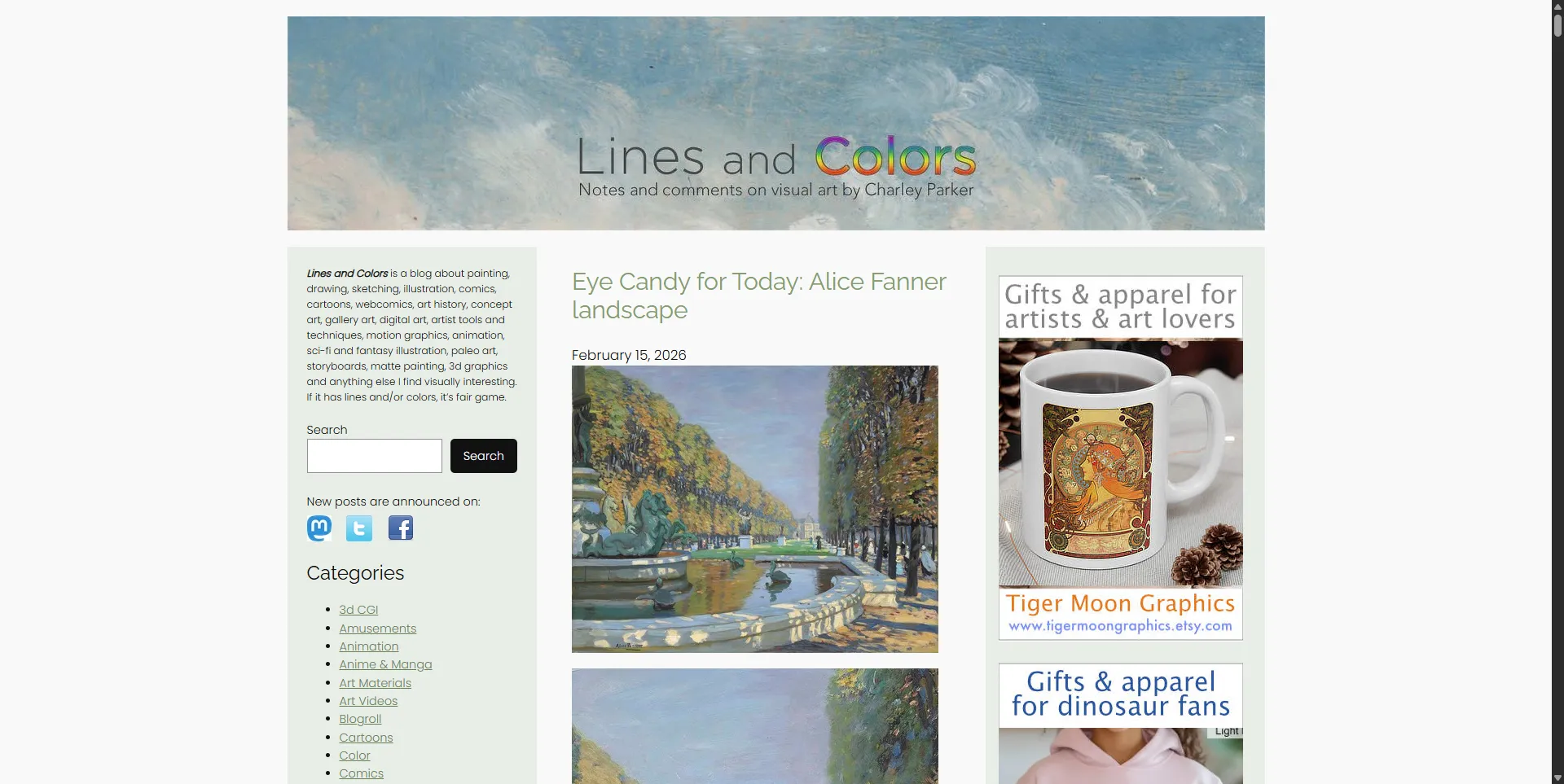
Lines and Colors by Charley Parker celebrated 20 years in 2025. Still posting in 2026 covering illustration, concept art, comics, and fine art. Honest assessment.
Discover other art communities you might be interested in
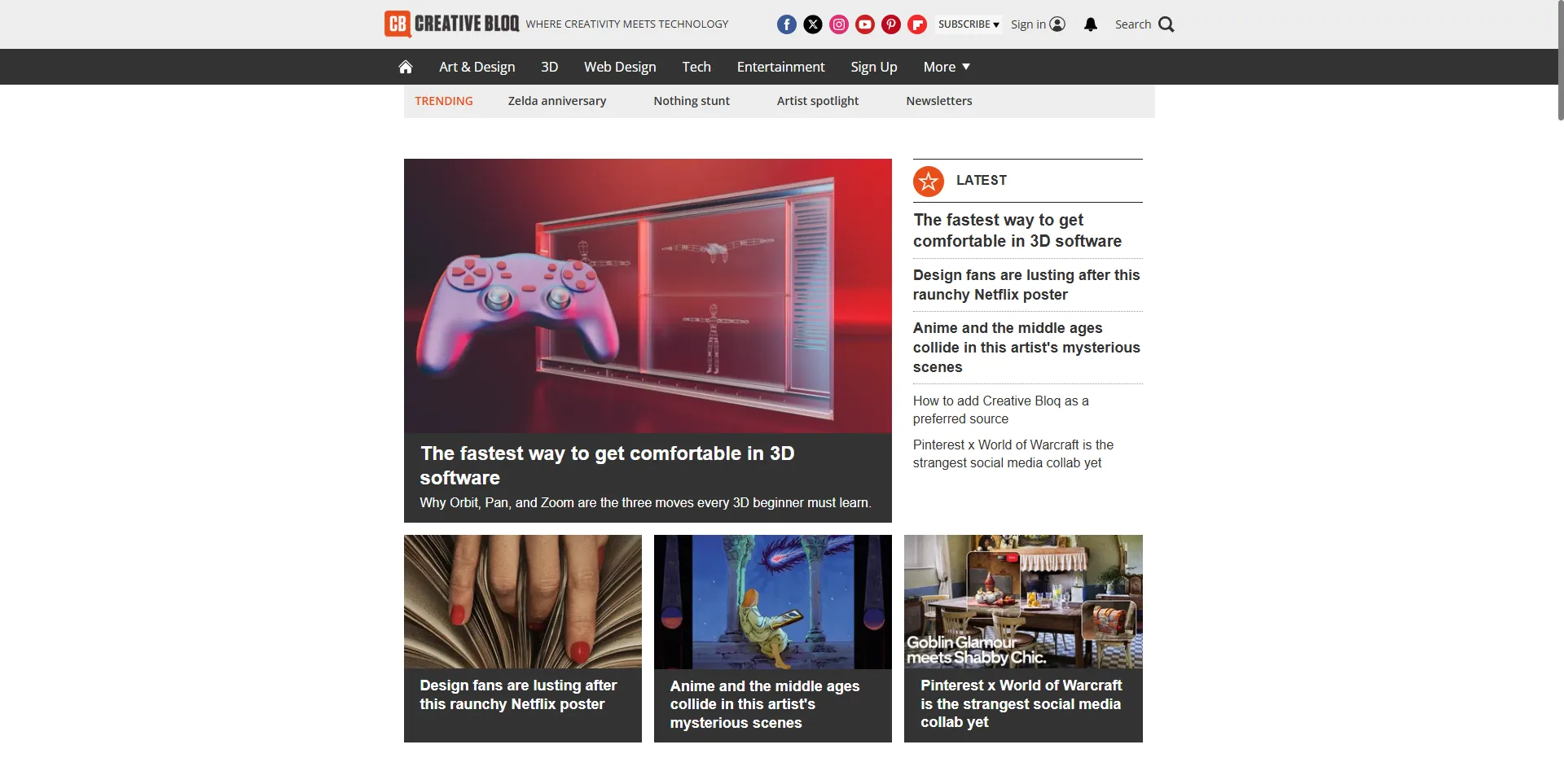
Creative Bloq is Future plc's digital art and design publication covering tutorials, software reviews, and industry news for working creatives. Honest look at its strengths and blind spots.
View details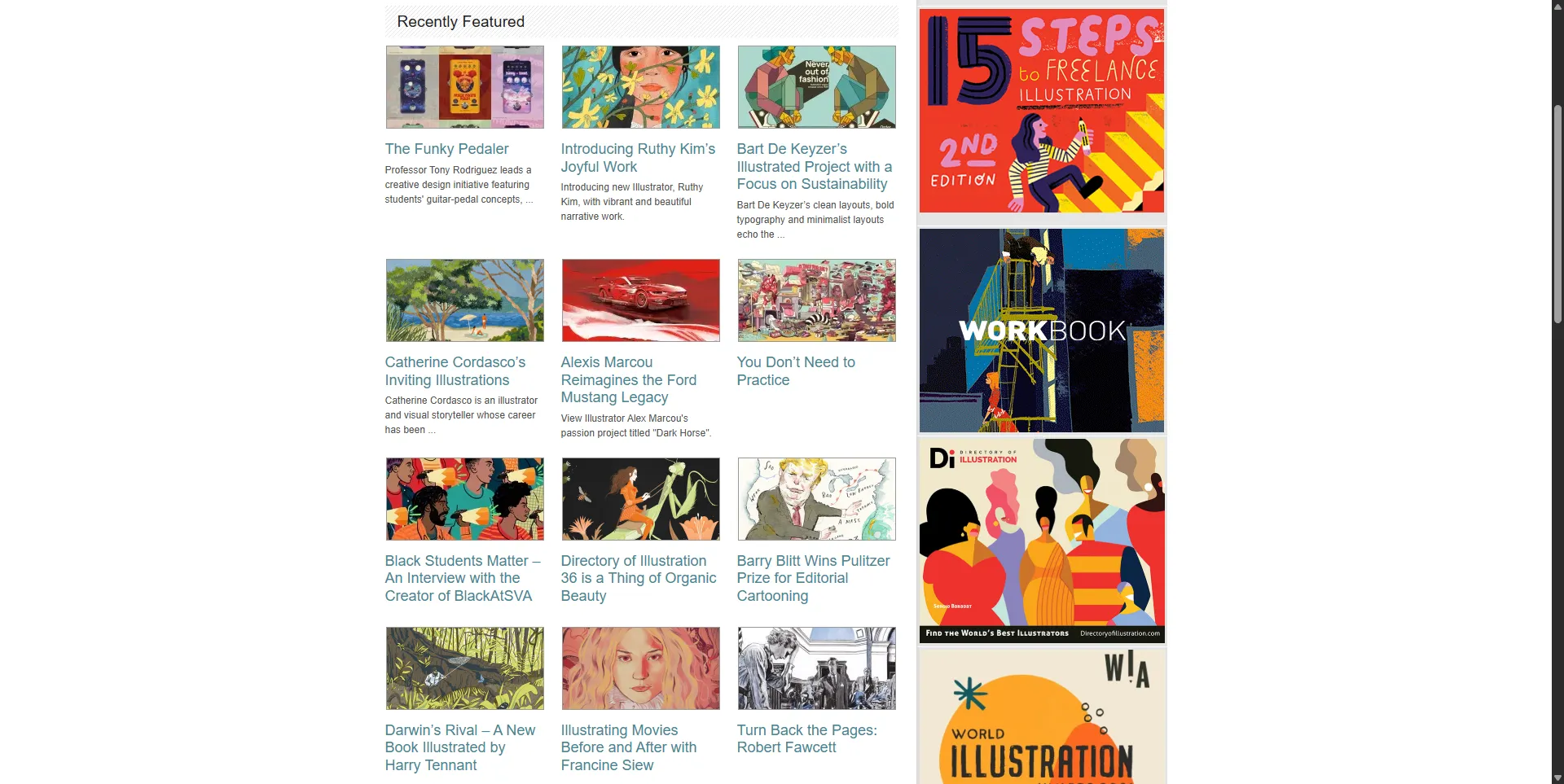
Illustration Age has showcased contemporary illustrators since 2010 with artist features, a podcast, and a resource library. 26,000+ subscribers. Honest look at its strengths.
View detailsExplore definitions from our glossary that connect to this community
Concept art is visual development art for games, film, and animation. Learn its history from Disney's Snow White to AI-assisted workflows in 2026.
Fine art photography uses the camera as an expressive tool, not a recording device. From Stieglitz and Weston to Sugimoto and Sherman, learn what makes a photograph art.
Read more about this topic on our blog
Game design is one of the most sophisticated visual arts of the 21st century. Discover how environmental storytelling and visual world-building make games fine art.

Discover gouache, the opaque painting medium used by illustrators, designers, and fine artists from medieval manuscript painters to Mary Blair. Learn how it works, how it differs from watercolor, and how to get started.

Understand the distinct eras of Modern vs. Contemporary art — covering timelines, defining movements, key artists, and how each era reflects its historical moment. A practical guide for art enthusiasts.
On August 22, 2025, Charley Parker published a post titled "20 Years of Lines and Colors". He had been writing the blog for exactly two decades. The post was a quiet retrospective: a sample image from August 22nd of each year, oldest first, showing what had caught his eye on that date across 20 years of daily art looking.
Then, in May 2025, Parker had posted an apology for an extended hiatus. "I've been dealing with personal issues that have kept me unable to attend to the blog," he wrote. "I'm fine, just overwhelmed." He hoped he would be able to pick up speed again. By July 2026, he was posting regularly, including a new pochade boxes guide on July 7, 2026, an N.C. Wyeth Independence Day feature on July 4, and a John Mattos update on July 3.
This is what 20 years of a one-person art blog looks like: not a steady march of content, but a human being sharing what he finds visually interesting, when he can, for as long as he can.
Parker is a plein air painter, webcomics artist, cartoonist, illustrator, and web designer based in the Philadelphia area. He studied painting at the Pennsylvania Academy of the Fine Arts and teaches animation at the Delaware College of Art and Design. He is best known as the creator of Argon Zark!, the first ongoing comic created specifically for distribution on the Web.
His background as both a working artist and a student of art history informs the blog's perspective. Parker writes about art the way a painter looks at a painting: with attention to craft, technique, and the specific decisions that make a work succeed or fail. He is not an art critic in the academic sense. He is a practitioner who has spent decades looking at art and thinking about how it is made.
The blog's scope is deliberately broad. Parker describes it as covering "painting, drawing, sketching, illustration, comics, cartoons, webcomics, art history, concept art, gallery art, digital art, artist tools and techniques, motion graphics, animation, sci-fi and fantasy illustration, paleo art, storyboards, matte painting, 3D graphics and anything else I find visually interesting. If it has lines and/or colors, it's fair game."
This breadth is the blog's defining characteristic. Unlike blogs that focus on a single medium, Lines and Colors moves freely between gallery art and commercial illustration, between contemporary work and historical masters, between traditional media and digital art. A single week in July 2026 might feature a Japanese hanging scroll from the Edo period, a British pen-and-ink illustrator from the early 1900s, and an American vector artist working today.
Insider tip: The blog's categories are the best navigation tool. Use the category links in the sidebar to filter by "Illustration," "Gallery and Museum Art," "Concept Art," "Comics," or "Art Materials." The search function is basic, but the categories are well-organised and make browsing the archive by interest area efficient.
The archive is Lines and Colors' most valuable asset. Spanning 20 years and thousands of posts, it functions as a searchable reference library for visual art discovery. Parker's curatorial judgment is consistent and reliable: if he features an artist, the work is worth looking at.
In an era when art discovery is mediated by algorithms that prioritise engagement metrics over visual quality, Lines and Colors represents a genuinely human curatorial voice. Parker features artists because he finds their work visually interesting, not because their work is trending or because featuring them will generate clicks. This human curation is increasingly rare and increasingly valuable.
The archive is particularly strong in areas that algorithm-driven platforms underserve: historical illustration, golden age illustration, academic painting, and the work of illustrators who are not famous enough to trend on social media but whose craft is exceptional. If you want to discover artists you have never seen before, the Lines and Colors archive is one of the best free resources available.
In July 2026, Parker published a new pochade boxes guide as a permanent page rather than a blog post. He explained that the usual post format was not ideal for content that needs ongoing updates, so he created a separate permanent page that he intends to keep updating as the market changes.
The guide gives an overview of major commercial pochade boxes, based on information gleaned online and from conversations with other painters. Parker is clear that these are not reviews but overviews. This kind of practical, continuously updated resource is rare on art blogs, and it shows Parker's willingness to adapt his format when the content demands it.
Against Gurney Journey, which is one master painter's daily technical and scientific investigation of painting, Lines and Colors is broader in scope and less technical. Gurney shows you how to understand why a painting works. Parker shows you what great art looks like across disciplines. They complement each other perfectly.
Against Muddy Colors, which focuses on fantasy and science fiction illustration from working professionals, Lines and Colors covers a wider range of visual art but with less professional industry context. Muddy Colors gives you career advice from working illustrators. Lines and Colors gives you art discovery from a passionate viewer.
Against Illustration Age, which is a curated showcase for professional illustrators seeking client work, Lines and Colors is more about appreciation than commerce. Illustration Age is a professional tool. Lines and Colors is a love letter to visual art.
Against algorithm-driven discovery on Instagram, Pinterest, and ArtStation, Lines and Colors offers something those platforms cannot: a single person's taste applied consistently over 20 years. No algorithm has been running for 20 years. No algorithm has studied at the Pennsylvania Academy. No algorithm gets overwhelmed and takes a hiatus and then comes back.
The blog runs on WordPress and looks like a blog from the early 2010s. The design is functional but dated. There is no modern mobile optimisation. The search function is basic. For readers used to the polished interfaces of modern publications, the Lines and Colors experience takes adjustment.
The post frequency is inconsistent. Parker's May 2025 hiatus post was honest about the reality of running a solo blog for 20 years: sometimes life gets in the way. If you depend on Lines and Colors for daily content, you will be disappointed. If you visit it as a reference library and check in periodically, the inconsistency matters less.
The blog does not provide technique instruction. If you want to learn how to paint, go to Gurney Journey or The Virtual Instructor. Lines and Colors is about discovery and appreciation, not instruction.
Artists looking for inspiration outside the algorithm will find the most value here. Parker surfaces artists and artworks that Instagram, Pinterest, and ArtStation will never show you because they do not trend well or fit popular categories.
Illustrators and concept artists benefit from Parker's deep knowledge of illustration history. His features on golden age illustrators, contemporary concept artists, and working illustrators provide context and inspiration that is hard to find elsewhere.
Art enthusiasts who simply want to see great visual art across disciplines will find a 20-year archive of carefully selected work. This is a blog for people who enjoy looking at art as much as making it.
Art students get a free education in visual literacy. Browsing the archive exposes you to a range of work, styles, and periods that no art school curriculum can match.
Lines and Colors is not a product. It is not a business. It is one person's 20-year project of sharing art he finds visually interesting, and it is still going in 2026. The design is dated, the posting schedule is inconsistent, and there is no modern content strategy. What there is, is 20 years of human curation from someone who knows what he is looking at. In an internet increasingly dominated by algorithmic discovery, that is worth more than ever.
Visit linesandcolors.com to browse the archive. For related resources, check out our profiles on Gurney Journey, Muddy Colors, and Illustration Age.
Quiet Canvas is a space for artists and art lovers: essays, glossary terms, tools, and curated directories to support your creative practice.
Learn more →


