
In 1967, the French literary theorist Roland Barthes published a short essay called "The Death of the Author." It was first published in the American journal Aspen, no. 5+6, and later republished in Barthes's 1968 collection. The essay's argument was radical and simple: the author's intention does not determine the meaning of a text. "The birth of the reader must be at the cost of the death of the Author." This sentence, the essay's closing line, became one of the most quoted statements in 20th-century literary and art criticism. It changed how we read, how we look at art, and who we think gets to decide what a work means.
Barthes was writing in the tradition of poststructuralism, the French intellectual movement that questioned the idea of stable meaning, fixed truth, and authoritative interpretation. His predecessors included T.S. Eliot, who argued for poetic "impersonality" in 1919, and Wimsatt and Beardsley, who coined the "intentional fallacy" in 1946. But Barthes gave the idea its most provocative and influential formulation. This guide covers what "The Death of the Author" actually says, what it means for art, the counter-arguments from postcolonial critics, the intentional fallacy, and why the debate still matters in 2026.
What Barthes Actually Said
Barthes's argument begins with a claim about how we read. "The Author, when we believe in him, is always conceived of as the past of his own book: the book and the author take their places of their own accord on the same line, cast as a before and after: the Author is supposed to feed the book, that is, he pre-exists it, thinks, suffers, lives for it." Barthes rejected this model. The modern writer, whom he called the "scriptor," is "born simultaneously with the text." The scriptor does not precede the text, does not control it, and does not hold the key to its meaning.
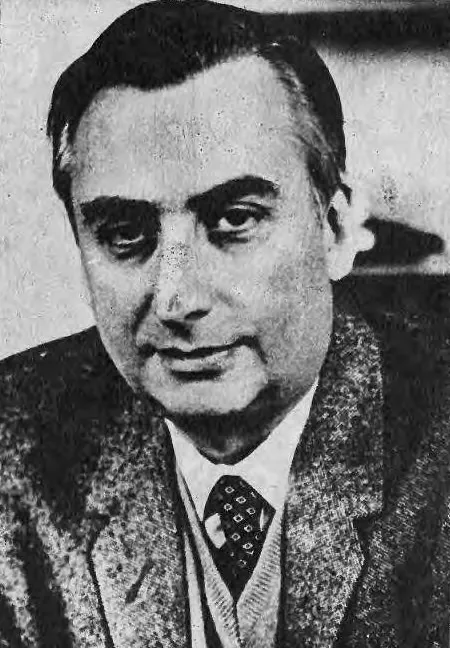
Roland Barthes (1915-1980). Image: Public domain, via Wikimedia Commons
The key claim follows: "A text does not consist of a line of words, releasing a single 'theological' meaning (the 'message' of the Author-God), but is a space of many dimensions, in which are wedded and contested various kinds of writing, no one of which is original: the text is a tissue of citations, resulting from the thousand sources of culture." This is the core of Barthes's position. The text is not a pipe carrying a single message from author to reader. It is a tissue of citations, a weave of cultural codes and conventions that the writer draws from but does not own. The writer is a channel, not a source.
The implication is that once the author is removed, the claim to "decipher" a text becomes useless. There is no single meaning to discover. There are multiple meanings, as many as there are readers. "The birth of the reader must be at the cost of the death of the Author." The reader is not a passive recipient of the author's message. The reader is an active participant in the creation of meaning. You can read the full text of "The Death of the Author" at the University of Washington.
What This Means for Art
The authorial intent problem in art is the same as in literature, but more visible. When you stand in front of Van Gogh's "The Starry Night" (1889), do you need to know that Van Gogh was in an asylum, that he was mentally ill, that he wrote "This morning I saw the countryside from my window a long time before sunrise" to his brother Theo? Or can the painting mean something without that knowledge?
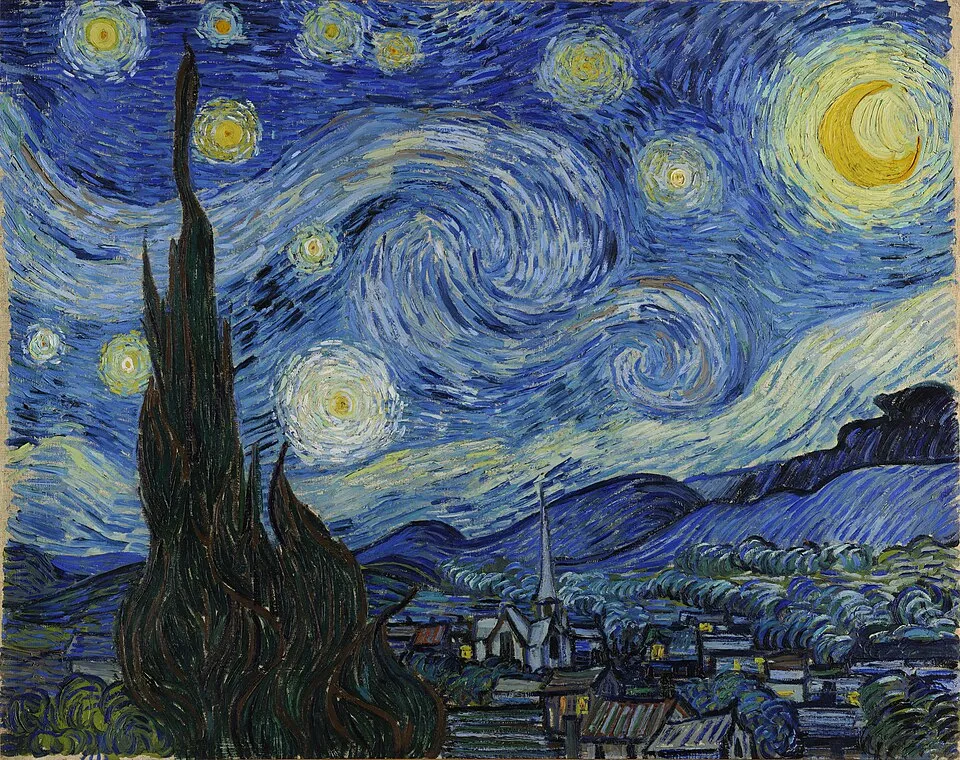
Vincent van Gogh, "The Starry Night" (1889). Oil on canvas, 73.7 x 92.1 cm. MoMA. Image: Public domain, via Wikimedia Commons
The traditional view, which most museum labels and most art history textbooks take, is that the meaning of "The Starry Night" is determined by Van Gogh's intention: what he was trying to express, what he was feeling, what he wrote about it. The painting is a symptom of his mental state. This is the authorial intent position. It treats the painting as a message from Van Gogh to the viewer, and the critic's job is to decode the message by studying the author's biography and statements.
The Barthesian view is that the meaning of "The Starry Night" is determined by the viewer. What you see in it, the turbulence, the beauty, the cosmic energy, the despair, the hope, is the meaning. Van Gogh's intention is one possible interpretation, but it is not privileged over any other. The painting does not belong to Van Gogh. It belongs to everyone who looks at it. The viewer is the "reader" whose birth comes at the cost of the author's death.
René Magritte's "The Treachery of Images" (1929) is a visual version of Barthes's argument. The painting shows a pipe with the words "Ceci n'est pas une pipe" ("This is not a pipe") written below it. The image is not the thing. The word is not the thing. The author's intention does not determine the meaning. The viewer must decide what the painting means, and the meaning they decide is as valid as any other. Magritte made the point visually that Barthes made textually: representation is not reality, and the author does not control interpretation.
René Magritte, "The Treachery of Images" (1929). Oil on canvas, 60.3 x 81.1 cm. LACMA. Image: Public domain, via Wikimedia Commons
For more on Van Gogh and the myth of the tortured artist, see our guide to Vincent van Gogh: Turbulent Brilliance and the Myth of the Tortured Artist.
The Counter-Arguments: Postcolonial Critics and the Return of the Author
Barthes's essay had detractors from the start, many from the postcolonial world. The most serious challenge to "The Death of the Author" came from writers who argued that for colonized and marginalized people, the author's presence in the text is inseparable from anti-colonial politics.
Édouard Glissant (1928-2011) was a Caribbean poet and philosopher from Martinique. In "Poetic Intention" (1969), published two years after Barthes's essay, Glissant argued that for colonized people, the author's presence and humanity in the text are inseparable from anti-colonial politics. To "kill the author" is to erase the voice of the colonized, the very voice that colonialism has spent centuries suppressing. Glissant's argument is not that Barthes is wrong about how meaning works. It is that Barthes's position is a position of privilege. A white, European, male academic can afford to declare the author dead because his authorship has never been in question. His voice has never been suppressed. For a writer from Martinique, from Algeria, from Senegal, the act of speaking as an author is itself a political act. To declare the author dead is to declare that act irrelevant.
Edward Said (1935-2003), the Palestinian-American literary critic, made a related argument in "Beginnings" (1975). Said wrote: "despite recent genuinely investigative tendencies in criticism (in, for example, the work of Roland Barthes), certain conventions, persisting as unexamined vestiges of the whole history of ideas, have a strong hold." Said argued that "intention is the link between idiosyncratic view and the communal concern." Authors represent their people, and to erase the author is to erase the community. When a Palestinian writer writes about Palestine, the fact that a Palestinian wrote the text is part of its meaning. You cannot separate the text from its author without also separating it from the political context that gives it force.
The postcolonial argument is straightforward: for writers and artists from colonized or marginalized communities, authorship is political. When a Black artist, a woman artist, or an Indigenous artist makes a work, the fact that they made it, that they exist as an author, is part of the meaning. Barthes's "death of the author" was written from a position of privilege. A white, European, male academic could afford to declare the author dead because his authorship had never been in question. For marginalized artists, authorship is not a given. It is a struggle. Declaring the author dead erases that struggle. You can read more about the postcolonial response to Barthes at The Conversation.
The Intentional Fallacy: Wimsatt and Beardsley
Before Barthes, the American literary critics W.K. Wimsatt and Monroe Beardsley published "The Intentional Fallacy" in 1946. Their argument was that placing excessive emphasis on authorial intention led to fallacies of interpretation. "We may imagine we know what the author means to say, but we only have the text present before us, not the author, so we are mistaken if we think we can know their intentions."
The difference between Wimsatt and Beardsley on one side and Barthes on the other is important. Wimsatt and Beardsley made a methodological argument: we cannot know intention, so we should not rely on it. Barthes made a philosophical argument: intention does not determine meaning, even if we could know it. The Americans spoke of a "fallacy," a mistake in method. The Frenchman declared a "death," a change in the nature of meaning itself.
The practical implication for art is direct. If you believe in the intentional fallacy, you should not interpret a painting by reference to the artist's biography. You should interpret it by what is on the canvas. This is the formalist position. If you reject the intentional fallacy, you believe that biography, context, and intention are essential to meaning. This is the contextualist position. The debate about authorial intent is the same debate that runs through art criticism as the formalism vs. contextualism divide. For more on that debate, see our guide on formalism vs. contextualism.
Why This Debate Still Matters in 2026
The "death of the author" debate has been revived by AI-generated art, and the revival has produced a body of new research. When an AI generates an image, there is no human author in the traditional sense. The "prompter" did not paint the image. The AI did not intend it. Who is the author? What is the intention? Barthes's essay, written 59 years ago, turns out to be unexpectedly relevant.
A 2025 article in the RSUH/RGGU Bulletin examined how Barthes's concept interacts with AI technologies, arguing that AI acts as a new "discursive agent" that blurs the boundaries between creator and creation. A 2026 paper by Mohammad Bilal in Literariness Journal analyzed AI-generated poetry through the frameworks of both Barthes and Foucault, arguing that AI "does not abolish the author but rather redistributes and redefines authorship across human and technological networks." A 2025 article on Zenodo examined AI-generated art through Barthes's framework and the U.S. Copyright Office's 2023 ruling on "Zarya of the Dawn," concluding that AI art "necessitates a revised theoretical framework that moves beyond the Romantic notion of the solitary genius."
These studies converge on a similar conclusion: AI does not kill the author. It distributes authorship. The prompter, the programmer, the training data, and the viewer all participate in the creation of meaning. This is closer to Barthes's "tissue of citations" than Barthes himself could have imagined. The AI image is literally a tissue of citations, drawn from millions of training images. The question is whether this constitutes a genuine "death of the author" or a redistribution of authorship so complex that the concept of "author" becomes inadequate.
The debate also matters for identity and representation. The postcolonial counter-argument is more relevant than ever. When a white artist depicts a Black subject, or a male artist depicts a female subject, the question of who gets to speak for whom is central. The author's identity, their race, gender, class, nationality, is part of the meaning. You cannot "kill the author" without also killing the political content of their work. In 2026, with AI art raising questions about who owns cultural production, and with ongoing debates about cultural appropriation in visual art, the tension between Barthes's position and the postcolonial position is the tension that defines contemporary art criticism.
The museum label problem is a practical version of this theoretical debate. Museums are caught between two positions. Traditional labels give biographical context: artist, date, medium, subject. Contemporary labels increasingly give interpretive context: what the work means, how it relates to social issues. The Barthesian position suggests that the viewer should interpret without the label. The contextualist position suggests that the label is essential. Most museums compromise by providing both, but the compromise is unstable. Every label is an editorial decision about what context matters and what does not. For more on contemporary art and current trends, see our guide to contemporary art trends in 2026.
Final Thoughts
Barthes declared the author dead in 1967. The declaration was provocative, influential, and partially wrong. The author's intention does not determine meaning. But the author's identity, context, and historical position are part of the meaning. The most productive approach is not to kill the author or to resurrect them. It is to treat authorship as one source of meaning among many. The viewer is not a passive recipient of the author's message. The viewer is an active participant in the creation of meaning. But the viewer does not create meaning in a vacuum. The viewer creates meaning in dialogue with the work, with the author, and with the cultural and historical context that surrounds both.
Barthes was right that the author does not control meaning. He was wrong that the author is irrelevant. For marginalized artists, authorship is political, and "killing the author" means erasing the political content of their work. For AI art, the question of authorship is not settled but redistributed, and the redistribution is so complex that the traditional concept of "author" may not be adequate to describe it.
Next time you look at a painting, try this. First, look without reading the label. What do you see? What does it mean to you? Then read the label. Does the biographical information change your interpretation? The gap between those two readings is where art criticism lives. For the broader context of art history, see our Complete Guide to Art Movements and our Art History in 10 Minutes. For more on how to look at art, see our guide on how to look at art for beginners. For more on the history of writing about art, see our guide to art criticism. For more on famous paintings and their stories, see our guide to famous paintings explained.


