
The Russian Revolution of 1917 produced one of the most extraordinary art movements in history. Between 1917 and 1930, the Russian avant-garde, Constructivism, Suprematism, Rayonism, Russian Futurism, created some of the most innovative art of the 20th century. El Lissitzky's "Beat the Whites with the Red Wedge" (1919), Malevich's "Black Square" (1915), Rodchenko's photomontages, Popova's textile designs: these works were not just art. They were a visual revolution, a reinvention of what art could be and what it could do. "Many new movements of avant-garde art emerged during this period, such as Rayonism, Russian Futurism, and Constructivism" (The Collector). "The state was in fact happy to use the talents of these artists to further their cause" (The Collector). Then Stalin took power. "In an ironic manipulation of Constructivist theory, he asserted that art should serve a functional purpose: however, for Stalin, this simply meant that it should offer unambiguously positive images of life in communist Russia, in a 'true-to-life' visual style which could be easily appreciated by the" masses (TheArtStory). Socialist Realism became "the officially sanctioned art movement of the Soviet Union from the 1930s-1980s" (Soviet-Union.com). The avant-garde was suppressed. Artists who had been celebrated were censored, exiled, or killed. The question is not just whether Socialist Realism is propaganda, it obviously is. The question is whether it is also art, whether beauty, skill, and meaning can exist within a system of state control. The answer is more complicated than you might expect.
Soviet art is often dismissed as propaganda, and much of it is. But the story is more complex. The avant-garde period (1917-1930) was one of the most innovative in art history. The Socialist Realism period (1930-1980s) was one of the most controlled. And the post-Stalin period (1953-1991) saw a gradual loosening that allowed artists to experiment with abstraction and critique. This guide covers Soviet art through the Russian avant-garde (1917-1930, Constructivism, Suprematism, Malevich, Rodchenko, Popova, El Lissitzky), the imposition of Socialist Realism (Stalin, the 1932 decree, "unambiguously positive images"), the characteristics of Socialist Realism (heroic workers, happy peasants, visionary leaders), the post-Stalin thaw (Bielutin, abstraction, the nonconformists), and the question of propaganda versus art.
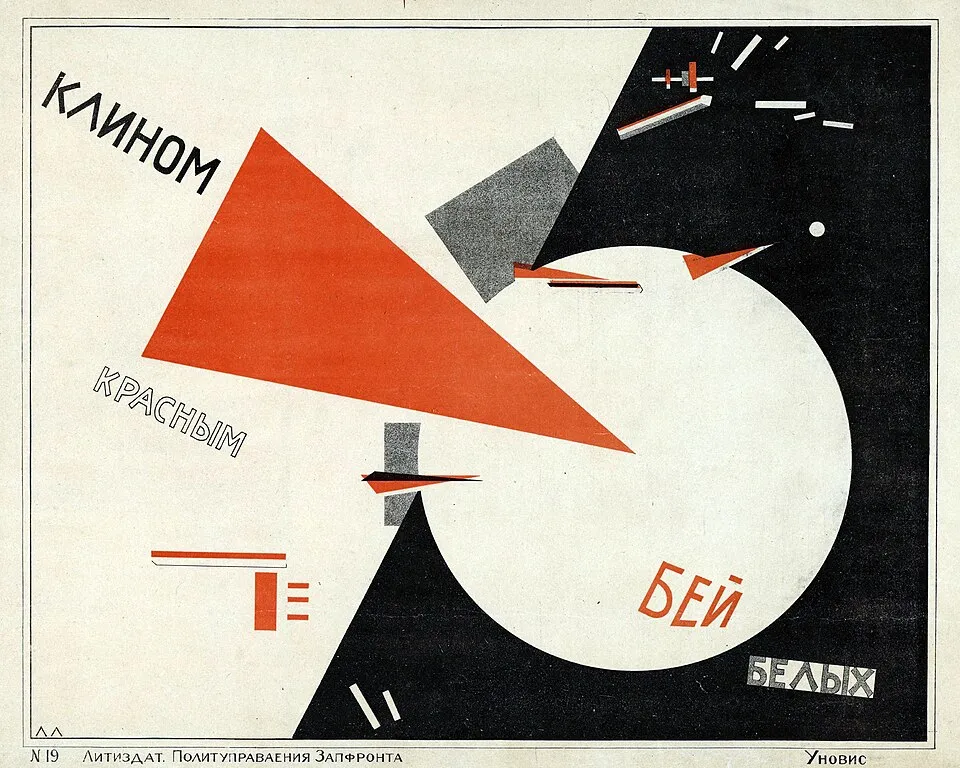
El Lissitzky, "Beat the Whites with the Red Wedge" (1919). "Many new movements of avant-garde art emerged during this period, such as Rayonism, Russian Futurism, and Constructivism" (The Collector). "The state was in fact happy to use the talents of these artists to further their cause" (The Collector). Image via Wikimedia Commons.
The Russian Avant-Garde (1917-1930): Innovation Before the Crackdown
The 1917 Revolution created a space for artistic experimentation that was unprecedented. The old order was destroyed. Artists believed they could build a new society through art. Many new movements of avant-garde art emerged during this period, such as Rayonism, Russian Futurism, and Constructivism. The state was in fact happy to use the talents of these artists to further their cause. Constructivism, associated with Vladimir Tatlin, Aleksandr Rodchenko, El Lissitzky, Lyubov Popova, rejected "art for art's sake" in favor of art that served social purposes. Tatlin's "Monument to the Third International" (1919-20) was a proposed tower that would have been taller than the Eiffel Tower, a synthesis of architecture, sculpture, and engineering. Rodchenko's photomontages and posters used bold typography, diagonal compositions, and geometric forms. El Lissitzky's "Beat the Whites with the Red Wedge" (1919) is one of the most iconic images of the 20th century.
Malevich's "Black Square" (1915), painted before the Revolution but embraced by the avant-garde, was the founding work of Suprematism, a movement of pure geometric abstraction. Malevich believed that art should be freed from representation, from politics, from utility, that it should be "supreme" in its own realm. The art style during the early period of the Soviet Union (1917-1930) differed from the socialist realist art created during the Stalinist period. Artists were able to experiment more freely with the message of the revolution. Many Soviet artists during this period were part of the avant-garde. The avant-garde period ended in 1932, when the Central Committee issued a decree dissolving all independent art groups and establishing state control over artistic production. For the wider movement context, see our complete guide to art movements.
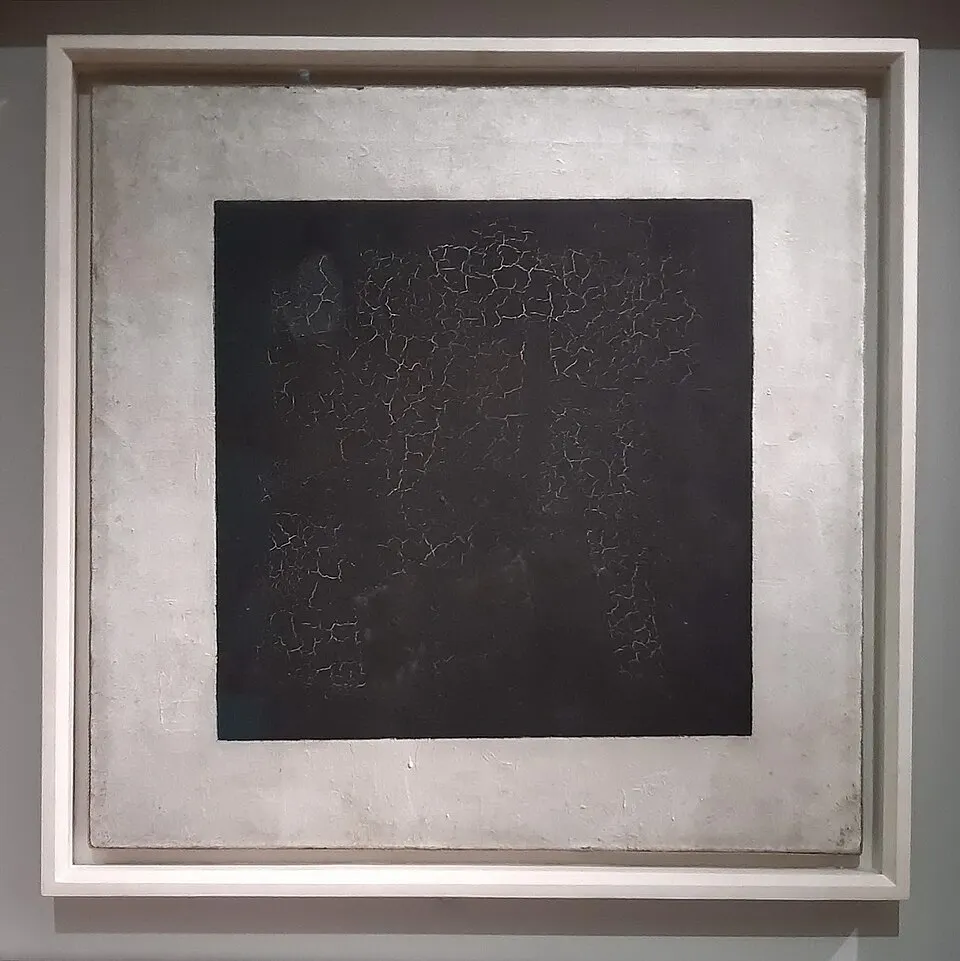
Kasimir Malevich, "Black Square" (1915). Suprematism, Malevich's movement of pure geometric abstraction, was one of the most radical art movements of the 20th century. "The state was in fact happy to use the talents of these artists to further their cause" (The Collector), until it wasn't. Image via Wikimedia Commons.
The Imposition of Socialist Realism (1932-1953)
In 1932, the Central Committee issued a decree "On the Reconstruction of Literary and Art Organizations" that dissolved all independent art groups and established state-controlled unions. "The officially sanctioned art movement of the Soviet Union from the 1930s-1980s" (Soviet-Union.com). In an ironic manipulation of Constructivist theory, Stalin asserted that art should serve a functional purpose: however, for Stalin, this simply meant that it should offer unambiguously positive images of life in communist Russia, in a "true-to-life" visual style which could be easily appreciated by the masses (TheArtStory). Socialist Realism was defined by four principles: ideological content (art must reflect Soviet ideology), party-mindedness (art must serve the Communist Party), realism (art must be representational and accessible), and optimism (art must depict a positive vision of Soviet life).
Socialist Realism produced paintings of heroic workers, happy peasants, visionary leaders, and bountiful harvests. The style was representational, academic, and monumental. It was the opposite of the avant-garde: no abstraction, no experimentation, no ambiguity. Art should offer unambiguously positive images of life in communist Russia (TheArtStory). Artists who did not conform were censored, exiled, or killed. Malevich was arrested in 1930 and died in 1935, his work banned. The avant-garde was erased from Soviet art history, its works stored in museum basements, its names removed from textbooks. Although no official change in policy took place, artists began to feel free to experiment in their work with considerably less fear of repercussions than during the Stalinist period, but only after Stalin's death in 1953. For the social framework behind this, see our piece on art and society.
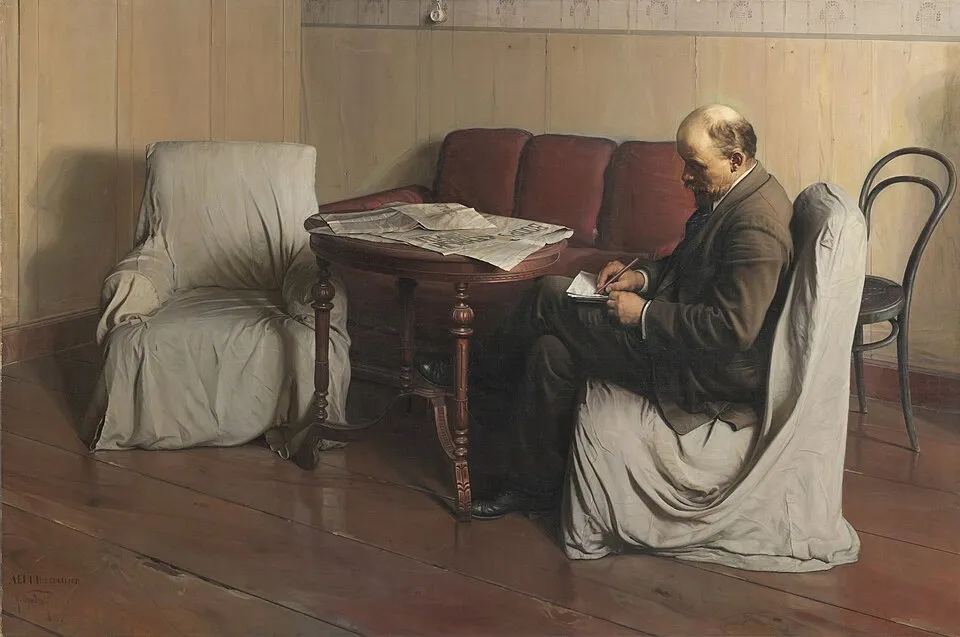
Socialist Realism painting. "The officially sanctioned art movement of the Soviet Union from the 1930s-1980s" (Soviet-Union.com). "Stalin asserted that art should serve a functional purpose: however, for Stalin, this simply meant that it should offer unambiguously positive images of life in communist Russia, in a 'true-to-life' visual style which could be easily appreciated by the" masses (TheArtStory). Image via Wikimedia Commons.
The Post-Stalin Thaw: Abstraction and Nonconformism
In the 1950s, Moscow artist Ely Bielutin encouraged his students to experiment with abstractionism, a practice thoroughly banned under Stalin. Although no official change in policy took place, artists began to feel free to experiment in their work with considerably less fear of repercussions than during the Stalinist period. In the 1960s-1980s, a group of Soviet artists, the nonconformists, produced work outside the official system. They worked in abstraction, conceptualism, and underground art, exhibiting in apartments and unofficial spaces. Artists like Erik Bulatov, Ilya Kabakov, and Komar and Melamid used art to critique the Soviet system from within.
The Soviet Union collapsed in 1991. Socialist Realism was no longer the official style. The avant-garde, which had been suppressed for 60 years, was rediscovered, its works brought out of museum basements, its names restored to art history. For a structured way to study this material, see our guide on how to teach yourself art history.
Propaganda vs. Art: The Question
Socialist Realism is propaganda. It was produced under state control, to serve state ideology, to depict a vision of Soviet life that did not exist. The heroic workers, the happy peasants, the bountiful harvests were not descriptions of reality but prescriptions for how reality should be. "Unambiguously positive images of life in communist Russia" (TheArtStory). But some Socialist Realist paintings are also beautiful. The skill of the painters, trained in the academic tradition, capable of monumental composition, rich color, and convincing figuration, is real. The works are not just propaganda. They are also paintings, made by artists who had training, talent, and (within the constraints of the system) creative agency.
The question is not whether Socialist Realism is propaganda or art. It is both. The question is how to look at it, how to see the propaganda and the art simultaneously, how to acknowledge the system of control without dismissing the skill of the painters, how to recognize the ideology without ignoring the humanity. This is the challenge of looking at any art produced under a system of state control, not just Soviet art, but art produced under all forms of political constraint. For how to read the work on its own terms, see our guide on how to look at art.
Why This Matters
The story of Soviet art, from the avant-garde to Socialist Realism to the nonconformists, is a case study in the relationship between art and power. It shows what art can be when it is free (the avant-garde), what it becomes when it is controlled (Socialist Realism), and what happens when artists resist (the nonconformists). The question of art and state control is not historical. It is contemporary. China, Iran, Russia, and other states continue to control artistic production. The Soviet case is the most fully documented example of state-controlled art in the 20th century, and it remains relevant.
The Soviet story demonstrates that art cannot be reduced to propaganda, even under a system of state control. The avant-garde was suppressed, but it was not destroyed, its works survived in museum basements, and its influence is visible in 20th-century design, architecture, and graphic design. Socialist Realism was propaganda, but it was also painting, made by human beings with training, talent, and (limited) agency. The nonconformists proved that art can resist control, even when the state has total power. If you are new to this material, start with our guide on art for beginners, and for where this sits now, see our guide to contemporary art trends.
Final Thoughts
The Russian Revolution of 1917 produced one of the most extraordinary art movements in history. "Many new movements of avant-garde art emerged during this period, such as Rayonism, Russian Futurism, and Constructivism" (The Collector). "The state was in fact happy to use the talents of these artists to further their cause" (The Collector). El Lissitzky's "Beat the Whites with the Red Wedge" (1919), Malevich's "Black Square" (1915), Rodchenko's photomontages: the avant-garde was a visual revolution. Then Stalin took power. "In an ironic manipulation of Constructivist theory, he asserted that art should serve a functional purpose: however, for Stalin, this simply meant that it should offer unambiguously positive images of life in communist Russia, in a 'true-to-life' visual style which could be easily appreciated by the" masses (TheArtStory). "The officially sanctioned art movement of the Soviet Union from the 1930s-1980s" (Soviet-Union.com). In 1932, the Central Committee dissolved all independent art groups. Malevich was arrested in 1930 and died in 1935. "In the 1950s, Moscow artist Ely Bielutin encouraged his students to experiment with abstractionism, a practice thoroughly banned under Stalin" (Wikipedia). "Although no official change in policy took place, artists began to feel free to experiment in their work with considerably less fear of repercussions than during the Stalinist period" (Wikipedia). The nonconformists, Erik Bulatov, Ilya Kabakov, Komar and Melamid, produced work outside the official system. The Soviet Union collapsed in 1991. The avant-garde was rediscovered. The question is not whether Socialist Realism is propaganda, it obviously is. The question is whether it is also art. The answer is: it is both. The challenge is to see the propaganda and the art simultaneously, to acknowledge the system of control without dismissing the skill of the painters, to recognize the ideology without ignoring the humanity. The Soviet story demonstrates that art cannot be reduced to propaganda, even under a system of state control.
Go to the State Russian Museum in St. Petersburg or the State Tretyakov Gallery in Moscow. They hold both the avant-garde works (brought out of the basements after 1991) and the Socialist Realist paintings. Look at Malevich's "Black Square" (1915), the most radical painting of the 20th century, banned for 60 years, now on display. Then look at the Socialist Realist paintings, the heroic workers, the happy peasants, the visionary leaders. See the skill. See the ideology. See both at the same time. Then go to the Museum of Nonconformist Art in St. Petersburg, a museum dedicated to the art that was made outside the system, in apartments and underground spaces, while Socialist Realism was the official style. The story of Soviet art is a story of what art can be when it is free, what it becomes when it is controlled, and what happens when artists resist. It is not just Russian history. It is a case study in art and power, and it is still relevant. For reference, read The Collector on Socialist Realism, the TheArtStory overview, and Wikipedia on Socialist Realism. For more on the works that anchor this history, see our guide to famous paintings explained.


