
"The 1961 painting, inspired by a Walt Whitman poem of the same name, was an early statement of intent by an artist who would go on to become a defining figure of British, and LGBT+, culture. Over the next decade, Hockney continued to break social taboos by celebrating same-sex relationships in his art, often by depicting the quiet, everyday moments of gay domestic life." The painting is "We Two Boys Together Clinging" (1961), by David Hockney, made at the Royal College of Art. At that time, he could have been imprisoned for being gay. Refusing to code or obscure his work was just a brilliant and blatant act of resistance. Homosexuality was not partially decriminalized in the UK until 1967, six years after Hockney's painting. Homosexuality was only partially decriminalised some six years later, in 1967, when the law changed to allow sex between two men "in private," so long as they were both over the age of 21.
Queer art history is a history of visibility and code, of art that was hidden in plain sight, that used symbols and references understood by those who knew how to look, and that gradually, over centuries, became visible. As writer Philip Gefter has put it, gay life in New York in the 1970s was "downtown, out of sight and after hours." Mapplethorpe's on-off lover and partner, curator Sam Wagstaff, was part of an artworld that, in 1972 when they first met, was still well and truly in the closet. It included artists like Robert Rauschenberg, Jasper Johns and Andy Warhol, all of whom only spoke openly about their sexuality amongst themselves. The history of queer art is the history of what could not be said, what was coded, what was hidden, and what, eventually, was shown. "Don't name it, just look at it," said Michael Valinsky of Hockney's work. That is the history: art that showed what could not be named, art that was visible to those who knew how to look, art that was hidden in plain sight. This guide covers David Hockney and the pre-decriminalization era, Robert Mapplethorpe and the Culture Wars, the closeted art world, coding and visibility in art history, Queer Britain and the present, and why queer art history matters.
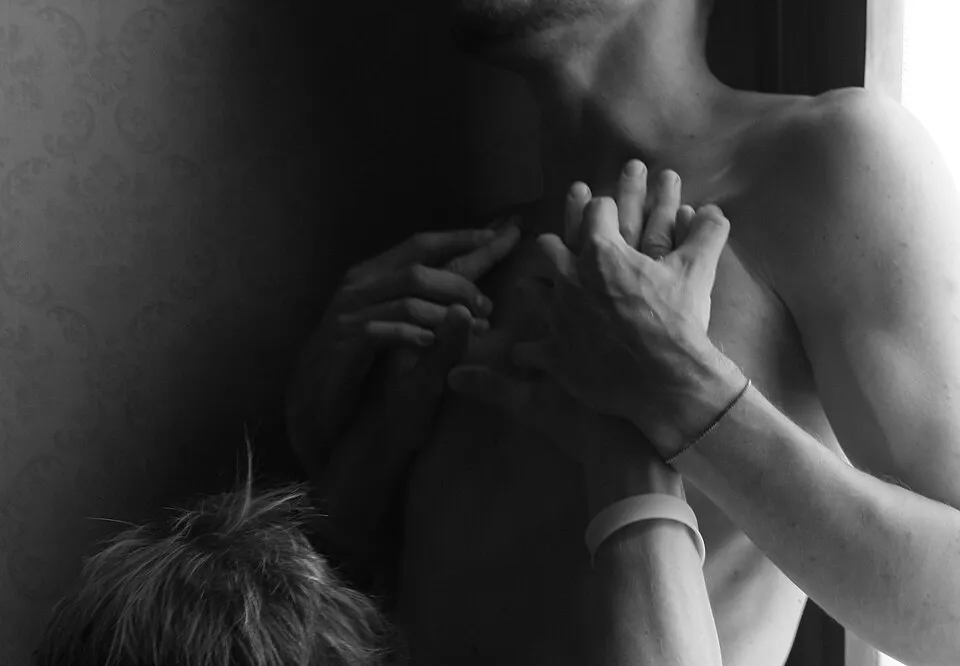
David Hockney, "We Two Boys Together Clinging" (1961). "The 1961 painting, inspired by a Walt Whitman poem of the same name, was an early statement of intent by an artist who would go on to become a defining figure of British, and LGBT+, culture. Over the next decade, Hockney continued to break social taboos by celebrating same-sex relationships in his art, often by depicting the quiet, everyday moments of gay domestic life" (BBC). Image via Wikimedia Commons.
David Hockney: Painting Gay Life When It Was a Crime
"We Two Boys Together Clinging" (1961) was painted at the Royal College of Art. At that time, he could have been imprisoned for being gay. Refusing to code or obscure his work was just a brilliant and blatant act of resistance. He moved to California in 1964 so that he could be free of British social attitudes. That move is not a footnote. It is the condition of the work that followed. The California paintings are where Hockney found his subject and his light.
Those works are so queer, so sensual and sexy and playful and joyous, says Dominic James Bilton, co-leader of the Queer British Art Network. Hockney was "normalising same-sex relationships... that we take for granted," Bilton suggests, adding the artist showed that gay people "are just normal people... doing normal stuff, looking at our partners and thinking: 'oh, you're beautiful.'" That ordinariness was the radical move. In the 1960s, depictions of gay men in popular culture were defined by "parody," Marshall explains. In the media, "queer figures were often isolated, very alone... narrowed down to very basic stereotypes." But Hockney's California series "told an alternative story of queerness" in which gay life was "domesticated" and "peaceful."
The Cavafy etchings carried the argument into print. In 1966 Hockney went to Beirut, Lebanon, for inspiration for a suite of etchings to accompany 14 poems by the Egyptian-born Greek poet Constantine P. Cavafy (or Konstantinos Petrou Kavafis, 1863-1933), whose work explored same-sex love and desire. His prints ended up being largely set in his Notting Hill flat in London, using friends as models. Their simplicity of line coupled with the intimacy and tenderness of the men depicted became a beacon of gay pride when they were published in 1967, the year which also saw the partial decriminalisation of homosexuality in England and Wales. Hockney's approach to gay representation was quietly radical. At a time when our lives were hidden or ignored, he painted them in bright daylight. His work normalised intimacy between men; it was not disguised or sensationalised, it was simply part of the everyday. He was really pioneering as somebody who was unashamedly proud of his queerness before the legalisation of homosexuality in '67. For more on the works that anchor this history, see our guide to famous paintings explained.
Robert Mapplethorpe and the Culture Wars
Mapplethorpe was not the first artist to photograph the male nude in homoerotic ways. The art-historically well informed Mapplethorpe knew of the work of Thomas Eakins, George Platt Lynes and Baron Wilhelm von Gloeden, indeed often directly quoting their work in his compositions. But he was perhaps the first to consistently put the homoerotic up front and centre in galleries and museums. When Mapplethorpe exhibited photographs of the men from the West Village gay bars he regularly cruised, he exposed a hidden underground world to wider straight society. Having had his first homosexual experiences during a trip to San Francisco in 1968, Mapplethorpe once said: "My life began [that] summer... Before that I didn't exist." And from that point on, he seemed driven by a desire to make visible the hidden history of gay male sexuality and erotics.
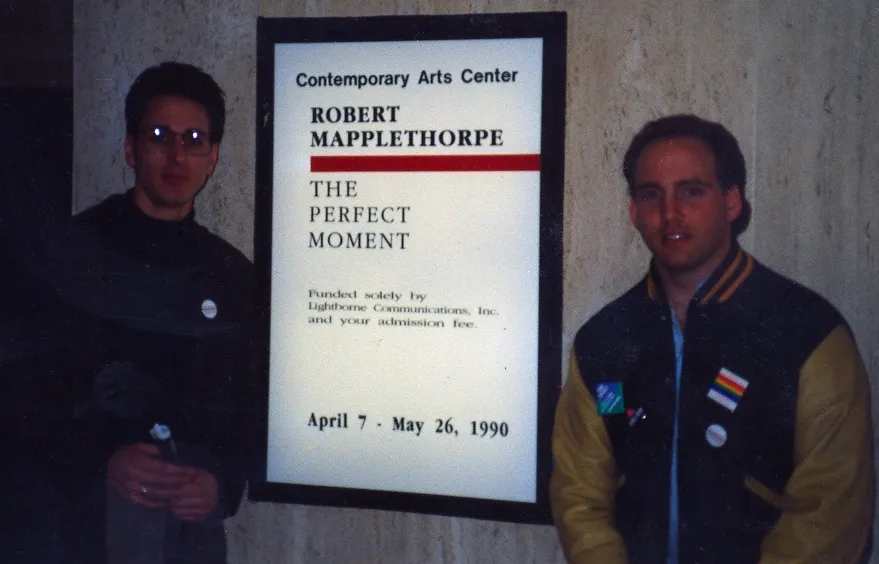
Robert Mapplethorpe (1946-1989). "Mapplethorpe was not the first artist to photograph the male nude in homoerotic ways... but he was perhaps the first to consistently put the homoerotic up front and centre in galleries and museums" (Art Gallery of NSW). Image via Wikimedia Commons.
When Robert Mapplethorpe died of AIDS-related conditions in March 1989, he was a prolific and respected artist. But his work, which had long provoked questions about censorship and freedom of expression, soon set off one of the fiercest episodes in what came to be known as the "Culture Wars." In 1989, at the height of the HIV and AIDS crisis, Mapplethorpe's retrospective exhibition, "The Perfect Moment," emphasized Mapplethorpe's career achievements, integrating themes of sexuality and the male nude alongside portraits and floral still lifes. After a controversy-free start to the tour, one venue, the Corcoran Gallery of Art in Washington DC, cancelled the show before its opening. The reaction of the artistic community was swift: students installed an 8ft papier-mâché penis on the grounds; several artists boycotted the institution, and activists projected slides of Mapplethorpe's images, those not allowed to be shown inside, on the façade of the Corcoran.
The tour continued until it opened at Cincinnati Contemporary Arts Center. Cincinnati's Director, Dennis Barrie, was arrested on obscenity charges, with Mapplethorpe cast as a pervert by conservative politicians, who monopolised the incident to fuel fear-mongering in light of the AIDS crisis. While Barrie was later acquitted, the incident sparked mass protests by those defending personal and artistic freedoms. Mapplethorpe's work was not just art. It was a test of the boundary between public and private, between art and obscenity, between visibility and censorship. The Culture Wars were not about Mapplethorpe's photographs. They were about whether queer life could be visible in a museum, whether the hidden could be shown. For the social framework behind these conflicts, see our piece on art and society.
The Closeted Art World: Rauschenberg, Johns, Warhol
Mapplethorpe's on-off lover and partner, curator Sam Wagstaff, was part of an artworld that, in 1972 when they first met, was still well and truly in the closet. It included artists like Robert Rauschenberg, Jasper Johns and Andy Warhol, all of whom only spoke openly about their sexuality amongst themselves. These three artists, among the most important of the 20th century, were gay or bisexual, and their sexuality was known within the art world but not publicly acknowledged during their lifetimes. That is the structure of the closet: the knowledge is shared, but the public statement is withheld. The art world knew. The public did not. The line between the two was the closet door.
Queer artists who could not be openly gay used code, symbols, references, subject matter, that was visible to those who knew how to look but invisible to those who did not. This is the history of "coding" in art: not a secret language, but a way of making art that was simultaneously public and private, visible and hidden. "Don't name it, just look at it," said Michael Valinsky. That is how coding works. The image is there for anyone to see, but the meaning is available only to those who recognize it. The shift from closeted to visible was not gradual. It was abrupt, driven by the AIDS crisis. The AIDS crisis forced queer artists out of the closet. Mapplethorpe died of AIDS-related conditions in March 1989. The epidemic made silence impossible. Queer artists, writers, and activists demanded visibility, fought censorship, and insisted that their lives and their art be seen. For how to read the visual signals in art, see our guide on how to look at art.
Coding and Visibility in Art History
Coding in queer art is not a 20th-century invention. From Renaissance depictions of same-sex desire (Caravaggio's boys, Michelangelo's nudes) to 19th-century symbolism (Walt Whitman's poetry that inspired Hockney), queer artists have always found ways to make art that was visible to those who knew how to look. The code was not always sexual. It could be stylistic, thematic, or referential. But it was always a way of making art that was simultaneously public and private.
The shift from code to visibility was driven by legal and social change. Homosexuality was only partially decriminalised some six years later, in 1967 in the UK. In the US, the Stonewall riots of 1969 marked the beginning of the modern gay rights movement. The AIDS crisis of the 1980s and 1990s forced visibility. Queer artists could not remain closeted when their communities were dying. Today, queer art is visible in museums, galleries, and collections. Queer Britain, the UK's first national LGBTQ+ museum, opened in King's Cross, London. At Queer Britain, we see the ongoing impact of David's work in our annual Queer Britain Art Award, which celebrates Queer Creativity across generations. We see thousands of artists today still following David's only rule: "Paint the things you love." He started his career when it was illegal to be gay, he lived through partial decriminalisation, the HIV/Aids epidemic, actual decriminalisation, civil partnerships and marriage equality. He experienced some extraordinary changes for queer people. For a structured way to study this material, see our guide on how to teach yourself art history.
Queer Britain and the Present
Queer Britain, located in King's Cross, London, is the UK's first national LGBTQ+ museum. It hosts the annual Queer Britain Art Award, "celebrating Queer Creativity across generations." We see thousands of artists today still following David's only rule: "Paint the things you love." David's legacy is his insistence on queer joy and visibility. His art gave us permission to be unapologetic, and he has inspired so many people. He asserted existence in a world that did not make space for queer people. He was also an early supporter of Stonewall, the LGBTQ+ advocacy organisation and charity, co-founded by Sir Ian McKellen, Lord Michael Cashman and Lisa Power MBE, among others, donating a painting valued at over $250,000 to support their fundraising.
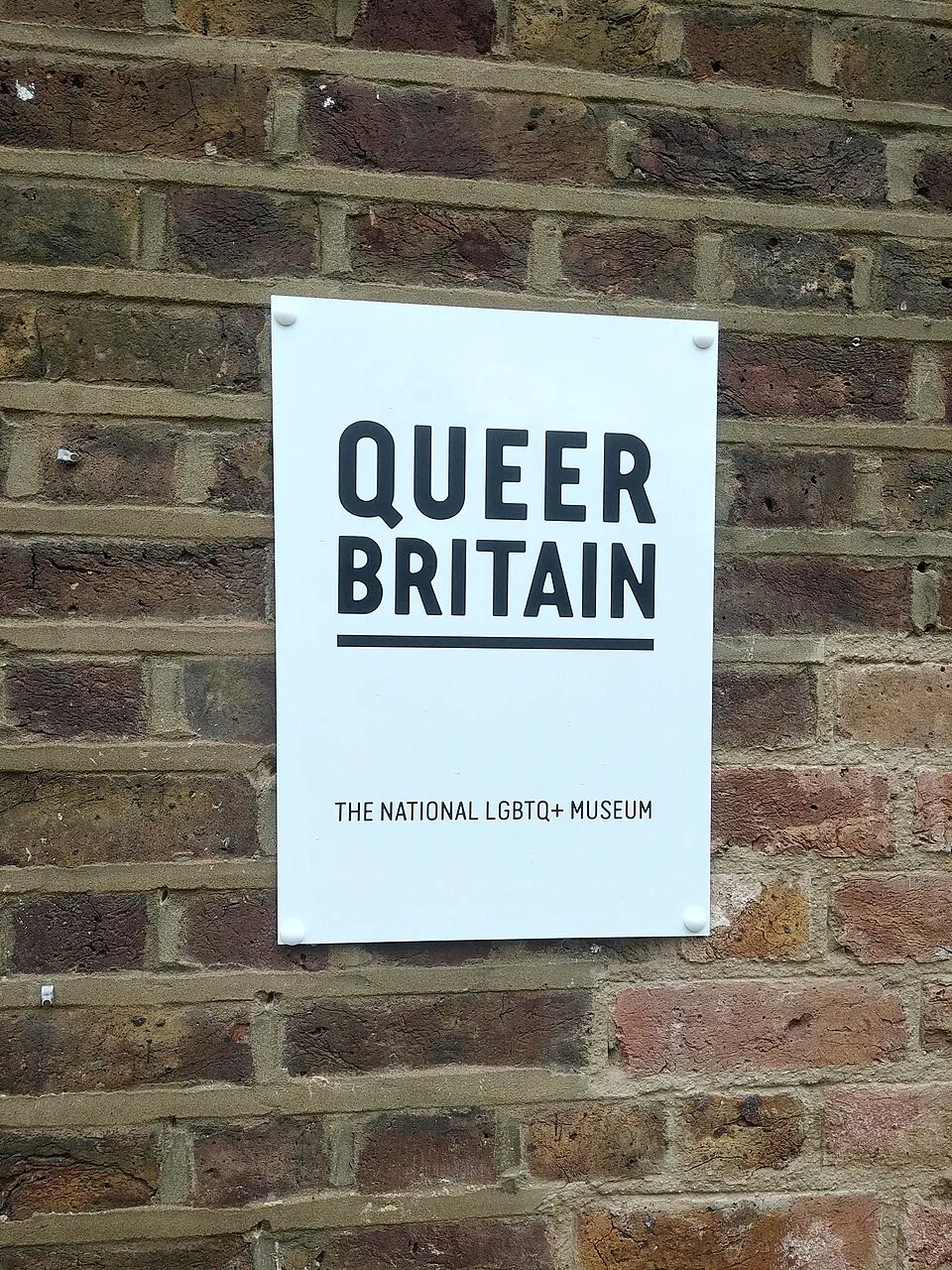
Queer Britain, King's Cross, London. "At Queer Britain, we see the ongoing impact of David's work in our annual Queer Britain Art Award, which celebrates Queer Creativity across generations. We see thousands of artists today still following David's only rule: 'Paint the things you love'" (The Independent). Image via Wikimedia Commons.
He started his career when it was illegal to be gay, he lived through partial decriminalisation, the HIV/Aids epidemic, actual decriminalisation, civil partnerships and marriage equality. He experienced some extraordinary changes for queer people. But the work is not done. Queer art history is still being written. Artists who were closeted are being reexamined. Works that were coded are being reread. The history of queer art is not a closed chapter. It is an ongoing project of recovery, visibility, and recognition. If you are new to this material, start with our guide on art for beginners.
Why Queer Art History Matters
Queer art history makes visible what was hidden. At a time when our lives were hidden or ignored, he painted them in bright daylight. The history of queer art is the history of art that was made, seen, and valued, but often not named, not acknowledged, not written into the history books. Queer art history corrects that erasure. Coding in art is not just a queer phenomenon. It is a universal strategy for making art under constraint. Queer artists developed coding because they had to. But the strategy, making art that is simultaneously public and private, visible and hidden, is a strategy that artists under all forms of constraint have used. Queer art history teaches us to look for what is hidden in plain sight.
Queer art has always been political, not because it is propaganda, but because visibility itself is political when your existence is criminalized or censored. "But they're also a strong act of protest at a time when showing queer lives as normalised or domesticated was very much avoided," says James Marshall of Hockney's early work. It is easy to underestimate the political power of Hockney's paintings today, according to writer and critic Michael Valinsky. He tells the BBC it is now difficult to appreciate the effect Hockney's work had on museum-goers in the 1960s, 70s and 80s. "It's hard for me to think about the shock factor at the time," he said. According to Valinsky, Hockney's paintings offered society new, visual ways to engage with ideas about homosexuality. "That helps the cause, right? Don't name it, just look at it," he said. For where queer visibility sits in the current moment, see our guide to contemporary art trends, and for a parallel case of recovery, see our piece on the women of Impressionism.
Final Thoughts
"The 1961 painting, inspired by a Walt Whitman poem of the same name, was an early statement of intent by an artist who would go on to become a defining figure of British, and LGBT+, culture." David Hockney painted "We Two Boys Together Clinging" at the Royal College of Art, when he could have been imprisoned for being gay. Refusing to code or obscure his work was just a brilliant and blatant act of resistance. Homosexuality was only partially decriminalised some six years later, in 1967, when the law changed to allow sex between two men "in private," so long as they were both over the age of 21. Hockney moved to California in 1964 so that he could be free of British social attitudes. Those works are so queer, so sensual and sexy and playful and joyous. The Cavafy etchings were published in 1967, the year which also saw the partial decriminalisation of homosexuality in England and Wales. Robert Mapplethorpe (1946-1989) was perhaps the first to consistently put the homoerotic up front and centre in galleries and museums. Mapplethorpe's on-off lover and partner, curator Sam Wagstaff, was part of an artworld that, in 1972 when they first met, was still well and truly in the closet. It included artists like Robert Rauschenberg, Jasper Johns and Andy Warhol, all of whom only spoke openly about their sexuality amongst themselves. When Robert Mapplethorpe died of AIDS-related conditions in March 1989, he was a prolific and respected artist. In 1989, at the height of the HIV and AIDS crisis, Mapplethorpe's retrospective exhibition, "The Perfect Moment," was cancelled by the Corcoran Gallery of Art in Washington DC. Students installed an 8ft papier-mâché penis on the grounds; activists projected slides of Mapplethorpe's images on the façade of the Corcoran. Cincinnati's Director, Dennis Barrie, was arrested on obscenity charges. While Barrie was later acquitted, the incident sparked mass protests. Queer Britain, King's Cross, London: "we see the ongoing impact of David's work in our annual Queer Britain Art Award, which celebrates Queer Creativity across generations." "Don't name it, just look at it." The history of queer art is the history of what was hidden in plain sight, and what, eventually, was shown.
Go to Queer Britain in King's Cross, London, the UK's first national LGBTQ+ museum. Go to the V&A, which holds Hockney's prints and drawings, including the Cavafy etchings published in 1967, the year which also saw the partial decriminalisation of homosexuality in England and Wales. Go to the Robert Mapplethorpe Foundation's collection. Look at "We Two Boys Together Clinging" (1961), painted when Hockney could have been imprisoned for being gay. Look at the California pool paintings, so queer, so sensual and sexy and playful and joyous. Look at Mapplethorpe's photographs, the first to consistently put the homoerotic up front and centre in galleries and museums. Then look at art history itself, at Caravaggio, at Michelangelo, at Thomas Eakins, at George Platt Lynes, at Rauschenberg and Johns and Warhol, and ask: what was hidden in plain sight? What was coded? What was visible to those who knew how to look? "Don't name it, just look at it." That is the history. That is the method. Look. For reference, read the BBC on David Hockney and gay life when homosexuality was illegal, the Art Gallery of NSW on Robert Mapplethorpe's political legacy, and The Independent on David Hockney's legacy of gay visibility.


