Fine Arts Work Center: Seven Funded Months in America's Oldest Art Colony
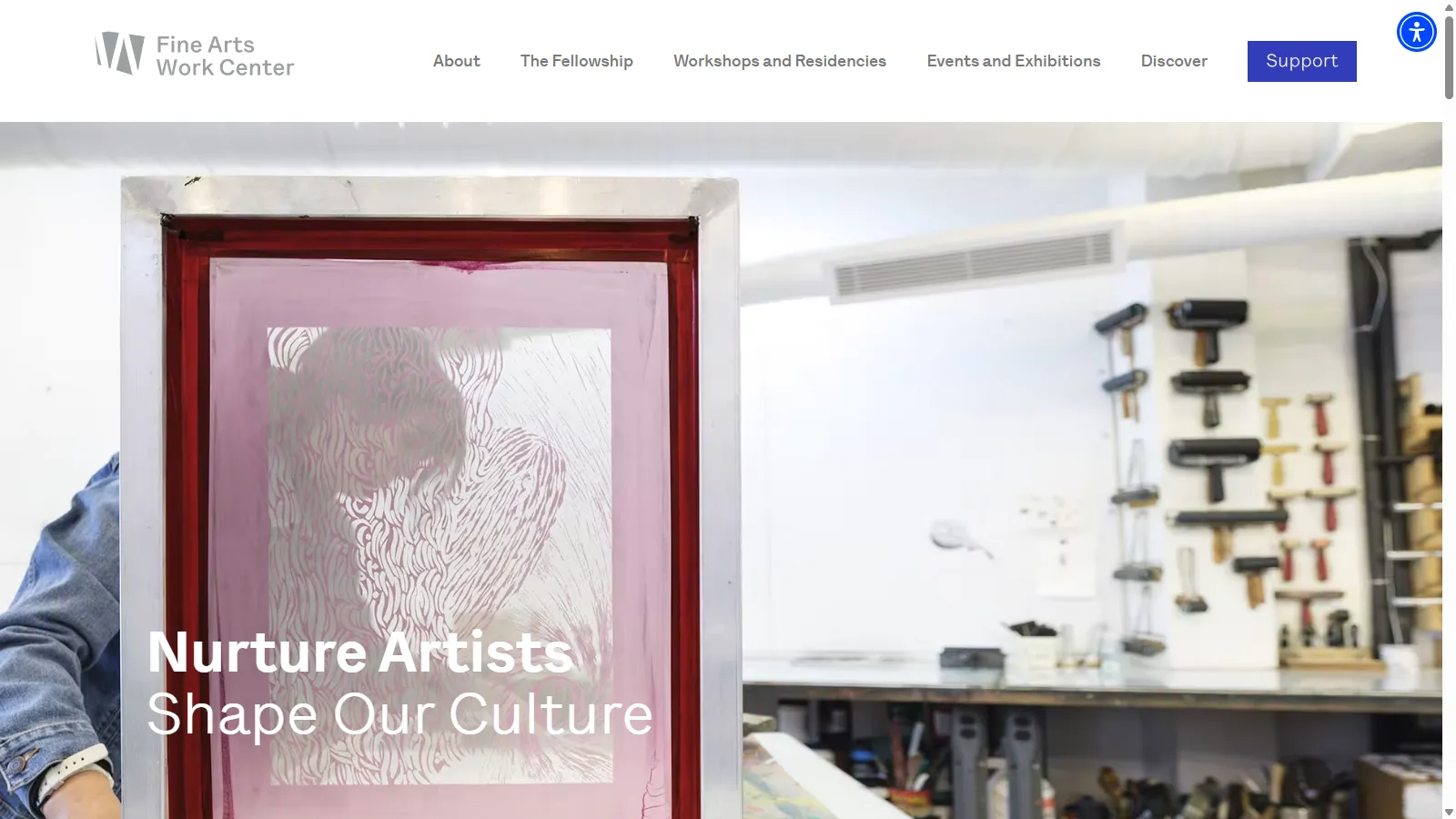
Provincetown has been pulling artists to the tip of Cape Cod for over a century, and the Fine Arts Work Center has anchored the serious end of that pull since 1968. Its Fellowship is one of the strongest deals in American residency funding: 20 artists and writers get seven months, October through April, with an apartment, a studio, a $1,300 monthly stipend, and a $1,000 exit stipend to cover relocation.
That is roughly $10,100 in direct support plus housing and studio, in a town where off-season rents are the only reason this math works. The fellowship targets the moment that matters most: the years right after training, before a first book or gallery career, when unrestricted time is the scarcest resource.
What the Fellowship Includes
Ten spots go to visual artists and ten to writers, split between fiction and poetry. Visual art fellows get a private studio and a solo exhibition in the Hudson D. Walker Gallery; writing fellows give a public reading in the Stanley Kunitz Common Room. Both events plug fellows into Provincetown's unusually dense cultural network, where year-round residents include established artists who actually attend openings.
All 20 fellows arrive October 1 and stay through April 30, full stop. There is no early arrival and no part-time option; the fellowship assumes you can relocate for the duration. International artists are eligible but must supply a Social Security number or ITIN, and FAWC cannot provide visa counsel.
The Costs and the Application
Applications tier by date: $40 by November 15, $55 by December 1, and $65 through the December 15 deadline. Visual artists submit work samples and a CV; writers submit up to 15 pages of poetry or 35 pages of fiction. Notices go out in early May.
One embedded bonus: the Rona Jaffe Foundation Fellowship fully funds one emerging woman writer each year with an additional $2,500 prize, and every eligible applicant is automatically considered. A Fellowship Access Fund also grants $500 to $2,500 to select candidates whose finances would otherwise prevent attendance.
The Honest Trade-offs
Provincetown in winter is not Provincetown in July. The town empties, the weather turns serious, and seven months is a long time to be far from your usual life. Partners are welcome but the apartments are tight for two, and there are no guests or pets.
The stipend is honest but thin: $1,300 a month covers a frugal off-season life, not a comfortable one. Artists who need to keep a city apartment running will feel the squeeze, which is exactly what the Access Fund exists to soften. And because fellows are deliberately mixed between artists and writers, the peer community is half writers, which visual artists should welcome as a feature rather than a bug.
The Jury Profile
The fellowship juries look for emerging artists at the moment the term actually means something: strong recent work, clear trajectory, and evidence that seven uninterrupted months would change the practice. Hobbyists and established mid-career artists both miss the mark; the sweet spot is a few years of serious independent work post-school.
Writers face a hard rule: no published full-length book, since the fellowship exists for first-book careers. Visual artists have no equivalent publication cutoff, but the jury's profile assumption is similar, favoring artists before their first major gallery representation rather than after it.
The Provincetown Context
Provincetown is not incidental to the fellowship; the town's century-old art colony history is the point. Fellows live blocks from the Provincetown Art Association and Museum, walk the same light that drew the impressionists, and inherit the off-season intimacy of a community built around working artists rather than tourists.
The Work Center itself runs year-round programming, so fellows land inside an institution rather than a dormitory. The Hudson D. Walker Gallery shows fellows' work alongside alumni and visitors, and the Common Room hosts the readings and talks that stitch the two disciplines together.
Insider Tips
Apply by November 15 to pay the lowest fee; the content is identical. Visual artists should read the fellowship list before applying: alumni include Michael Mazur, Ellen Gallagher-era peers, and a steady line into New York galleries. The solo exhibition is a genuine credential, and the juries know it.
If you are choosing between FAWC and a shorter residency like Yaddo or Skowhegan, the question is duration: FAWC trades breadth for depth. Seven months is enough to produce a body of work, not just a project.
Who Should Apply
Emerging visual artists and early-career writers who can relocate for seven months and want the most sustained funded residency in the US short of a degree program. If you need summer residency or cannot leave for that long, look at Anderson Ranch or Hambidge instead.