DAAD Artists-in-Berlin: The Fellowship That Treats Artists Like Diplomats
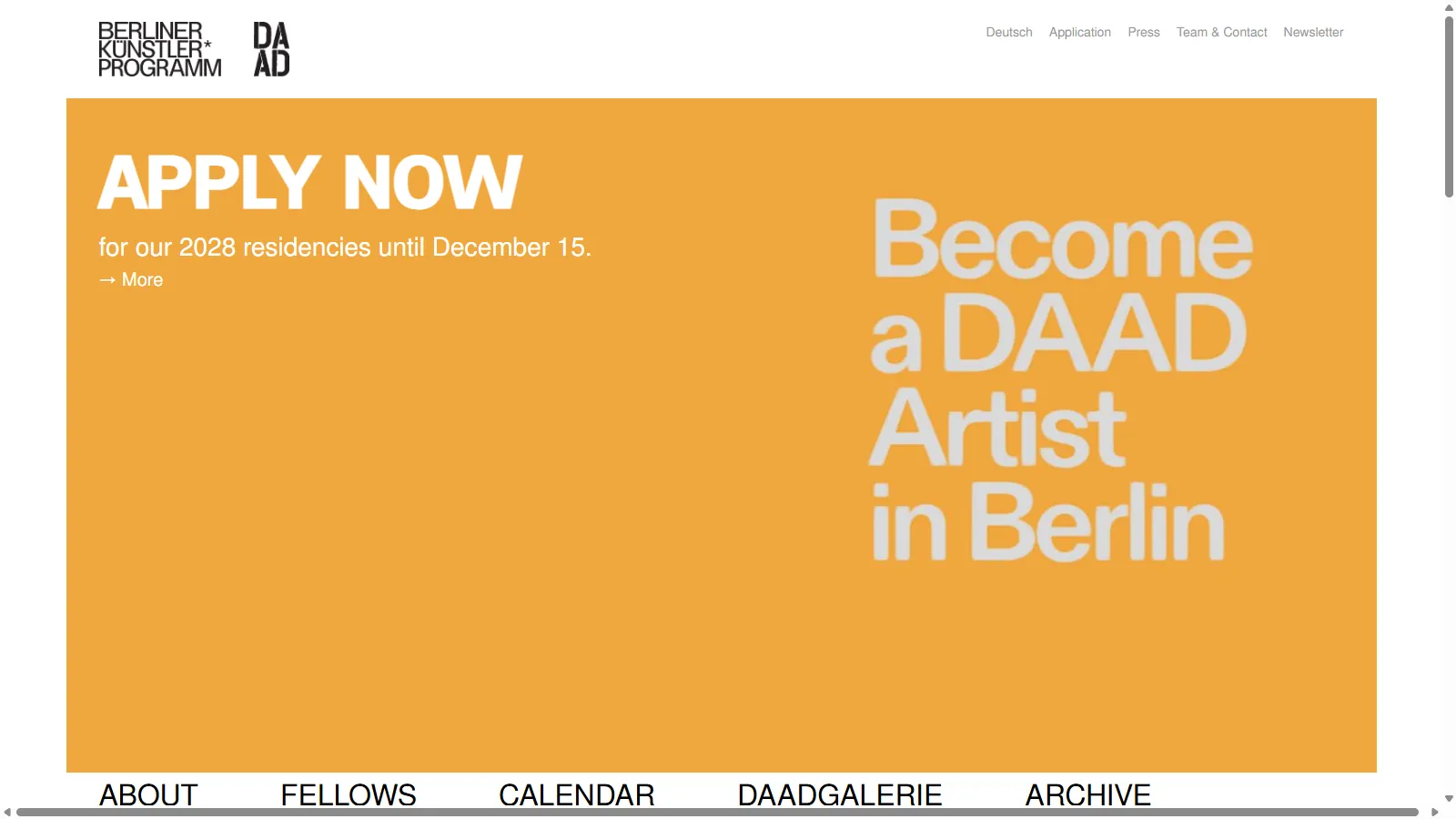
The Berliner Kunstlerprogramm began in 1963 as a Cold War gesture: bring international artists to an isolated West Berlin so the city stayed culturally alive. Six decades later it is still one of the world's most respected residency fellowships, and still run on the same belief that artists deserve a funded year of freedom rather than a month of supervised production.
Around 20 fellows are selected each year across literature, film, music and sound, and visual arts. The package covers a monthly living stipend, a furnished Berlin apartment, travel costs for the artist and their family, German lessons, and health, accident, and liability insurance if needed. There are no production obligations, no exhibition requirements, and no teaching duties, which the program frames as a deliberate point of principle rather than an oversight.
The Critical Caveat for Visual Artists
Read this before planning your application: visual artists cannot apply. In the visual arts category, fellows are nominated and selected by a specialist jury, which means no open call exists. Applications are only accepted in literature, film, and music and sound. If you are a painter or sculptor reading the "artists" branding, the door is closed; look at the Rijksakademie or Casa Wabi instead.
For the eligible disciplines, the program wants internationally established artists with a developed voice and standing, and it states a preference for positions that engage historical issues and contemporary discourse rather than pure aesthetics. There is no upper age limit and no academic requirement.
What the Fellowship Looks Like
Literature and music fellows get twelve months; film fellows get six. Fellows live in the program's own apartments, mostly in the Charlottenburg district, and are free to work privately or engage with Berlin's cultural life as they choose. The program deliberately refuses to treat its guests as content producers, which distinguishes it from most funded residencies.
Past fellows include Jim Jarmusch, Ocean Vuong, Jennifer Egan, Cao Fei, and a long list of artists who used the year to redirect their work. The alumni network carries weight in European institutional circles that shorter residencies cannot match.
The Application
A two-stage online process: submit personal information first, then complete a portfolio application via a personalized link. Portfolios arrive as a single PDF up to 15 MB plus online documentation formatted by discipline. The December 15 deadline applies to residencies beginning the following year; juries decide between March and May.
Reapplication is unlimited, which matters because hundreds of applications chase a small number of fellowships. Rejection here says more about the pool than about your work.
The Nominations Route for Visual Artists
The nomination-only rule for visual arts frustrates applicants, but it is not arbitrary. The specialist jury curates the visual arts cohort deliberately, and the practical path is visibility: international exhibitions, biennials, and critical writing are how the jury learns names. Artists active in the German-speaking institutional circuit get nominated disproportionately because the jury works there.
For film, literature, and music applicants, the open call is real but demanding. The portfolio requirements ask for substantial recent work, and the preference for critically engaged practices means apolitical formalism faces an uphill selection. The program's own FAQ says as much in diplomatic language.
What a Year in Berlin Buys
Berlin in the fellowship year is not the Berlin of a week-long art trip. The program's apartments put you inside the city for a full seasonal cycle, and the Kunstlerprogramm's own events, gallery openings, and the alumni network of the Freunde der Berliner Kunstlerprogramm create a social fabric most residencies never build. Fellows describe the year less as a residency and more as a recalibration of their entire working life.
The family policy is the most generous in the field: travel, insurance, and support extend to partners and children, which is why the program attracts established artists who cannot simply abandon households for a year.
The Legacy Weight
The alumni list reads as a history of late-20th-century culture: composers, filmmakers, novelists, and artists who later defined their fields passed through the Charlottenburg apartments. That history is the fellowship's quiet prestige; a DAAD line on a CV signals institutional validation to European curators and editors in a way shorter residencies cannot replicate.
Insider Tips
The program rewards context as much as craft. Applications that connect your practice to the historical or contemporary questions the program cares about outperform technically brilliant but context-free portfolios. Because the stipend amount is not publicly listed, fellows report it as a comfortable living allowance rather than a windfall; treat it as funding for time, not profit.
If you are a visual artist, the nomination route is opaque but not unreachable: the jury watches the international scene, and strong visibility through biennials and institutional shows is how names enter the conversation.
Who Should Apply
Established writers, filmmakers, and composers who want a fully funded year in Europe's most consequential art city, with family included and no strings attached. Visual artists should stop at the nomination-only rule and aim their application energy at the residencies that actually take applications.