Guggenheim Fellowship: A 5% Acceptance Rate and a Credential That Lasts Forever
In 2026, the Guggenheim Foundation received nearly 5,000 applications and awarded 223 fellowships. That is a 4.5% acceptance rate, making the Guggenheim harder to get into than most Ivy League universities. The 2025 centennial class was slightly smaller (198 fellows from 3,500 applicants), but applications surged in 2026, with creative arts and humanities submissions up 50% and sciences up 86%. The foundation has now awarded nearly $450 million to more than 19,000 fellows since 1925.
The money matters. The average stipend runs between $40,000 and $55,000, and you can spend it on whatever you want. No budget reports, no quarterly check-ins, no mandated outcomes. But ask any former fellow what the Guggenheim actually did for their career, and they will tell you the money was secondary. "Guggenheim Fellow" is a permanent credential that goes on your CV, your exhibition catalogs, your book jackets, and your institutional bios for the rest of your life. It opens doors that money alone cannot open.
How the Fellowship Actually Works
The Guggenheim awards fellowships to people, not projects. You submit a project proposal, but the foundation's primary interest is your demonstrated creative ability and the quality of your body of work. This is a bet on the artist, not on a specific piece. The fellowship period spans six to twelve months, during which you are expected to devote yourself substantially to your proposed work. Many fellows use the funding to take leave from teaching, reduce commercial work, travel for research, or simply buy the time to focus on ambitious projects.
The foundation does not define "exceptional" narrowly. It recognizes achievement across a wide range of styles, approaches, and career trajectories. But the expectation is clear: competitive applicants have a substantial body of work that demonstrates not just competence but genuine distinction. This is not a grant for emerging artists. It is not a grant for recent MFA graduates. It is a grant for mid-career and established artists who have already proven they can produce exceptional work and who have a compelling vision for what comes next.
The 2026 Numbers and What They Mean
The 2026 class of 223 fellows works across 55 disciplines. The foundation noted that applications in creative arts and humanities were up 50% from the previous year, and science applications were up 86%. This surge likely reflects growing anxiety about funding cuts to arts and research, making the competition even steeper than in previous years.
The acceptance rate has hovered around 5% in recent years. The vast majority of applicants, including many genuinely talented and accomplished artists, will not receive the fellowship. This is not a reflection of inadequacy. It is a reflection of the sheer volume of qualified applicants competing for a fixed number of awards.
The Selection Process
Applications are evaluated by peer review panels organized by field. Visual artists review visual artists. Composers review composers. Writers review writers. This ensures that the people making decisions understand the standards, conventions, and innovations of the specific discipline.
The evaluation criteria center on demonstrated exceptional creative ability and the quality of the proposed project. The foundation also considers geographic and demographic diversity, ensuring that talent is recognized regardless of where the artist lives or works. While the fellowship is open to citizens and permanent residents of the United States and Canada, artists outside major cultural centers are not disadvantaged by their location.
The Application: What You Need
The 2026 competition is now closed. The 2027 competition will open in late summer 2026, with the deadline typically in mid-September. The application requires:
A project proposal describing what you intend to accomplish during the fellowship period. This should be specific enough to show clear artistic direction but flexible enough to reflect the reality that creative work evolves. The foundation is not looking for rigid project plans. They want evidence of compelling artistic vision.
A portfolio of recent work. For visual artists, this means high-quality images of your strongest, most characteristic work. The portfolio carries most of the evaluation weight.
A professional resume documenting your career: exhibitions, publications, performances, awards, education, and other relevant achievements.
Three to four letters of recommendation from individuals who can speak with authority about your creative ability. These should come from respected figures in your field: curators, critics, fellow artists, or scholars who know your work well enough to make a credible case for its exceptional quality.
How It Compares to Other Major Awards
The Joan Mitchell Foundation offers $60,000 over five years but is now nomination-only, meaning you cannot apply directly. The Guggenheim is open-application, which makes it accessible to any qualifying artist regardless of their connections.
The Gottlieb Foundation Individual Support Grant offers $25,000 to painters, sculptors, and printmakers with 20+ years of practice and financial need. The Guggenheim has no financial need requirement and no minimum career length, but the competition is significantly stiffer.
The Kresge Artist Fellowships offer $50,000 but are restricted to Detroit-area residents. The Guggenheim is national (US and Canada), making it far more competitive but also far more accessible geographically.
The Harpo Foundation targets under-recognized artists with $10,000 grants. The Guggenheim does not specifically target under-recognized artists, but its peer review process means that an artist with exceptional work but limited name recognition can win on merit alone.
The Credential Value
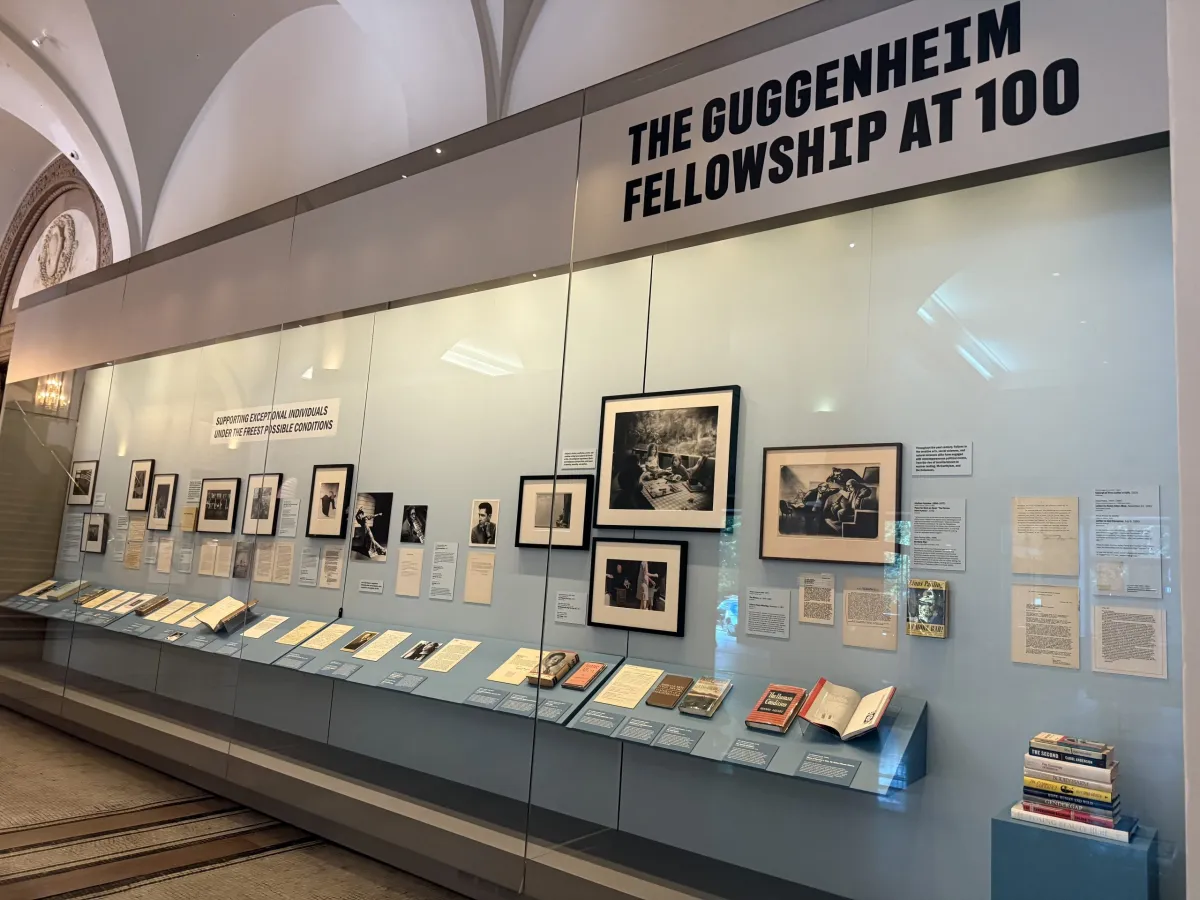
The Guggenheim's alumni include Ansel Adams, Dorothea Lange, Georgia O'Keeffe, Mark Rothko, Aaron Copland, Leonard Bernstein, Langston Hughes, Flannery O'Connor, and Martha Graham. More than 125 Nobel laureates have been Guggenheim Fellows. Joining this roster provides access to a legacy that few other programs can match.
The credential carries weight across multiple dimensions. Institutional recognition increases: museums, galleries, and universities treat Guggenheim Fellows with heightened seriousness. Funding leverage improves: other grant-makers view a Guggenheim as validation, making subsequent applications more competitive. Market impact is real for visual artists: the fellowship can increase the commercial value of your work. Career opportunities expand: teaching positions, residencies, commissions, and speaking invitations become more accessible.
Insider Tips for Applicants
- Your portfolio is everything. The peer review panel evaluates your work samples first and most carefully. Submit your strongest, most recent, most characteristic work. Do not try to game the panel by submitting work you think they want to see. Submit the work that best represents who you are as an artist.
- Your project proposal should be clear but not rigid. The foundation wants evidence of artistic vision, not a project management plan. Describe what you intend to accomplish, but leave room for the reality that creative work evolves.
- Choose your recommenders strategically. They should be people who know your work well and can speak with specific authority about its quality. A famous name who writes a generic letter is less valuable than a respected peer who writes a detailed, specific one.
- Apply even if you think you will not win. The discipline of articulating your artistic vision, assembling your strongest portfolio, and securing thoughtful references strengthens your professional practice regardless of the outcome. Many artists report that the Guggenheim application process clarified their direction and improved subsequent applications.
- The 2027 application opens in late summer 2026. Check the Guggenheim Foundation website for the exact date and updated guidelines, as the foundation has noted they are making changes to the 2027 competition timeline.
Who Should Apply
Mid-career and established artists with substantial bodies of work that demonstrate genuine distinction. There is no formal minimum career length, but the practical reality is that competitive applicants have significant exhibition histories, published work, or other evidence of sustained creative production at a high level.
Artists working in all visual arts disciplines are eligible: painting, sculpture, photography, video, performance, installation, new media, and other forms. The fellowship also supports work in literature, music composition, film, dance, and the natural and social sciences, making it one of the broadest funding programs available to creative individuals.
Final Verdict: Who Is This Actually For?
The Guggenheim is for artists who have already proven they can produce exceptional work and who are ready for the next level of recognition. If you are early in your career, focus on building your body of work and apply in a few years. If you are mid-career with a strong track record and a compelling vision for future work, the Guggenheim is one of the most important professional steps you can take. The 5% acceptance rate means you will probably not get it on your first try. Apply anyway. The application process itself has value, and the credential, if you win it, lasts forever. Visit the Guggenheim Foundation website to check the 2027 competition timeline and download application guidelines.