
Eighty-five percent of art advisors operate independently. 71.1% bring more than a decade of art-world experience. 65% manage 10 or fewer clients annually. These are not the numbers of an industry built around broad funnels or aggressive volume. They are the numbers of a profession built on narrow books, accumulated trust, and relationships that deepen slowly, often over years. The Art Advisor Report 2025, created in collaboration between The Art Marketplace, The Art Bystander, and The Art World Guide, draws on a global survey conducted between July and November 2025, with 128 responses from art advisors worldwide. Art advisory is one of the most influential but least understood professions in the art market. The advisor has often been present at the center of the room, but rarely at the center of the analysis.
Josh Baer reckons around 70% of contemporary and Modern sales at the big auction houses run through advisers, according to The Art Newspaper. Patti Wong, former chair of Sotheby's Asia for 20 years, left to set up Patti Wong and Associates in 2023 and says they have done more than $1 billion in deals since then, working with around ten clients. Bank of America just launched an art consulting service for clients with $100 million net worth and an art collection of $20 million fair market value or greater, as Observer reports. Today's high-end art consultants do not have other jobs. They are full-time advocates for art who separate wheat from chaff by wearing many hats: market analyst, dealmaker, historian, appraiser, registrar, estate manager, conservator, soothsayer. The question is not whether art advisors matter. They clearly do. The question is what they actually do, who uses them, and why. This guide covers what advisors do, who uses them, the "super advisories," the Art Advisor Report 2025 data, bank art consulting, and why advisory matters. For more on how the public market works, see our guide to auction houses and valuation.
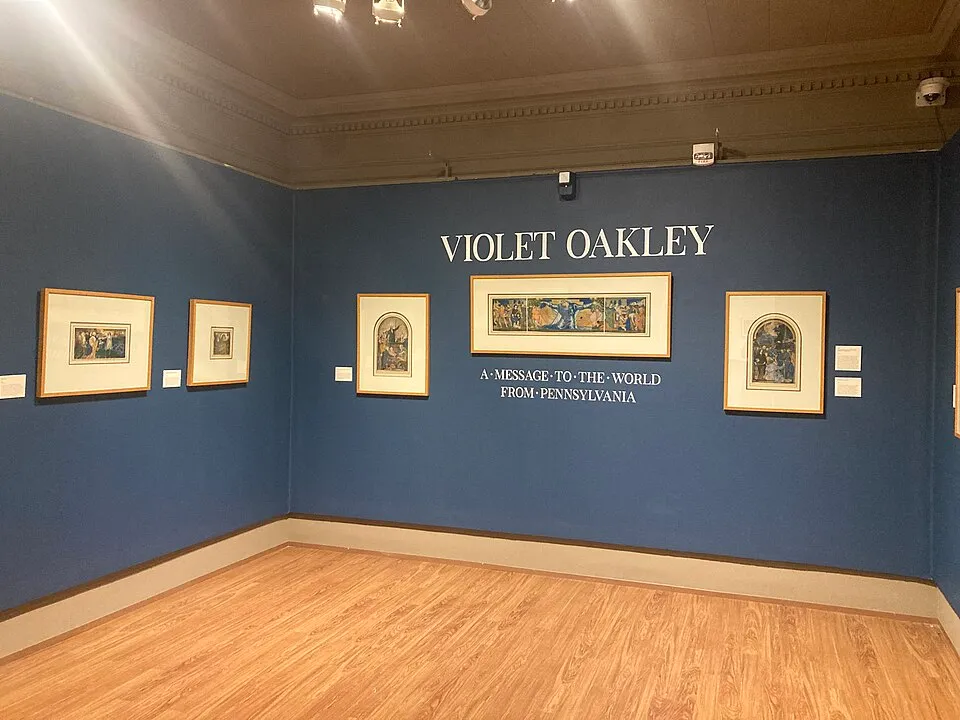
An art advisor in a gallery setting. The advisor has often been present at the center of the room, but rarely at the center of the analysis. Art advisory is not primarily about "selling art" in the crude sense. It is about reducing uncertainty in a market that still runs, to an extraordinary degree, on opacity, uneven access, private information, and social fluency. Image via Wikimedia Commons
What Art Advisors Actually Do
Art advisory is not primarily about "selling art" in the crude sense. It is about reducing uncertainty in a market that still runs, to an extraordinary degree, on opacity, uneven access, private information, and social fluency. The advisor's function is not simply transactional. It is interpretive, logistical, psychological, and strategic all at once. They source, filter, contextualize, reassure, negotiate, and, when necessary, slow clients down.
The day-to-day is unglamorous. One advisor describes visiting galleries, auction houses, and dealers' showrooms, running comps that actually compare like-for-like in period, scale, medium, condition, and exhibition history, calling conservators for opinions on condition reports, and speaking with museum curators who are hoping to secure funding for an acquisition through donations. And there are more emails with registrars, shippers, framers, storage facilities, insurance reps, and the unglamorous logistics that keep great objects safe. Today's high-end art consultants do not have other jobs. They are full-time advocates who wear many hats: market analyst, dealmaker, historian, appraiser, registrar, estate manager, conservator, soothsayer. They may no longer be on the payroll of the auction houses, but advisers still oil the auction wheels. Josh Baer reckons around 70% of contemporary and Modern sales at the big auction houses run through advisers. For more on the valuation framework advisors use, see our guide to auction houses and valuation.
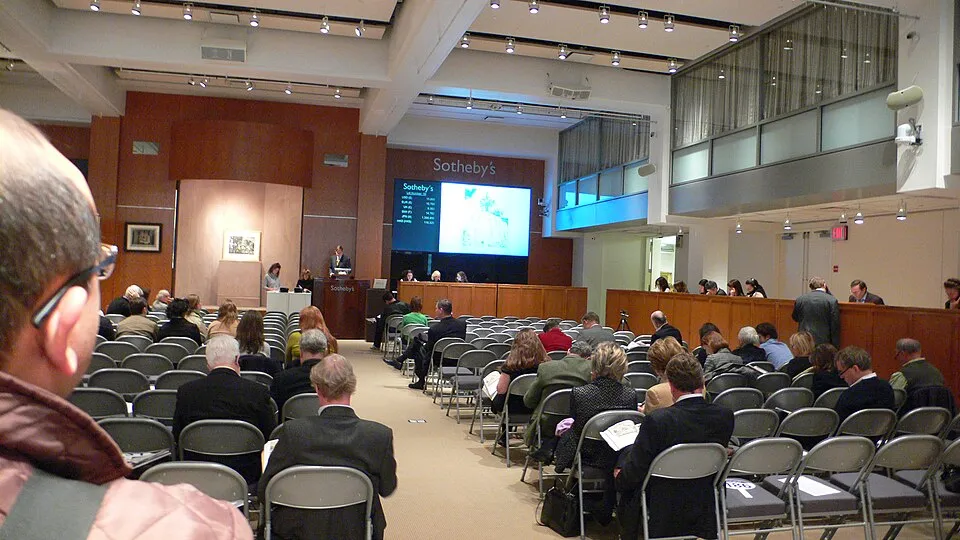
Auction house sale room. Josh Baer reckons around 70% of contemporary and Modern sales at the big auction houses run through advisers. The increasing digitisation and cost cutting of the major houses, with the departure of many senior specialists, has also been a drain on knowledge and personal service. Image via Wikimedia Commons
Who Uses Art Advisors
New collectors are a primary audience. Allan Schwartzman, a dean of the advisory business, says he always encourages clients, whether they are new or established collectors, to not spend money in the first six months. The approach is to take time looking, learning, and assessing short- and long-term goals. With experienced collectors, the work is seeing what interests should drop away to focus on others. Newer collectors often have no basis for understanding that what is most easily apprehensible is that which does not last, so advisors find ways to broaden their thinking. Schwartzman has a mature clientele that includes eminent nonprofits like the Robert Rauschenberg Foundation as well as collectors, 30 percent of whom are actively donating to museums or establishing their own.
Banks have entered the field. Bank of America is the most recent to launch an art consulting service for its high-net-worth private banking clients. Drew Watson, head of Bank of America's art services group, told Observer: "We help clients acquire works of art, whether they're just starting or they're looking to refine their collections." The bank is looking for clients with a $100 million net worth and an art collection of $20 million fair market value or greater. Citi inaugurated its program in 1979. Emigrant offers loans of between $1 million and $100 million with terms up to 15 years. The time problem is real. Collectors do have taste. What collectors do not have, especially those with a life, a job, a family, is the time to navigate a market with 700-plus serious galleries around the world and an equal amount of shows every 5 to 6 weeks from New York to Hong Kong. For more on where to begin, see our guide to art for beginners.
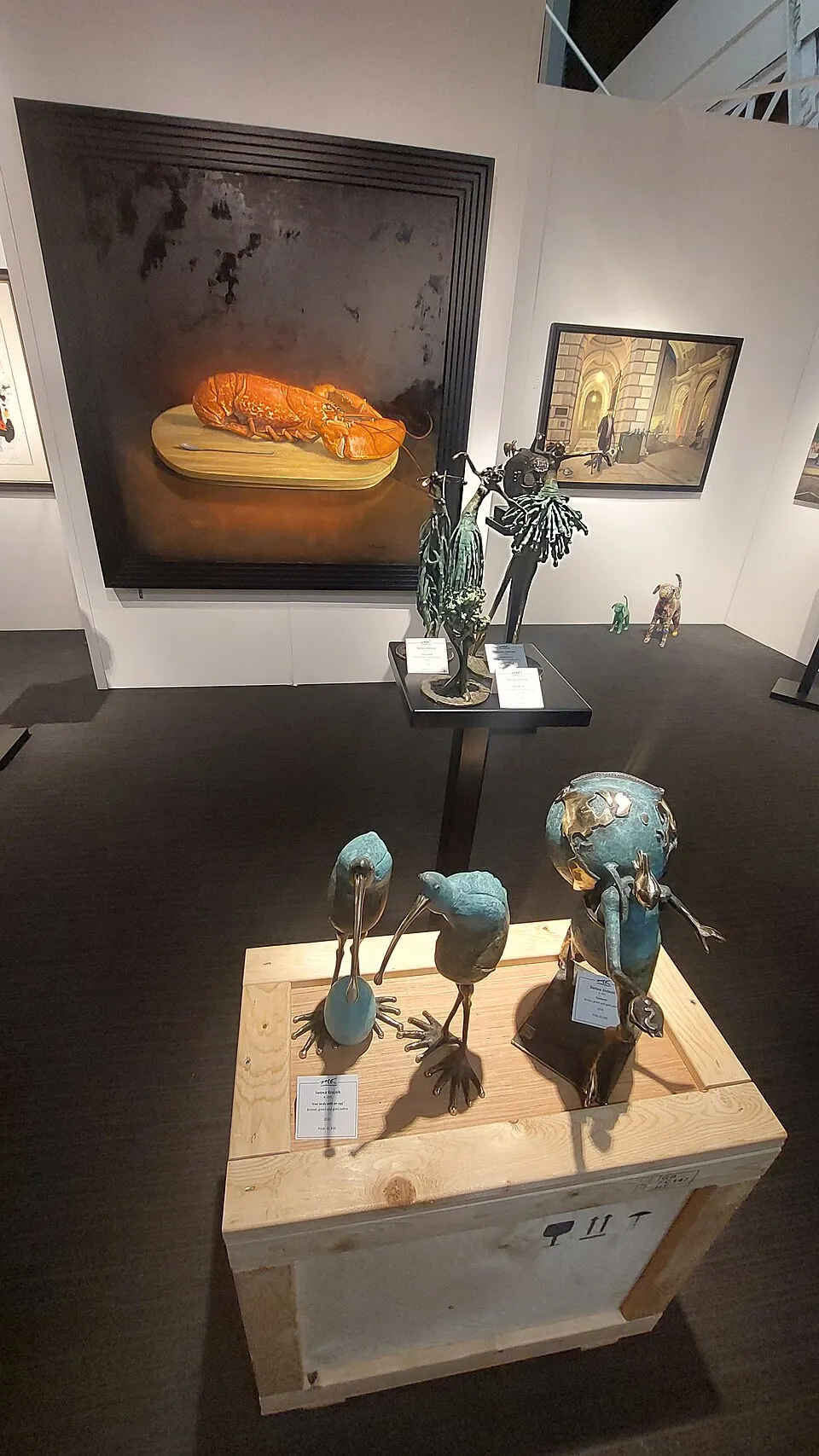
Art fair VIP preview. Collectors do have taste. What collectors do not have, especially those with a life, a job, a family, is the time to navigate a market with 700-plus serious galleries around the world and an equal amount of shows every 5 to 6 weeks. Image via Wikimedia Commons
The "Super Advisories": From Auction Houses to Independent Firms
While the major auction houses have shed staff amid a bearish market since the pandemic, a group of "super advisories" has been born, some founded by former top-level auction rainmakers with decades of experience and bulging address books. When Amy Cappellazzo left Sotheby's in 2021, she launched another advisory firm, Art Intelligence Global (AIG), along with her former Sotheby's colleague, Hong Kong-based Yuki Terase. Mike Goss, who was chief financial officer of Sotheby's until 2019, when Patrick Drahi bought the auction house, now fills the same role at AIG.
Hong Kong-based Patti Wong was chair of Sotheby's Asia for 20 years before she left to set up the firm Patti Wong and Associates with Sotheby's veteran Daryl Wickstrom in 2023. Wong says they have done more than $1 billion in deals since then, working with around ten clients. She questions whether the auction houses now can afford to have that very personalised approach to looking after the clients, because the touch points are fewer. Wong and her business partner Philip Hoffman, the head of the London-based advisory The Fine Art Group and a former chief financial officer of Christie's, announced their collaboration with Ed Dolman (the former executive chair of Phillips), Brett Gorvy (a co-founder of Levy Gorvy gallery and former chair of post-war and contemporary art at Christie's), and Dolman's son Alex to launch New Perspectives Art Partners. Gorvy estimates the NPAP partners have 350 clients between them, with the capacity to spend up to $30 million on an object. Without the vast overheads of auction houses and galleries, the leaner, nimbler, more discreet advisory model chimes with a cautious market. The biggest cost for an art adviser is travel, and you can easily stop that. It just makes sense that they could be more efficient and competitive. For more on the current market, see our guide to contemporary art trends.
The Art Advisor Report 2025: By the Numbers
The Art Advisor Report 2025, as The Art Bystander documents, drew 128 responses from art advisors worldwide. Eighty-five percent of respondents operate independently. 71.1% bring more than a decade of art-world experience. 65% manage 10 or fewer clients annually. On the market outlook, 48% of respondents characterize current conditions as either decline or strong decline, against a much smaller share describing the market as in growth or strong growth. The three most-cited challenges are finding new clients, access to inventory, and pricing transparency. Advisors are being asked not only to guide taste, but to solve scarcity, ambiguity, and mistrust.
Art advisory follows a different logic. These are not the numbers of an industry built around broad funnels or aggressive volume. They are the numbers of a profession built on narrow books, accumulated trust, and relationships that deepen slowly, often over years. The advisor's business is not really one of scale. It is one of concentration. For more on building your own knowledge base, see our guide to teaching yourself art history.
Bank Art Consulting: A Different Model
Citi and Emigrant banks have been in the lead here, but Bank of America is the most recent to launch an art consulting service. Citi inaugurated its program in 1979. Betsy Bickar of Citi says: "We provide collectors globally with objective, curatorially informed guidance across the full arc of art collection and maintenance, whether they are buying one artwork or building a collection." Art consultancy services offered by banks run the gamut from educating clients on artists or a particular work of art, doing due diligence (provenance, literature, exhibition history and condition) before the purchase of an artwork, helping them navigate the process of buying and selling, as well as how to care for, ship, store, appraise, insure, and create documentation for objects in a collection.
There are several other services not generally offered by independent art advisors, including art-backed lending that uses artworks in a collection as collateral. Suzanne Gyorgy, a partner at Emigrant Bank Fine Art, says the firm "can arrange all aspects of collateralized art loans, from appraisals to negotiating the terms of a loan and finally lending the money, and we can do it all in-house." Emigrant offers loans of between $1 million and $100 million with terms up to 15 years. The minimums are steep. Bank of America looks for clients with a $100 million net worth and an art collection of $20 million fair market value or greater. For art consulting, the client criteria, the relationship minimum is $50 million net worth with $25 million on the firm. Bank art consulting is a different model from independent advisory: fiduciary, not transactional. For more on the cultural context, see our guide to art and society.
Why Art Advisory Matters
The art world has been called "the art world's secret club." The art market is an unregulated market that is famously opaque and driven as much by emotion as metrics. Advisors reduce that opacity. They provide access, context, and judgment in a market that runs on private information. As with more intimate relationships, trust is paramount to advisor-client longevity. Unlike stockbrokers or lawyers, art advisors do not need a license to operate, nor do they bill by the hour. Some work on retainer but most earn commissions on individual acquisitions, even when they take months to transact. None advertise their services. Word of mouth is the only calling card advisors need.
Art advisory is not a scale business in the conventional sense. It is a trust-and-access business, where judgment, sourcing, negotiation, and execution create real advantage. In a market full of noise, the advisor's real value lies in turning complexity into clarity. For more on the works that drive the market, see our guide to famous paintings.
Final Thoughts
Eighty-five percent of art advisors operate independently. 71.1% bring more than a decade of art-world experience. 65% manage 10 or fewer clients annually. The Art Advisor Report 2025 drew 128 responses from art advisors worldwide, and 48% of respondents characterize current conditions as either decline or strong decline. Around 70% of contemporary and Modern sales at the big auction houses run through advisers. Patti Wong, former chair of Sotheby's Asia for 20 years, set up Patti Wong and Associates in 2023 and has done more than $1 billion in deals since then, working with around ten clients. Amy Cappellazzo launched Art Intelligence Global in 2021. New Perspectives Art Partners has 350 clients between them, with the capacity to spend up to $30 million on an object. Bank of America looks for clients with a $100 million net worth and an art collection of $20 million fair market value or greater. Citi inaugurated its program in 1979. Emigrant offers loans of between $1 million and $100 million with terms up to 15 years. Art advisory is not primarily about selling art. It is about reducing uncertainty in a market that runs on opacity, uneven access, private information, and social fluency. The advisor's business is not one of scale. It is one of concentration.
If you are buying art, whether at a gallery, at auction, or privately, consider whether you need an advisor. The question is not whether you have taste. The question is whether you have the time, the access, and the expertise to navigate a market with 700-plus serious galleries around the world. If you do, you do not need an advisor. If you do not, find one, by word of mouth, not by advertising. None advertise their services. Word of mouth is the only calling card advisors need. If you have $100 million net worth and $20 million in art, call Bank of America or Citi. If you are buying at the top of the market, call Patti Wong or Amy Cappellazzo. If you are starting out, find an independent advisor with more than a decade of art-world experience who manages 10 or fewer clients annually, because the advisor's business is not really one of scale. It is one of concentration. For more on approaching unfamiliar work, see our guide to how to look at art.


