
In 1991, Newsweek named the Diana School in Reggio Emilia, Italy, the most progressive early childhood education program in the world. The school's approach, now known as the Reggio Emilia Approach, places art at the center of education. Not art as a once-a-week enrichment activity, but art as the primary vehicle for learning. Children in Reggio Emilia schools do not "do art." They think through art, communicate through art, and understand the world through art. The approach has spread to over 40 countries. It is not the only approach. Waldorf education, developed by Rudolf Steiner in 1919, also places art at the center, but with a different philosophy: art as spiritual development, not intellectual inquiry. Montessori education, developed by Maria Montessori in 1907, integrates art into practical life, art as a skill, not a subject. These three approaches, Reggio, Waldorf, Montessori, represent the most influential arts-based educational philosophies in the world. And research shows they work: arts-based education develops not just creativity but cognition, social-emotional skills, and academic performance. "In an arts-based kindergarten, children are not only learning knowledge, but also learning to be creative and imaginative with the knowledge they learn."
Art education for children is not just about making art. It is about cognitive development, creative thinking, social-emotional growth, and self-expression. The research is clear: children who receive arts education outperform children who do not on measures of creativity, academic achievement, and social-emotional development. And yet, arts education is declining. Budget cuts, standardized testing, and the emphasis on STEM have marginalized art in schools. The gap between what research shows and what schools do is the subject of this guide. This guide covers teaching art to children: the three major approaches (Waldorf, Reggio Emilia, Montessori), what research shows about the benefits of arts education, practical approaches for parents and teachers, the developmental stages of children's art, the decline of arts education and what to do about it, and resources for teaching art to children in 2026.
Waldorf Education: Art as Spiritual Development
Waldorf education was developed by Rudolf Steiner in 1919, based on his spiritual philosophy (anthroposophy). The approach follows Steiner's theory of child development in three stages: 0-7 (imitation and play), 7-14 (imagination and feeling), and 14-21 (independent thinking). Art is central to all three stages. "The Waldorf method advocates teaching as an art by creating an aesthetic environment, and presenting subject matter in an artistic way." The curriculum includes "movement, drawing, water coloring, song, drama, puppetry, finger knitting, embroidery, beeswax sculpting, and felting." The materials are natural: beeswax crayons, watercolor paints, wool felt, wooden toys. Plastic is avoided. There are no electronic media in the classroom.
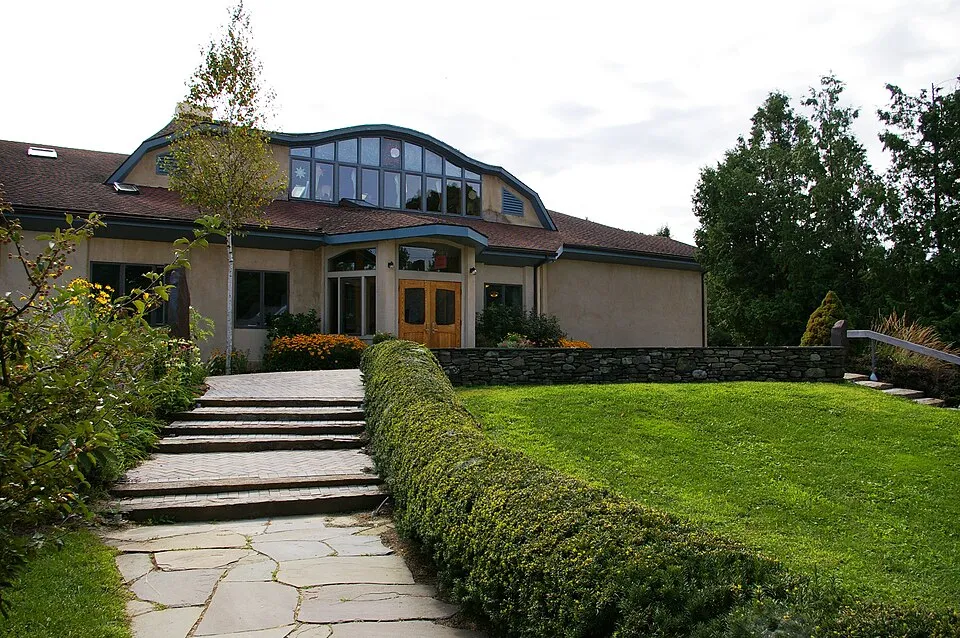
Waldorf education uses "natural art activities, developing the child's spiritual sensitivity and awareness of the world." The method emphasizes process over product, natural materials, and age-appropriate creative expression. Image via Wikimedia Commons
Waldorf art education emphasizes process over product. Children are not taught to draw realistic objects. They are taught to experience color, form, and movement. "The main emphasis is on creativity, singing, reading, and acting." The teacher tells stories rather than reading them. "Teachers tell, rather than read, stories in an expressive voice, modeling a quality the class is expected to imitate." The children respond with artistic expression: drawing, painting, acting. Studies of Waldorf graduates show high levels of creativity and social engagement. However, "child outcome research is not intrinsic to the way educators work in any of these three approaches." Waldorf relies on "testimonials of parents and graduates" rather than controlled studies. For more on the therapeutic dimension of art practice, see our guide to art therapy.
Reggio Emilia: Art as Inquiry
The Reggio Emilia Approach was developed by Loris Malaguzzi after World War II in the town of Reggio Emilia, Italy. The approach is based on the belief that "children are full of curiosity and creativity; they are not empty memory banks waiting to be filled with facts, figures, and data." Art is not a subject. It is "a vehicle for learning." Each Reggio school has an atelier (art studio) and an atelierista (art specialist). The atelier is filled with materials: clay, wire, paint, light tables, natural objects. Children use it as a laboratory for exploration. "Teachers organize environments rich in possibilities and provocations that invite the children to undertake extended exploration and problem solving, often in small groups."
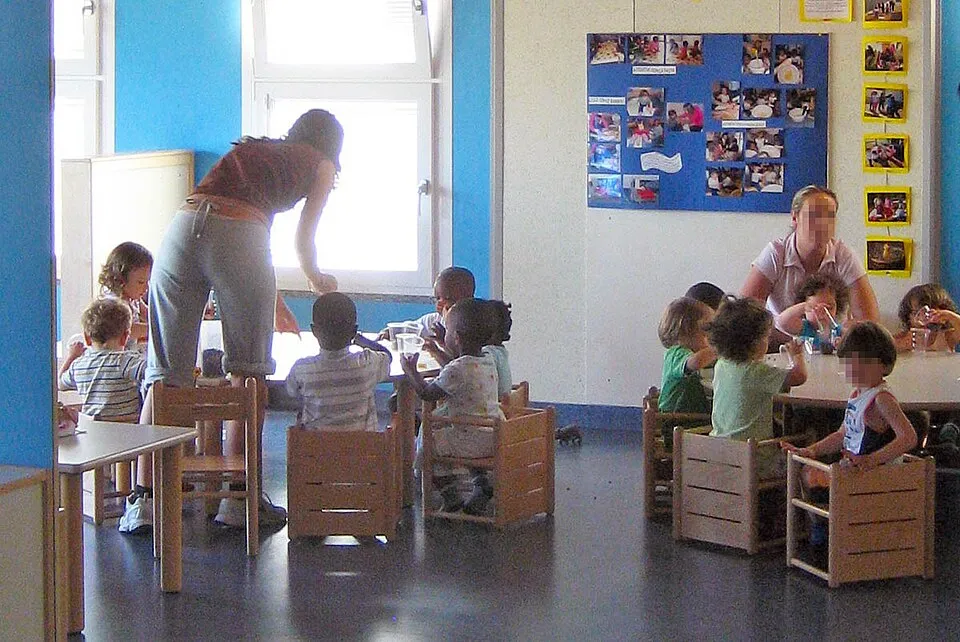
The Reggio Emilia atelier (art studio). In the Reggio approach, art is not a subject but a "vehicle for learning," and the environment, the "amiable school," is "the third teacher." Image via Wikimedia Commons
Reggio education emphasizes documentation. Teachers photograph, record, and transcribe children's words and actions, making "the learning visible." The documentation is not assessment. It is a tool for reflection, for the child to "trace and revisit their words and actions." The documentation also makes the child's learning visible to parents, who are partners in the educational process. "The physical environment (the 'amiable' school) receives much attention and supports exchange and relationships through physical qualities of transparency, reflectiveness, openness, harmony, softness, and light." The environment is "the third teacher," after the parent and the classroom teacher. A 2024 metasynthesis of 23 studies on Reggio-inspired practices in Australia found "the significant impact of the REA on research, teaching and learning, cementing its status as a promising avenue." However, "integrating it into Australian early years education poses challenges, necessitating proactive measures such as educator and policy maker involvement, professional development, resource support, and a rethink of conventional teaching methods." For more on how art functions in social contexts, see our guide to art and society.
Montessori: Art as Practical Life
Maria Montessori developed her educational method in 1907 in Rome. The Montessori method emphasizes independence, self-directed learning, and practical life skills. Art is integrated into the curriculum as a practical life activity. Children learn to cut, paste, draw, and paint as skills, not as self-expression. Montessori classrooms have "prepared environments," shelves with materials arranged by subject and difficulty. Art materials (crayons, paints, clay, scissors) are available for children to choose independently. The teacher does not instruct in art. The teacher prepares the environment and observes. The child learns through exploration and repetition.
Montessori art education is more structured than Waldorf or Reggio. The emphasis is on skill development, learning to hold a brush, to cut with scissors, to mix colors, rather than on creative expression or spiritual development. The approach is practical: art is a skill that develops the hand, the eye, and the mind. For more on the therapeutic dimension of art practice, see our guide to art therapy. The Early Childhood Research and Practice journal at the University of Illinois has a clear comparative overview of the three approaches, and Springer publishes a useful comparative analysis of Montessori, Waldorf, and Reggio Emilia.
What Research Shows: The Benefits of Arts Education
"In an arts-based kindergarten, children are not only learning knowledge, but also learning to be creative and imaginative with the knowledge they learn." Arts education develops divergent thinking, the ability to generate multiple solutions to a problem, which is the foundation of creativity. Arts education also develops cognitive skills that transfer to other domains. A 2020 systematic literature review found "a correlation between pedagogical practices of Waldorf schools and MI theory compatible teaching practices and between Waldorf schools and neuroeducation." The correlation suggests that arts-based education engages multiple intelligences (Gardner's theory) and supports brain development.
"Arts-based curriculums aid in the development of the whole child to not only mature in their own time and space but also encouraging the child to build meaningful relationships with other children, the teachers, their parents, and the environment around them." Arts education develops empathy, collaboration, and self-regulation. Studies show that arts education improves academic performance across subjects. The "transfer effect," skills learned in art transferring to math, reading, and science, is documented but debated. The strongest evidence is for transfer to reading and spatial reasoning. The caveat is that "child outcome research is not intrinsic to the way educators work in any of these three approaches." Waldorf, Reggio, and Montessori do not conduct controlled studies of their own effectiveness. They rely on qualitative research, testimonials, and practitioner observation. The evidence base is growing but still limited. For more on the therapeutic dimension of art practice, see our guide to art therapy.
The Developmental Stages of Children's Art
Children's art develops in stages. In the scribbling stage (ages 2-4), children make marks, random, uncontrolled, for the pleasure of movement. The scribbles are not representational. They are kinetic. The child is learning that the hand can make a mark, and the mark can be seen. In the preschematic stage (ages 4-7), children begin to draw recognizable shapes: circles, lines, simple figures. The "tadpole man" (a circle with lines for arms and legs) is the universal first representation of the human figure. The child is learning that marks can represent things.
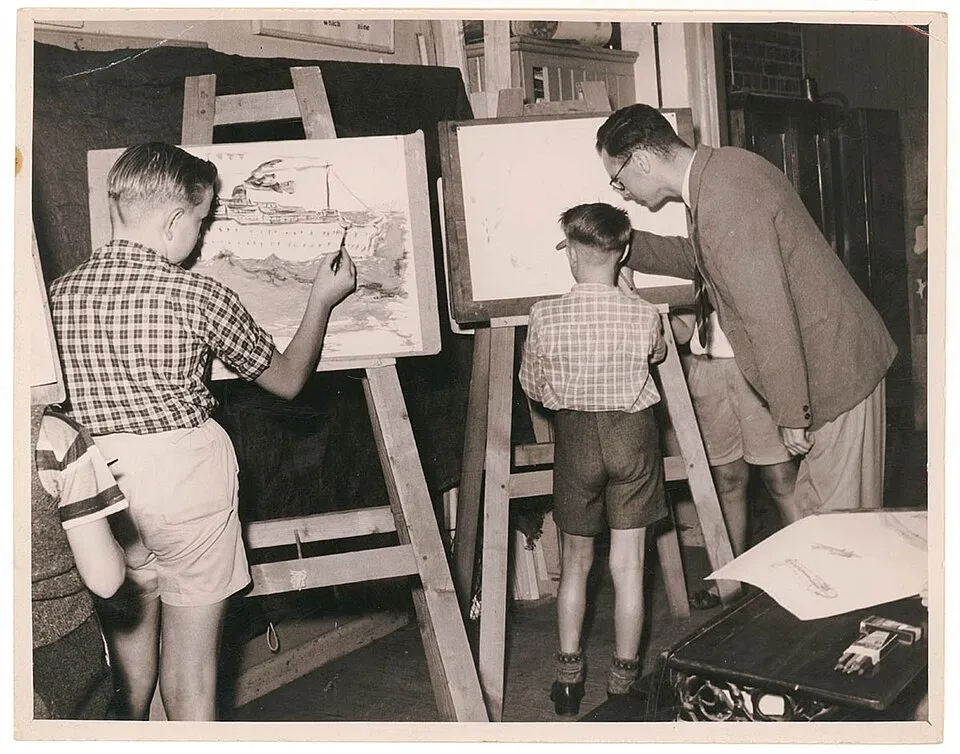
Children in an art class. Research shows that arts-based education develops the "whole child," not just knowledge but creativity, imagination, and social-emotional growth. Image via Wikimedia Commons
In the schematic stage (ages 7-9), children develop schemas, repeated ways of drawing things (a house is a square with a triangle roof, a tree is a brown line with a green circle). The schemas are not copied from observation. They are invented. The child is learning that representation is a system. In the dawning realism stage (ages 9-12), children begin to draw from observation, trying to draw what they see, not what they know. This is the stage where many children stop making art, because the gap between what they see and what they can draw becomes painful. The child who drew schematic houses happily at age 8 becomes frustrated at age 10 because the house "doesn't look right." The dawning realism stage is the crisis of children's art. Most children stop making art at this stage, not because they lack talent but because the demand for realism exceeds their skill. The solution is not to teach realism but to teach that art is not realism, that art is expression, communication, and exploration, not photographic accuracy. For help thinking about what you see, see our guide on how to look at art for beginners.
Practical Approaches for Parents and Teachers
The single most important principle in teaching art to children is: emphasize process over product. The child's experience of making, the exploration, the experimentation, the discovery, is more valuable than the finished product. The parent or teacher who says "what is that supposed to be?" is sending the wrong message. The right message is: "tell me about what you made." Provide open-ended materials that allow exploration, not kits that produce a predetermined result. Crayons, paint, clay, paper, scissors, glue, natural materials (leaves, sticks, stones). The child should decide what to make, not the kit.
Do not correct a child's art. The child who draws a blue sun or a green sky is not wrong. They are exploring. Correction teaches the child that there is a "right" way to make art, and that the right way is the adult's way. This kills creativity. Display the child's art, on the wall, on the refrigerator, in a portfolio. Discuss the art, not "what is it?" but "how did you make it?" "what were you thinking about?" "how did you choose that color?" The discussion makes the child's process visible and valued. For more on the therapeutic dimension of art practice, see our guide to art therapy, and for a self-directed approach for older learners, our guide on how to teach yourself art history.
The Decline of Arts Education, and What to Do About It
Arts education in public schools has declined for decades. Budget cuts, standardized testing, and the emphasis on STEM (science, technology, engineering, math) have marginalized art. In the US, the percentage of schools offering visual arts education has declined since the 1990s. The decline is worst in low-income communities, where arts education is most needed and least available. The gap between what research shows (arts education develops creativity, cognition, and social-emotional skills) and what schools do (marginalize or eliminate arts education) is a policy failure. The research is clear. The policy is driven by test scores, not by developmental science.
Parents can fill the gap: by providing art materials at home, by making art with their children, by visiting museums, by enrolling children in community art classes. Teachers can integrate art into other subjects: drawing in science, painting in history, collage in literature. Advocates can push for policy change: for arts education as a core subject, not an enrichment activity. The research is there. The evidence is there. The will is not. For more on how art functions in social contexts, see our guide to art and society, and for the broader case for creativity, our guide to the healing power of art and our piece on contemporary art trends in 2026. For absolute beginners, see our guide on art for beginners.
Final Thoughts
Teaching art to children is not about making artists. It is about developing the whole child. The three major approaches, Waldorf (art as spiritual development), Reggio Emilia (art as inquiry), and Montessori (art as practical life), all place art at the center of education, but with different philosophies and methods. Research shows that arts-based education develops creativity ("children are not only learning knowledge, but also learning to be creative and imaginative with the knowledge they learn"), cognition ("a correlation between pedagogical practices of Waldorf schools and MI theory compatible teaching practices and neuroeducation"), and social-emotional skills ("arts-based curriculums aid in the development of the whole child"). The developmental stages of children's art, scribbling (2-4), preschematic (4-7), schematic (7-9), dawning realism (9-12), show that art develops in stages, and that the crisis of dawning realism (when children demand realism but lack the skill) is where most children stop making art. The solution is process over product, emphasizing exploration, not accuracy.
My position is that the decline of arts education is a policy failure that contradicts the research. Arts education should be a core subject, not an enrichment activity. The crisis of dawning realism, when children stop making art because they cannot draw realistically, is caused by the adult expectation of realism, not by the child's lack of talent. The solution is process over product. If you are a parent, provide art materials and make art with your children, not to make artists but to develop their creativity, cognition, and confidence. If you are a teacher, integrate art into your subject: drawing in science, painting in history, collage in literature. If you are an advocate, push for arts education as a core subject. The research is clear. The evidence is there. The children are waiting.


