
In 2019, the Montreal Museum of Fine Arts became the first museum in the world to partner with a medical association, allowing Canadian doctors to prescribe museum visits as part of clinical care for physical and mental health conditions. Patients received free museum admission alongside their other treatments. The program was backed by research showing that engaging with art reduces cortisol levels, lowers blood pressure, and alleviates symptoms of anxiety and depression. It sounds surprising until you look at how long humans have been using creative expression as a form of healing: at least 40,000 years, far longer than we have had written medicine.
Art therapy is a formal clinical field that uses creative expression as a therapeutic tool. It works in two distinct directions: making art as a way to process emotions and experience, and viewing existing art as a stimulus for reflection, empathy, and psychological well-being. Both approaches now have solid research support, and the evidence base has grown significantly in the past few years. A 2024 review in Frontiers in Psychology surveyed the neuroscience behind art therapy, identifying how it reconfigures brain networks associated with self-referential processing, emotion regulation, and stress response. A 2025 follow-up in the same journal proposed a framework positioning art-making as an intervention that simultaneously affects biological, psychological, and cultural dimensions of mental health.
Neither approach requires artistic skill. The therapeutic benefit comes from the process of making and engaging, not from the quality of what gets produced. This guide covers the science, the clinical applications, and practical ways to use art's effects in your own life.
What Is Art Therapy?
Art therapy is a form of psychotherapy that uses art-making as its primary mode of communication and expression. Developed in the mid-20th century by pioneers like Margaret Naumburg and Edith Kramer, it is practiced by licensed art therapists who hold master's degrees in art therapy and clinical psychology.
Art therapy differs from recreational art classes in several important ways:
Therapeutic intent — The goal is not to produce beautiful artwork but to use the creative process as a vehicle for self-expression, emotional processing, and psychological insight.
Clinical framework — Art therapy sessions are conducted by trained professionals within a therapeutic relationship, with treatment goals and clinical assessment.
Process over product — The emphasis is on the experience of making art rather than the quality of the result. A messy, "ugly" drawing that helps someone express grief is more therapeutically valuable than a technically perfect painting made without emotional engagement.
Non-verbal expression — Art provides a way to communicate experiences, emotions, and memories that may be too painful, complex, or pre-verbal to express in words. This makes it especially valuable for trauma survivors, children, and individuals with communication difficulties.
The Science: How Art Affects the Brain
Creating Art
Neuroscience research has identified several mechanisms through which art-making affects mental health:
Cortisol reduction. A 2016 study by Kaimal et al., published in the journal Art Therapy, found that 45 minutes of art-making significantly reduced cortisol levels in participants regardless of their artistic skill level. Beginners benefited as much as trained artists. A 2025 pre-registered study published in PLOS ONE extended these findings, showing that painting specifically reduced anxiety above and beyond what non-creative activities with similar motor engagement produced, confirming that the creative element, not just the physical act, drives the effect.
Brain network reconfiguration. A 2025 review in Frontiers in Psychology synthesized neuroimaging research showing that art-making modulates the Default Mode Network (associated with self-reflection and internal processing), the Salience Network (emotion and threat detection), and the Central Executive Network (cognitive control). The pattern of change suggests art-making helps the brain shift from rigid, maladaptive states toward more integrated and flexible ones: a neurological mechanism that may explain its effectiveness across conditions as different as PTSD, depression, and anxiety.
Dopamine and the reward system. Creative activities stimulate the brain's reward circuitry, producing dopamine, the neurotransmitter associated with motivation, pleasure, and reinforcement. This is part of why making art can feel absorbing in a way that is qualitatively different from completing a task: the creative uncertainty keeps the reward system engaged.
Flow state. The immersive concentration that sustained art-making produces corresponds to what psychologist Mihaly Csikszentmihalyi called flow. Research consistently associates flow states with reduced anxiety, elevated mood, and a stronger sense of agency. The 2025 PLOS ONE study identified cognitive engagement and reduced boredom as key mediators of anxiety reduction during painting, suggesting that the challenge of creative decision-making is itself part of the mechanism.
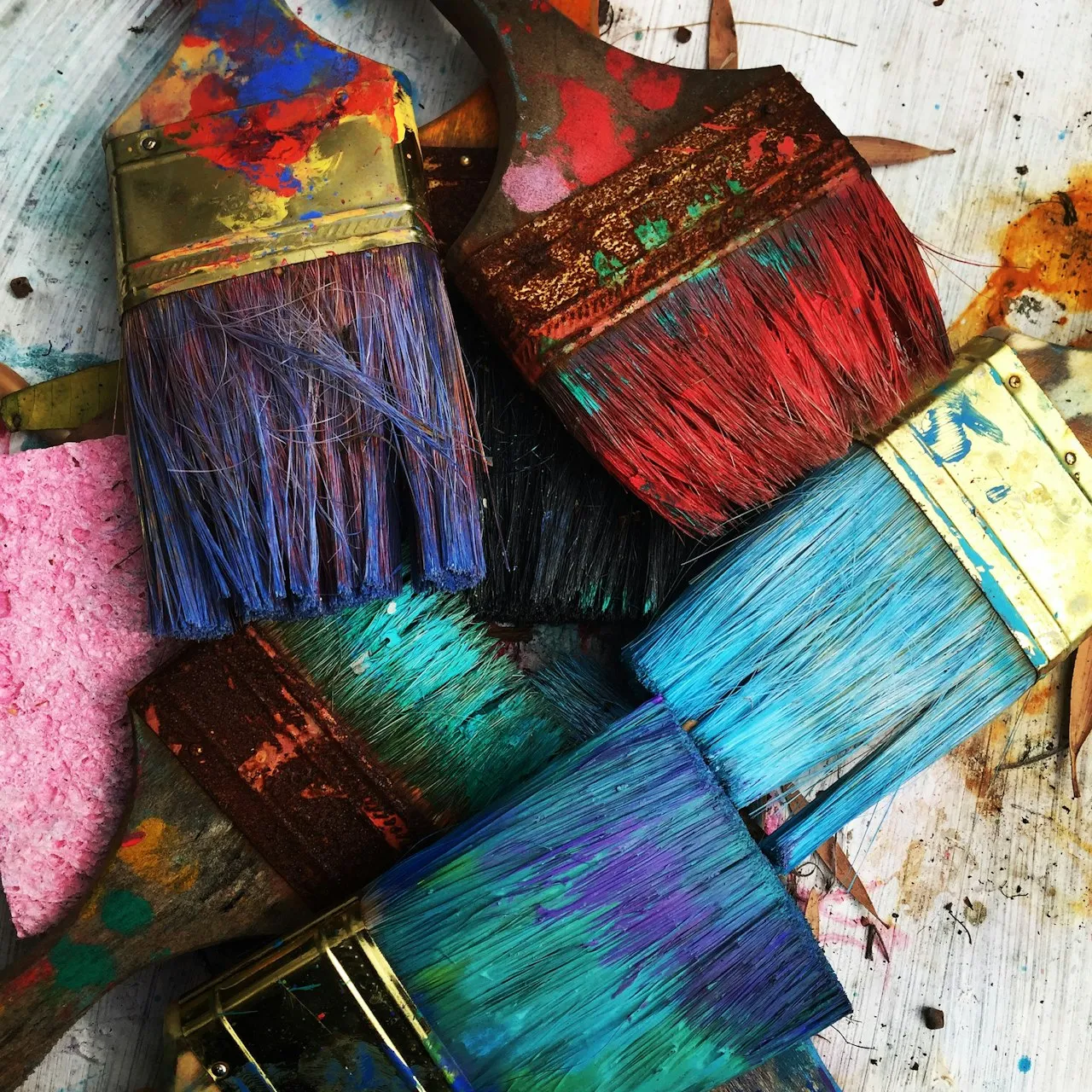
The process of creating art — regardless of skill level — reduces cortisol, stimulates dopamine release, and activates brain networks associated with self-reflection and emotional processing. Photo by Alice Dietrich on Unsplash
Viewing Art
Engaging with existing artworks also produces measurable psychological effects:
Mirror neuron activation — When we look at art depicting human figures, actions, and emotions, our mirror neurons fire as if we were experiencing those actions and emotions ourselves. This neural mirroring is the biological basis of empathy and may explain why viewing art can produce powerful emotional responses.
Reduced rumination — A 2017 study at the University of Westminster found that a lunchtime visit to an art gallery significantly reduced cortisol levels and self-reported stress in London office workers. The researchers suggested that art viewing interrupts the cycle of repetitive negative thinking (rumination) that drives anxiety and depression.
Aesthetic experience — Neuroscientist Semir Zeki's research on "neuroaesthetics" has shown that viewing beautiful art activates the same brain regions (particularly the medial orbito-frontal cortex) that respond to love, desire, and other deeply pleasurable experiences. The aesthetic response is not a luxury — it is a fundamental human neural capacity.
Applications of Art Therapy
Trauma Processing
Art therapy is particularly effective for trauma because traumatic memories are often stored as sensory fragments — images, sounds, physical sensations — rather than coherent narratives. Traditional talk therapy requires patients to put these experiences into words, which can be retraumatizing for some. Art therapy provides an alternative pathway: patients can express traumatic material visually, externalizing it onto paper or canvas where it can be examined, modified, and gradually integrated at a safe distance.
Art therapy has been used with combat veterans, survivors of sexual assault, refugees, children who have experienced abuse, and survivors of natural disasters. The evidence base is strong and growing — the American Art Therapy Association cites over 200 peer-reviewed studies supporting its effectiveness.
Mental Health Conditions
Art therapy is used as an adjunct treatment for a range of mental health conditions:
Depression — Art-making can counteract the withdrawal, passivity, and loss of pleasure that characterize depression by providing a structured, achievable creative task that produces visible results.
Anxiety — The absorbing, present-focused nature of art-making interrupts anxious thinking patterns. Repetitive art activities like mandala drawing and doodling are particularly effective for anxiety reduction.
PTSD — Art therapy helps patients externalize traumatic imagery and gain a sense of control over material that otherwise feels overwhelming.
Eating disorders — Art therapy provides a non-verbal way to explore body image, self-perception, and emotional regulation.
Dementia and Alzheimer's — Creative activities can access preserved abilities and memories even as cognitive function declines. Music and visual art are among the last capacities lost in dementia, making arts-based therapies especially valuable for this population.
Children and Adolescents
Art therapy is widely used with children because children naturally communicate through imagery and play rather than verbal analysis. A child who cannot articulate feelings of fear, anger, or grief may express them clearly through drawing. Art therapists are trained to read visual imagery in the context of developmental psychology, recognizing symbolic content and emotional themes in children's artwork.
Museum-Based Wellness Programs
The Montreal prescription program is part of a broader trend of museums recognizing and formalizing their role in public health. Programs around the world include:
Social prescribing (UK) — The National Health Service refers patients to arts and cultural activities, including museum visits, as part of treatment for loneliness, mild depression, and chronic health conditions.
Museum programs for dementia — The Museum of Modern Art's "Meet Me at MoMA" program pioneered guided gallery visits for people with Alzheimer's and their caregivers, using art viewing to stimulate memory, conversation, and emotional connection.
Hospital art programs — Research consistently shows that patients in hospital rooms with art heal faster, require less pain medication, and report higher satisfaction than those in rooms without art. Many hospitals now employ arts coordinators to curate healing environments.
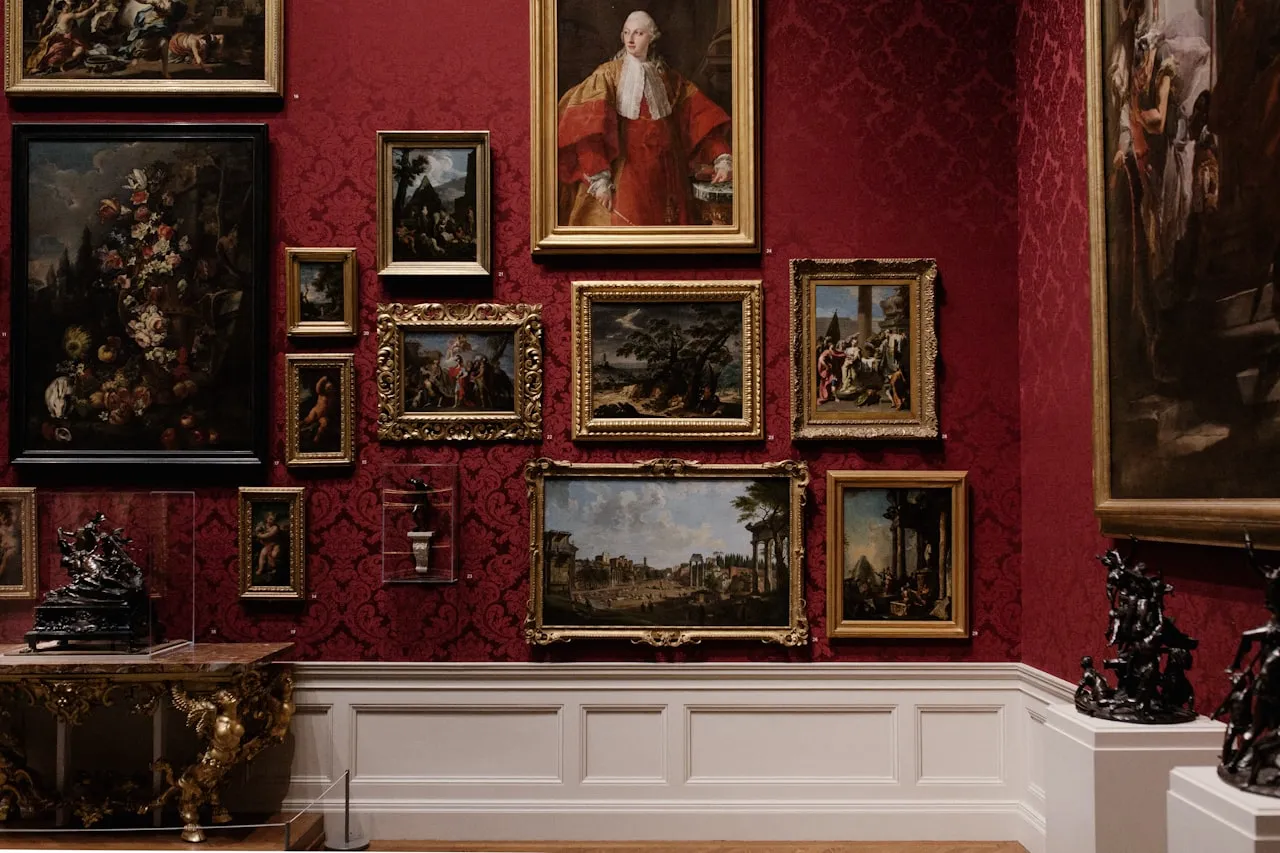
Research shows that museum visits reduce cortisol levels and self-reported stress. Some healthcare systems now prescribe gallery visits as part of treatment for mental health conditions. Photo by Zalfa Imani on Unsplash
How to Use Art for Your Own Well-Being
You do not need a therapist to benefit from art's healing effects. Here are evidence-based strategies for incorporating art into your mental health toolkit:
Create Something
Keep an art journal — Regular visual journaling reduces stress and promotes self-reflection. The research is clear: you do not need to be skilled. The therapeutic benefit comes from the process, not the product.
Draw mandalas — The repetitive, symmetrical nature of mandala drawing activates the parasympathetic nervous system (the "rest and digest" response), making it one of the most reliably calming art activities available.
Try adult coloring — Structured coloring activities reduce anxiety by providing a focused, achievable task that occupies the mind without demanding creative decision-making.
Work with clay — The physical, tactile nature of clay work is uniquely grounding. The sensory engagement of squeezing, shaping, and smoothing clay engages the body in ways that paper-based art does not.
View Art Intentionally
Visit a museum or gallery — Even a brief visit (30–45 minutes) can reduce stress and improve mood. Visit our guide to how to visit an art museum for strategies that maximize the experience.
Slow look — Choose one artwork and spend ten full minutes with it. Notice details. Let your mind wander. This practice — called "slow looking" — activates the default mode network and promotes the reflective state associated with reduced anxiety.
Engage emotionally — Ask yourself how the artwork makes you feel. Do not analyze — just notice your emotional response. This emotional engagement is where the therapeutic benefit lies.
Live with art — Having art in your daily environment — even an inexpensive print — provides micro-doses of aesthetic experience throughout the day. The cumulative effect on mood and well-being is meaningful.
The Bigger Picture: Why Art and Health Are Connected
The connection between art and health is not accidental. Humans have been making art for at least 40,000 years — far longer than we have had written language, agriculture, or cities. The impulse to create and respond to images is not a cultural luxury that appeared after our basic needs were met. It is a fundamental human capacity, deeply wired into our neurology and psychology, that evolved because it serves essential functions: processing experience, communicating emotion, strengthening social bonds, and making sense of a complex and often threatening world.
When we create art or engage deeply with existing art, we are exercising a capacity that is as basic and as necessary as language, movement, or social connection. The modern rediscovery of art's therapeutic value is not new — it is a return to understanding that indigenous cultures, spiritual traditions, and intuitive healers have maintained for millennia. Art matters not because it is beautiful (though it often is) but because it helps us be human.
Final Thoughts
The science on art and mental health has become genuinely solid. Creating art reduces cortisol, activates dopamine pathways, and reconfigures the brain networks that underlie self-reflection and emotional regulation. Viewing art interrupts rumination, activates mirror neuron systems, and produces measurable reductions in self-reported stress. These are not soft findings from small studies. They are reproducible across populations, experience levels, and clinical contexts.
You do not need a diagnosis to benefit from any of this. You do not need to make good art. You do not need expensive materials or a museum membership, though a museum visit is one of the most reliably effective stress interventions available for the price of an admission ticket. What you need is the willingness to make something or to look at something with genuine attention. The effects follow the act, not the intention.
To start building a creative practice, read the guide to art journals and sketchbooks, which covers practical approaches that require no prior skill. For developing the habit of attentive looking, see how to start appreciating art. And for understanding why art matters beyond its aesthetic function, the guide to why art matters covers the broader historical and neurological case. What are you waiting for? Pick something up.


