
The field of American folk art was first defined at the turn of the twentieth century by collectors, professional artists, critics, dealers, and curators whose search for an authentic American art seemed to be finally answered in works that presented a nuanced picture of national identity, faith, progress, ingenuity, community, and individuality. The American Folk Art Museum, founded in 1961, holds more than seven thousand works of art from four centuries and nearly every continent, from compelling portraits and dazzling quilts to powerful works by living artists in a variety of mediums. In 1932, MoMA offered the exhibition entitled "American Folk Art, the Art of the Common Man." Promoting an overtly American definition of "folk art" and anticipating the New Deal ethos, the text of that exhibition's catalog, written by acting director of MoMA Holger Cahill, asserted that folk art in the United States embodied the needs and ideals of the American mainstream rather than those of the "cultured classes." Folk art is, as the Encyclopedia of American Folk Art puts it, "a contested expression." The terms used to describe it, "folk art," "naïve art," "vernacular art," "self-taught art," "outsider art," "nonacademic art," are remarkably resistant to definition and evidence of the growth of the field, the shifting nature of its parameters, and the passionate engagement of its participants. Many of these terms describe work by artists who may not have had extensive, formal training or decided not to follow the teachings and ideas of traditional art instruction. Often, these artists rely on their own experimentation or local knowledge about how to make things. The question is not just what folk art is. The question is why it was excluded from art history for so long, and what its inclusion changes.
Folk art occupies an ambiguous position in art history. It is not "outsider art" (which is defined by isolation from culture). It is not "fine art" (which is defined by institutional validation). It is art made within a community, by people who are self-taught or trained through local tradition rather than academic instruction. It includes portraits, quilts, weathervanes, decoys, shop signs, carousel figures, and paintings, objects that are functional, decorative, and expressive all at once. This guide covers what folk art is and how it differs from fine art and outsider art, the history of the category (MoMA 1932, the American Folk Art Museum 1961), key figures (Edward Hicks, Grandma Moses, Jessie Telfair), quilts as art and political expression, the problem of terminology, why folk art was excluded from art history, and what its inclusion means.
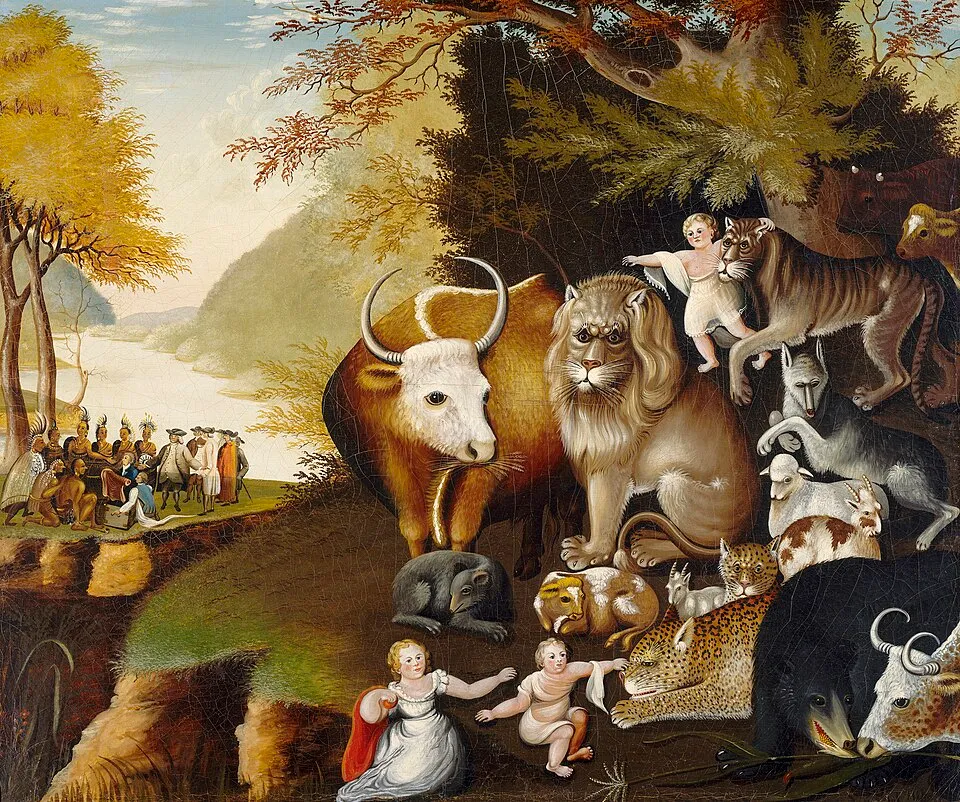
Edward Hicks (1780-1849), "Peaceable Kingdom" (c. 1834). Oil on canvas. Abby Aldrich Rockefeller Folk Art Museum, Williamsburg, Virginia. Hicks, a Quaker minister, painted over 60 versions of this scene. "The artist may have been obliged by group expectations to work within the norms of transmitted forms and conventions, but individual creativity, which implied personal aesthetic choices and technical virtuosity, saved received or inherited traditions from stagnating" (Wikipedia, on folk art). Image via Wikimedia Commons.
What Folk Art Is, and How It Differs from Fine Art and Outsider Art
Folk art is predominantly functional or utilitarian visual art created by hand for use within a particular environment or context. Historically, Folk Art existed outside academic art practice, made by artists who were self-taught or learned a trade through local communities rather than formal training, reflecting a collective ethos as opposed to the ideas of an isolated individual. The distinction from fine art is structural. Fine art is made by professionally trained artists, exhibited in galleries and museums, and valued for its aesthetic properties. Folk art is made by self-taught or locally trained makers, used in everyday life, and valued for both its function and its beauty. The European concept was concerned not only with examples of traditional material culture and their makers but also with the cultural milieu that produced those manifestations. From the European perspective, a craftperson's personality and the unique aesthetic qualities of one work of folk art were deemed less significant than the cultural information that might be uncovered through careful analysis of that work's construction and use.
The distinction from outsider art is just as important. Outsider art (Art Brut) is made by people isolated from culture, psychiatric patients, hermits, social outsiders. Folk art is made within a community, by people embedded in local tradition. It is a stretch for the term Folk Art to include both the Art Brut work of an artist like Adolf Wölfli and the contemporary Vernacular work of an artist like Thornton Dial. Related terms such as Folk Art, Naïve Art, and Neuve Invention have some more specific characteristics and will not be used generally. The ambiguity is real. Many of these terms describe work by artists who may not have had extensive, formal training or decided not to follow the teachings and ideas of traditional art instruction. Often, these artists rely on their own experimentation or local knowledge about how to make things. For the related category defined by isolation rather than community, see our guide to outsider art and Art Brut.
The History of the Category: From MoMA 1932 to the American Folk Art Museum
The term folk art was widely embraced in 1932, when the Museum of Modern Art (MoMA) offered the exhibition entitled "American Folk Art, the Art of the Common Man." Promoting an overtly American definition of "folk art" and anticipating the New Deal ethos, the text of that exhibition's catalog, written by acting director of MoMA Holger Cahill, asserted that folk art in the United States embodied the needs and ideals of the American mainstream rather than those of the "cultured classes." That sentence is the founding gesture of the American category. Folk art was not presented as a leftover or a curiosity. It was presented as the mainstream.
The roots go back further. Formal collection, exhibition, categorization, and analysis of traditional material culture dates to the early nineteenth century in Europe but in the United States only to the 1920s, when several modernist painters working at the Ogunquit School of Painting and Sculpture in Maine started decorating their studios, converted fishing huts, with material objects (rugs, bird decoys, and weathervanes, for example) made by local craftspeople and with paintings (mostly portraits) by untrained local artists. In 1924 these modernist painters loaned items from their collections to the Whitney Studio Club in New York City for the first museum exhibition of "folk art" in the United States. The American Folk Art Museum followed in 1961. Since 1961, the Museum has celebrated the creativity of individuals whose singular talents have been refined largely through personal experience rather than formal artistic training. The collection includes more than seven thousand works of art from four centuries and nearly every continent, from compelling portraits and dazzling quilts to powerful works by living artists in a variety of mediums.
The terminology has shifted with the field. For the last twenty years, the term "self-taught" has more regularly come to address these artists, whose inspiration emerges from unsuspected paths and unconventional places, giving voice to individuals who may be situated outside the social mainstream. The proliferation of these terms, to which others might justifiably be added, demonstrates an ongoing struggle for precision and clarity in an aesthetic terrain that remains remarkably resistant to definition. For where folk art sits in the wider map of movements, see our complete guide to art movements.
Edward Hicks and Grandma Moses: Key Figures
Edward Hicks (1780-1849) was a Quaker minister and self-taught painter who produced over 60 versions of "Peaceable Kingdom," based on Isaiah 11:6-9. Hicks painted the same subject repeatedly, not because he lacked imagination, but because the subject carried religious and political meaning that he explored through variation. His work is in the Abby Aldrich Rockefeller Folk Art Museum. The artist may have been obliged by group expectations to work within the norms of transmitted forms and conventions, but individual creativity, which implied personal aesthetic choices and technical virtuosity, saved received or inherited traditions from stagnating and permitted them to evolve. Hicks is the case study for that tension. He worked inside a community tradition and still made each painting his own.
Grandma Moses (1860-1961) is the other case study, and she works by a different logic. Anna Mary Robertson Moses began painting in her 70s, after arthritis made embroidery difficult. She painted rural life from memory, farm scenes, holidays, seasons. Her work was discovered by a collector in 1938 and exhibited at MoMA in 1939. She became one of the most famous American artists of the mid-20th century, featured on the cover of Time magazine in 1953. Self-taught art, past and present, tells empowering stories of everyday life. Hicks and Moses represent two different modes of folk art. Hicks worked within a religious community, painting variations on a single theme. Moses worked alone, painting from memory. Both were self-taught. Both were celebrated, Hicks within his Quaker community, Moses by the national art establishment. Their inclusion in art history is a result of the redefinition of "art" that began in the 1930s and continues today. For more on the works that anchor this history, see our guide to famous paintings explained.
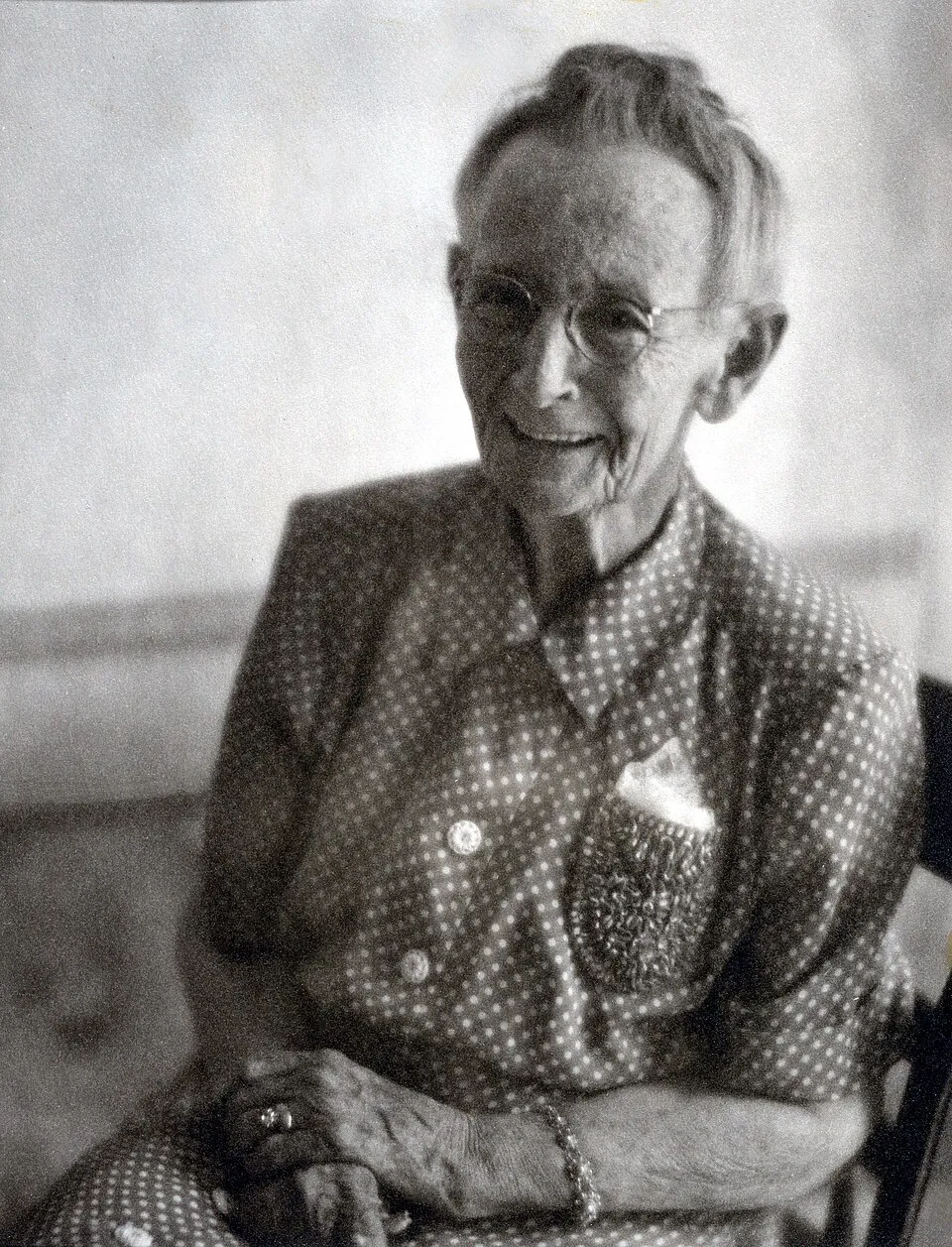
Grandma Moses (1860-1961), "Sugaring Off" (1943). Anna Mary Robertson Moses began painting in her 70s and became one of the most celebrated American artists. "Self-taught art, past and present, tells empowering stories of everyday life" (American Folk Art Museum). The field of American folk art was first defined at the turn of the twentieth century by collectors, professional artists, critics, dealers, and curators whose search for an authentic American art seemed to be finally answered in works that presented a nuanced picture of national identity, faith, progress, ingenuity, community, and individuality. Image via Wikimedia Commons.
Quilts as Art and Political Expression
Quilts are one of the most significant forms of American folk art. They are functional objects, bed coverings, that are also expressive works, carrying pattern, color, memory, and meaning. The American Folk Art Museum collection includes more than seven thousand works of art from four centuries and nearly every continent, from compelling portraits and dazzling quilts to powerful works by living artists in a variety of mediums. The "dazzling quilts" phrase is not decoration. It is the institution saying that quilts belong in the same sentence as portraits.
The politics are inseparable from the form. Jessie Telfair's "Freedom Quilt" (c. 1983) makes the point in the plainest possible way. When Jessie Telfair invoked the power of a single word repeated over and over in this quilt, she knew the word would reverberate through the history of the United States, back to the "peculiar institution" of slavery and the freedom that she was still struggling to attain in the 1960s at the beginning of the civil rights movement. The making of the quilt was incited by an incident she suffered in those years, when registering to vote was enough to cost this African American woman her job in a school kitchen. The bitterness of that experience still burned years later, and fellow quiltmakers urged her to express the pain through her art. Worked in the colors of the American flag, the quilt cries freedom. In a subtle metaphor, Telfair has set each repeated letter in its own block; all are visually related, but no two are alike.
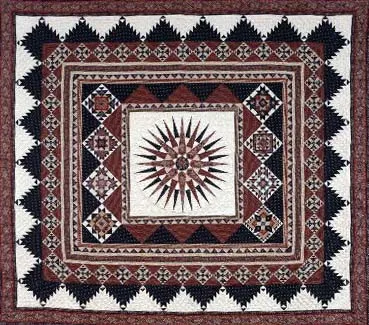
Jessie Telfair, "Freedom Quilt" (c. 1983). "When Jessie Telfair invoked the power of a single word repeated over and over in this quilt, she knew the word would reverberate through the history of the United States, back to the 'peculiar institution' of slavery and the freedom that she was still struggling to attain in the 1960s at the beginning of the civil rights movement. The making of the quilt was incited by an incident she suffered in those years, when registering to vote was enough to cost this African American woman her job in a school kitchen" (American Folk Art Museum). Image via Wikimedia Commons.
The Gees Bend quilts carry the argument further. The quilts of Gees Bend, Alabama, made by African American women in an isolated community, have been exhibited at the Whitney Museum of American Art (2002) and the Smithsonian. They are abstract works of art that also function as bed coverings, made from worn clothing, feed sacks, and fabric scraps. The Gees Bend quilts challenge the distinction between "art" and "craft." They are both, simultaneously. Quilts demonstrate that folk art is not separate from politics, memory, or identity. The quilt is a form that carries personal and communal history: who made it, what fabric was used, what pattern was chosen, what occasion it marked. To call quilts "folk art" rather than "fine art" is a decision, and that decision has consequences for who is considered an artist and who is not. For the social framework behind these decisions, see our piece on art and society.
The Problem of Terminology: "Folk," "Naïve," "Vernacular," "Self-Taught"
The proliferation of these terms, to which others might justifiably be added, demonstrates an ongoing struggle for precision and clarity in an aesthetic terrain that remains remarkably resistant to definition. It is also evidence of the growth of the field, the shifting nature of its parameters, and the passionate engagement of its participants. The problem with "folk" is concrete. Today, there are a lot of people who dislike the term "folk art" because the term may incorrectly suggest that folk art is not as important, well-made, or valuable as work by artists with more formal training. It was a term popularized in the late nineteenth and early twentieth centuries as art historians and collectors sought to bring more attention to arts made outside of the mainstream or thought to be more representative of regional styles.
Some people prefer to use related terms like "naïve," "vernacular," or "nonacademic" instead of "folk." All of these terms describe work by artists who may not have had extensive, formal training or decided not to follow the teachings and ideas of traditional art instruction. For the last twenty years, the term "self-taught" has more regularly come to address these artists, whose inspiration emerges from unsuspected paths and unconventional places, giving voice to individuals who may be situated outside the social mainstream. The shift from "folk" to "self-taught" reflects a broader shift in the field, from defining artists by their relationship to community tradition to defining them by their relationship to formal training.
Every term is a decision. "Folk" implies community tradition. "Naïve" implies lack of awareness. "Vernacular" implies local language. "Self-taught" implies individual initiative. "Outsider" implies exclusion. Each term carries assumptions about who the artist is, how they learned, and why they make art. The terms are not neutral. They shape what we see and how we value it. For a structured way to think through these categories, see our guide on how to teach yourself art history.
Why Folk Art Was Excluded from Art History, and What Inclusion Means
Many of Cahill's contemporaries in the American art world evaluated manifestations of American folk art according to European "high-culture" aesthetic precepts. For instance, some American art scholars of that era, influenced by the Eurocentric academic field of art history, studied American folk art from a diffusionist perspective, that is, they believed that traditional material objects made by rural Americans had evolved from urban, "fine art" prototypes. Others among Cahill's contemporaries even argued against the conjoining of the terms folk and art, maintaining that objects of traditional material culture made by people with little or no formal artistic training should be considered handicrafts rather than art. That last sentence is the exclusion in its purest form. The argument was not that folk art was bad. The argument was that it was not art at all.
Art history, as a discipline, was built on the distinction between "art" and "craft," between "fine art" and "decorative art," between "trained" and "untrained." Folk art falls on the wrong side of every one of these distinctions. It is made by untrained makers. It is often functional. It is rooted in local tradition rather than international movements. It is made by women, rural people, working-class people, and people of color, the same groups excluded from the academic art world. Folk art is increasingly recognized as a vital element in the cultural history of the United States, but it remains a contested expression. Art historians, museum curators, folklorists, and cultural anthropologists assign varying discipline-based meanings to it. The inclusion of folk art in art history is not just about adding objects to the canon. It is about changing what counts as art, and who counts as an artist.
Those individuals have been active participants in the shaping of American visual culture, influencing generations of artists and establishing lively artistic traditions. Recast as self-taught geniuses, they fit within a pervasive but mutable self-taught culture, reflecting life in America as it has changed and as it has been ambitiously dreamed. The American Folk Art Museum, the Whitney (Gees Bend quilts, 2002), and other institutions have brought folk art into the mainstream. But the tension remains, between the community context that produced the work and the museum context that displays it. If you are new to these questions, start with our guide on art for beginners.
Final Thoughts
The field of American folk art was first defined at the turn of the twentieth century by collectors, professional artists, critics, dealers, and curators whose search for an authentic American art seemed to be finally answered in works that presented a nuanced picture of national identity, faith, progress, ingenuity, community, and individuality. The American Folk Art Museum (founded 1961) holds more than seven thousand works of art from four centuries and nearly every continent. In 1932, MoMA's "American Folk Art, the Art of the Common Man" was the first major exhibition, with acting director Holger Cahill asserting that folk art in the United States embodied the needs and ideals of the American mainstream rather than those of the "cultured classes." In 1924, modernist painters loaned items from their collections to the Whitney Studio Club in New York City for the first museum exhibition of "folk art" in the United States. Key figures: Edward Hicks (1780-1849, Quaker minister, over 60 versions of "Peaceable Kingdom"), Grandma Moses (1860-1961, began painting in her 70s, Time magazine cover 1953), Jessie Telfair ("Freedom Quilt," c. 1983, "when registering to vote was enough to cost this African American woman her job in a school kitchen"). Quilts: the Gees Bend quilts exhibited at the Whitney (2002). Terminology: "folk," "naïve," "vernacular," "self-taught," "outsider," "nonacademic," the proliferation of these terms demonstrates an ongoing struggle for precision and clarity in an aesthetic terrain that remains remarkably resistant to definition. For the last twenty years, the term "self-taught" has more regularly come to address these artists. The exclusion: others among Cahill's contemporaries even argued against the conjoining of the terms folk and art, maintaining that objects of traditional material culture made by people with little or no formal artistic training should be considered handicrafts rather than art. The inclusion: folk art is increasingly recognized as a vital element in the cultural history of the United States, but it remains a contested expression. Every term is a decision. The terms are not neutral. They shape what we see and how we value it.
Go to the American Folk Art Museum in New York. It holds more than seven thousand works of art from four centuries and nearly every continent, from compelling portraits and dazzling quilts to powerful works by living artists. Walk through the galleries. Look at the portraits, many by artists whose names are lost, and in those cases, we are often still able to appreciate the art by looking closely and learning about the culture in which it was made. Look at the quilts, especially Jessie Telfair's "Freedom Quilt," where each repeated letter is in its own block; all are visually related, but no two are alike. Then ask yourself: who decided this was not art? The answer is the same art establishment that is now exhibiting it. The exclusion was a decision. The inclusion is a decision. Both decisions tell you more about the art world than about the art. For reference, read the American Folk Art Museum's about page and The Huntington's guide to Folk Art, Vernacular Art, or Naïve Art. For how to look at what you find there, see our guide on how to look at art.


